 跳到内容
跳到内容 

Keeping your watch collection safe involves combining high-security storage, environmental control, and precise mechanical maintenance. Imagine the sinking feeling of opening your storage box to find your most prized heirloom has stopped ticking or, worse, is missing entirely. This emotional and financial distress is a nightmare for any serious collector, but you can prevent it by taking proactive steps. The most comprehensive solution is to invest in a high-quality safe with watch winder technology to ensure your timepieces remain secure and mechanically healthy.
How to Maintain Watch Winder Motors?
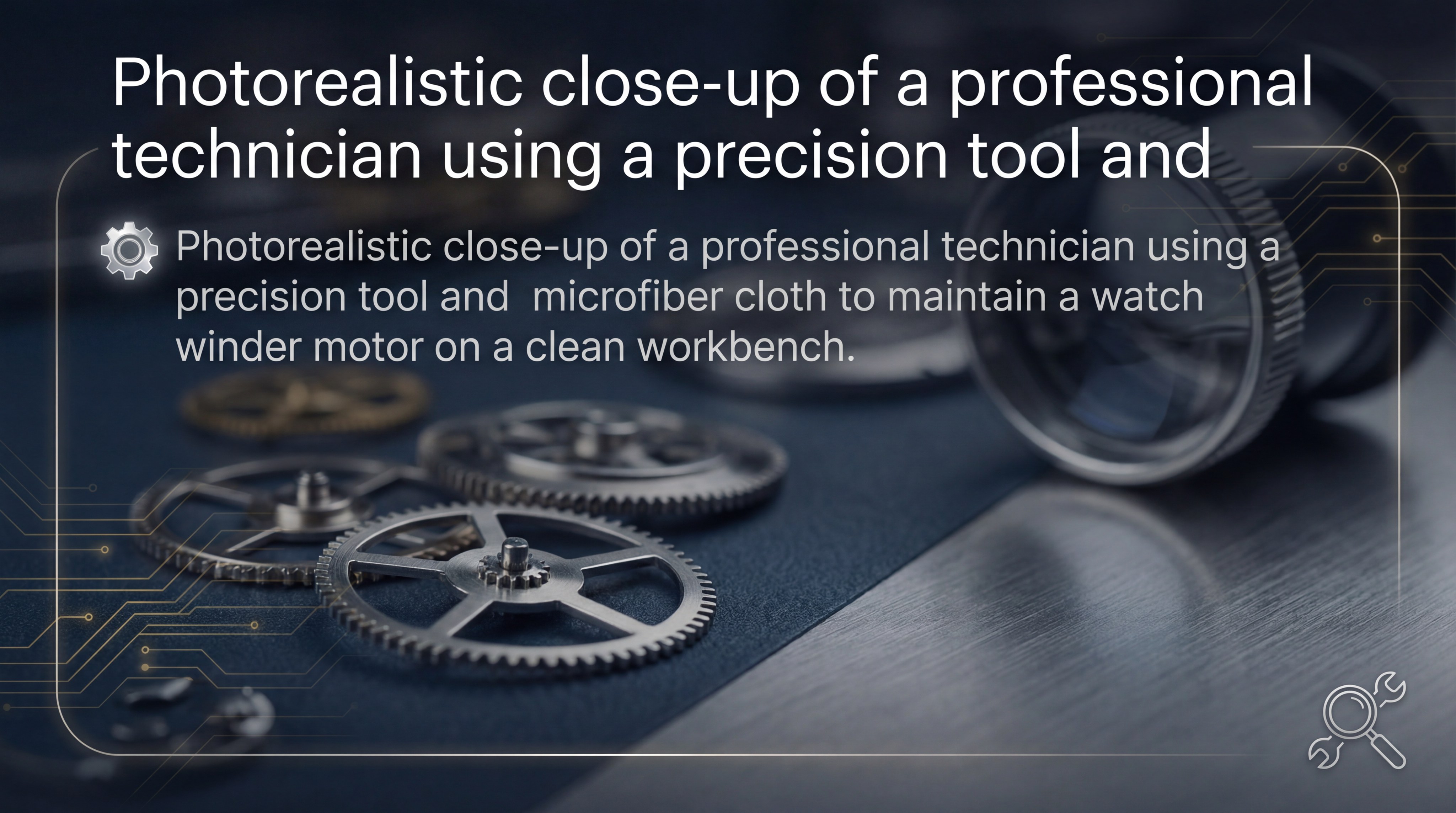
You maintain watch winder motors by performing regular dusting, ensuring a stable power supply, and conducting periodic noise inspections to detect early signs of mechanical wear. When using a safe with watch winder modules, it is vital to keep the interior free of debris that could clog the precision gears.
What are the signs of motor wear?
The first sign of trouble is usually a faint grinding or clicking sound during the rotation cycle. You should also check if the rotation speed has become inconsistent or if the motor feels excessively warm to the touch.
Here is the kicker:
If you ignore these minor sounds, the motor could eventually seize up. This stall leaves your automatic watches stationary, leading to oil stagnation.
How to clean internal components?
Use a soft, dry microfiber cloth to wipe down the exterior of the winding cups and the surrounding surfaces. Avoid using liquid cleaners that could seep into the electronics and cause a short circuit.
- Disconnect power before cleaning.
- Use compressed air for tight crevices.
- Wipe pillows to remove skin oils.
- Inspect cables for fraying.
Key Takeaway: Proactive motor maintenance prevents unexpected downtime and protects your watch movements from oil clumping.
| Component | Maintenance Action | Frequency |
|---|---|---|
| Electric Motor | Acoustic noise check | Monthly |
| Winding Cups | Microfiber dusting | Weekly |
| Power Adapter | Voltage stability check | Quarterly |
This systematic approach ensures the longevity of your winding hardware and the safety of your timepieces.
Why Are TPD Settings Critical?
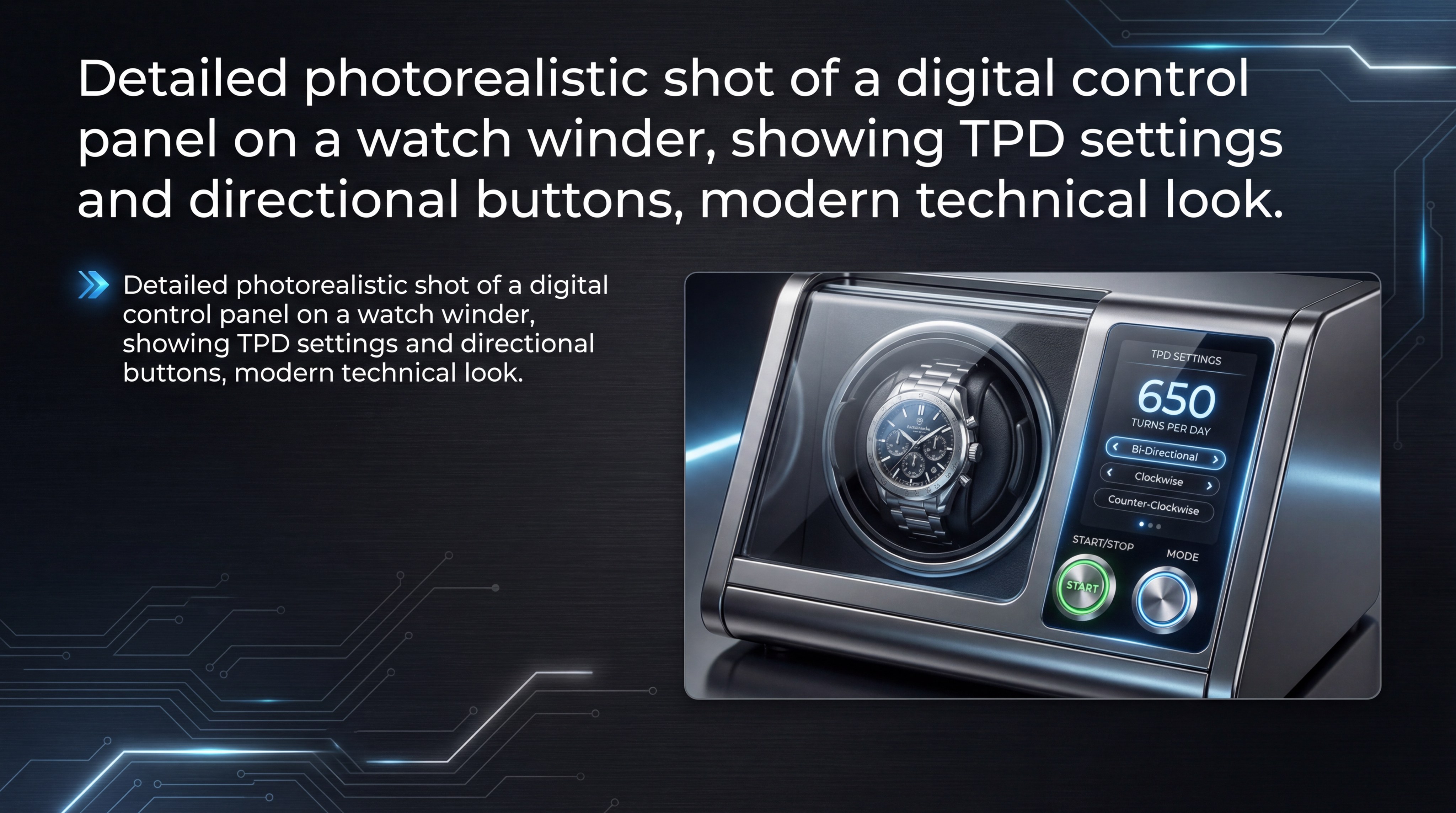
TPD settings are critical because they prevent overstressing the slipping clutch mechanism while ensuring the mainspring stays sufficiently wound for chronometric accuracy. Every automatic movement requires a specific amount of energy, and your safe with watch winder must be programmed to meet those exact requirements.
Can you overwind an automatic watch?
While modern watches have a “slipping clutch” to prevent the mainspring from snapping, excessive winding still causes unnecessary friction. This friction can lead to premature wear on the winding gears and the rotor assembly over several years.
Think about it:
Do you really want to put a decade of wear on your watch in just three years of storage? Precise TPD settings act as a digital “rest” for your mechanical investment.
How to find the correct TPD for your caliber?
Most luxury watch movements require between 650 and 900 Turns Per Day. You should consult your watch’s technical manual or use a professional database to find the recommended direction and turn count.
- Bi-directional: Works for most modern ETA movements.
- Clockwise: Common for certain vintage calibers.
- Counter-Clockwise: Required for specific chronograph movements.
- Programmable TPD: Essential for diverse collections.
Key Takeaway: Matching the winder’s rotation to your watch’s caliber prevents mechanical fatigue and extends service intervals.
| Watch Type | Typical TPD Range | Rotation Direction |
|---|---|---|
| Standard Automatic | 650 – 800 | Bi-directional |
| Chronograph | 800 – 950 | Often Uni-directional |
| Grand Complication | 900+ | Caliber Specific |
Adjusting these settings correctly ensures your movement remains in peak operating condition without unnecessary stress.
Is UL Certification Necessary?
Yes, UL certification is necessary because it provides an independent, third-party verification that the vault has passed rigorous testing against sophisticated burglary and fire threats. Relying on a safe with watch winder that bears the UL mark ensures that your most valuable assets are protected by industrial-grade security standards.

What does a UL Residential Security Container rating mean?
A UL RSC rating confirms that the safe can withstand a concentrated attack from hand tools for a specific duration. This means the steel thickness and the locking bolt strength are sufficient to deter the average home intruder.
But wait, there is more:
Higher UL ratings, such as TL-15 or TL-30, indicate the safe can survive attacks from heavy-duty power tools. For a collection worth six figures, these higher certifications are non-negotiable.
Why does certification matter for insurance?
Insurance companies often require a certain level of UL certification before they will cover high-value jewelry or watches. Without a certified vault, your premiums could skyrocket or your claim could be denied in the event of a loss.
- TL-15: Resists tools for 15 minutes.
- TL-30: Resists tools for 30 minutes.
- Fire Class 350: Keeps paper safe from charring.
- Impact Rating: Survives a 30-foot drop.
Key Takeaway: A UL-certified safe is the only way to guarantee that your security hardware meets recognized global standards.
| Certification | Protection Focus | Tool Resistance |
|---|---|---|
| UL RSC | Burglary (Hand Tools) | 5 Minutes |
| UL TL-15 | Burglary (Power Tools) | 15 Minutes |
| UL TL-30 | Burglary (Heavy Tools) | 30 Minutes |
Investing in certified hardware provides the peace of mind that your collection is truly impenetrable.
Should You Insure Your Collection?
You should insure your collection because high-security storage cannot prevent every eventuality, and insurance provides the financial safety net necessary for replacement or repair after a loss. Your safe with watch winder setup is your first line of defense, but insurance is the ultimate backup plan for your horological capital.

How to document your watches for a policy?
You need to maintain high-resolution photographs of every watch, including the serial number on the case back or between the lugs. Keep digital and physical copies of your original sales receipts and warranty cards within your vault.
The best part?
A well-documented collection is much easier to recover if it is ever stolen. Police and auction houses can use your serial numbers to flag the pieces worldwide.
What is a scheduled personal property rider?
Standard homeowner’s insurance typically has very low limits for jewelry and watches. You need a specific “rider” or a standalone policy that covers the full appraised value of each individual piece in your collection.
- Market Value: Covers current replacement cost.
- Agreed Value: Pays a set amount regardless of market shifts.
- Worldwide Coverage: Protects you while traveling.
- No-Deductible: Ideal for high-value items.
Key Takeaway: Professional insurance documentation ensures that a physical loss does not become a permanent financial disaster.
| Document | Purpose | Storage Location |
|---|---|---|
| Appraisal | Establishes Value | Safe & Cloud |
| Serial Numbers | Identification | Secure Digital Folder |
| Insurance Policy | Coverage Proof | Physical File |
Combining physical security with comprehensive insurance creates a multi-layered shield for your collection.
What Are the Best Storage Methods?
The best storage methods involve a combination of centralized vaults, off-site safety deposit boxes for investment pieces, and a safe with watch winder for items in active rotation. Choosing the right method depends on how often you wear your pieces and the total value of your horological portfolio.

Is a bank deposit box safer than a home vault?
Bank vaults offer superior physical security but lack the convenience of daily access. Furthermore, bank boxes are not moisture-controlled, which can lead to movement damage if you leave a watch there for several years without service.
Believe it or not:
A high-end home safe often provides better environmental protection than a bank. You can control the temperature and humidity to ensure your watches never rust.
Why choose a specialized watch safe?
Specialized safes feature built-in winding modules that keep your automatic watches ready to wear at a moment’s notice. These units often include velvet-lined drawers for straps, tools, and jewelry, keeping everything organized and scratch-free.
- Integrated Winders: Keeps movements active.
- Bolt-Down Kits: Prevents safe removal.
- Interior Lighting: Enhances visibility.
- Custom Drawers: Protects delicate finishes.
Key Takeaway: A specialized watch safe offers the perfect balance of high-level security and daily horological convenience.
| Storage Method | Security Level | Accessibility |
|---|---|---|
| Watch Box | Low | Very High |
| Home Safe | High | High |
| Bank Vault | Highest | Low |
Evaluating these factors allows you to tailor your storage strategy to your specific lifestyle and collection size.
How Does Mechanical Precision Help?
Mechanical precision helps by ensuring that the winding motion mimics the natural movement of a human wrist, preventing the over-tensioning of the mainspring. Utilizing a high-quality safe with watch winder ensures that the rotation is smooth and vibration-free, which protects the delicate escapement of your timepiece.

Why is low-vibration rotation important?
Cheap winders often use low-quality motors that vibrate excessively, which can theoretically interfere with the watch’s timing. Precision motors operate silently and smoothly, ensuring that the only force acting on the watch is a gentle, consistent rotation.
You might be wondering:
Does a quiet motor really matter for the watch? Absolutely, because noise is a symptom of friction, and friction in the winder can eventually transfer to the watch mounting.
How does “sleep mode” preserve the movement?
High-end winders include a sleep cycle that allows the watch to rest for several hours, mimicking the period when you are asleep. This allows the mainspring to slightly unwind, preventing it from being held at maximum tension indefinitely.
- Mimics Human Motion: Natural energy transfer.
- Silent Operation: Ideal for bedroom placement.
- Anti-Magnetic Motors: Prevents hairspring magnetization.
- Soft-Start Technology: Gentle on the gears.
Key Takeaway: Precision engineering in your storage hardware directly correlates to the long-term health of your watch movements.
| Feature | Mechanical Benefit | Watch Protection |
|---|---|---|
| Sleep Mode | Mainspring relaxation | Prevents tension fatigue |
| Shielded Motor | Zero magnetic field | Protects hairspring |
| Precision Gears | Constant RPM | Prevents jerky motion |
Prioritizing mechanical excellence in your winder is as important as the quality of the watch itself.
Can Safes Survive a Fire?
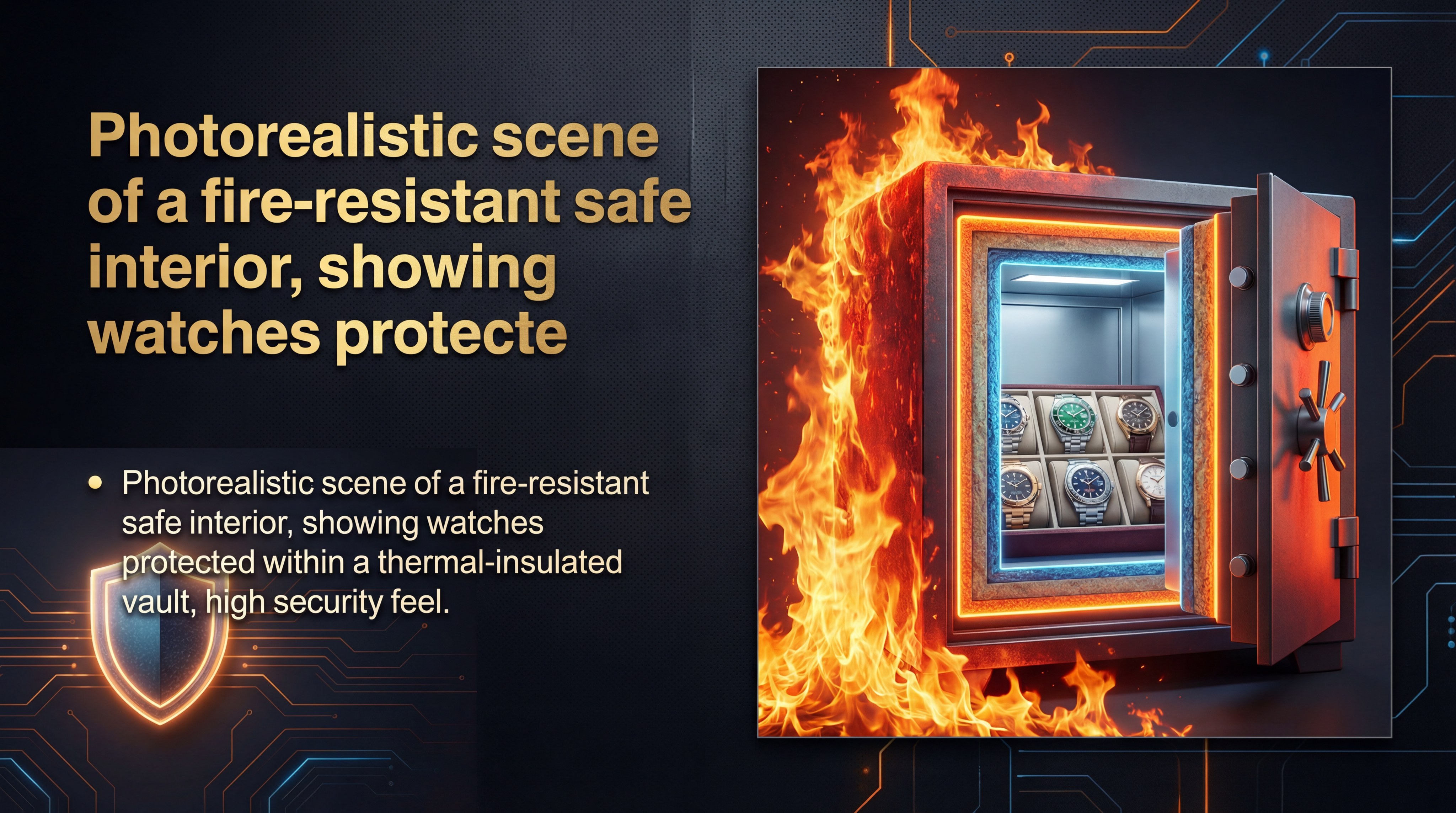
Safes can survive a fire if they are constructed with specialized heat-resistant liners that keep the internal temperature below the critical point for several hours. When you store a safe with watch winder unit inside a fire-rated vault, you are protecting the lubricants and rubber gaskets from melting or evaporating under extreme heat.
What happens to a watch in a fire?
Even if the flames don’t touch the watch, the ambient heat can liquefy the internal oils and warp the delicate hairspring. Rubber gaskets will also become brittle, destroying the watch’s water resistance and making it vulnerable to future moisture.
It gets better:
A fire-rated safe uses moisture-releasing insulation that creates a steam barrier. This barrier actively cools the interior of the safe during a house fire.
How to read a fire rating?
A typical fire rating like “1 Hour at 1700°F” means the safe will keep its internal temperature below 350°F for sixty minutes. This is sufficient for most residential fires, which usually pass through a single room in less than half an hour.
- Intumescent Seals: Expand to block smoke.
- Fireboard Lining: Provides thermal mass.
- Double-Walled Steel: Resists structural warping.
- Tested to UL 72: The gold standard for fire.
Key Takeaway: A high fire rating is essential for preserving the mechanical integrity of your watches during a catastrophe.
| Fire Duration | External Temp | Internal Temp Limit |
|---|---|---|
| 30 Minutes | 1200°F | < 350°F |
| 60 Minutes | 1700°F | < 350°F |
| 90 Minutes | 1850°F | < 350°F |
Selecting a safe with an appropriate fire rating ensures your collection survives the heat and the smoke.
Is Humidity Damaging Your Watches?
Humidity is damaging your watches because excess moisture causes oxidation of the steel components and can lead to the growth of mold on leather straps and wooden boxes. Inside your safe with watch winder, maintaining a stable, dry environment is crucial for preventing the “clouding” of dials and the rusting of movement parts.

How does rust form inside a sealed watch?
If a watch is serviced in a humid environment, a tiny amount of moisture can be trapped inside the case. When temperatures drop, this moisture condenses on the movement, leading to microscopic pitting and rust on the balance wheel.
Here is the thing:
Most collectors worry about water resistance, but atmospheric humidity is a much more common silent killer. It gradually degrades the movement over years of storage.
How to use desiccants effectively?
You should place high-capacity silica gel packs or an electronic dehumidifier rod inside your safe to maintain a relative humidity level of 40-50%. Monitor these levels using a digital hygrometer to ensure the environment remains stable.
- Silica Gel: Absorbs moisture passively.
- Dehumidifier Rods: Slightly warms the air to prevent condensation.
- Hygrometers: Provides real-time humidity tracking.
- Hermetic Seals: Blocks humid air from entering.
Key Takeaway: Active humidity management prevents corrosion and preserves the aesthetic value of your watch dials.
| Humidity Level | Risk Level | Effect on Watches |
|---|---|---|
| > 60% RH | High | Rust and mold growth |
| 40% – 50% RH | Ideal | Optimal preservation |
| < 30% RH | Moderate | Dries out lubricants |
Regularly checking your humidity levels is a simple step that saves thousands in restoration costs.
Why Use Large Winder Cabinets?
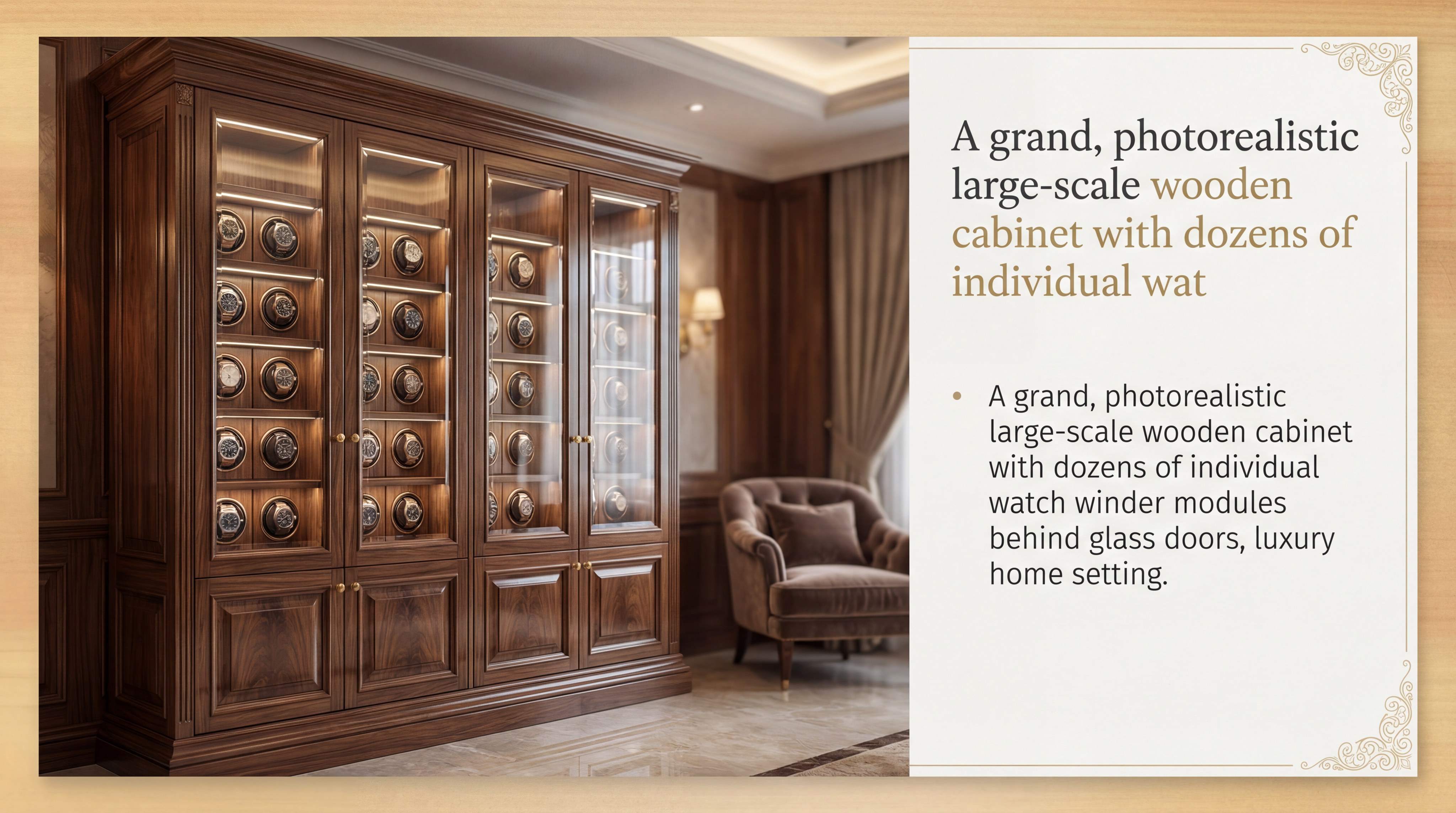
You use large winder cabinets to centralize your entire collection into a single, secure, and visually stunning display unit that simplifies management. A large safe with watch winder cabinet allows you to see every piece at a glance while ensuring each one receives the specific rotation it requires.
How do cabinets improve organization?
Cabinets consolidate multiple single winders into one footprint, eliminating the “cable nest” of power adapters in your dressing room. They often include additional storage for your collection’s paperwork, spare links, and cleaning kits.
Think about this for a second:
A disorganized collection is a collection that isn’t being enjoyed. Centralization turns your watches into a curated gallery rather than a cluttered drawer.
Are cabinets more secure than single winders?
Because of their size and weight, large cabinets are much harder for a thief to carry away. When bolted to the floor or wall, they become an immovable fixture that requires heavy equipment to breach.
- Bulk Capacity: Store 12, 24, or 48+ watches.
- Central Power: One plug for dozens of winders.
- Glass Portals: View your watches without opening.
- Modular Upgrades: Add more winders as you grow.
Key Takeaway: Large-scale cabinets provide a professional-grade solution for serious collectors with growing portfolios.
| Cabinet Feature | Collector Benefit | Security Impact |
|---|---|---|
| Floor Bolting | Permanent installation | Anti-theft |
| LED Display | Visual inventory check | Convenience |
| Central Control | Ease of programming | Time-saving |
A cabinet is the ultimate statement piece for a horological enthusiast who values both form and function.
How Secure are Integrated Safes?
Integrated safes are extremely secure because they combine heavy-gauge steel construction with advanced electronic locks that can track every opening and closing of the vault. A safe with watch winder integration ensures that your security is not an afterthought, but a purpose-built environment designed for high-value timepieces.
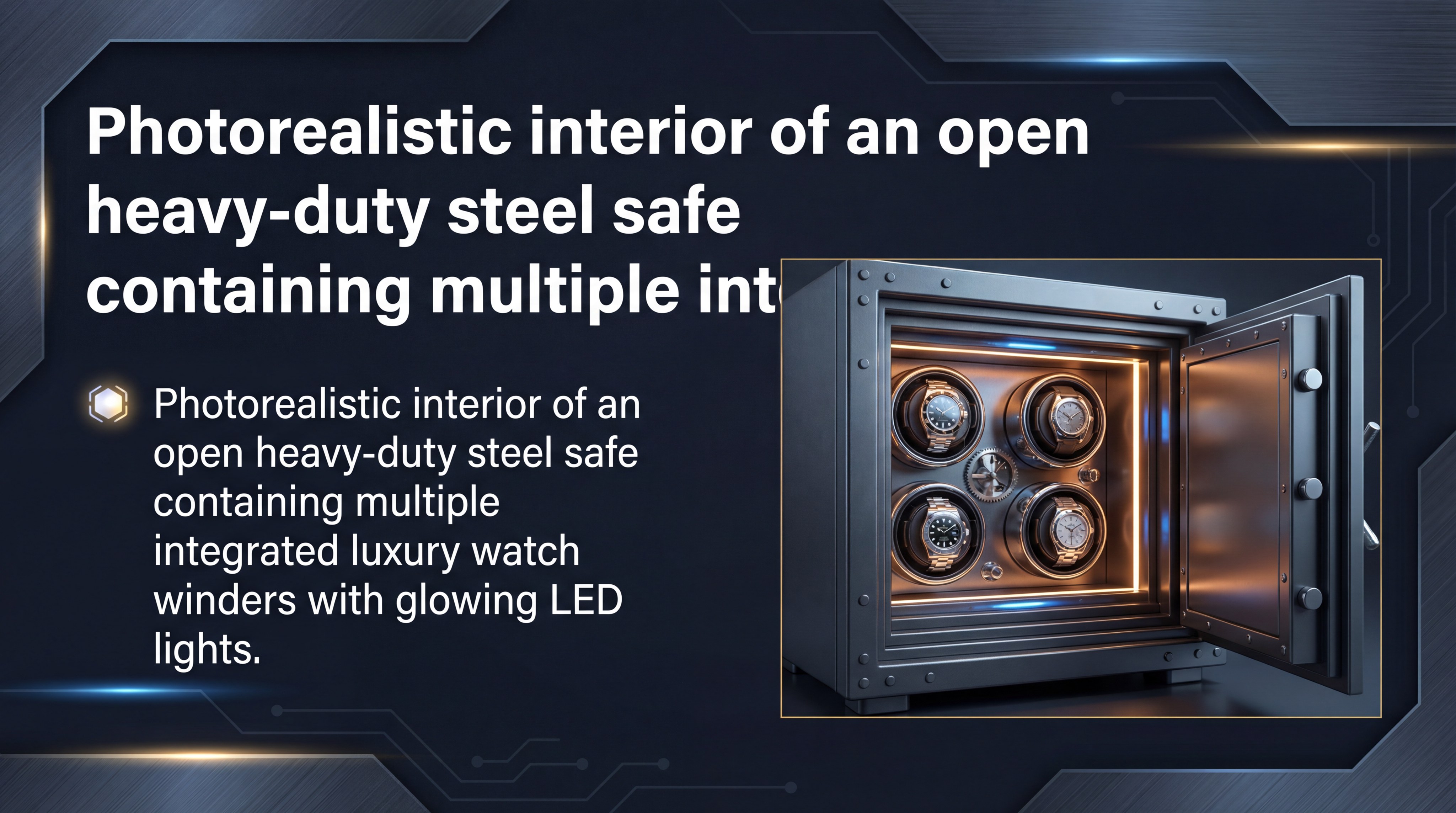
What are the benefits of biometric locks?
Biometric scanners allow you to access your collection using your fingerprint, which is significantly faster and more secure than a traditional key or combination. This technology prevents unauthorized access from anyone who might find a hidden key or guess a birthday-based code.
But wait, there is more:
Modern safes can be programmed with “duress codes” that send a silent alarm to security companies if you are forced to open the safe under threat.
How thick should safe walls be?
For a watch safe, you should look for at least 1/4″ solid steel doors and 12-gauge steel bodies. This thickness provides a substantial barrier against drilling and prying, forcing a thief to spend more time than they likely have.
- Active Locking Bolts: Engage on all four sides.
- Drill-Resistant Plates: Protect the lock mechanism.
- Relockers: Fire a secondary bolt if the lock is tampered with.
- Audit Trails: Record who accessed the safe and when.
Key Takeaway: Integrated safes offer the most sophisticated defense against both physical burglary and unauthorized domestic access.
| Security Layer | Function | Deterrent Level |
|---|---|---|
| Steel Body | Physical barrier | High |
| Electronic Lock | Access control | Very High |
| Internal Winders | Mechanical care | Operational |
This comprehensive security approach ensures that your collection remains yours for a lifetime.
*
Frequently Asked Questions
Can I use a watch winder inside a standard safe?
Yes, you can, provided the safe has an internal power outlet or you use a battery-operated winder. However, purpose-built watch safes are superior because they offer better organization and integrated wiring for a cleaner look.
What is the best way to clean my watch safe?
The best way is to use a slightly damp microfiber cloth for the exterior and a dry brush for the internal velvet. Avoid harsh chemicals that could damage the high-gloss finish or the delicate winder motors.
How often should I service my watch winder?
Judgment: Annually. You should perform a basic inspection every twelve months to check for motor noise and to ensure that the power cables are not pinched or damaged.
Can magnets in the safe damage my watches?
Judgment: No, if the safe is designed correctly. Professional watch safes use shielded motors and non-magnetic materials to ensure that the magnetic field from the electronics does not affect your watch’s hairspring.
Is it safe to keep my collection in a safe in the basement?
Judgment: Only with climate control. Basements are prone to high humidity and flooding; if you must store your collection there, ensure the safe is bolted to a pedestal and equipped with a robust dehumidification system.
Conclusion
Protecting your horological investment requires a dedicated commitment to security, mechanical health, and environmental stability. By integrating a high-performance winding system with a certified security vault, you ensure your watches remain in “ready-to-wear” condition while being shielded from theft and disaster. Do not wait for a loss to occur before taking action. To find the perfect security solution for your unique collection, please contact us today to speak with our security experts. At Jimbo Safes, we are dedicated to crafting the ultimate assurance in anti-theft excellence for the world’s most discerning collectors.


