 跳到内容
跳到内容 

Why are watch winder safes vital for movement?
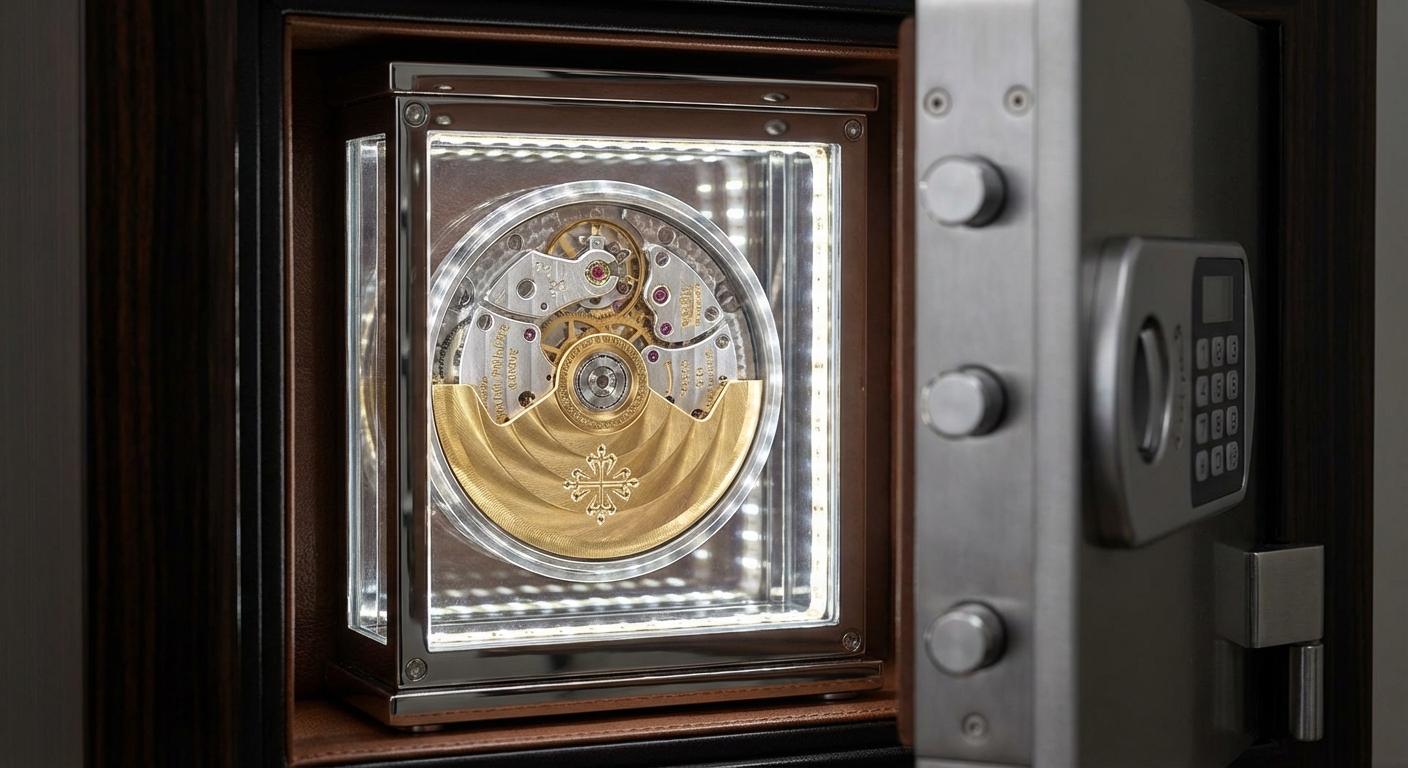
They ensure continuous operation which prevents mechanical parts from sticking or settling into static positions. You can rely on watch winder safes to mimic the natural movement of your wrist throughout the day and night. This constant state of readiness keeps the mechanical components engaged without the shock of a sudden start after weeks of inactivity.
What powers an automatic watch movement?
The energy in your watch comes from a rotor that spins as you move, winding the mainspring. Let’s get down to basics. Without this motion, the power reserve eventually depletes, and the movement grinds to a halt.
- The role of the rotor in energy transfer.
- Mainspring tension and power reserves.
- The mechanical stress of “cold starts.”
Does frequent stopping hurt your watch?
Frequent stopping forces you to manually wind the watch to get it started again, which puts unnecessary pressure on the internal gears. Think about it: avoiding these “cold starts” preserves the delicate teeth of the winding wheels.
- Impact of repetitive manual winding on gear teeth.
- Energy depletion and its effect on timing accuracy.
- Mechanical fatigue from irregular usage patterns.
Key Takeaway: Consistent motion through a winder prevents the mechanical fatigue associated with manual restarts and power depletion.
| Feature | Impact on Longevity |
|---|---|
| Consistent Rotor Spin | Maintains steady mainspring tension |
| Reduced Manual Winding | Minimizes gear tooth wear |
| Steady Energy Flow | Enhances overall movement stability |
Maintaining a steady state of energy prevents the internal components from experiencing the high-torque stress of manual winding.
How do watch winder safes maintain lubrication?
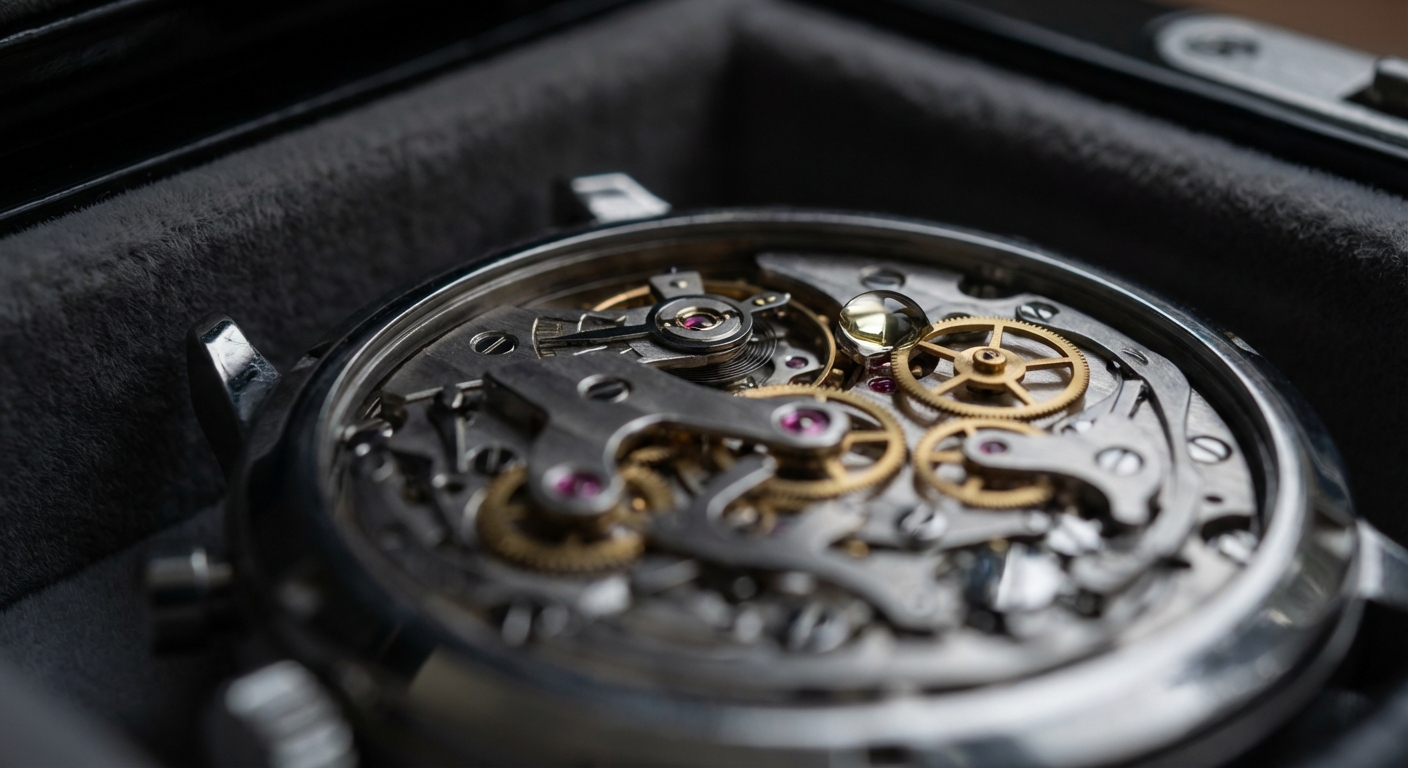
Consistent rotation keeps internal synthetic oils evenly distributed across critical pivots and jewels. Investing in watch winder safes is the most effective way to prevent oil from pooling in your timepiece. When a watch remains static, the lubricants can migrate away from where they are needed most.
Why does oil migration damage movements?
Oil migration causes friction points to run dry, leading to metal-on-metal wear that degrades the movement. Here is the interesting part. This lack of lubrication is a primary cause of accuracy loss and mechanical failure over time.
- Synthetic oil properties vs. old formulations.
- Maintaining oil film on pivots and jewels.
- Friction reduction during daily operation.
How does constant motion distribute oil?
Continuous, gentle rotation ensures that the oil stays exactly where the manufacturer intended it to be. You might be wondering how this works; it simply uses centrifugal force to keep the film intact. This film of lubricant protects the tiny pivots from the heat and friction generated by the movement’s high-beat frequency.
- The science of oil retention through rotation.
- Preventing the “drying out” effect on jewels.
- Preservation of high-beat movement precision.
Key Takeaway: Regular movement keeps internal lubricants fluid and correctly positioned, drastically reducing friction-related wear.
| Condition | Lubrication Status |
|---|---|
| Long-term Storage | Oil migration and potential stagnation |
| Active Winder Use | Evenly distributed protective oil film |
| Manual Resetting | Temporary high friction before oil redistributes |
Active rotation is the best defense against the “drying out” effect that plagues neglected mechanical watches.
Can watch winder safes prevent crown damage?
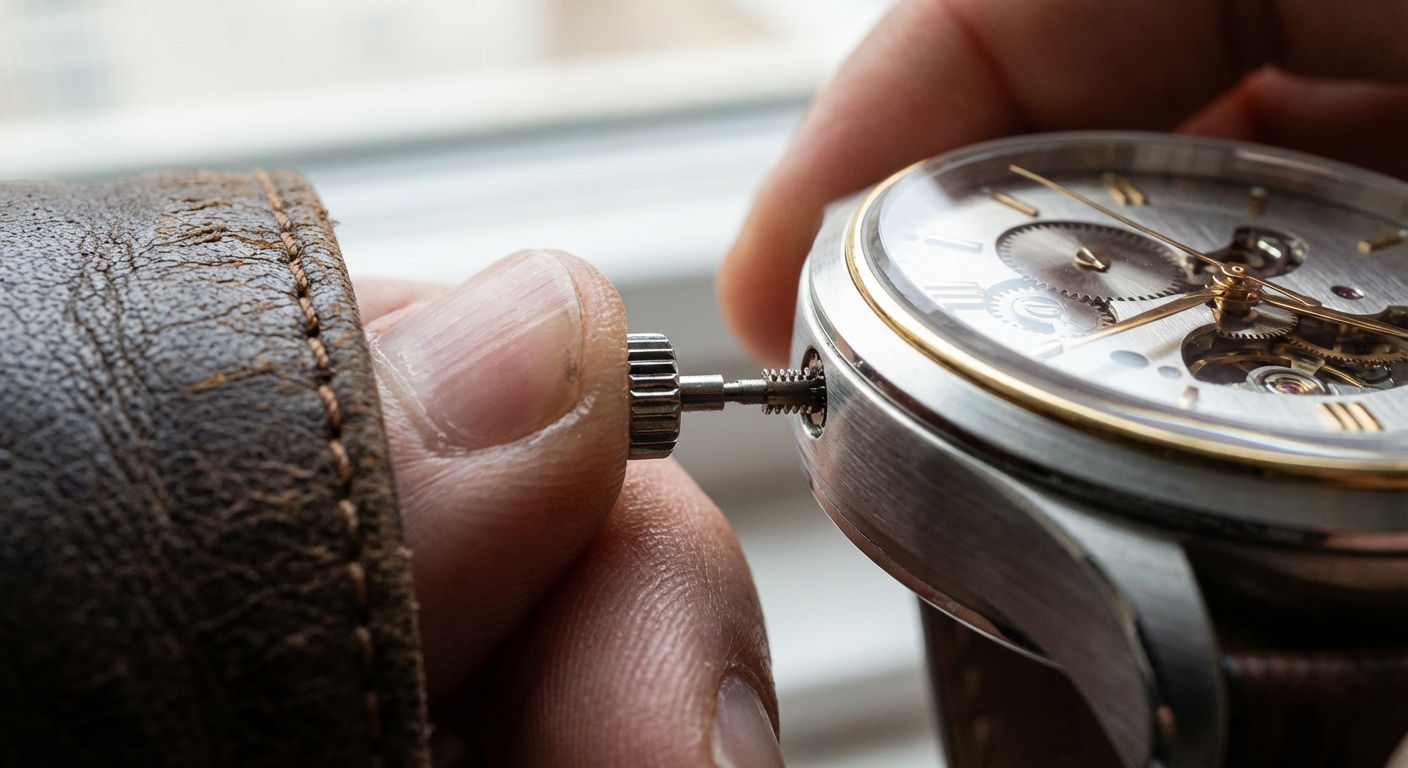
These units prevent crown damage by removing the need to unscrew and pull the stem for time and date adjustments. Using watch winder safes ensures your watch is always set, so you rarely have to interact with the most vulnerable part of the case. The crown and its internal tube are delicate components that can easily fail under repetitive use.
Does manual winding wear out the stem?
Manual winding can definitely wear out the stem because it is a thin piece of steel that can bend or snap if handled too aggressively. But that is not all. Every time you pull the crown to “position two,” you are putting tension on the setting lever.
- Vulnerability of the winding stem and tube.
- Risks of cross-threading screw-down crowns.
- Mechanical fatigue from frequent time setting.
Why avoid resetting complex complications?
Resetting a perpetual calendar or a moonphase complication is not just tedious; it is technically demanding for the movement. Now, consider this: using a winder keeps these synchronized, avoiding the risk of “forcing” a gear during a prohibited time zone.
- Risks of adjustment during “danger zones.”
- Complexity of perpetual calendar synchronization.
- Reducing the mechanical load on complication gears.
Key Takeaway: Keeping your watch running eliminates the mechanical stress and physical wear on the crown, stem, and setting mechanisms.
| Component | Winder Benefit |
|---|---|
| Crown Threads | Prevents cross-threading and stripping |
| Winding Stem | Reduces physical tension and bending risk |
| Gaskets | Minimizes wear from frequent opening |
A watch that is always running is a watch that remains sealed and structurally sound for a longer period.
Do watch winder safes protect rubber gaskets?
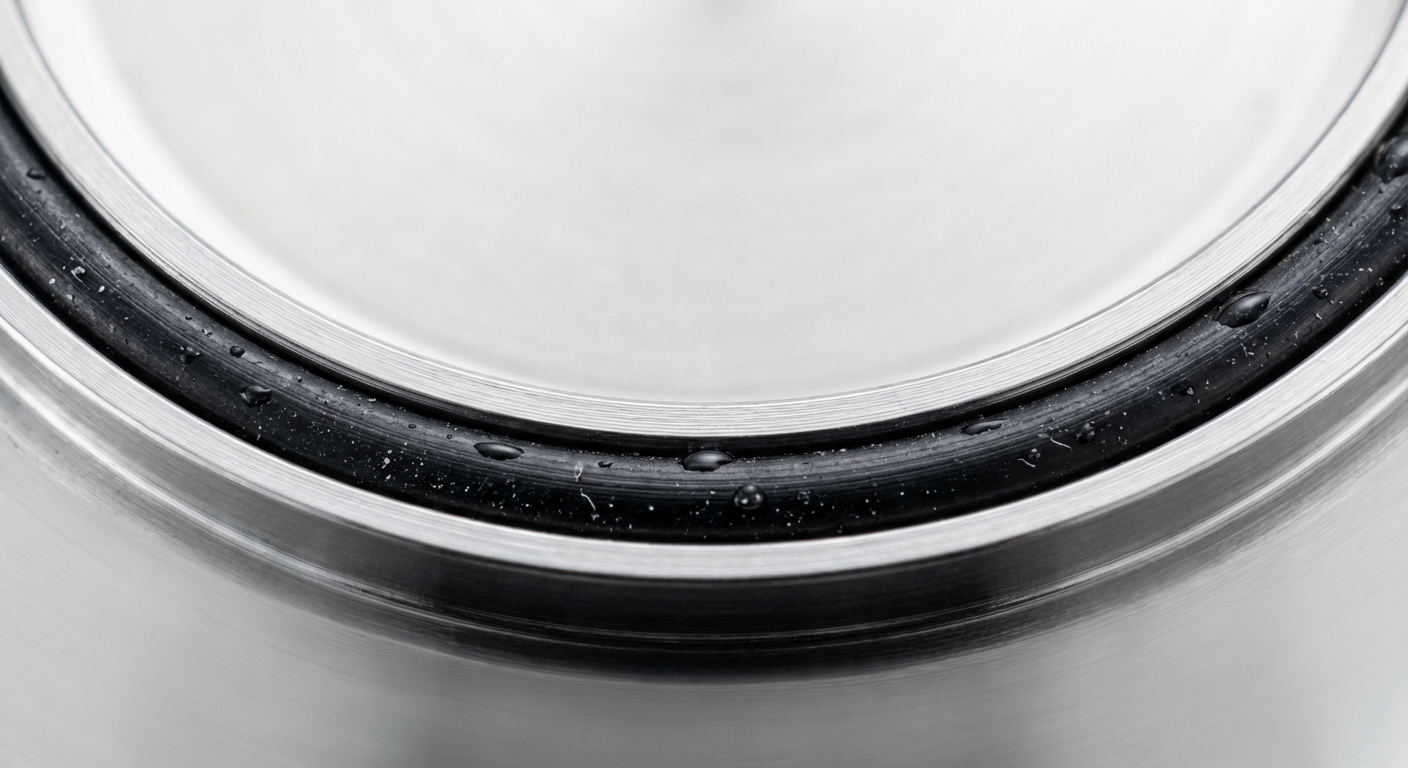
They protect rubber gaskets by minimizing the frequency with which the crown is manipulated, which preserves the airtight seal. High-quality watch winder safes provide a stable environment where you don’t have to worry about the integrity of your moisture barriers. Every time the crown is unscrewed, the gaskets are compressed and turned, leading to eventual flattening.
Does excessive handling compromise seals?
Repeatedly opening and closing a screw-down crown creates friction heat and physical abrasion on the tiny O-rings inside. The truth is simple. Over time, this leads to a loss of water resistance that you might not notice until it is too late.
- Friction heat and seal degradation.
- Preventing dust entry during crown use.
- Maintaining the “crush” of the gasket for a better seal.
How to maintain water resistance longer?
The best way to maintain water resistance is to keep the crown screwed down tight and leave it that way. It gets even better when you realize that keeping the watch wound ensures the internal environment remains isolated from external contaminants like dust and moisture.
- Long-term integrity of moisture barriers.
- Reducing the frequency of gasket replacements.
- Benefits of a static crown on case isolation.
Key Takeaway: Reducing crown usage significantly extends the lifespan of the rubber gaskets responsible for keeping your watch water-resistant.
| Risk Factor | Protection Method |
|---|---|
| Gasket Abrasion | Reduced crown manipulation |
| Dust Infiltration | Constant sealed state of the case |
| Moisture Seepage | Maintaining long-term seal integrity |
By keeping the seals intact, you prevent the microscopic debris that often enters during time adjustments from damaging the movement.
Are TPD settings key in watch winder safes?
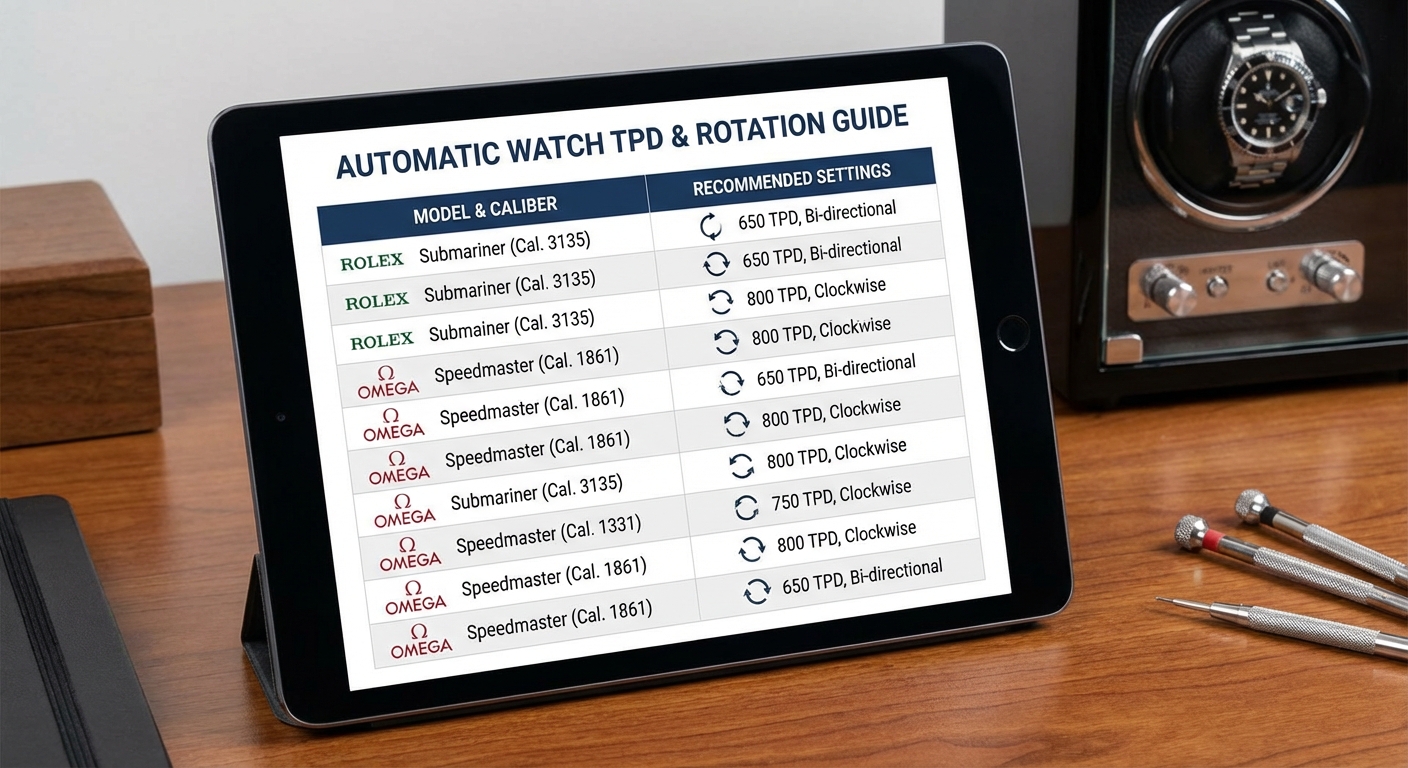
Turns Per Day (TPD) settings are essential because they ensure the watch receives exactly the amount of energy it needs without overworking the mechanism. Professional watch winder safes allow you to customize these settings to match the specific requirements of your movement. If a winder turns too little, the watch stops; if it turns too much, you are simply adding unnecessary wear.
What is the ideal turns per day count?
Most modern automatic watches require between 650 and 900 TPD to stay fully wound throughout a 24-hour cycle. Let’s face it: setting your winder to these specifications ensures the mainspring stays in its optimal “sweet spot” of tension.
- Matching TPD to manufacturer specs.
- Efficiency of energy transfer per rotation.
- Avoiding the “dead zone” of a depleted power reserve.
Why does rotation direction really matter?
Rotation direction matters because some movements only wind in one direction, while others are bi-directional. Think of it this way: using the wrong setting means the rotor is spinning freely without actually adding any energy to the mainspring.
- Clockwise vs. counter-clockwise requirements.
- Efficiency of bi-directional winding systems.
- Impact of free-spinning on rotor bearings.
Key Takeaway: Proper TPD and direction settings ensure your watch stays wound efficiently while avoiding any mechanical over-exertion.
| Movement Type | Recommended Setting |
|---|---|
| Rolex 3135 | 650 TPD (Bi-directional) |
| Patek Philippe 324 | 800 TPD (Counter-clockwise) |
| ETA 2824-2 | 650 TPD (Bi-directional) |
Correct settings act as a tailored maintenance routine that keeps your watch perfectly powered without wasted motion.
Why do watch winder safes need sleep cycles?
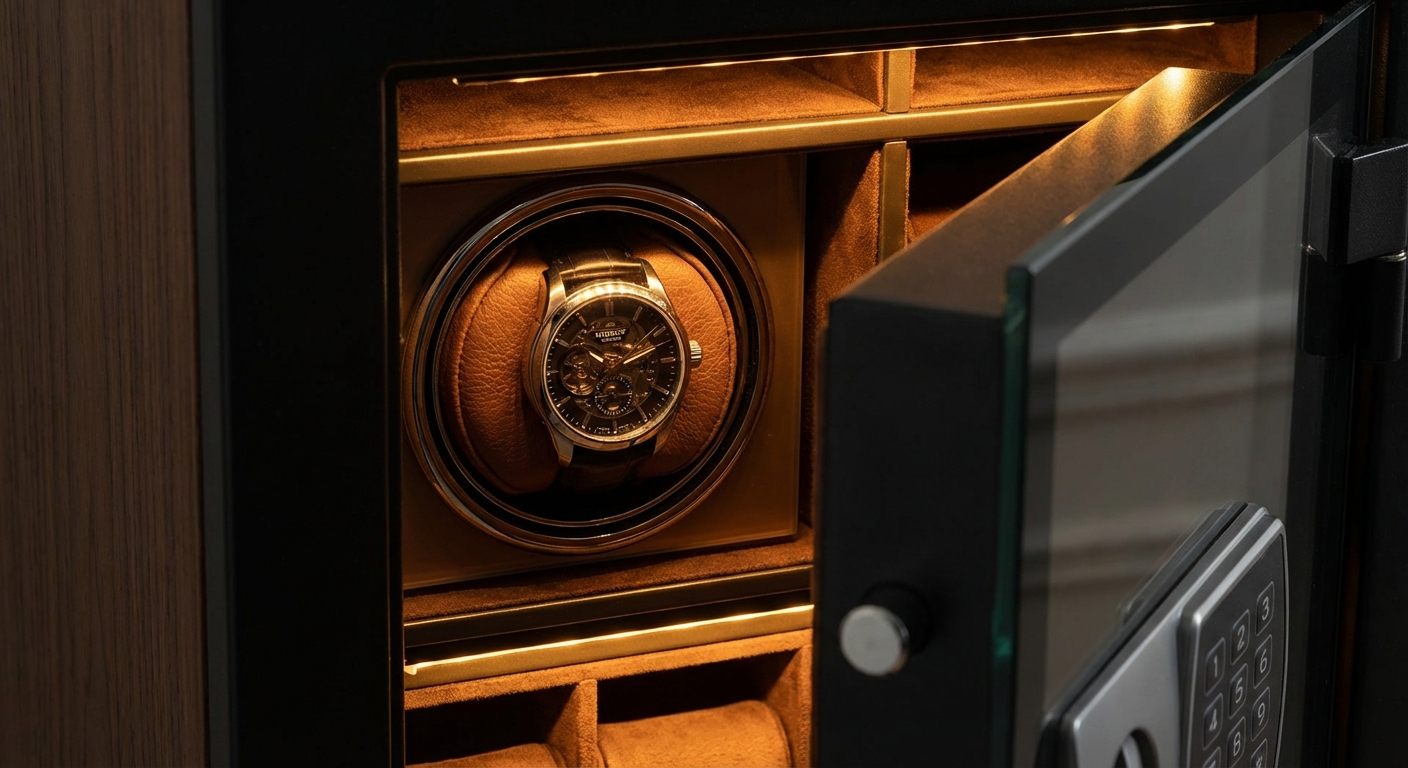
Sleep cycles are necessary to allow the mainspring to relax periodically, which mimics the natural rhythm of human wear. Quality watch winder safes are designed to run for a set period and then pause for several hours. This prevents the slipping clutch mechanism from being engaged for extended periods, which can lead to heat and friction.
Can a winder overstress the mainspring?
A winder can overstress the slipping clutch if it runs continuously without any break. One final thought: while an automatic watch cannot be “overwound” to the point of breaking the spring, the slipping clutch is a wear-item that needs rest.
- The slipping clutch mechanism.
- Avoiding constant tension on the bridle.
- Reducing motor wear and heat build-up.
How do rest periods mimic natural wear?
A rest period allows the watch to discharge a small amount of energy, just as it would when you are sleeping or sitting still. Here is the interesting part: this cycle of winding and resting keeps the mainspring flexible and prevents the lubricants from being under constant pressure.
- Flexibility of the mainspring through discharge.
- Mimicking the human circadian rhythm.
- Balancing energy input and mechanical output.
Key Takeaway: Sleep cycles protect the internal slipping clutch and mainspring by providing the necessary intervals of mechanical rest.
| Phase | Internal Watch Effect |
|---|---|
| Active Winding | Builds torque and distributes oils |
| Sleep Cycle | Relaxes the mainspring and clutch |
| 24-Hour Cycle | Mimics natural daily wearing patterns |
Incorporating rest periods ensures the longevity of both the watch movement and the winder’s electric motor.
Do watch winder safes offer humidity control?
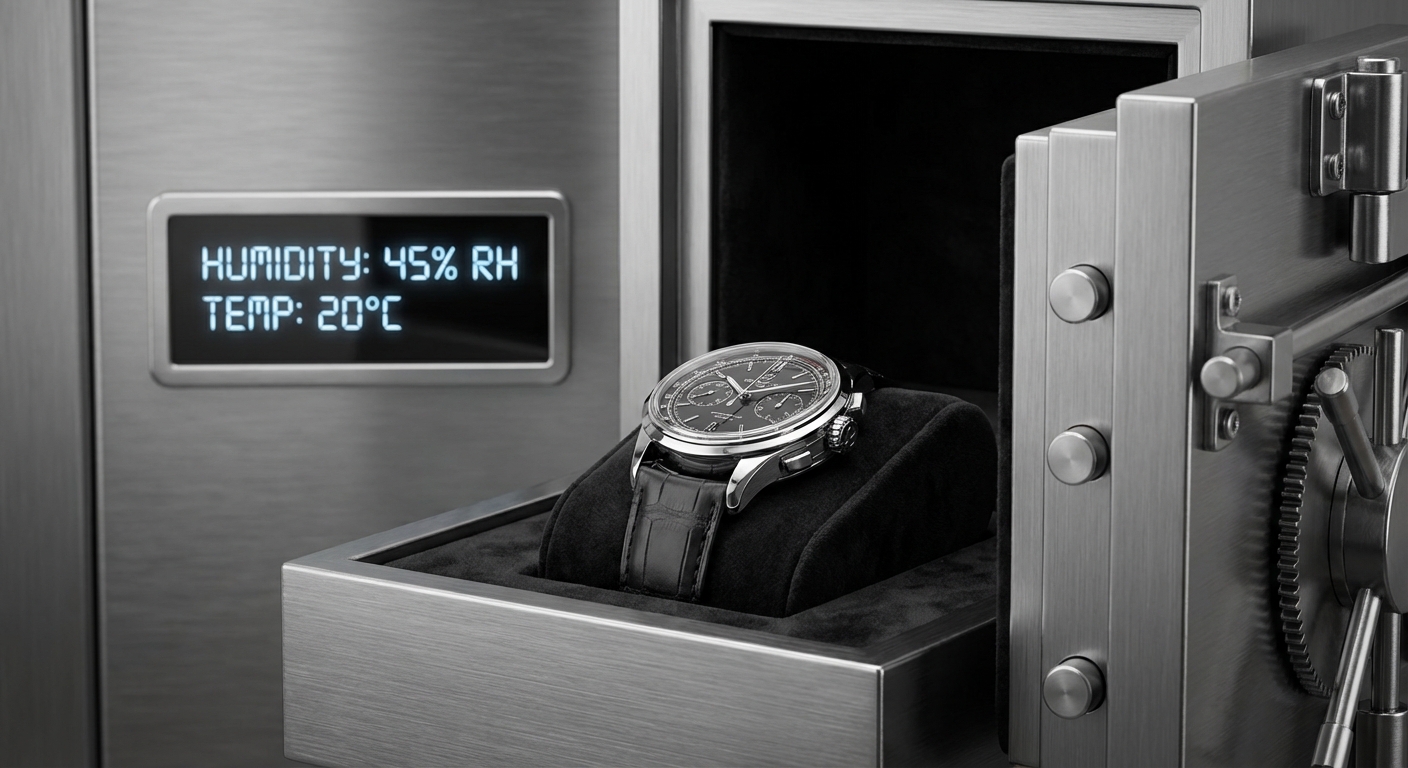
These safes offer humidity control by providing a sealed, climate-stable environment that prevents moisture from infiltrating the watch case. Utilizing watch winder safes in humid climates is a proactive step toward preventing dial oxidation and internal rust. Humidity is a silent killer for vintage and modern timepieces alike, especially if the seals are aged.
Does moisture impact internal longevity?
Moisture trapped inside a case causes “clouding” and oxidation that permanently damages the dial and hands. Let’s get down to basics. This leads to permanent spotting and the degradation of luminous materials that are expensive to restore.
- Preventing condensation on the dial.
- Oxidation risks in high-humidity zones.
- Protecting the “patina” of vintage pieces.
Why keep watches in a stable environment?
Steel safes provide a natural thermal mass that resists rapid temperature changes, which are the primary cause of internal condensation. You might be wondering why this matters; a stable environment ensures that the metal components don’t expand and contract excessively, keeping the timing regulated.
- Thermal mass and temperature regulation.
- Avoiding internal moisture buildup through stability.
- Preservation of metal grain and case integrity.
Key Takeaway: Climate-controlled storage prevents the corrosive effects of moisture and temperature fluctuations on delicate internal components.
| Environment | Longevity Risk |
|---|---|
| High Humidity | Internal rust and dial oxidation |
| Fluctuating Temps | Gasket failure and condensation |
| Stable Safe Interior | Preserved aesthetics and movement health |
A dry, stable atmosphere is just as important for a watch’s lifespan as the mechanical winding itself.
Can watch winder safes stop physical theft?
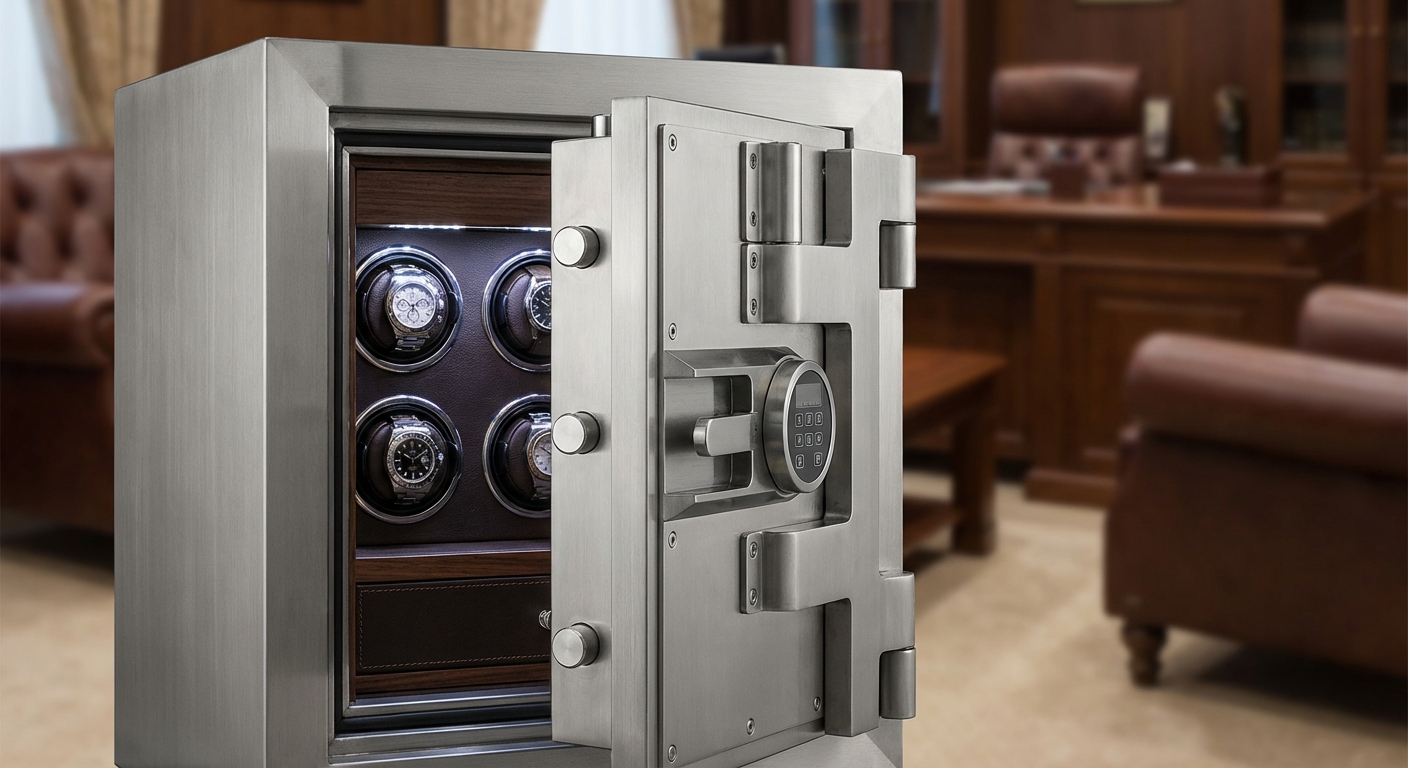
They stop physical theft by providing a heavy, reinforced barrier that prevents unauthorized access to your valuable collection. When you store your timepieces in watch winder safes, you are moving them from a vulnerable dresser top to a secure, anti-pry vault. This protection is vital for maintaining the “longevity” of your ownership, not just the mechanical health of the watch.
Why is dresser storage a major security risk?
Dresser storage is risky because most watches are stolen during “invitee” theft or quick “smash and grab” burglaries. Let’s face it. A watch sitting out is an easy target for anyone entering your home, from contractors to guests.
- Protection from “invitee” theft.
- Anti-pry technology and fire resistance.
- Concealment versus high-visibility storage.
How does steel plating provide peace of mind?
High-grade steel plating and advanced locking mechanisms mean that even a determined thief will struggle to access your collection. Think about it: this security allows you to enjoy your watches without the constant anxiety of loss or damage during a break-in.
- Resistance to mechanical tool attacks.
- Psychological comfort of high-level protection.
- Insurance compliance for high-value collections.
Key Takeaway: Physical security ensures that your investment remains in your possession, protecting its legacy for future generations.
| Security Level | Asset Protection |
|---|---|
| Unsecured Storage | High risk of theft and accidental damage |
| Standard Winder | Moderate organization, zero security |
| High-Security Safe | Maximum protection from theft and fire |
Investing in a safe is the only way to ensure your collection survives the external threats of the modern world.
Are modular units best for watch winder safes?
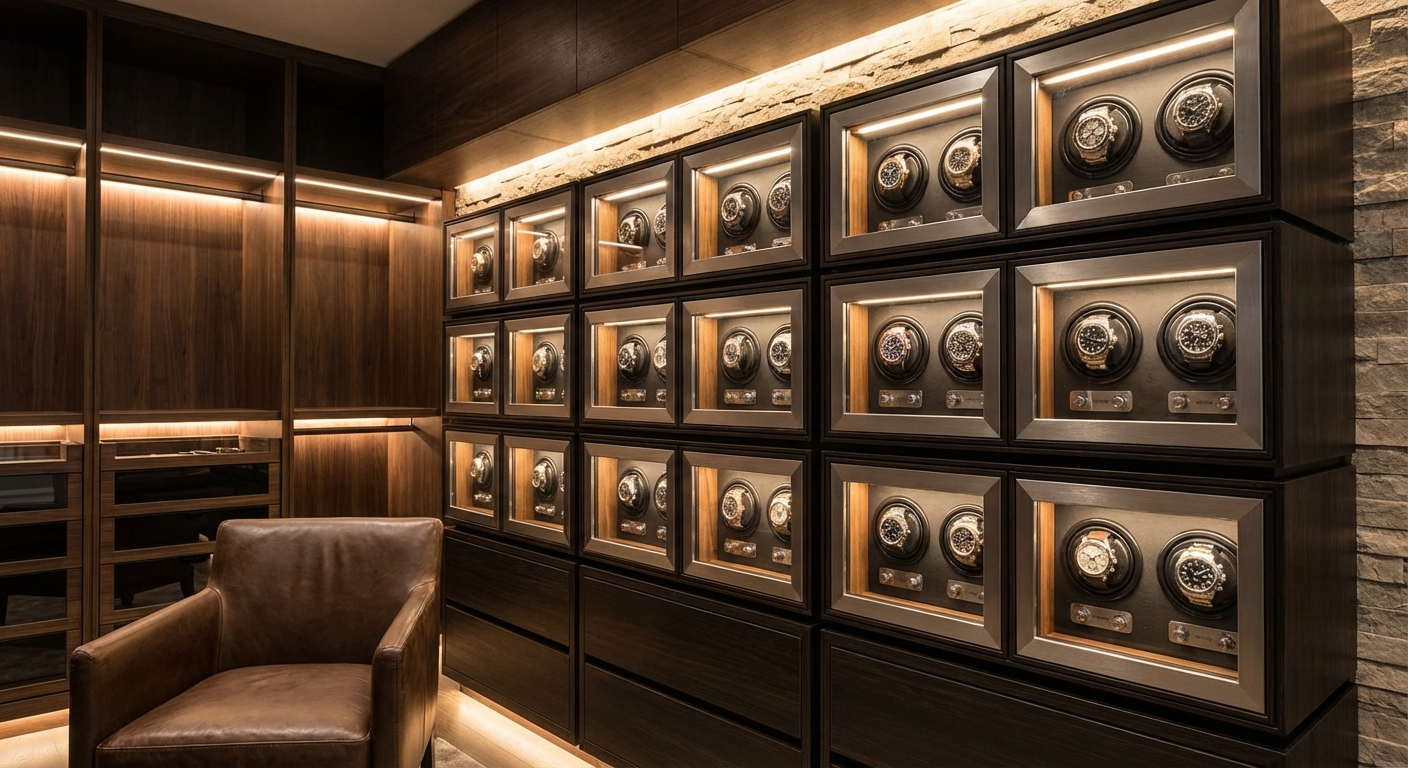
Modular units are often the best choice because they allow you to replace or service individual motors without affecting the entire collection. Most advanced watch winder safes utilize these independent modules to give you maximum flexibility. If one motor reaches its end-of-life after a decade, you can simply swap it out for a new one in minutes.
Can you expand your safe as you collect?
A modular system grows with you, allowing you to add more winding stations as your passion for horology expands. Now, consider this: this scalability ensures that you don’t have to buy a completely new safe every time you acquire a new timepiece.
- Scalability for growing collections.
- Independence of each winder station.
- Customization of settings per module.
Is it easier to service individual motors?
Modular designs mean that if one watch requires a specific TPD setting, it won’t interfere with the needs of the watch right next to it. One final thought: this independence is crucial for collectors who own a mix of vintage and modern movements with different requirements.
- Targeted maintenance without downtime.
- Preventing total system failure scenarios.
- Long-term cost savings on repair work.
Key Takeaway: Modularity provides long-term serviceability and the ability to customize winding parameters for every unique watch in your safe.
| Design Type | Collector Advantage |
|---|---|
| Integrated (Single Motor) | Simpler design but high failure risk |
| Modular (Independent) | Easy maintenance and custom settings |
| Scalable Units | Long-term value as the collection grows |
Choosing a modular system is a strategic decision that simplifies maintenance and ensures every watch gets the specific care it needs.
How to choose quality watch winder safes?

Choosing quality involves looking for silent motors, magnetic shielding, and high-end interior materials that won’t scratch your timepieces. You should only trust watch winder safes that offer a proven track record of reliability and specialized engineering. A cheap winder can actually do more harm than good if it uses unshielded magnets or abrasive watch cushions.
Should you avoid cheap plastic components?
Cheap winders often use plastic gears that wear out quickly and noisy motors that become a nuisance in your home. Let’s get down to basics. Quality units use metal components and Japanese or Swiss motors designed for decades of silent operation.
- Motor noise and magnetic shielding.
- Quality of interior materials and cushions.
- Durability of the rotation mechanism.
What features define professional grade?
Professional-grade units feature LCD controls, pre-programmed TPD settings, and soft-touch cushions that accommodate various wrist sizes. It gets even better when you see that these features ensure the “interface” between the winder and your watch is always safe and protective.
- Digital control precision for custom TPD.
- Protective interior finishes and soft cushions.
- Magnetic isolation to protect the hairspring.
Key Takeaway: High-quality construction and specialized features like magnetic shielding are non-negotiable for protecting the health of your collection.
| Quality Tier | Expected Lifespan |
|---|---|
| Entry-Level | 1–2 years (High noise, high wear) |
| Mid-Range | 3–7 years (Moderate features) |
| Professional-Grade | 10+ years (Silent, shielded, modular) |
Investing in quality upfront prevents the mechanical issues and safety risks associated with sub-par winding equipment.
True watch care extends beyond the aesthetic; it is about honoring the mechanical soul of the timepiece. Our vision for the industry is one where security and maintenance coexist perfectly within the home. We solve the problem of mechanical wear and the fear of theft by providing the world’s most robust storage solutions. If you want to ensure your collection remains pristine and ready for the next generation, contact us today for expert guidance on the ultimate storage solutions.
FAQ
Can I use watch winder safes for manual wind watches?
No, because manual wind watches do not have a rotor to capture the motion of the winder. These watches require you to physically turn the crown to tension the mainspring, making a winder purely a storage device for them rather than a functional tool.
What’s the best way to determine my watch’s TPD?
Check the manufacturer’s manual or an online database specifically for watch winding specifications. Most luxury brands provide exact TPD and direction requirements to ensure their movements remain in peak condition.
Can watch winder safes cause magnetization?
Only if they are poorly designed and lack proper magnetic shielding for the motors. High-quality safes use shielded motors and strategic placement to ensure that no magnetic fields ever interfere with your watch’s hairspring.
What’s the best location for a heavy winder safe?
Place it on a reinforced floor, preferably in a corner or a closet where it can be bolted down to the structure of the house. This adds an extra layer of security and ensures the weight is properly supported.
Can I leave my watch on a winder indefinitely?
Yes, provided the winder uses proper TPD settings and includes a sleep cycle. Modern automatic watches are designed with a slipping clutch that prevents damage from continuous winding, and the winder’s rest periods mimic real-world usage.


