 跳到内容
跳到内容 

Investing in a high-quality watch safe is the only definitive way to protect your significant financial investment and horological legacy from professional theft, fire damage, and environmental degradation. You spend years meticulously curating a collection of timepieces, yet storing them in a standard bedside drawer or a basic jewelry box leaves them dangerously exposed. A single security breach or an undetected spike in humidity can erase decades of passion and value in mere moments. Fortunately, modern watch safes offer a fortified, climate-controlled sanctuary that integrates precision technology with elegant design to ensure your collection remains pristine for generations to come.
*
Why should you invest in a dedicated watch safe?
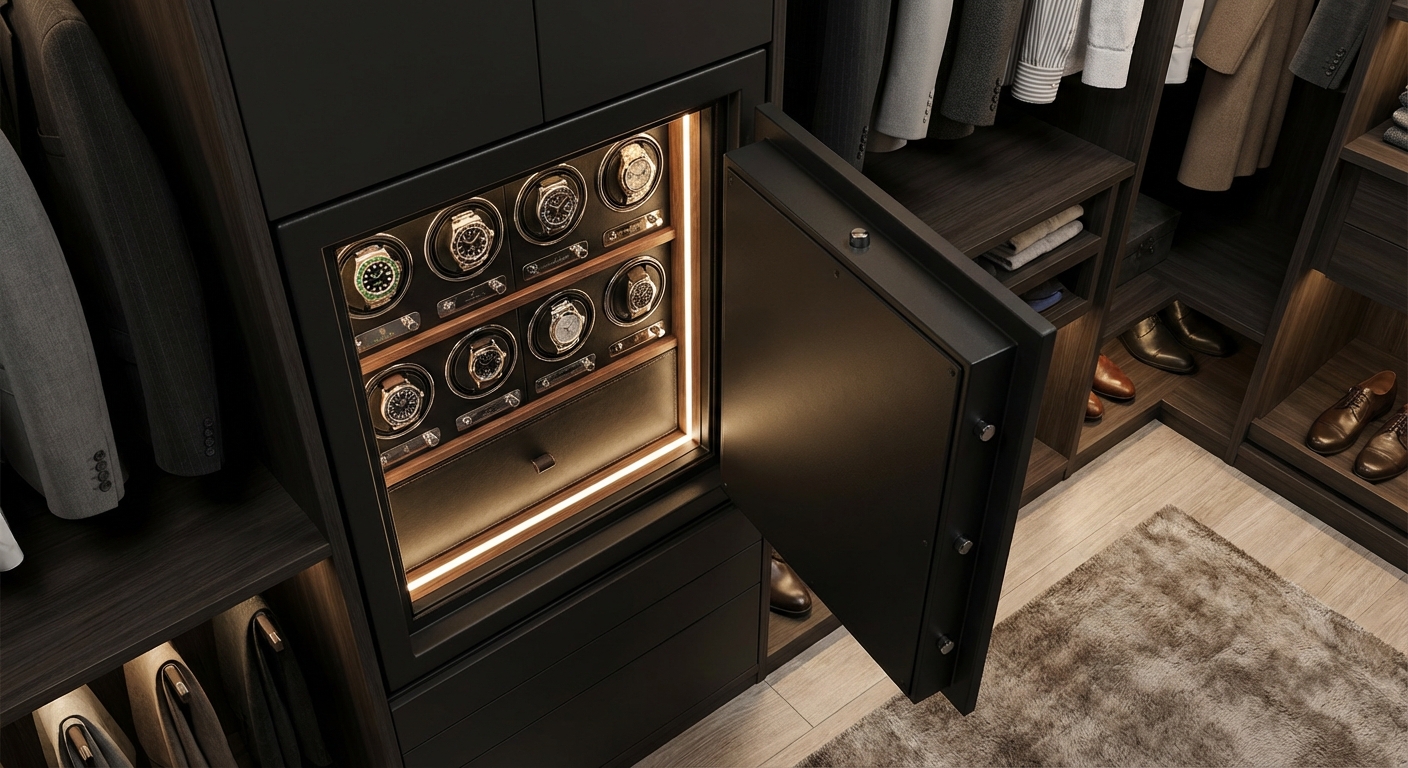
Security for high-value assets requires specialized engineering found only in professional watch safes. Standard home safes often lack the refined interiors and specific security ratings necessary to protect delicate mechanical movements. By choosing a dedicated unit, you ensure that your investment is defended against both physical force and organized crime.
Defending against targeted residential theft?
Luxury watches are among the most liquid assets for thieves, making them primary targets during home invasions. A specialized safe provides a multilayered defense that deters even the most sophisticated intruders.
Centralizing your assets for better management
Think about it. Keeping your collection in one secure, organized location simplifies maintenance and prevents accidental loss or misplacement.
- Hardened Steel: Prevents drilling and physical breaching.
- LED Lighting: Provides clear visibility for selection.
- Armored Plating: Defends against heavy-duty power tools.
Key Takeaway: A specialized safe is the primary defense mechanism for any serious collector, offering both physical security and logical organization for a growing horological portfolio.
The following table summarizes the core security benefits of a dedicated safe versus standard residential storage.
| Feature | Dedicated Safe | Standard Storage |
|---|---|---|
| Material | Reinforced Alloy Steel | Thin Sheet Metal or Wood |
| Visibility | Integrated LED System | Ambient Room Light Only |
| Accessibility | Rapid Biometric/Digital | Manual Key or No Lock |
*
How do winders preserve automatic movements?
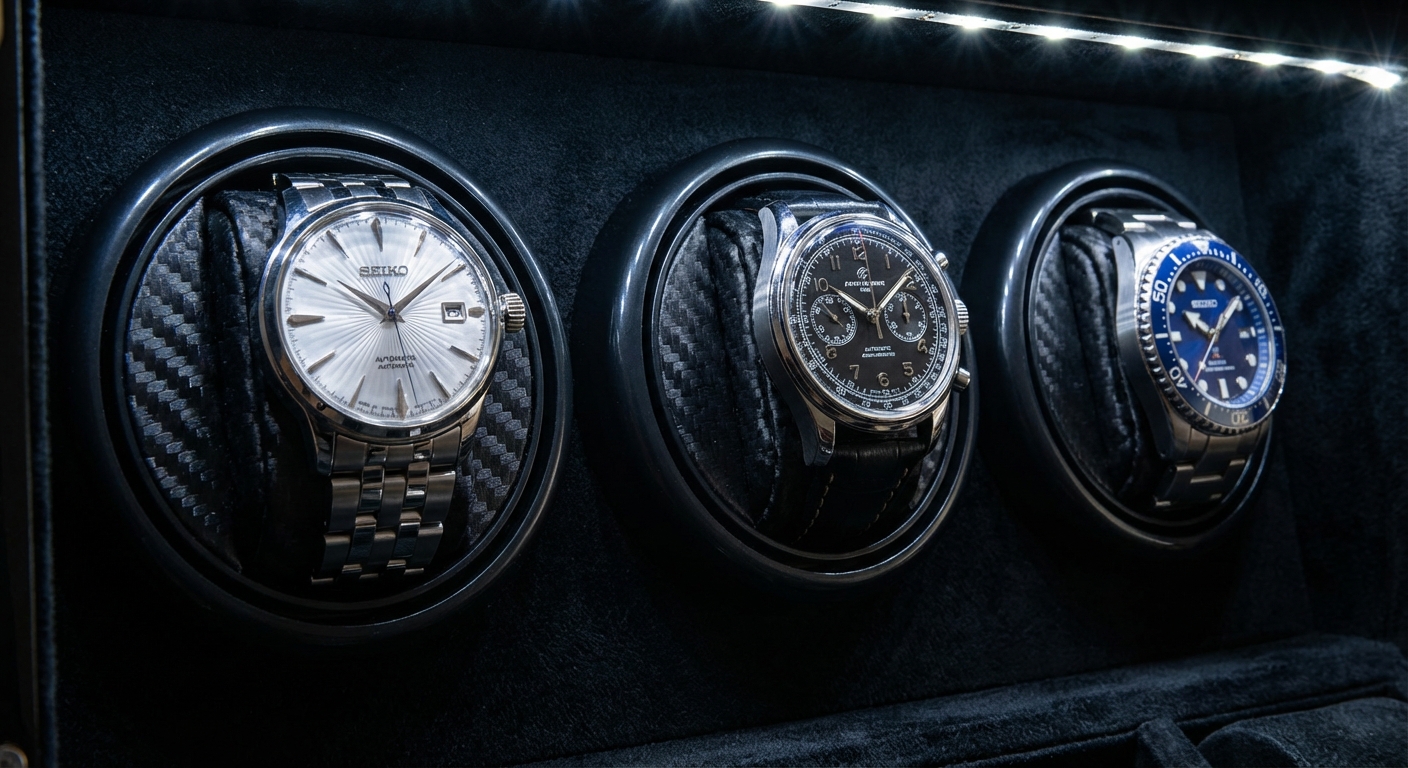
Integrated winding systems in modern watch safes are essential for maintaining the internal health of automatic movements. Mechanical watches rely on synthetic lubricants that can congeal or migrate if the gears remain stationary for extended periods. By keeping the watches in motion, you prevent mechanical stagnation and ensure long-term accuracy.
Preventing oil stagnation in your movements
The internal components of a luxury watch require consistent movement to stay lubricated and functional. Here is the kicker: integrated winders mimic the natural motion of the human wrist to keep the movement active.
Ready-to-wear convenience for every piece
For collectors with perpetual calendars or moon phase complications, resetting the time can be a tedious chore. Winders keep your entire collection synchronized and ready for immediate wear.
- Silent Motors: Ensures the safe can be placed in bedrooms without noise.
- TPD Control: Allows for specific turns-per-day settings based on the caliber.
- Sleep Modes: Prevents over-winding stress on the mainspring.
Key Takeaway: Integrated winders are a critical maintenance tool that preserves the mechanical integrity of your watches while providing the ultimate luxury of convenience.
The table below outlines how winding technology impacts the longevity and usability of your automatic timepieces.
| Winder Feature | Mechanical Impact | User Convenience |
|---|---|---|
| Rotation Control | Prevents mainspring fatigue | No manual winding needed |
| Angle Alignment | Optimizes gravity distribution | Perpetual calendars stay set |
| Shielded Motors | Prevents magnetic interference | Immediate wearability |
*
Can a safe be hidden behind home decor?
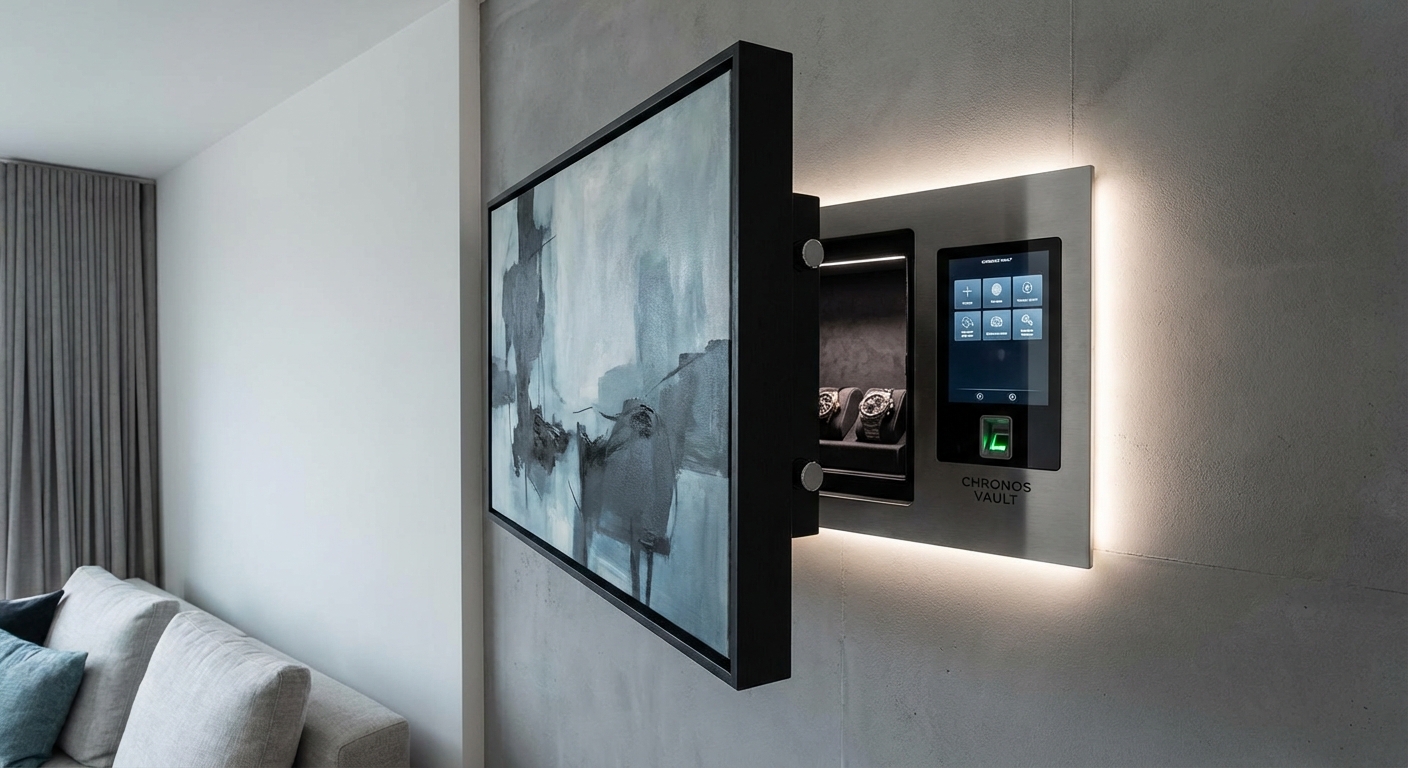
Concealment is a powerful security multiplier often utilized in the design of high-end watch safes. If a thief cannot find the vault, they cannot attempt to breach it, adding an invisible layer of protection. Many modern units are designed to be flush-mounted into walls, hidden behind artwork or custom mirrors for a seamless aesthetic.
Security through clever concealment?
A safe that blends into your interior design avoids drawing unwanted attention from visitors or service staff. This “security by obscurity” strategy is highly effective in modern luxury residences.
Saving floor space in urban environments
In high-end apartments where square footage is at a premium, a wall-mounted safe is the perfect solution. You get full security without sacrificing your living space.
- Art Integration: Safes hidden behind hinged paintings.
- Flush Mounting: Embedded into the wall for a flat finish.
- Custom Facades: Wood or stone panels that match your decor.
Key Takeaway: Concealing your safe provides a strategic advantage, as it prevents intruders from even identifying the location of your most valuable assets.
This analysis shows the tactical benefits of choosing a concealed wall safe over a traditional freestanding model.
| Placement Type | Main Advantage | Best Application |
|---|---|---|
| Concealed Wall | Maximum Discretion | Modern Apartments/Gallery Walls |
| Floor Mounted | Heavy Armor Capacity | Private Studies or Basements |
| Mirror Hidden | Everyday Accessibility | Master Dressing Rooms |
*
What interior features maximize protection?
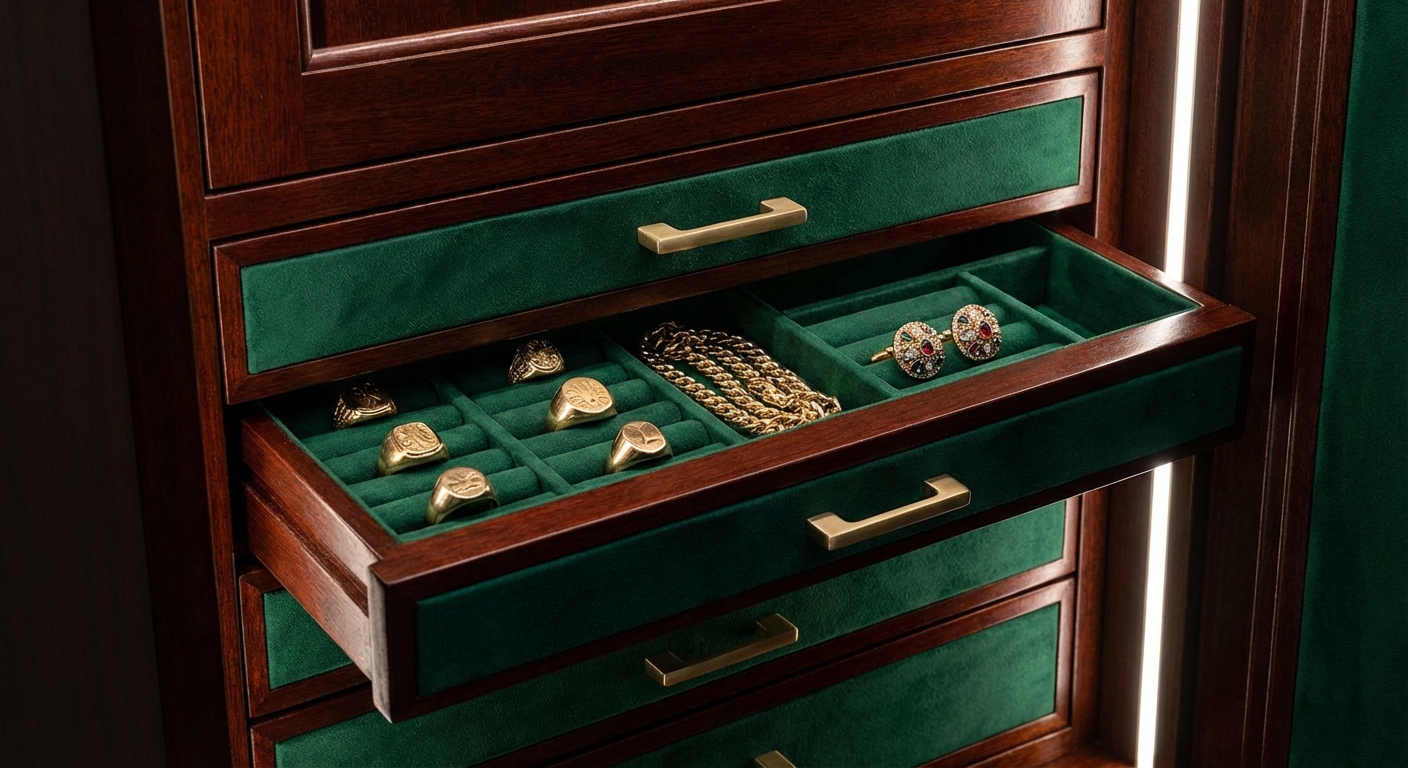
The internal environment of watch safes is specifically engineered to prevent physical damage like scratches and scuffs. High-end materials such as mahogany, carbon fiber, and microsuede provide a soft, non-abrasive surface for your timepieces. These custom interiors transform a security device into a luxury display case.
Protecting cases with soft lining materials
Standard metal shelves can easily scratch a polished gold or platinum case. Luxury safes utilize plush fabrics and cushioned watch holders to ensure every surface remains flawless.
Organizing your collection with custom drawers
Having a dedicated space for straps, tools, and jewelry helps maintain a clear inventory of your assets. Think about it: an organized safe is an efficient safe.
- Microsuede Lining: Prevents fine hairline scratches on precious metals.
- Modular Layouts: Adjustable drawers for different watch sizes.
- Jewelry Inserts: Integrated slots for cufflinks and rings.
Key Takeaway: A custom luxury interior ensures that your watches are stored in an environment as refined as the timepieces themselves, preventing accidental handling damage.
Below is an analysis of how different interior materials contribute to the preservation of luxury watch finishes.
| Material | Protective Quality | Aesthetic Impact |
|---|---|---|
| Microsuede | Anti-Abrasive | Contemporary/Sleek |
| Velvet | High Cushioning | Traditional/Classic |
| Mahogany | Structural Rigidity | Rich/Sophisticated |
*
What makes a safe physically impenetrable?
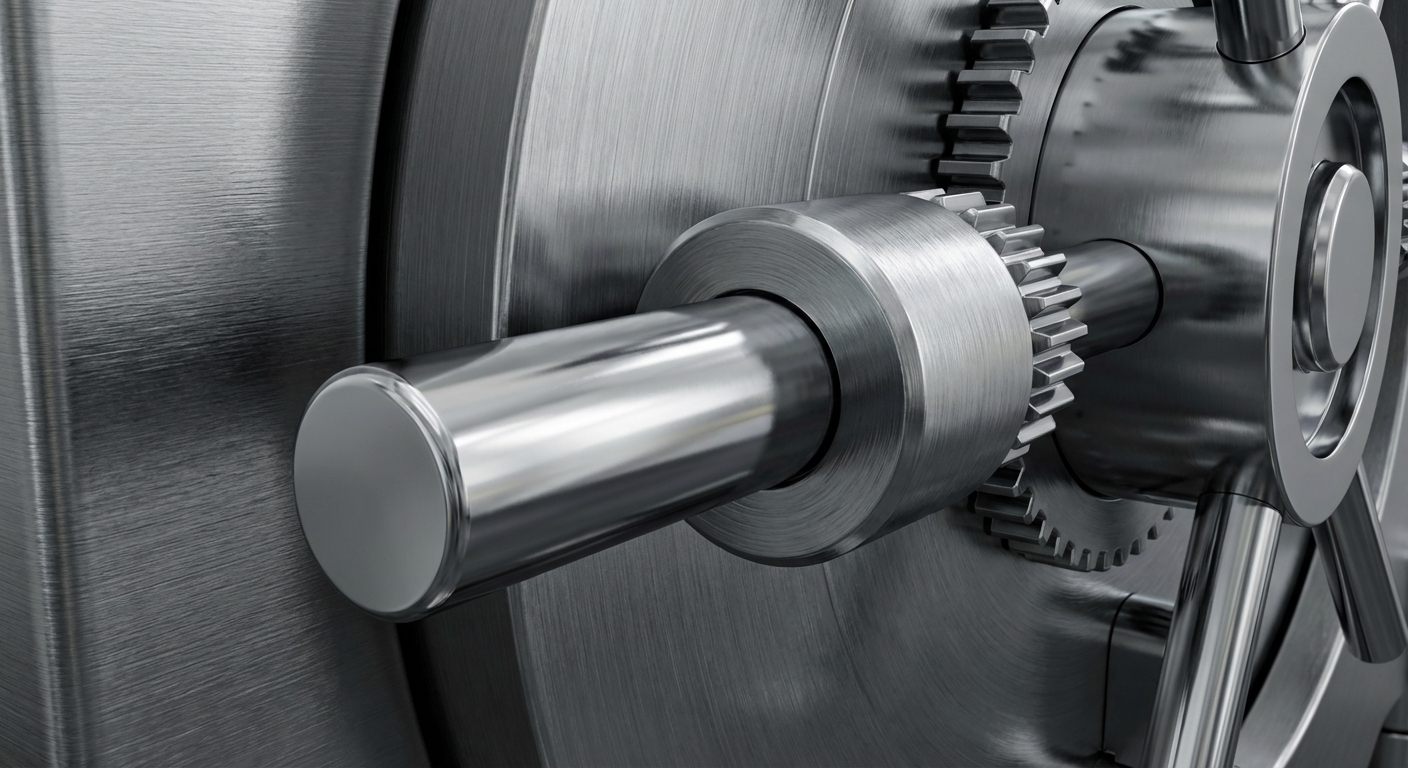
The physical integrity of watch safes is defined by the thickness of the door and the complexity of the locking mechanism. Heavy-duty chrome-plated bolts and hardened steel plates create a barrier that is resistant to drilling, prying, and grinding. These engineering choices provide the “time-delay” needed to stop a professional breach.
Understanding the role of locking bolts
Large-diameter active bolts engage with the safe frame on multiple sides to prevent the door from being pried open. Here is the kicker: these bolts are often made of high-tensile steel to resist cutting tools.
Defense against modern drilling techniques
Hardened ball-bearing plates are often placed behind the lock to destroy drill bits before they can reach the mechanism. This ensures your collection stays safe even under sustained attack.
- Active Bolts: Moving bars that lock deep into the safe body.
- Relockers: Devices that permanently lock the safe if the mechanism is tampered with.
- Solid Steel Doors: Single-piece construction for maximum strength.
Key Takeaway: Physical security is the foundation of any safe, and high-quality materials are the only way to ensure the safe survives a determined physical attack.
The following data highlights the structural specifications required for high-security burglary protection.
| Component | Specification | Resistance Type |
|---|---|---|
| Locking Bolt | 1.5″ – 2.5″ Diameter | Pry and Cut Resistance |
| Door Plate | 0.5″ – 1″ Solid Steel | Drill and Impact Resistance |
| Safe Body | Double-Walled Composite | Torch and Grinder Resistance |
*
How is humidity managed for vintage pieces?
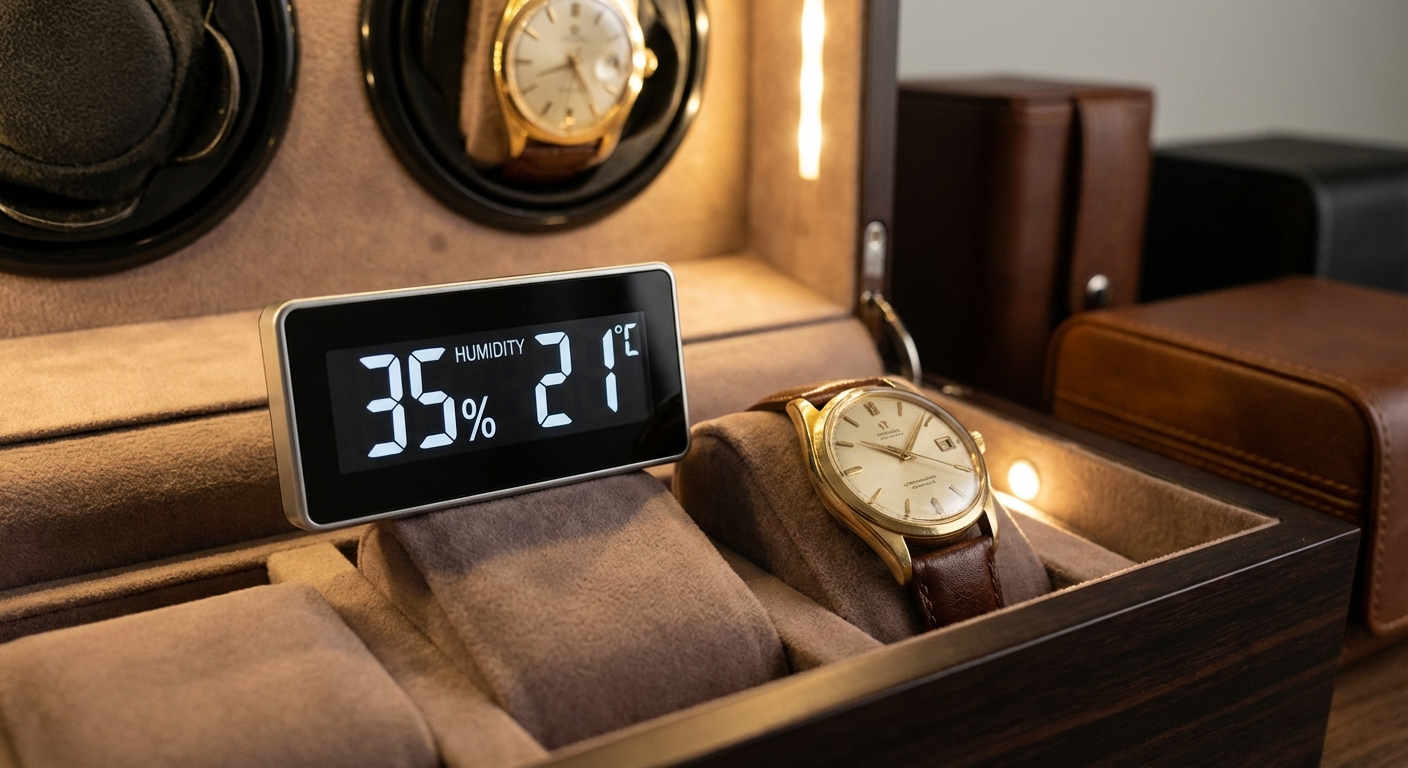
Humidity control is a feature often overlooked in standard security, but it is standard in high-end watch safes. Excess moisture can lead to dial discoloration, “tropical” patina, and even rust on internal movement parts. Integrated dehumidifiers and digital hygrometers allow you to monitor and maintain a stable atmosphere.
Maintaining stable humidity levels?
A digital hygrometer provides real-time data on the internal moisture levels of your safe. Keeping the humidity between 30% and 45% is the sweet spot for preserving vintage leather and metal.
Shielding from dust and environmental debris
Airtight gaskets around the door seal out dust and pollutants that can interfere with a movement’s precision. Think about it: a clean environment means fewer service visits.
- Dehumidifier Rods: Electronic devices that keep the air dry.
- Silica Gel Packs: Passive moisture absorption for smaller units.
- Hermetic Seals: Prevents external air from entering the vault.
Key Takeaway: Environmental stabilization is just as important as physical security for maintaining the long-term value and aesthetic of your watch collection.
This analysis focuses on the ideal environmental parameters for long-term horological storage.
| Environmental Factor | Ideal Range | Potential Damage (Out of Range) |
|---|---|---|
| Relative Humidity | 35% – 45% | Rust or Dial Peeling |
| Temperature | 65°F – 75°F | Oil Thinning or Thickening |
| Dust Levels | Near Zero | Gear Friction and Wear |
*
Is biometric access the future of security?
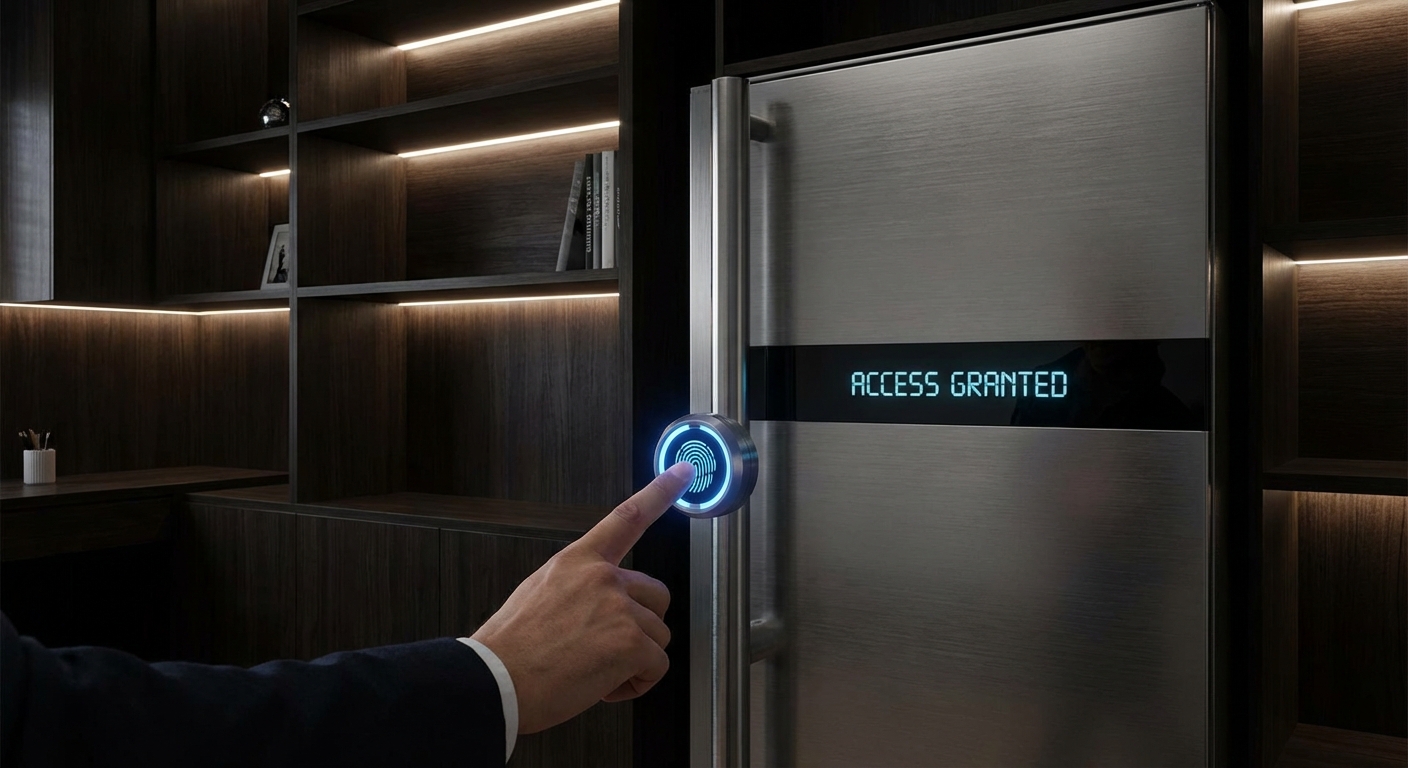
Biometric technology has revolutionized how owners interact with their watch safes. By using your fingerprint as the key, you eliminate the risk of lost combinations or stolen physical keys. This technology provides the fastest possible access while maintaining an incredibly high level of individual security.
Rapid entry with fingerprint technology
You can open your safe in less than a second with a simple touch. This is particularly useful for daily wear or in emergency situations where time is of the essence.
Eliminating the risk of stolen credentials
Unlike a four-digit code that can be observed, your biometric data is unique and cannot be duplicated. Here is the kicker: it ensures only you have the power to view your collection.
- Fingerprint Sensors: Advanced optical or capacitive scanners.
- Multiple Users: Capacity to store fingerprints for trusted family members.
- Backup Systems: Emergency keys or codes for power failure scenarios.
Key Takeaway: Biometrics offer a seamless blend of high-speed accessibility and modern security, making them the preferred choice for contemporary luxury safe owners.
The table below compares the efficiency of various access methods for modern collectors.
| Access Method | Speed of Entry | Security Level |
|---|---|---|
| Biometric | < 1 Second | Very High (Unique) |
| Digital Code | 3-5 Seconds | High (Can be shared) |
| Mechanical Dial | 15-30 Seconds | Very High (No electronics) |
*
Can your watches survive a house fire?
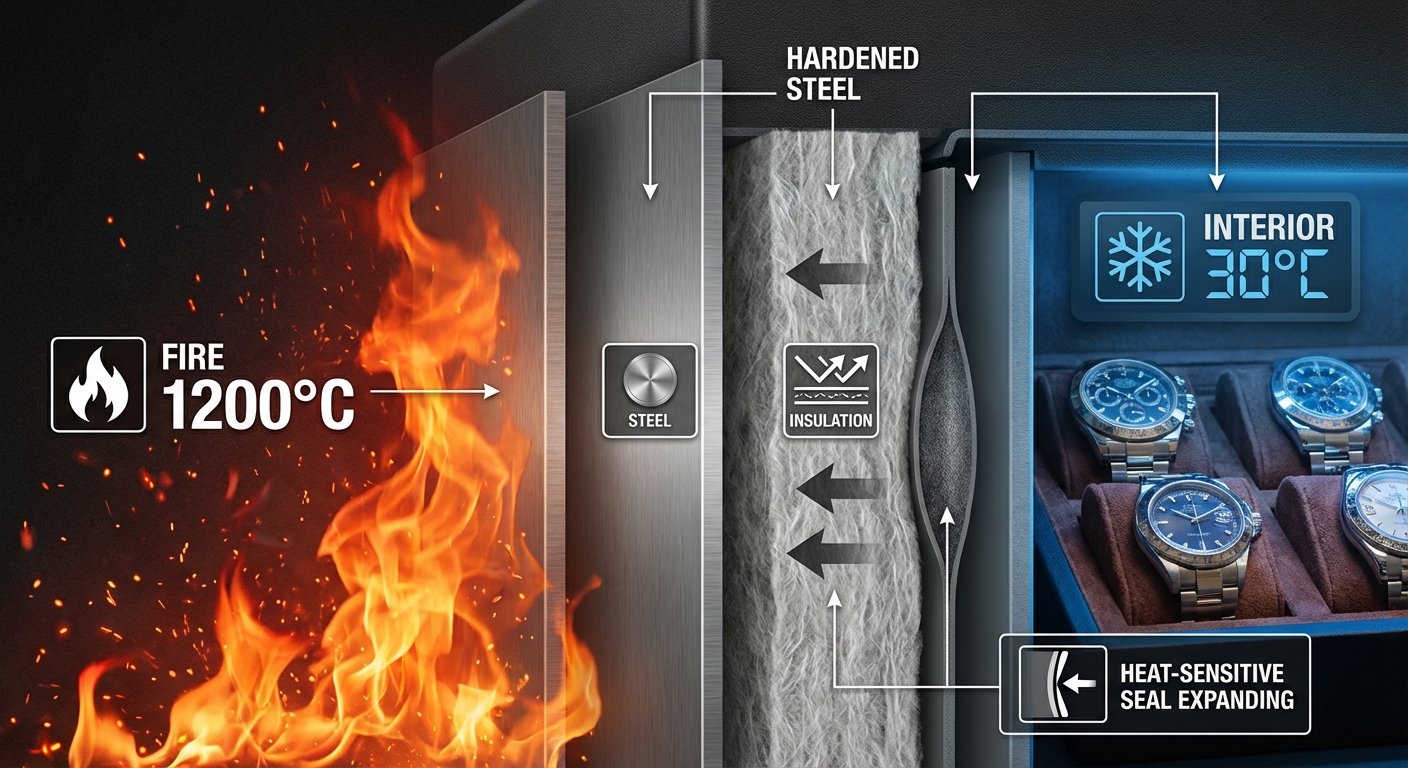
Fire protection in watch safes is achieved through advanced composite materials that act as thermal barriers. In the event of a blaze, these safes are designed to keep internal temperatures below the point where lubricants bake and dials blister. Certified fire ratings are a non-negotiable requirement for any collector living in a high-risk area.
Thermal barrier technology in action
Specialized insulation slows the transfer of heat from the exterior steel to the interior chamber. This ensures your watches stay cool even when the outside of the safe is exposed to 1200°C.
Expanding smoke and water seals
When exposed to high heat, intumescent seals around the door expand to many times their original size. This creates an airtight barrier that blocks smoke and water from fire hoses.
- Fire Ratings: Look for 60 to 120 minutes of certified protection.
- Heat Seals: Palusol gaskets that expand during a fire.
- Insulation: High-density fireboard or concrete-based composites.
Key Takeaway: Certified fire protection is an essential insurance policy for your collection, safeguarding it against the one threat that a burglary rating cannot stop.
Below is an overview of fire resistance standards and their impact on internal safe conditions.
| Fire Duration | External Temp | Internal Temp Max |
|---|---|---|
| 60 Minutes | 1200°F (649°C) | 350°F (176°C) |
| 90 Minutes | 1500°F (815°C) | 350°F (176°C) |
| 120 Minutes | 1850°F (1010°C) | 350°F (176°C) |
*
Does a safe impact your insurance costs?
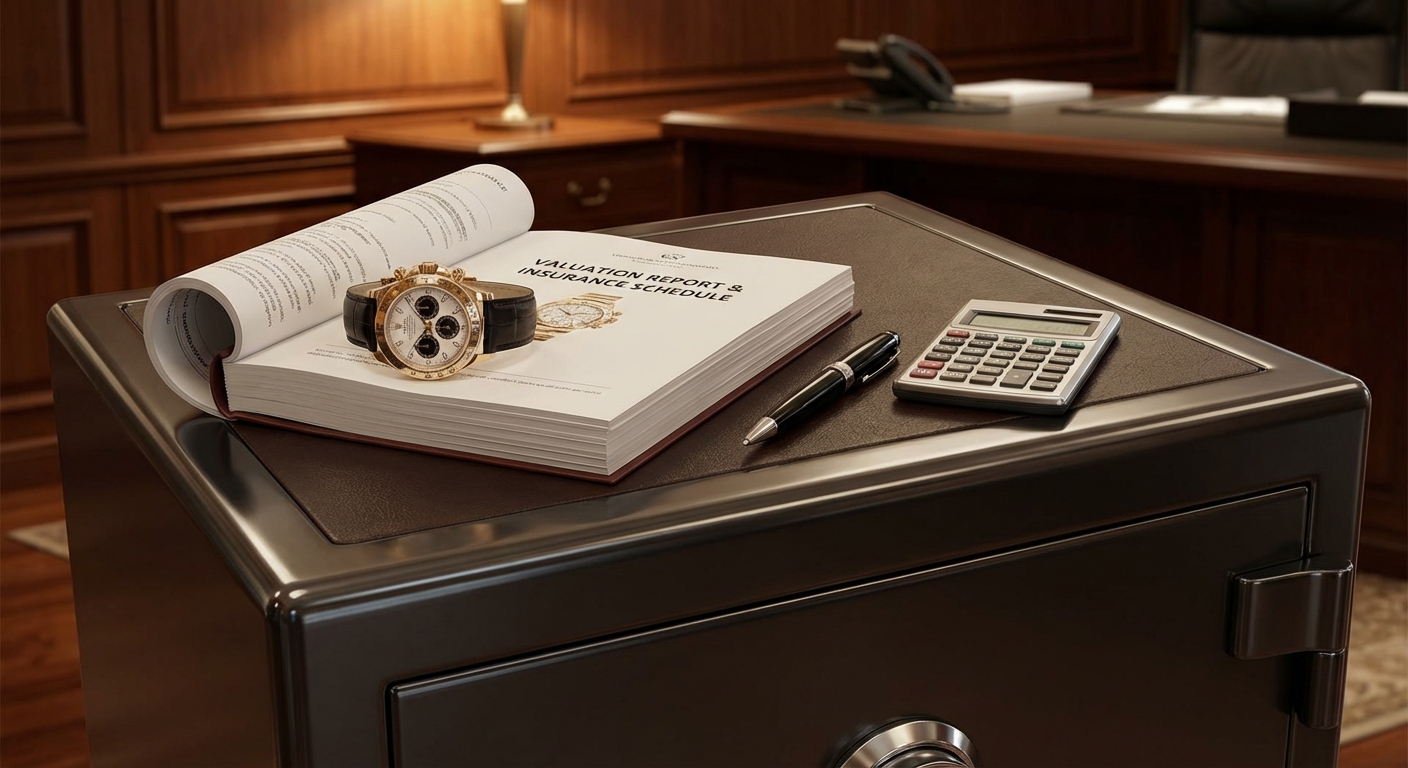
A professional watch safe is often a prerequisite for obtaining insurance coverage on high-value horological assets. Underwriters look for specific UL or Eurograde ratings to justify the risk of insuring a collection worth hundreds of thousands of dollars. Installing a certified unit can significantly lower your annual premiums.
Meeting the criteria for high-value coverage
Insurance companies require proof that you are taking reasonable steps to mitigate theft risk. A certified safe acts as a “security credit” that makes your policy more affordable.
Documentation for underwriter approval?
Keeping your safe’s certification plate and purchase receipt helps during the appraisal process. Think about it: a more secure collection is a cheaper collection to insure.
- UL Ratings: Standardized security levels (RSC, TL-15, TL-30).
- Appraisal Sync: Matching safe security to the collection value.
- Premium Discounts: Potential savings of 10% to 20% on insurance.
Key Takeaway: Investing in a high-quality safe effectively pays for itself over time through reduced insurance premiums and easier claim processing.
This table highlights the relationship between collection value and the required safe security level for insurance.
| Collection Value | Recommended Rating | Insurance Impact |
|---|---|---|
| Up to $50k | RSC (Residential) | Standard Coverage |
| $50k – $250k | TL-15 (Burglary) | Potential Discount |
| Over $250k | TL-30 (High Security) | Often Required for Policy |
*
How do you choose the right aesthetic?
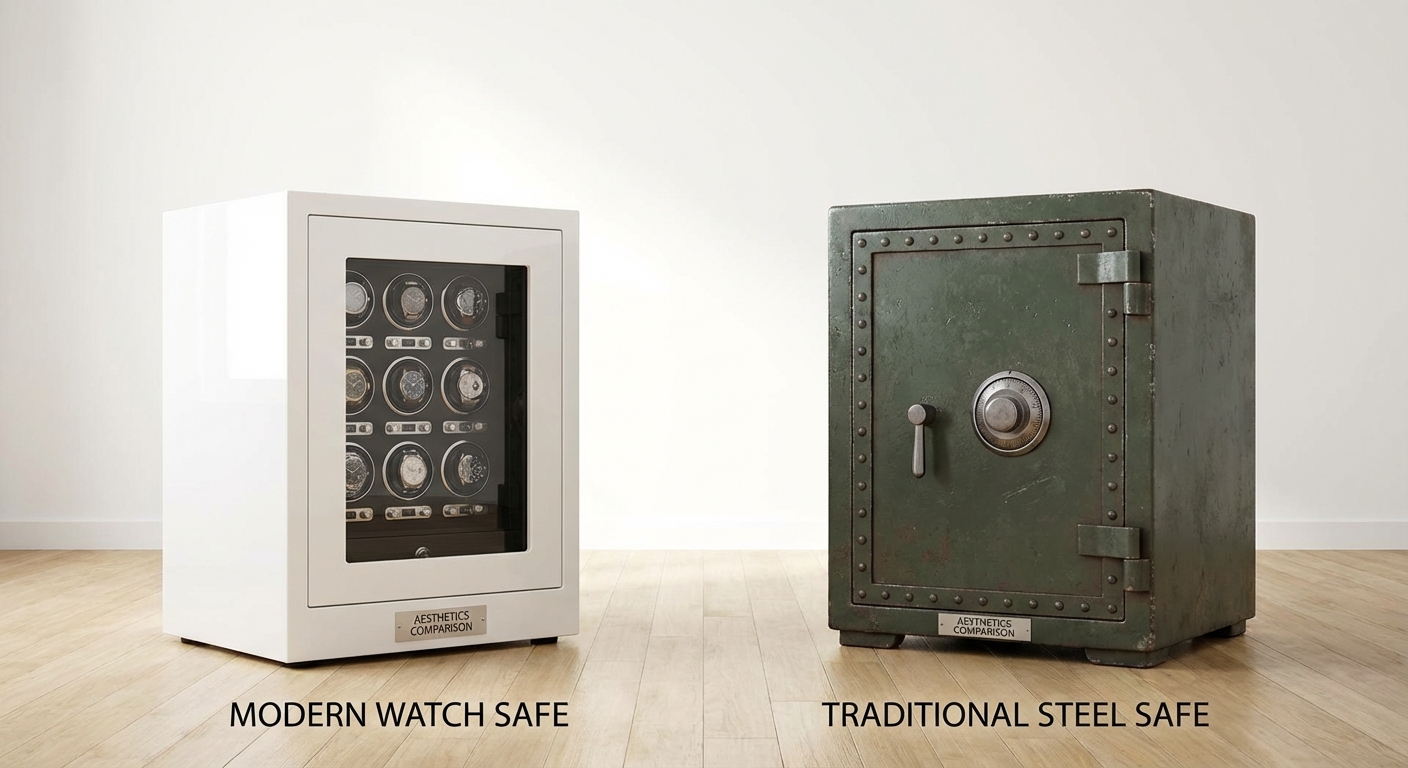
Selecting between a modern or traditional aesthetic for watch safes depends on your personal taste and the design of your home. Modern safes often feature high-gloss finishes and glass display doors, while traditional models prioritize a rugged, industrial appearance. Both can provide high-level security, but their visual impact on a room is vastly different.
Modern vs traditional design choices?
A sleek white gloss safe with a glass door allows you to enjoy the view of your collection while it remains secure. Conversely, a traditional green steel vault offers a classic look of impenetrable strength.
Scaling your safe for future growth
Always buy a safe that is at least 30% larger than your current collection requires. Here is the kicker: your collection will likely grow, and an early upgrade is a costly mistake.
- High-Gloss Paint: Automotive-quality finishes in any color.
- Display Glass: Ballistic-grade glass for viewing winders.
- Modular Storage: Ability to add more winders as you buy more watches.
Key Takeaway: The perfect safe is one that matches your home’s interior design while providing the necessary volume for future horological acquisitions.
The final table compares the design characteristics of modern luxury safes versus traditional industrial units.
| Aesthetic Style | Key Design Element | Best Placement |
|---|---|---|
| Modern Luxury | Gloss Finish / Glass Door | Master Bedroom / Living Room |
| Traditional Steel | Rugged Paint / Exposed Bolts | Private Study / Home Office |
| Custom Bespoke | Leather Wrap / Wood Veneer | Walk-in Closet / Boutique Room |
*
Secure Your Horological Legacy Today
Your luxury watch collection is more than a set of tools; it is a manifestation of your personal success and a legacy for future generations. Protecting these assets requires a commitment to the highest standards of security and environmental care. By integrating advanced winding technology, biometric access, and fire-resistant engineering, you ensure that every timepiece remains as functional and beautiful as the day it was acquired. At Jimbo Safe, we are dedicated to providing the ultimate sanctuary for your valuables, combining decades of manufacturing expertise with a vision for uncompromising elegance. Don’t leave the safety of your collection to chance; contact us today to find the perfect security solution tailored to your lifestyle.
*
Frequently Asked Questions
- Can I put a watch safe in my master bedroom?
Yes, modern luxury watch safes are specifically designed with silent winding motors and elegant aesthetics, making them perfectly suitable for high-end bedrooms or walk-in closets. - What’s the best way to determine the size of the safe I need?
You should calculate the number of watches you currently own and add at least 30% to 50% extra capacity for future acquisitions, ensuring you don’t outgrow your investment too quickly. - How do I know if a safe is truly fireproof for watches?
Check for a certified fire rating from a reputable testing body (like UL or SP) that guarantees the internal temperature will stay below 350°F (176°C) for a specific duration, which is critical for protecting movement oils. - Can I customize the interior of my watch safe?
Yes, most high-end manufacturers offer extensive customization options, including different wood veneers, various winder configurations, and specialized drawers for jewelry or watch straps. - How do I know if my insurance company will accept my safe?
You must confirm that the safe has a specific burglary rating (such as TL-15 or TL-30) that matches the total appraised value of your collection as per your underwriter’s guidelines.


