

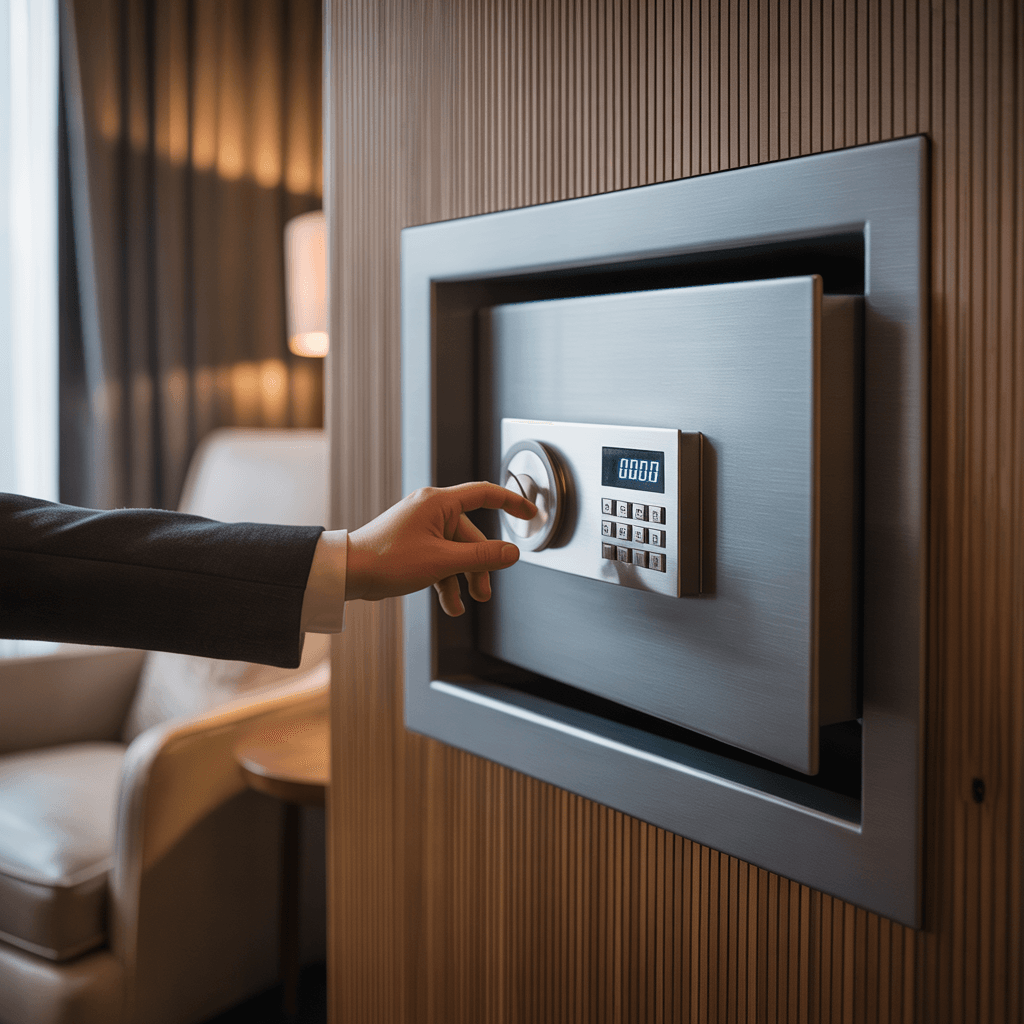
Selecting the perfect safe box for hotel rooms involves balancing guest convenience, robust security, and seamless integration with room design. A well-chosen safe enhances guest confidence while protecting valuables around the clock. Here’s what every hotelier must consider…
1. Defining Hotel Room Safe Box Purpose
Hotel room safes serve dual roles: securing guests’ passports, cash, and electronics, and projecting a professional image of care and reliability. These safes must resist tampering and environmental threats without intimidating guests. By installing user-friendly, fire-resistant units, hotels demonstrate commitment to guest security, reducing liability and enhancing reputation.
| Feature | Guest Benefit |
|---|---|
| User-Friendly Interface | Simple code setup and retrieval |
| Compact Footprint | Maximizes space in diverse room types |
| Fire Resistance | Protects valuables during emergencies |
2. Assessing Guest Security Expectations
Travelers expect confidentiality and rapid access to safes. They value intuitive operation—numeric keypads or RFID card access—over mechanical keys they might misplace. High-traffic hotels should choose models that reset codes automatically upon checkout, preventing code reuse. Understanding guest demographics—business travelers versus families—guides selection of features like dual codes or multi-user profiles.
3. Determining Size and Capacity Requirements
Hotel safes range from small 0.3 cu ft models sufficient for phones and passports to larger 1.0 cu ft units that hold laptops and briefcases. Measuring typical guest luggage and valuables ensures neither wasted space nor inadequate capacity. Upscale suites may warrant full-size safes, while economy rooms benefit from smaller boxes. Cater each room category to guest expectations and room layout constraints.
4. Evaluating Locking Mechanisms
Lock types include electronic PIN keypads, RFID card systems, and biometric fingerprint readers. PIN keypads offer simplicity and low cost but require code memorization. RFID systems integrate with room key cards for seamless access, reducing training needs. Biometric locks deliver maximum security but risk guest frustration if scans fail. Balance cost, reliability, and ease of use when selecting the lock system.
| Lock Type | Cost Level | Guest Convenience |
|---|---|---|
| PIN Keypad | Low | Moderate |
| RFID Card | Medium | High |
| Biometric Scanner | High | Variable |
5. Ensuring Fire and Heat Resistance
Hotels must protect guest valuables during fires. Choose safes with UL 72 Class 350 ratings, maintaining internal temperatures below 350 °F for 30 minutes. For high-rise properties, two-hour ratings provide additional safety margin. Fireboard liners and intumescent gaskets work together to delay heat penetration, giving occupants time to evacuate with valuables intact.
6. Water and Humidity Protection
Bathrooms and poolside corridors expose safes to high humidity and water spray. EPDM gaskets seal out moisture, while drainage ports channel any ingress away from contents. In coastal properties, salt air corrosion can degrade metal over time; stainless or powder-coated finishes resist rust, ensuring long-term reliability in humid environments.
7. Integration with Hotel Management Systems
Modern safes connect via LAN or Wi-Fi to property management systems (PMS), automating code resets upon checkout and synchronizing access logs for audit trails. Integrated safes reduce front-desk workload and prevent unauthorized access after guest departure. Interoperability with existing PMS infrastructure is critical for seamless deployment.
| Integration Feature | Operational Benefit |
|---|---|
| Code Auto-Reset | Eliminates manual resets |
| Access Logging | Streamlines security audits |
| PMS Synchronization | Centralized management |
8. Installation and Anchoring Requirements
Wall-mounted safes require solid backing—wood studs or concrete slabs—for secure anchoring. Bolt placement must avoid electrical and plumbing lines; use stud detectors and mark concealed utilities. Portable floor safes need heavy-duty anchor kits fixed to subfloors. Installation instructions dictate torque specifications, ensuring thieves cannot easily remove the unit.
9. Interior Layout and Accessibility
Adjustable shelves and removable trays help guests organize valuables efficiently. A padded compartment for jewelry and watch cushions prevents scratches. Large internal clearance accommodates laptops and cameras. Position safes at convenient heights—waist level in closets or under desks—so guests of varying mobility can access contents comfortably.
10. User Experience and Guest Training
Clear, multilingual instructions must accompany each safe, either printed on the box or via in-room digital guides. Pre-printed quick-start cards by the bedside simplify code entry. Hotels should brief staff to assist guests during check-in. A positive user experience reduces complaints and enhances perceived value of in-room amenities.
| Training Tool | Guest Benefit |
|---|---|
| Quick-Start Cards | Immediate, clear guidance |
| In-Room Videos | Step-by-step demonstrations |
| Staff Assistance | Personalized support |
11. Maintenance and Support Protocols
Regular maintenance schedules ensure battery replacements for electronic safes, lubrication of mechanical components, and inspection of gaskets. Hotels should establish service contracts with vendors for rapid response to lock failures. Standardized tracking of maintenance events prevents downtime and guest inconvenience.
12. Budget Considerations and ROI
Basic safes start at $150 per unit; mid-range models with PMS integration cost $300–$500; high-end biometric boxes exceed $800. Calculate ROI by factoring reduced theft claims, enhanced guest satisfaction scores, and potential rate premiums for rooms with upgraded security. Strategic investment balances initial costs against long-term brand reputation.
13. Compliance and Industry Standards
Hospitality industry standards—such as those from AHLA or local regulations—may mandate minimum safe specifications. Compliance with fire marshal codes and insurance underwriter requirements shields hotels from liability. Certifications like UL and ISO indicate adherence to recognized benchmarks, ensuring guest trust and regulatory approval.
| Standard | Requirement |
|---|---|
| UL 72 Class 350 | 30-minute fire rating |
| ISO 9001 | Quality management verification |
| AHLA Guidelines | Safe installation standards |
14. Aesthetic and Branding Opportunities
Safes come in customizable finishes—brushed steel, matte black, or wood-grain panels—allowing integration with room décor. Embossed logos or inlays reinforce hotel branding. Discreet placement behind artwork or in cabinets maintains sleek room design while showcasing attention to detail in amenities.
15. Final Selection Criteria and Checklist
Compile guest security needs, room layouts, and PMS capabilities. Rank safes by lock type, fire/water ratings, size, and integration features. Visit showrooms for hands-on evaluation. Pilot select units in sample rooms to gather guest feedback before full deployment. By following a structured checklist, you’ll choose the best wall or floor safe boxes that elevate guest confidence and protect hotel liability.
FAQ
Q1: How often should hotel safes be serviced?
Monthly battery checks, quarterly mechanical inspections, and annual gasket reviews ensure reliable operation.
Q2: Can guests choose their own codes?
Yes—PMS-integrated safes allow guests to set personal codes at check-in, enhancing convenience and security.
Q3: What fire rating is sufficient for hotel use?
UL 72 Class 350 (30 minutes) meets most fire marshal requirements; 60-minute ratings provide added safety.
Q4: Are biometric safes guest-friendly?
Biometrics offer fast access but require clear instructions and backup code options to avoid frustrations.
Q5: Do integrated safes increase room rates?
Upgraded safes often support premium pricing, as guests value enhanced security and convenience.

