 跳到内容
跳到内容 

Your watch collection is likely your most prized set of assets, yet keeping these high-value mechanical instruments in standard furniture or generic boxes is a critical liability in 2026. High-end timepieces are increasingly targeted by sophisticated theft rings, and environmental factors like humidity or lack of proper kinetic movement can lead to thousands of dollars in avoidable service costs. Investing in a best watch safe is the only comprehensive way to merge vault-grade security with the precision maintenance your horological investments require.
Why do collectors need specialized safes in 2026?

Collectors need specialized storage because the appreciating secondary market has made home collections a high-stakes target for theft. A best watch safe addresses these specific risks while managing the second-order effects of dust, magnetism, and moisture on delicate mechanical movements.
Is standard furniture enough for luxury watches?
Standard home furniture offers zero resistance against modern burglary tools and lacks the climate control necessary for movements.
- Generic safes often use abrasive linings that cause micro-scratches.
- Professional vaults offer integrated movement care through automatic winders.
Think about this: A single service for a complex perpetual calendar can cost more than a high-end safe.
How does environmental control impact value?
Moisture and magnetism can degrade the lubricants within a watch, leading to mechanical failure and lost resale value.
- Specialized safes maintain stable humidity levels to prevent “gumming.”
- Anti-magnetic shields protect the balance spring from household electronic interference.
Key Takeaway: Modern collecting requires a shift from passive storage to active asset preservation.
| Feature | Generic Safe | Professional Watch Safe |
|---|---|---|
| Security Grade | Basic Residential | Vault-Grade / High Security |
| Movement Care | Static (Manual winding) | Integrated Automatic Winders |
| Interior Lining | Rough/Abrasive | Ultra-Soft / Scratch-Resistant |
| Theft Resistance | Low (Targeted by prying) | High (Reinforced Anti-Drill) |
How does a best watch safe ensure maximum security?
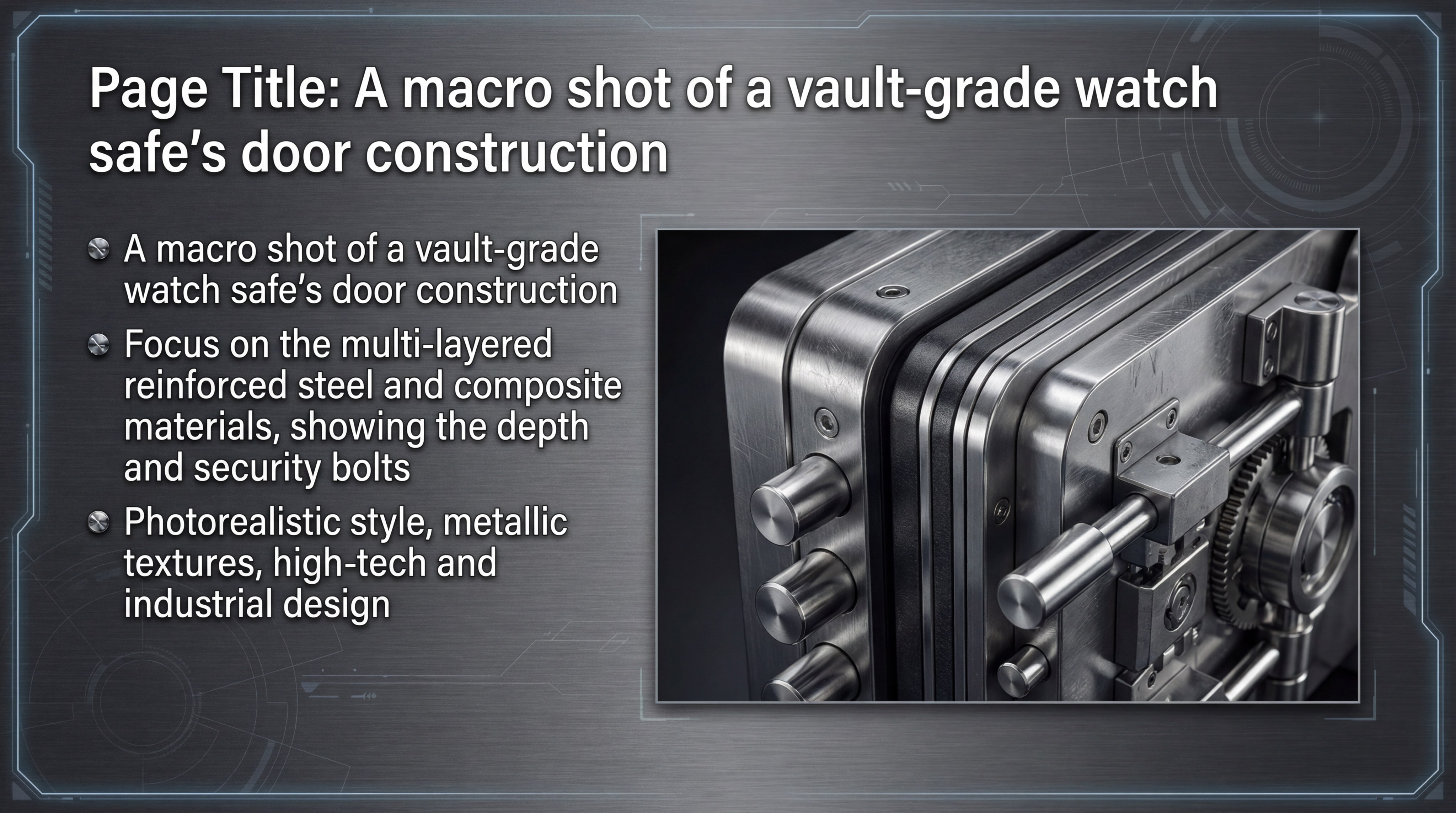
A best watch safe ensures maximum security by utilizing multi-layered wall construction and reinforced steel to defeat high-speed drills and torches. These units combine physical mass with encrypted digital or biometric access at jimbosafes.com/about.
What materials are used in vault construction?
Modern safes use a combination of high-density steel and composite materials to create a barrier that is nearly impenetrable.
- Multi-layered walls include anti-drill plates and thermal-resistant barriers.
- Active 4-way locking bolts ensure the door remains secure even if the hinges are cut.
But that’s not all…
Are biometric locking systems reliable today?
Encrypted digital and fingerprint systems have replaced mechanical dials, offering faster access without sacrificing security.
- Dual-factor authentication combines a code with a biometric scan for maximum exclusivity.
- Encrypted logs track every opening, providing a digital audit trail of access.
Key Takeaway: True security is found in “layered defense,” combining physical mass with digital encryption.
| Component | Minimum Standard | Professional Standard |
|---|---|---|
| Wall Thickness | 2mm – 4mm | 6mm – 12mm+ Composite |
| Lock Type | Single Key/Code | Dual-Factor Biometric |
| Bolt Work | 2-Way Locking | 4-Way Active Locking |
Which capacity options best fit your growing collection?
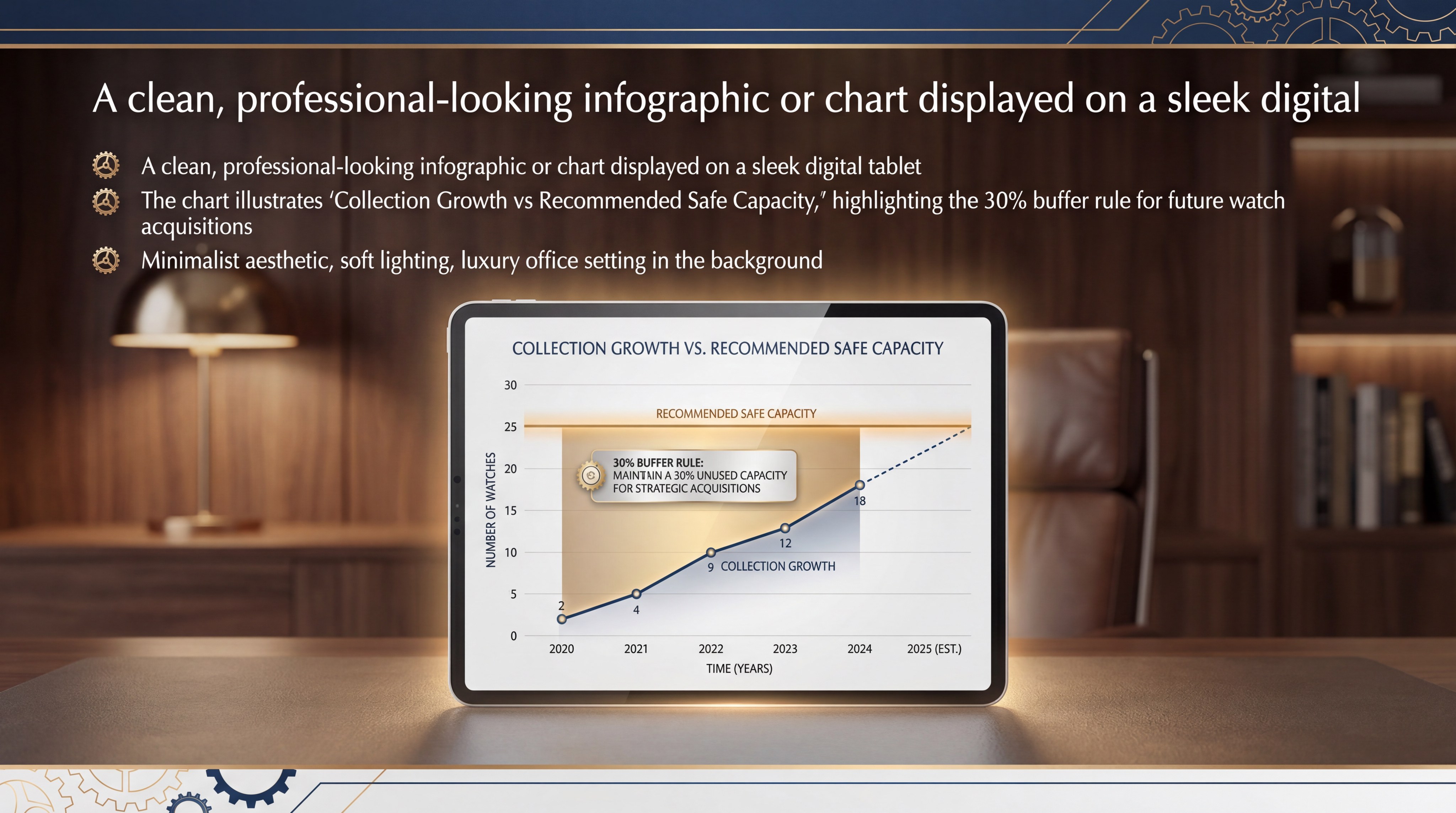
The best watch safe for your needs should offer roughly 30% more capacity than your current inventory to account for future acquisitions. Proper spacing is essential to ensure that oversized sports watches or complications with protruding crowns do not touch.
How do I calculate the right number of slots?
You should look at your acquisition rate over the last three years and project that growth forward into the next five.
- Emerging collectors should target 12-slot units to allow for growth.
- Established collectors often require 40+ slots with dedicated accessory drawers.
Think about this: It is much cheaper to buy a larger safe once than to upgrade a small safe twice.
Does slot size vary between safe models?
Many standard winders are too narrow for modern 44mm+ cases, making specific slot dimensions a critical specification.
- Professional safes offer adjustable or oversized “pillows” to fit any wrist size.
- Clearance between slots prevents watches from knocking against each other during rotation.
Key Takeaway: Capacity is not just about quantity; it is about the physical volume and clearance allowed for each individual piece.
| Collection Phase | Recommended Slots | Additional Features |
|---|---|---|
| Emerging Collector | 6 – 12 Slots | Accessory Drawer |
| Established Collector | 24 – 40 Slots | Integrated Winders |
| Institutional/VHNW | 60+ Slots | Custom Vault Room |
How do luxury designs enhance the collector experience?
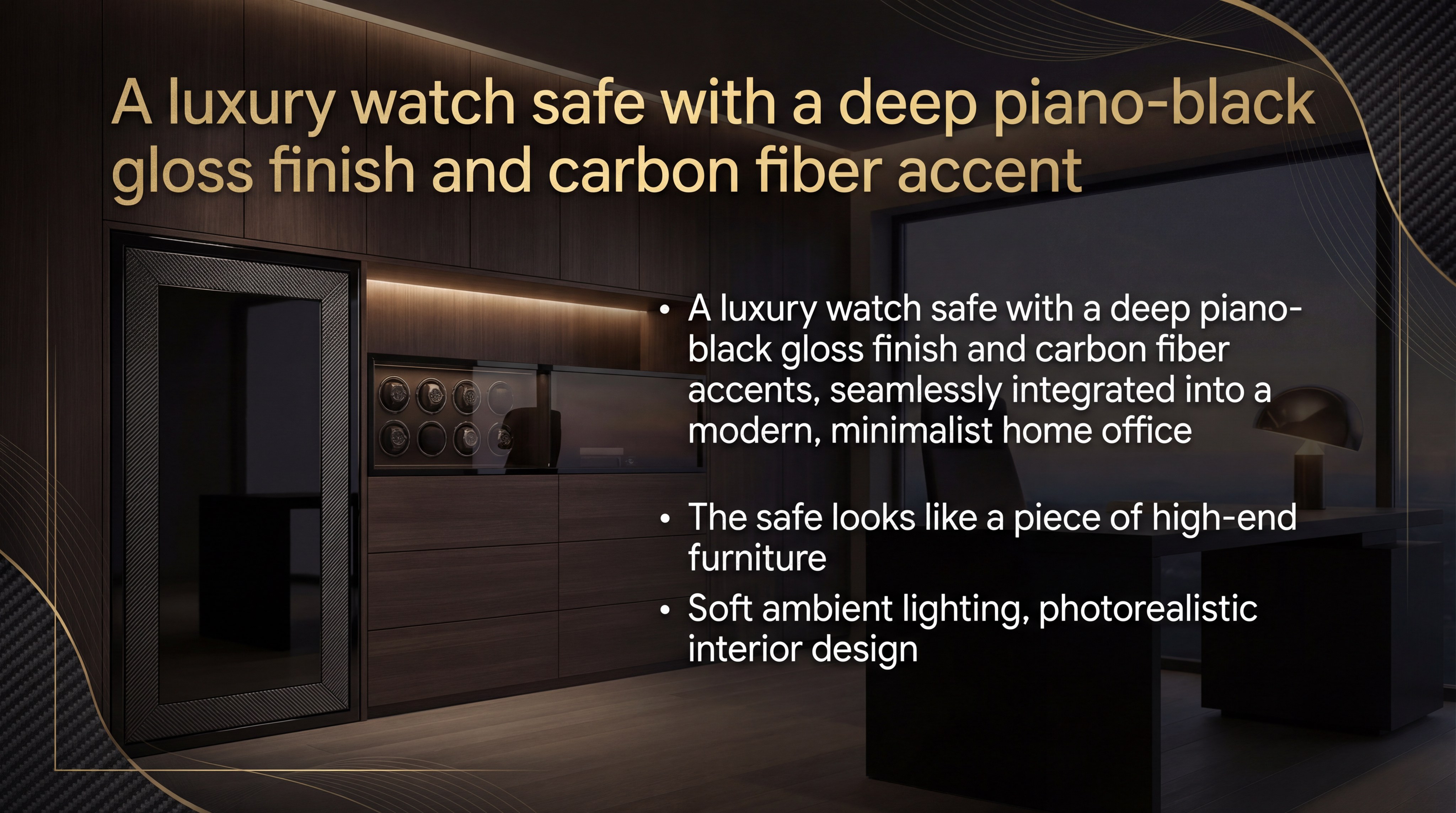
Luxury designs enhance the experience by turning a high-security vault into a piece of high-end furniture that fits seamlessly into your home. The best watch safe options often feature piano gloss or carbon fiber finishes, as seen at jimbosafes.com/blog.
Can a safe match my home’s interior design?
Modern manufacturers offer bespoke finishes ranging from hand-stitched leather to high-gloss lacquers in various colors.
- Exterior aesthetics allow the safe to be displayed openly in an office or suite.
- Integrated LED lighting systems create a gallery-like atmosphere for viewing your collection.
But that’s not all…
Why does interior material quality matter?
The interior must be lined with ultra-soft materials to protect polished gold and platinum surfaces from micro-abrasions.
- Micro-suede and Alcantara are the preferred choices for high-end horological storage.
- Soft-touch drawers provide safe haven for spare straps, tools, and jewelry.
Key Takeaway: A luxury safe should reflect the quality of the items it protects, serving as both a shield and a display.
| Exterior Finish | Interior Material | Aesthetic Impact |
|---|---|---|
| High-Gloss Lacquer | Micro-Suede | Modern / Minimalist |
| Hand-Stitched Leather | Quilted Velvet | Classic / Timeless |
| Brushed Metallic | Alcantara | Industrial / Technical |
Why are integrated watch winders a critical feature?
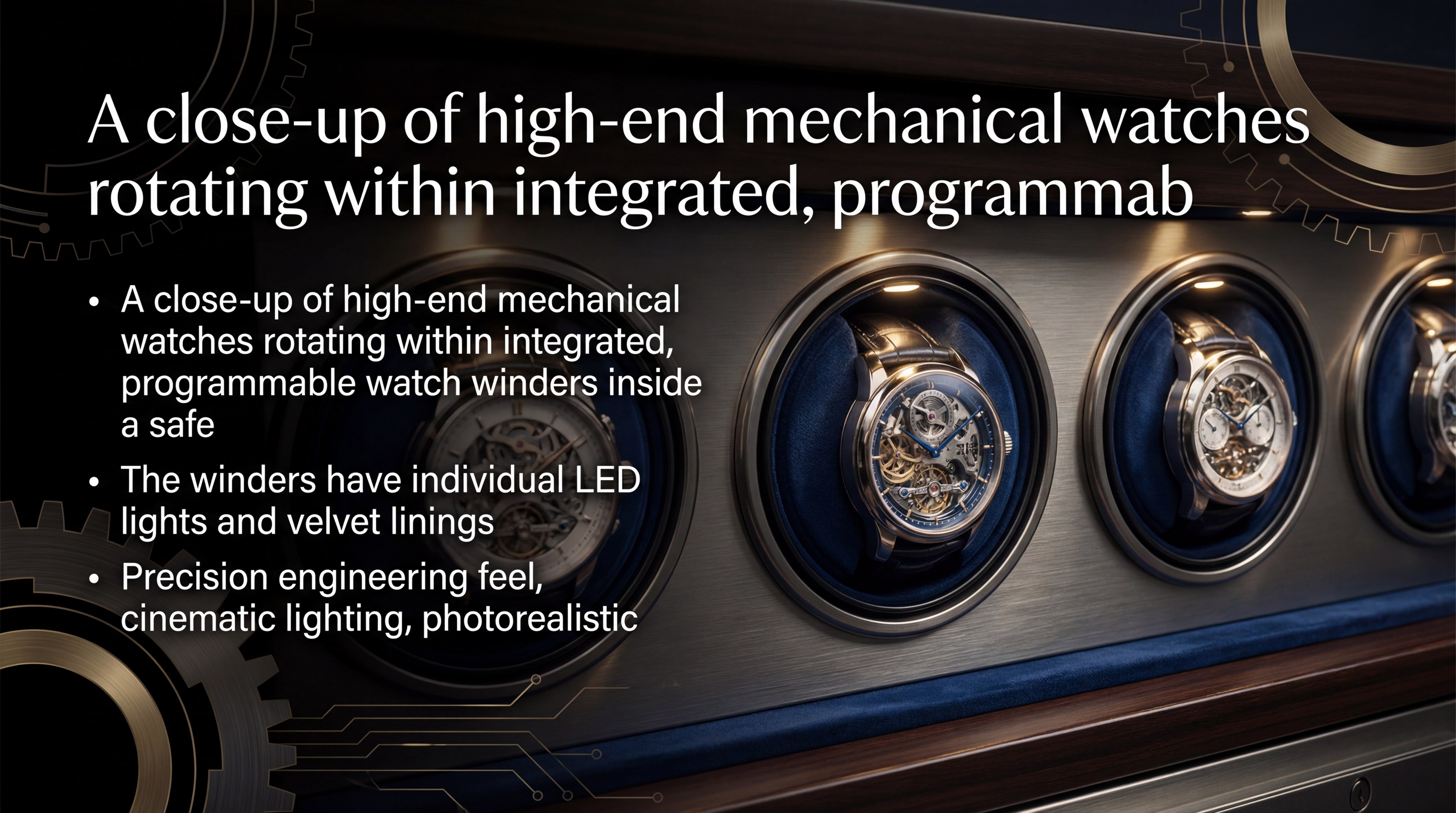
Integrated winders are critical because they keep lubricants distributed through consistent rotation, preventing “gumming” in complex movements. A best watch safe with these features ensures your timepieces are always accurate and ready for daily wear.
How do winders preserve movement health?
Mechanical watches rely on oils that can settle or dry up if the watch sits stationary for long periods.
- Consistent rotation keeps the mainspring energized and the gear train moving.
- Professional winders use “sleep modes” to prevent over-stressing the movement.
Think about this: Setting a perpetual calendar manually every time you wear it increases the risk of crown and stem wear.
Can I customize rotation for specific brands?
Top-tier safes allow you to program the Turns Per Day (TPD) and direction for every individual winder slot.
- Different calibers require specific TPD settings to maintain an optimal state of wind.
- Digital interfaces make it easy to adjust settings as you rotate pieces through your collection.
Key Takeaway: Integrated winders transform a safe from a static box into a functional maintenance station.
| Setting | Benefit | Best For |
|---|---|---|
| Clockwise/CCW | Versatility | General Collections |
| TPD Control | Precision | High-Complication Pieces |
| Sleep Mode | Gear Rest | Vintage Timepieces |
What defines the best watch safe for fire protection?
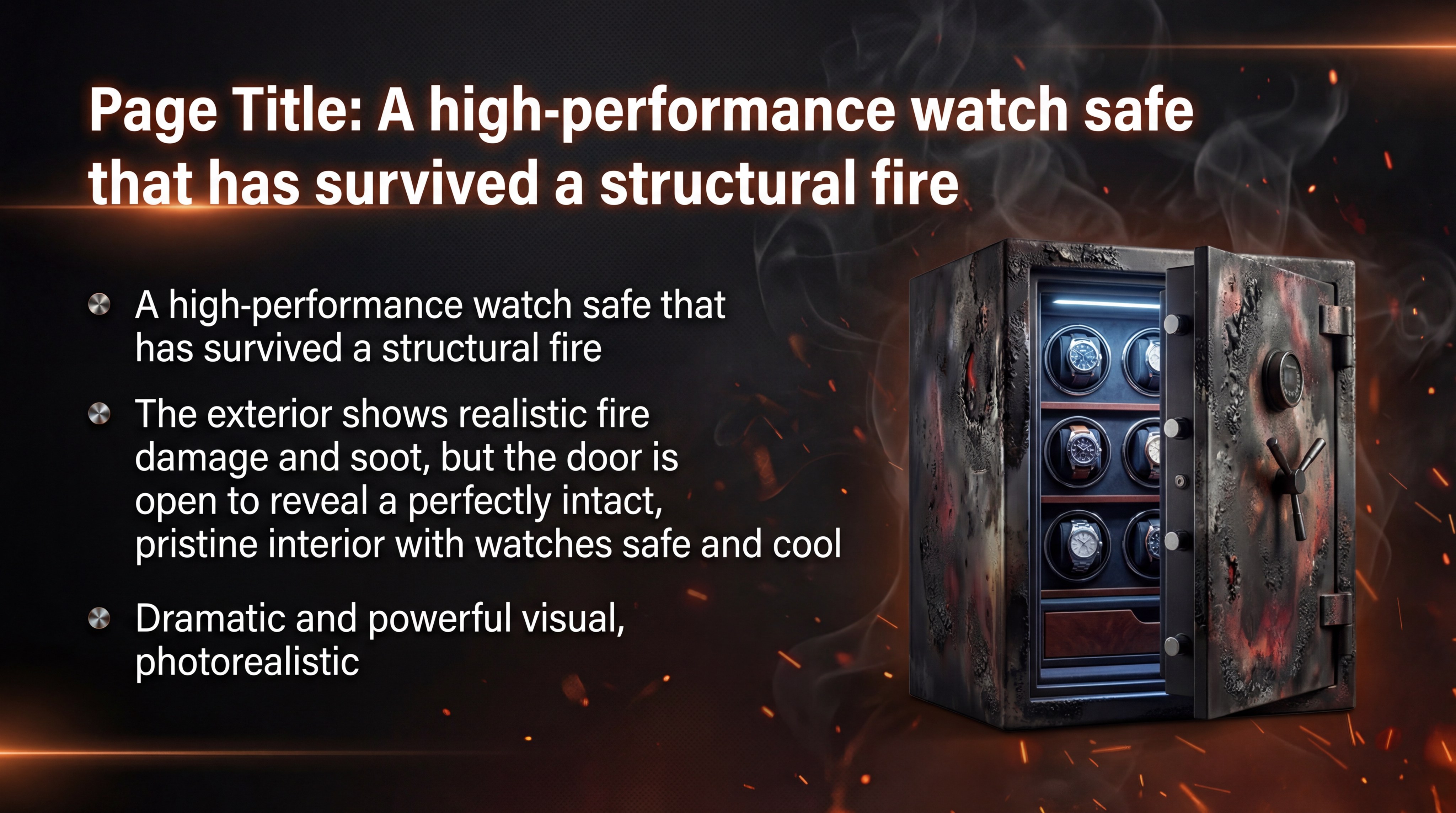
The best watch safe for fire protection is defined by its ability to maintain internal temperatures below 350°F during intense structural fires. You can find technical specifications on thermal barriers at jimbosafes.com/fireproof-safes-a-b2b-buyers-essential-guide.
How long should fire protection last?
A standard residential fire can burn for an hour, so professional-grade safes target 60 to 120 minutes of resistance.
- Fire-seals expand when heated to block out smoke and hot gases.
- Insulating composites act as a thermal sponge to keep the interior cool.
But that’s not all…
Does fire protection affect the safe’s weight?
The materials used for thermal resistance are significantly denser than standard steel, making fireproof safes much heavier.
- Heavy-duty construction provides the secondary benefit of increased theft resistance.
- These units often require professional installation on ground-floor slabs or reinforced floors.
Key Takeaway: Fire protection is the final insurance policy for a collection, ensuring survival when security is no longer the primary threat.
| Rating Time | Internal Temp Cap | Level of Protection |
|---|---|---|
| 30 Minutes | 350°F | Basic / Essential |
| 60 Minutes | 350°F | Standard / Reliable |
| 120 Minutes | 350°F | Maximum / Professional |
How do biometric locks compare to traditional keys?
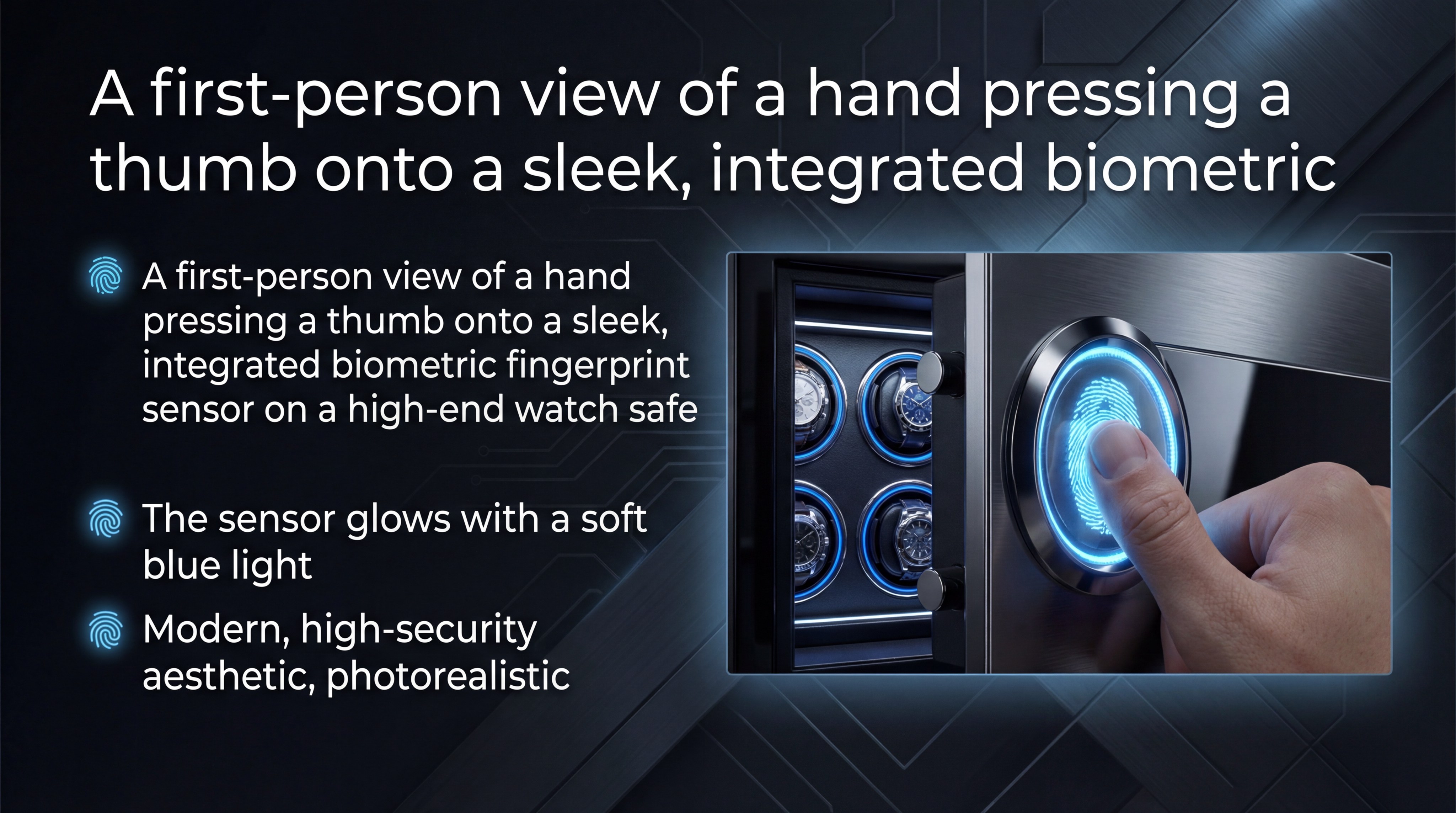
Biometric locks offer instant, exclusive access that encourages you to wear your luxury watches more frequently compared to cumbersome keys. Selecting the best watch safe with these sensors provides the ultimate balance of convenience and vault-grade protection.
Is fingerprint access faster than a keypad?
A biometric scan typically takes less than a second, allowing you to retrieve your watch and be out the door instantly.
- One-touch access eliminates the need to remember complex codes or hide physical keys.
- Multiple fingerprints can be registered for trusted family members or estate managers.
Think about this: A key can be stolen or duplicated, but your unique biometric signature cannot.
What happens if the biometric sensor fails?
Most professional safes include a high-security mechanical override or a backup digital keypad for emergency access.
- Dual-power sources ensure the lock remains functional even during a blackout.
- Redundant systems prevent you from being locked out of your own collection.
Key Takeaway: Biometrics provide the perfect balance of immediate accessibility and exclusive authorization.
| Method | Speed | Security Level | Risk Factor |
|---|---|---|---|
| Fingerprint | Instant | High | Sensor Failure |
| Digital Code | Fast | Medium | Code Sharing |
| Mechanical Key | Slow | High | Key Theft/Loss |
Where should you install a luxury watch safe at home?
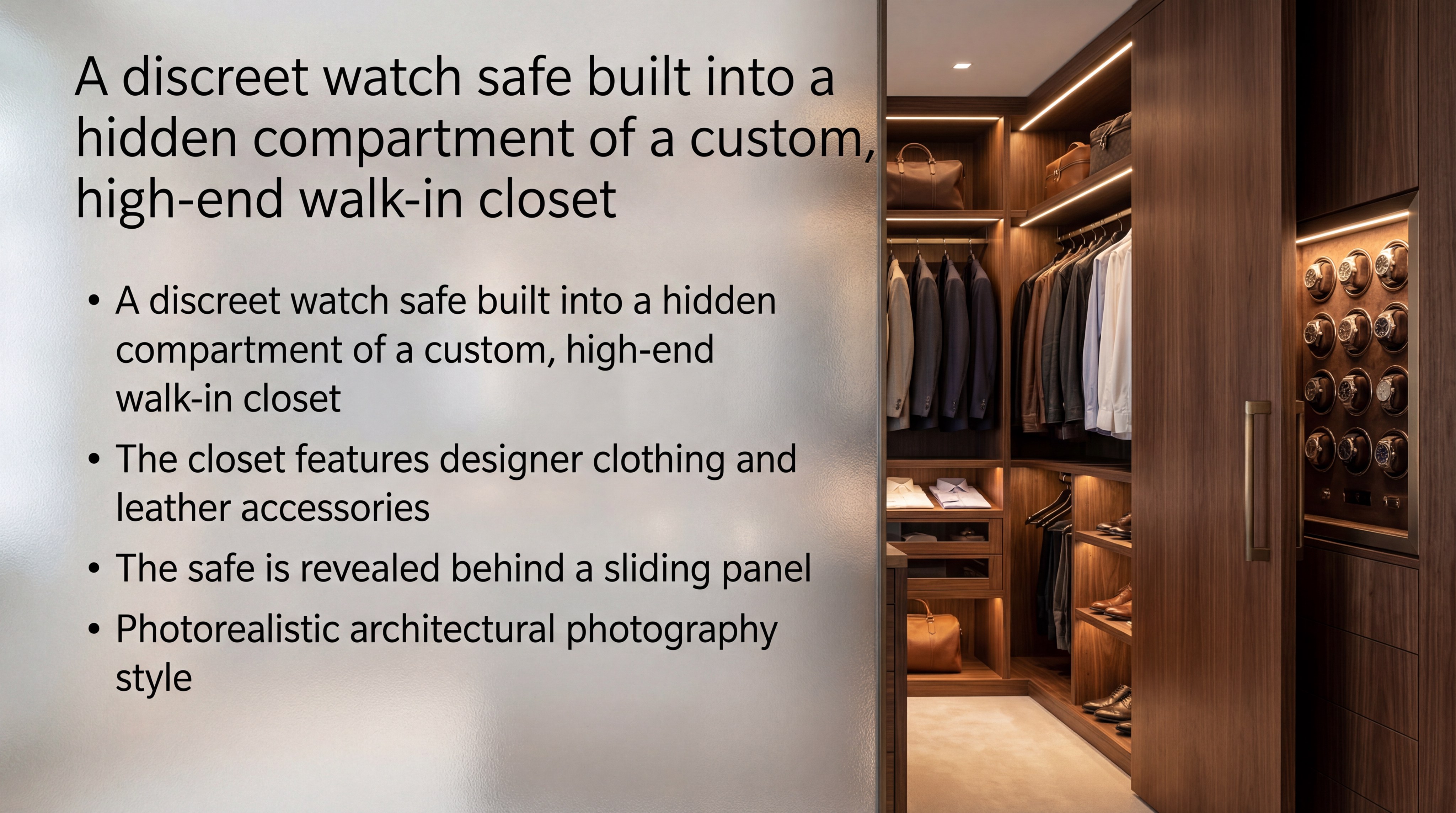
The best watch safe should be installed in a discreet location, such as a walk-in closet or a reinforced niche, to reduce visibility. Advanced fingerprint models for home integration can be found at jimbosafes.com/electronic-fingerprint-safe-boxes-secure-reliable.
Why is discreet placement important?
If a burglar cannot find the safe, they cannot attempt to breach it, making concealment your first line of defense.
- Integrating the safe into custom cabinetry hides the unit from plain sight.
- Walk-in closets provide a private environment for selecting and winding your timepieces.
But that’s not all…
Do I need to bolt the safe down?
Even the heaviest units should be anchored to the floor or wall to prevent them from being carted away for later breaching.
- Professional anchoring kits use expansion bolts to secure the safe to concrete or studs.
- Bolting the unit down significantly increases the time and noise required for a theft.
Key Takeaway: Strategic placement is the first line of defense against “smash and grab” attempts.
| Location | Pro | Con |
|---|---|---|
| Master Suite | High Accessibility | High Traffic |
| Home Office | Professional Display | Potential Target |
| Hidden Niche | Maximum Security | Low Convenience |
Which interior organizational features matter most?
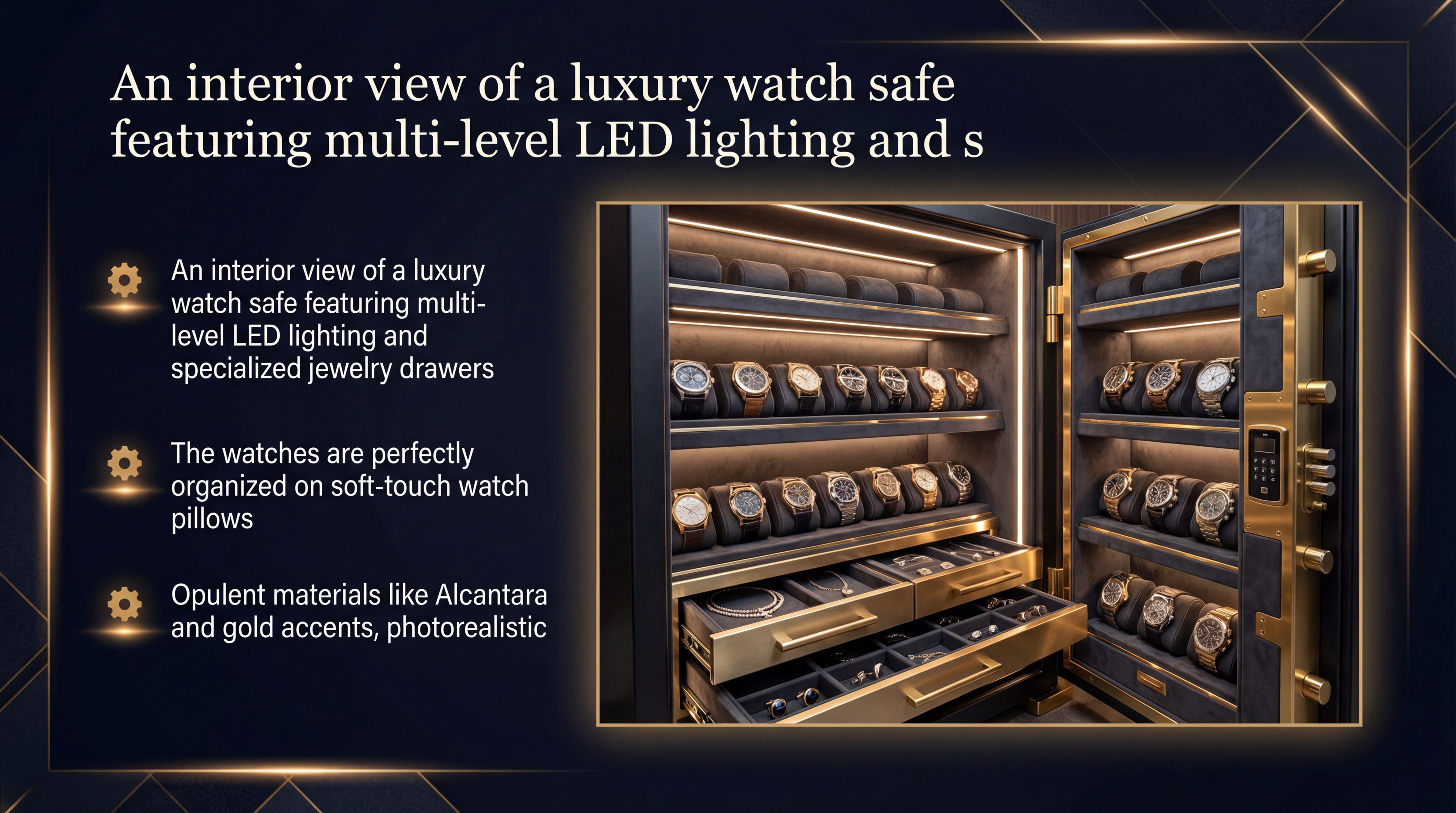
Interior organizational features like proximity-based LED lighting and specialized jewelry drawers ensure your entire collection is visible and protected. A best watch safe interior should reflect the discipline of the collector and prevent accidental damage during handling.
How does lighting improve the safe experience?
Integrated LEDs illuminate the dials and cases, making it easy to select the right piece even in a dark room.
- Proximity sensors automatically turn the lights on when the door is opened.
- High-CRI lighting ensures the true colors and finishes of your watches are displayed.
Think about this: Proper lighting prevents you from fumbling and accidentally dropping a watch during retrieval.
Are modular inserts worth the investment?
Modular systems allow you to reconfigure the interior as your collection evolves and your storage needs change.
- Removable drawers can be swapped for more winder slots or open shelving.
- Specialized inserts protect other valuable assets like cufflinks, rings, or passports.
Key Takeaway: Organization reflects the collector’s discipline; a well-organized interior prevents accidental damage during handling.
| Feature | Primary Function | Value Add |
|---|---|---|
| LED Lighting | Visibility | Display Appeal |
| Jewelry Drawers | Versatility | All-in-one Storage |
| Modular Inserts | Customization | Future-Proofing |
How do you choose the best watch safe for your budget?
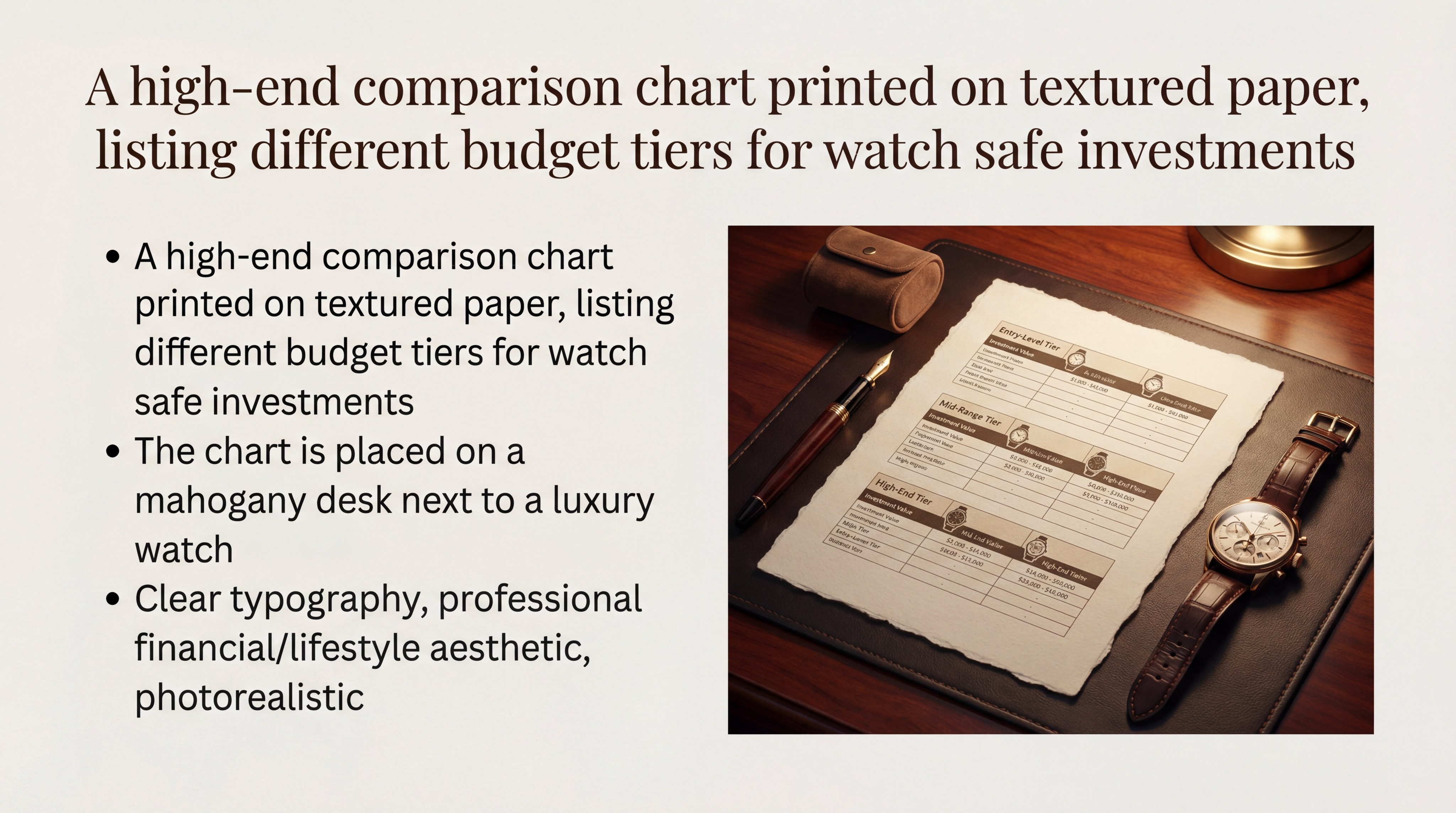
Choosing the best watch safe for your budget involves viewing the purchase as a percentage—typically 5-10%—of your total collection’s value. Comparing biometric versus traditional security at jimbosafes.com/biometric-vs-traditional-safes-which-protects-better can help you decide where to allocate funds.
What features should I prioritize on a budget?
If budget is a concern, prioritize security ratings and fire protection over aesthetic finishes or custom leather.
- A basic vault-grade unit with a few winders is better than a flashy box with weak security.
- Look for manufacturers that offer core security features in smaller, more affordable capacities.
But that’s not all…
Is a high-end safe a good long-term investment?
A quality safe will last a lifetime and preserve the value of assets that are appreciating at record rates.
- Preventing a single theft or mechanical failure pays for the safe several times over.
- High-quality vaults often retain their own resale value in the secondary market.
Key Takeaway: Budgeting for a safe is an essential part of the acquisition cost of any high-value timepiece.
| Investment Tier | Typical Features | Best For |
|---|---|---|
| Entry Level | 6 Slots, Basic Winding | New Collectors |
| Mid-Tier | 12-24 Slots, Biometric | Active Enthusiasts |
| Bespoke | 40+ Slots, Vault Customization | Institutional Collectors |
Frequently Asked Questions
- Can I connect my watch safe to my home security network?
Yes, high-end 2026 models feature silent alarm outputs and Wi-Fi connectivity to alert owners of tampering attempts or unsuccessful login tries. - What’s the ideal TPD setting for most automatic movements?
While it varies by manufacturer, a setting of 650 to 800 Turns Per Day (TPD) is generally sufficient to keep most modern automatic watches fully wound without over-stressing the mainspring. - Can I customize the winder speeds for individual slots?
Top-tier safes offer independent programming for every individual winder, allowing you to tailor the rotation specifically to the caliber requirements of each watch in your collection. - What’s the difference between a residential security rating and a commercial vault rating?
Residential ratings (like RSC) are tested against common hand tools, whereas commercial vault ratings are tested against high-intensity power tools and explosives, offering a much higher ceiling of protection. - Can I install a large watch safe on a standard second-story floor?
This depends on the weight-bearing capacity of your home’s structure. Large safes can exceed 1,000 lbs, often requiring professional floor reinforcement or placement on ground-floor concrete slabs.
Selecting the right security solution is a decision that impacts the longevity and safety of your most prized possessions. Our mission at Jimbo Safes is to provide the world’s most discerning collectors with the absolute pinnacle of horological security and preservation technology. Contact us today to find the perfect vault-grade investment for your growing collection.


