

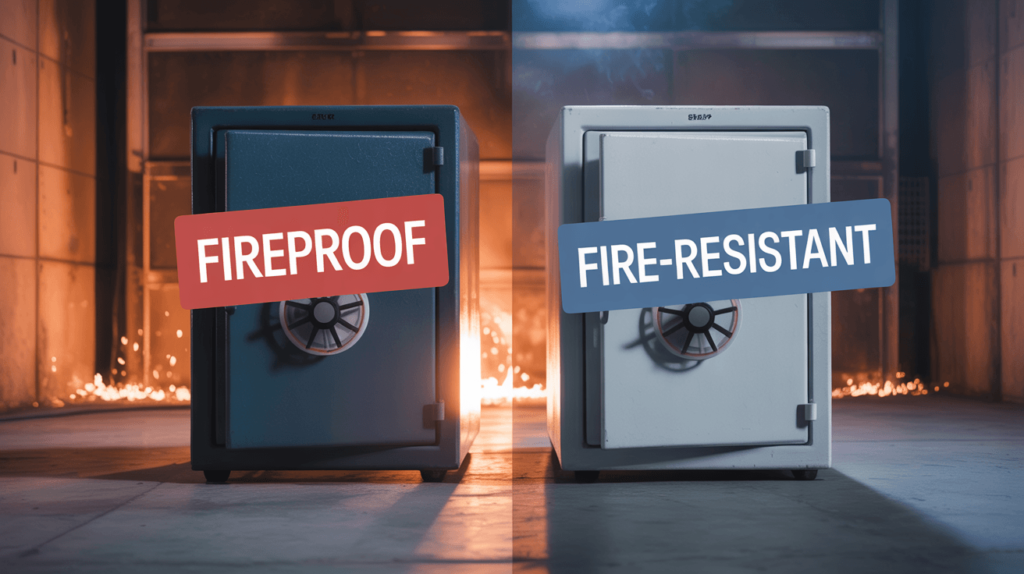
Fireproof vs Fire-Resistant Safes – What’s the Real Difference? Choosing between a “fireproof” safe and a “fire‐resistant” safe often confuses even seasoned buyers. Both promise heat protection for valuables, but their tested limits, materials, and certification criteria diverge significantly. Let’s clarify which designation matters most for your needs…
1. Definitions and Certification Standards
Fireproof safes imply total immunity to fire, a marketing term with no official certification. Fire-resistant safes undergo UL 72 or ETL testing, earning Class 350 or Class 150 ratings that guarantee internal temperatures stay below critical thresholds (350 °F or 150 °F) for specified durations (30–120 minutes). Certified safes list their exact rating; so look for real-world test credentials instead of “fireproof” claims.
| Certification Body | Class Rating | Internal Temp Limit |
|---|---|---|
| UL 72 | Class 350 | 350 °F |
| ETL | Class 150 | 150 °F |
| Intertek | I-30, I-60, I-120 | Varies |
2. Construction Materials and Heat Barriers
Fire-resistant safes use fireboard or gypsum‐ceramic liners that absorb heat and delay conduction. Steel exteriors protect against punctures but conduct heat; liners counteract this. “Fireproof” labels often hide minimal or untested liners. Always verify the thickness and composition of fire barriers: denser liners usually deliver longer protection but increase weight and cost.
3. Temperature Thresholds and Content Protection
Different items tolerate different maximum temperatures: paper chars above 350 °F, digital media fails above 125 °F internal, and photographs distort at 125–150 °F. Class 350 safes suit documents; Class 150 units protect media and film. “Fireproof” safes rarely specify content thresholds, leaving you uncertain if data drives or heirloom photos survive a blaze.
4. Duration Ratings: How Long Protection Lasts
UL and ETL ratings specify minutes of protection—common intervals include 30, 60, and 120 minutes. A 30-minute safe offers short‐term guard while firefighters arrive. A 120-minute unit covers more extensive fires or delayed response. “Fireproof” marketing doesn’t reveal duration, so certified time ratings guide your selection.
| Safe Rating | Duration | Ideal Use Case |
|---|---|---|
| 30 Minutes | 30 min | Basic documents |
| 60 Minutes | 60 min | Media, electronics |
| 120 Minutes | 120 min | High-value collections |
5. Water and Smoke Seals
Fire events often involve sprinklers or smoke damage. Fire-resistant safes include intumescent door gaskets that expand under heat, sealing out water and smoke. Uncertified “fireproof” models may lack these seals, exposing contents to corrosion or soot. Evaluate both heat and moisture barriers when comparing safes.
6. Testing Protocols and Real‐World Conditions
UL 72 tests involve controlled furnace heat up to 1,700 °F externally, with periodic internal temperature monitoring. ETL and Intertek follow similar methodologies. Home or business fires vary widely; certified safes simulate worst-case scenarios. “Fireproof” claims without lab tests offer no assurance under unpredictable conditions.
7. Impact of Safe Size and Wall Thickness
Larger safes require thicker liners to maintain ratings across greater surface area. Wall thickness (steel + liner) directly affects heat penetration. A small safe with a thin liner may achieve 30-minute ratings, but scaling up without proportionally thicker barriers reduces performance. Always check liner thickness relative to safe volume.
| Safe Size | Wall Thickness | Fire Barrier |
|---|---|---|
| Small (0.2 cu ft) | 1.5″ total | 1″ gypsum liner |
| Medium (0.6 cu ft) | 2″ total | 1.5″ gypsum liner |
| Large (1.2 cu ft) | 2.5″ total | Dual-layer liners |
8. Practical Storage Recommendations
Match safe ratings to content: store wills and deeds in Class 350 units; keep external hard drives and film in Class 150 safes. Bulky safes with higher ratings suit homes with massive document archives, while compact media safes fit personal electronics. Avoid “fireproof” buzzwords without certification; focus on exact UL/ETL class numbers.
9. Price vs Performance Trade‐Offs
Higher class and longer durations cost more due to thicker liners and testing overhead. A 30-minute Class 350 safe starts under $150; 120-minute Class 150 units can exceed $500. Weigh your vulnerability: if local fire department response is under 30 minutes, a Class 350 unit may suffice. For remote areas, investing in longer-duration ratings pays dividends.
10. Insurance and Liability Considerations
Insurers often require UL-rated safes to offer premiums or coverage for high-value contents. Non-certified “fireproof” safes may disqualify you from discounts or render claims void. Official ratings provide proof in post-fire assessments, ensuring your claim for documents or data recovery stands on firm ground.
| Insurance Benefit | Requirement |
|---|---|
| Premium Discount | UL Class 350 or better |
| Full Coverage | Certified fire & burglary ratings |
11. Burglary Resistance vs Fire Protection
Many safes blend fire and security features. UL 687 and UL 1037 burglary ratings detail drill, pry, and torch resistance. However, high burglary rating doesn’t guarantee fire performance—check both. “Fireproof” safes may boast security but neglect heat barriers. Choose dual-certified models for comprehensive defense.
12. Maintenance and Certification Renewal
Fire-resistant safes maintain ratings if intact; damaged liners or seals compromise performance. Some manufacturers offer recertification or liner replacement services. “Fireproof” models lack support networks for liner refurbishment. Factor long-term maintenance into purchase decisions, ensuring sustained protection.
| Maintenance Task | Frequency |
|---|---|
| Gasket Inspection | Annually |
| Liner Integrity | Every 5 Years |
| Lock Function | Quarterly |
13. Environmental and Health Considerations
Fireboard liners emit minimal toxic byproducts when heated, unlike cheaper materials. Certified safes test for safe smoke emissions. Unofficial “fireproof” boxes may use lower-grade materials that release harmful fumes. For homes, prioritize safes with clean-burning liners to protect both contents and indoor air quality during emergencies.
14. Emerging Technologies in Fireproofing
Innovations include nano-ceramic liners that reduce thickness while boosting insulation, and intumescent coatings enhancing door seals. Future safes may integrate active cooling or phase-change materials to extend survival times. While “fireproof” marketing may tout vague new materials, look for third-party validation before trusting green or novel technologies.
15. Making the Right Choice
Prioritize certified fire-resistant safes with clear UL/ETL ratings matching your contents’ temperature tolerances and desired durations. Avoid “fireproof” labels without lab-backed credentials. Balance size, weight, and cost against protection needs. Check for combined fire and burglary ratings if security against theft matters. By focusing on objective standards and real test results, you’ll select a safe that truly withstands fire, protects valuables, and gives you confidence when it matters most.
FAQ
Q1: Can “fireproof” safes truly withstand all fires?
No; only certified fire-resistant safes undergo lab tests to guarantee performance under specified conditions.
Q2: What rating protects digital media?
Digital media requires Class 150 safes (internal <150 °F) for at least 30–60 minutes.
Q3: Are longer-duration safes always better?
Longer ratings cost more but offer extra time during severe fires or delayed response; match ratings to local fire department arrival times.
Q4: Do certified safes require maintenance?
Inspect gaskets and liners periodically and replace worn components to preserve certification.
Q5: How do I verify a safe’s rating?
Check for UL or ETL certification labels and consult manufacturer test reports specifying class and duration.

