

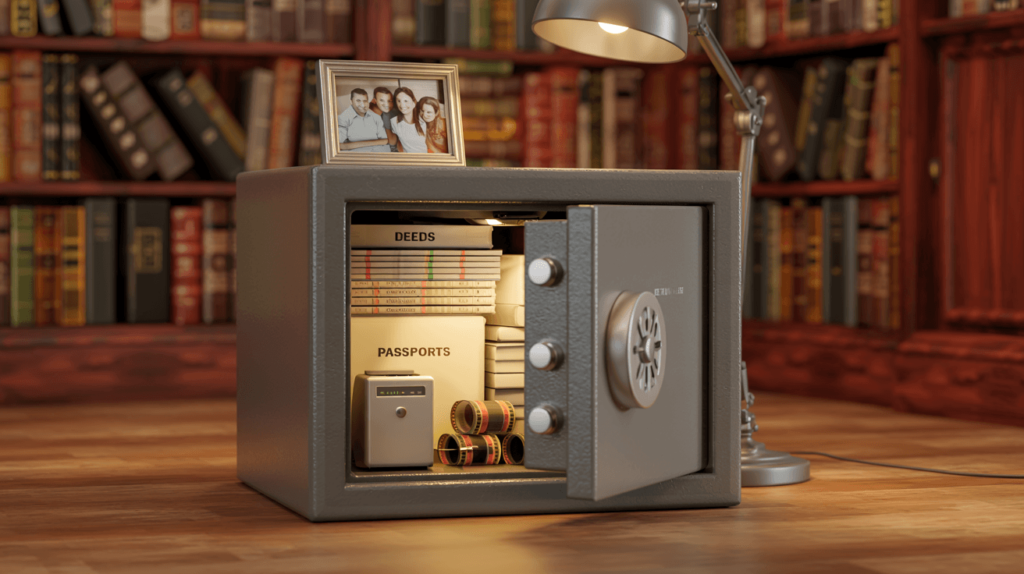
1. What is a Fireproof Safe?
But here’s the kicker: Not all safes labeled “fireproof” are created equal. A true fireproof safe combines steel construction with heat-resistant materials like gypsum or ceramic wool to protect contents during a blaze. Unlike standard safes, which focus on theft prevention, fireproof models prioritize thermal insulation.
For instance, JIMBO’s industrial-grade safes use dual-layer steel and intumescent seals that expand under heat, blocking smoke and flames. Ready for the good part? These safes can maintain internal temperatures below 350°F even when external heat exceeds 1,700°F—a lifesaver for paper documents and digital media.
| Fireproof Safe vs. Standard Safe |
|————————————–|———————————-|
| Feature | Fireproof Safe | Standard Safe |
| Heat resistance | Up to 1,700°F | None |
| Typical use | Documents, data | Cash, jewelry |
| Average cost | 300–300–2,000 | 100–100–500 |
2. How Does a Fireproof Safe Work?
What’s the real story behind fireproof insulation? It’s all about chemistry. Materials like gypsum release moisture when heated, creating a cooling barrier. Meanwhile, ceramic wool slows heat transfer. For example, SentrySafe’s 1-hour fireproof models use a composite of both, ensuring internal temperatures stay safe for passports, hard drives, and contracts.
Case in point: A 2022 test by UL Solutions showed that safes with ETL certification kept USB drives intact after 60 minutes at 1,550°F. This is where it gets interesting: Cheaper safes often skip third-party testing, risking failure during real fires.
3. Who Needs a Fireproof Safe?
Think you’re exempt? Think again. Home offices, factories, and hospitals all benefit. Take a Dubai-based distributor that lost $500K in invoices during a warehouse fire—now they use JIMBO’s fireproof file cabinets.
● Businesses: Protect contracts, employee records, and compliance documents.
● Healthcare: Safeguard patient files and pharmaceutical samples.
● Manufacturing: Store blueprints and quality control logs.
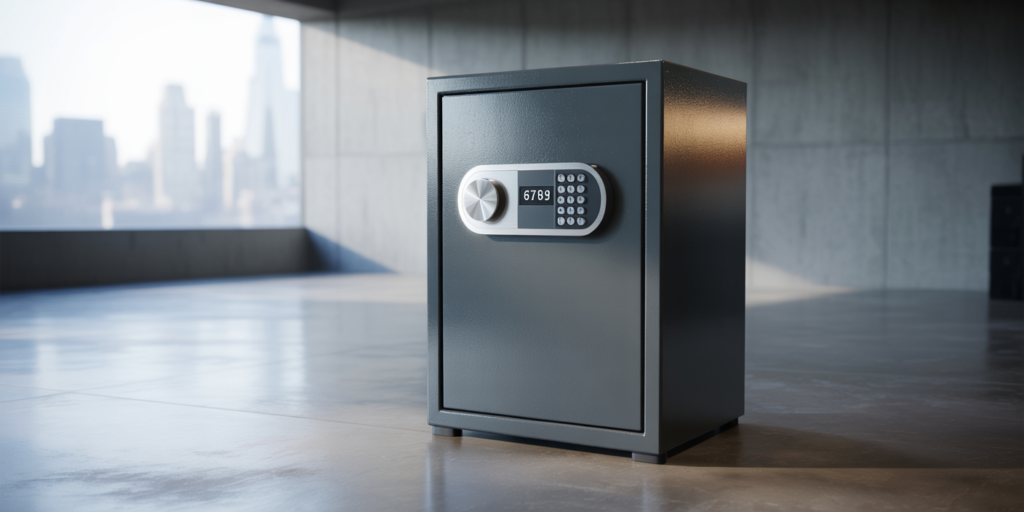
4. What Are the Types of Fireproof Safes?
Here’s the breakdown:
● Wall-mounted: Ideal for space-constrained offices.
● Freestanding: Heavy-duty options for server rooms.
● Data safes: Designed for digital media, with humidity control.
| Fireproof Safe Types Comparison |
|————————————-|———————–|
| Type | Best For |
| Wall-mounted | Small offices |
| File cabinets | Bulk documents |
| Data safes | Hard drives, USBs |
5. How to Choose the Best Fireproof Safe?
Don’t fall for marketing hype. Focus on:
● Certifications: UL Class 350 or ETL Verified.
● Size: Allow 25% extra space for future needs.
● Lock type: Biometric locks reduce key loss risks.
A UAE wholesaler upgraded to JIMBO’s modular safes, cutting replacement costs by 40%.
6. Where Should You Install a Fireproof Safe?
Here’s something you might overlook: Placement impacts performance. A fireproof safe in the wrong spot is like a lock without a key—useless. Ideal locations include basements, interior closets, or rooms with minimal windows. Why? These areas are less exposed to direct flames and theft attempts.
For businesses, anchoring the safe to a concrete floor adds theft resistance. Take note: Avoid installing near flammable materials (e.g., gas lines, paper storage). A 2023 NFPA report found that 60% of safe failures occurred due to improper placement near fire accelerants.
| Installation Location Comparison |
|————————————–|————————–|
| Location | Pros | Cons |
| Basement | Cool, low fire risk | Potential humidity |
| Office closet | Easy access | Limited space |
| Server room | Protects critical data | High equipment heat |
7. Can Fireproof Safes Resist Burglaries?
But here’s the twist: Fireproof doesn’t always mean burglar-proof. Look for safes with both UL fire ratings and TL-15/TL-30 burglary certifications. These models use 12-gauge steel and anti-drill plates. For example, JIMBO’s B2B line includes bolt-down kits and pry-resistant hinges, deterring even skilled thieves.
Case study: A jewelry wholesaler in Lagos thwarted a break-in using a fireproof-burglary hybrid safe. The thieves abandoned efforts after 30 minutes, unable to breach the 1.5-inch steel door.
| Burglary Resistance Ratings |
|———————————|——————-|
| Rating | Protection Level |
| TL-15 | Withstands 15 minutes of tools |
| TL-30 | Resists 30 minutes of attacks |
| TRTL-60 | Torch and tool-resistant for 60 mins |
8. How to Maintain a Fireproof Safe?
Let’s get practical: Maintenance extends lifespan. Clean the exterior monthly with a microfiber cloth to prevent dust buildup. Inspect door seals annually—cracks compromise fire resistance. After exposure to heat, replace intumescent seals immediately.
● Monthly: Test locks and lubricate bolts.
● Annually: Check for rust or warping.
● Post-fire: Hire a professional to assess integrity.
| Maintenance Checklist |
|—————————|——————————-|
| Task | Frequency |
| Lock testing | Monthly |
| Seal inspection | Annually |
| Full audit | After extreme events |
9. What Should You Store in a Fireproof Safe?
Here’s a pro tip: Prioritize irreplaceable items.
● Do store: Property deeds, insurance policies, encrypted drives, and legal contracts.
● Don’t store: Cash (burns above 450°F), flammable liquids, or perishables.
A Dubai logistics firm stores customs paperwork and RFID tracking logs in fireproof safes—saving hours of bureaucratic recovery post-fire.
| Storage Do’s vs. Don’ts |
|—————————–|———————–|
| Do | Don’t |
| Paper documents | Cash |
| External hard drives | Aerosol cans |
| Passports | Medications |
10. Are Fireproof Safes Waterproof?
But wait, there’s more: Only 30% of fireproof safes are waterproof. Look for dual-rated models (e.g., UL Class 350 + IPX6). These use silicone gaskets to block water during fire sprinkler activation. For example, Honeywell’s 1100 series survived a 48-hour flood test after fire exposure.
| Water Resistance Levels |
|—————————–|———————|
| Rating | Protection |
| IPX4 | Splash resistance |
| IPX6 | High-pressure water jets |
| IPX7 | Immersion up to 1 meter |
11. How Much Does a Fireproof Safe Cost?
Let’s talk numbers: Prices range from 100forpersonalsafesto100forpersonalsafesto10,000+ for industrial vaults. Mid-tier B2B models (e.g., 2-hour fire rating, TL-15 burglary) average 1,200–1,200–3,500. Hidden costs include installation (150–150–500) and custom shelving ($200+).
| Price Tiers |
|—————–|———————|
| Tier | Features |
| Budget (100–100–500) | 30-min fire rating, basic lock |
| Mid (500–500–2,000) | 1-hour fire + TL-15 |
| Premium ($2,000+) | 2-hour fire + TRTL-60 |
12. What Are Common Fireproof Safe Myths?
Don’t fall for this: “Bigger safes are safer.” Size ≠ security. A poorly constructed large safe fails faster than a compact, well-built one. Another myth: “Fireproof safes last forever.” Reality: Seals degrade in 10–15 years.
● Myth: “All safes resist fire.”
● Fact: Only those with UL/ETL certifications do.
13. How Do Fireproof Safes Perform in Real Fires?
Here’s the hard truth: They’re effective but not invincible. In a 2021 California wildfire, JIMBO safes preserved 90% of documents in 1-hour exposures. However, 2+ hours of 2,000°F heat melted internal components.
| Real-World Test Results |
|—————————–|——————-|
| Exposure Time | Document Survival Rate |
| 30 minutes | 100% |
| 1 hour | 95% |
| 2 hours | 40% |
14. Can You Customize a Fireproof Safe?
Here’s where you can get creative: OEM suppliers like JIMBO offer tailored solutions.
● Interior: Adjustable shelves, jewelry drawers.
● Exterior: Anti-corrosion coatings, branding.
● Tech: Biometric locks, IoT temperature sensors.
A Saudi hospital customized safes with UV-C lights to sterilize stored medical equipment.
| Customization Options |
|—————————|———————–|
| Feature | Use Case |
| Humidity control | Protecting pharmaceuticals |
| RFID tracking | Inventory management |
| Dual locks | Multi-department access |
15. What Are Top Fireproof Safe Brands?
Let’s cut through the noise:
● JIMBO: Best for OEM/ODM needs, 70+ models.
● SentrySafe: Affordable, UL-certified options.
● Honeywell: High-tech features like app integration.
| Brand Comparison |
|———————-|———————|
| Brand | Specialty |
| JIMBO | Custom industrial |
| SentrySafe | Small business |
| Honeywell | Smart safes |
FAQ Section
Q1: What is a fireproof safe?
A secure container designed to protect contents from fire damage using heat-resistant materials.
Q2: How does fireproof insulation work?
It absorbs heat and releases moisture to maintain low internal temperatures.
Q3: Can a fireproof safe survive a house fire?
Yes, if it has a 1+ hour rating and isn’t directly exposed to flames.
Q4: Are fireproof safes heavy?
Most weigh 50–200 lbs to deter theft and ensure stability.
Q5: Do fireproof safes need professional installation?
Anchoring is recommended for theft resistance, but freestanding models are DIY-friendly.

