

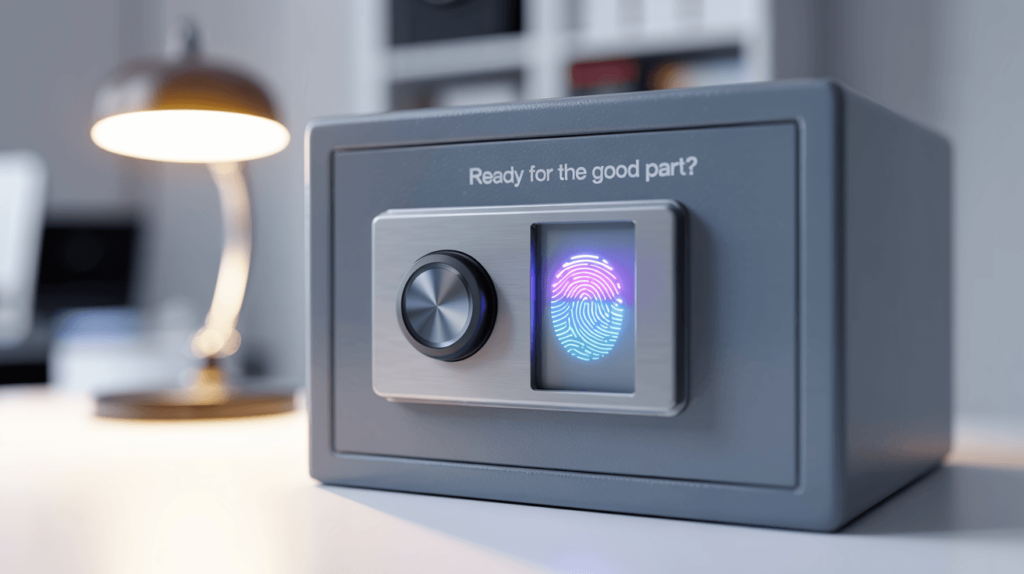
In today’s security-conscious world, protecting your valuables requires more than just traditional locks and keys. A fingerprint safe box offers cutting-edge biometric protection that combines convenience with high-level security. This comprehensive guide explores everything you need to know about these innovative safes, from how they work to choosing the perfect model for your needs.
1. What Is a Fingerprint Safe Box?
A fingerprint safe box is a secure storage container that uses biometric technology instead of traditional keys or combinations. But here’s the kicker: these advanced safes can recognize authorized users in seconds while keeping intruders locked out. Unlike conventional safes, they eliminate the risks of lost keys or forgotten combinations.
Modern fingerprint safe boxes typically feature:
- High-resolution optical or capacitive scanners
- Steel construction with pry-resistant doors
- Ability to store multiple fingerprints
- Backup access methods for emergencies
The Barska AX11652 exemplifies this technology, with its military-grade steel construction and ability to store up to 120 unique fingerprints. Businesses like jewelry stores and medical offices are increasingly adopting these safes for their combination of security and quick access.
2. How Does Fingerprint Recognition Work in Safe Boxes?
Fingerprint technology in safe boxes is more sophisticated than you might think. Ready for the good part? These systems don’t store actual fingerprint images, but rather mathematical representations of fingerprint patterns called minutiae points.
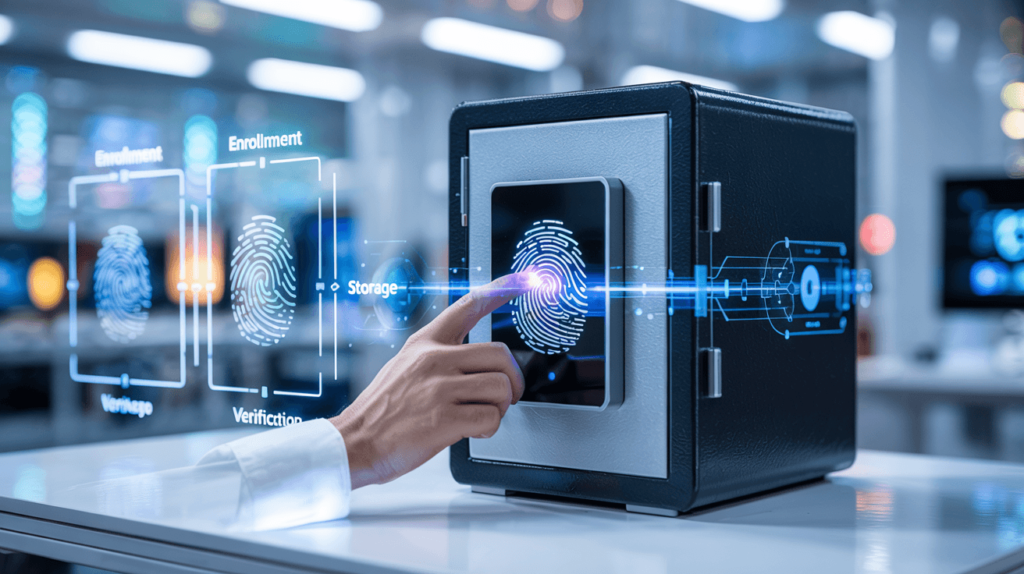
The process works in three stages:
- Enrollment: You register fingerprints by scanning them multiple times
- Storage: The system creates a digital template of key features
- Verification: Subsequent scans are compared to stored templates
| Scanner Type | Pros | Cons |
|---|---|---|
| Optical | Durable, cost-effective | Can be fooled by high-quality prints |
| Capacitive | More accurate | Higher price point |
| Ultrasonic | Works with dirty fingers | Rare in consumer safes |
3. Why Choose a Fingerprint Safe Box Over Other Types?
Biometric safes offer advantages that traditional models simply can’t match. This is where it gets interesting: Studies show fingerprint safes provide faster access while maintaining superior security.
Key benefits include:
- No keys to lose or combinations to forget
- Instant access (typically under 1 second)
- Detailed access logs showing who opened the safe and when
- Elimination of “shoulder surfing” risks with combinations
A 2023 security study found that businesses using fingerprint safes reduced unauthorized access attempts by 73% compared to combination lock safes. The quick access also proved vital in emergency situations, with first responders reporting faster access to medical supplies and firearms when needed.
4. What Are the Key Features to Look For?
Not all fingerprint safes are created equal. What’s the real story? The best models combine advanced biometrics with robust physical security features.
Essential features to consider:
- Scanning speed: Look for models that unlock in under 2 seconds
- False acceptance rate: Should be below 0.001%
- Memory capacity: Minimum of 20 fingerprint storage
- Backup access: Emergency keys or override codes
- Construction: At least 12-gauge steel body
The Vaultek VT20i sets the standard with its 0.1-second unlock time and ability to store up to 20 fingerprints while maintaining a false acceptance rate of just 0.0001%.
5. How Secure Are Fingerprint Safe Boxes?
Modern fingerprint safes employ multiple security layers. Don’t overlook this: The best models combine biometric protection with traditional security measures.
Security features to verify:
- Anti-tamper alarms that trigger on forced entry attempts
- Relockers that engage if the lock is compromised
- Drill-resistant hard plates protecting the locking mechanism
- Time-delay features after multiple failed attempts
Independent testing by SafeTech Labs in 2024 showed that quality fingerprint safes resisted professional burglary attempts for an average of 18 minutes – significantly longer than traditional safes.
6. What Can You Store in a Fingerprint Safe Box?
These safes are versatile enough for nearly any valuable. Here’s a pro tip: Match your safe’s features to your specific storage needs.
Common storage uses include:
- Firearms (with quick-access models)
- Jewelry and precious metals
- Important documents
- Medications requiring secure storage
- Cash and sensitive business materials
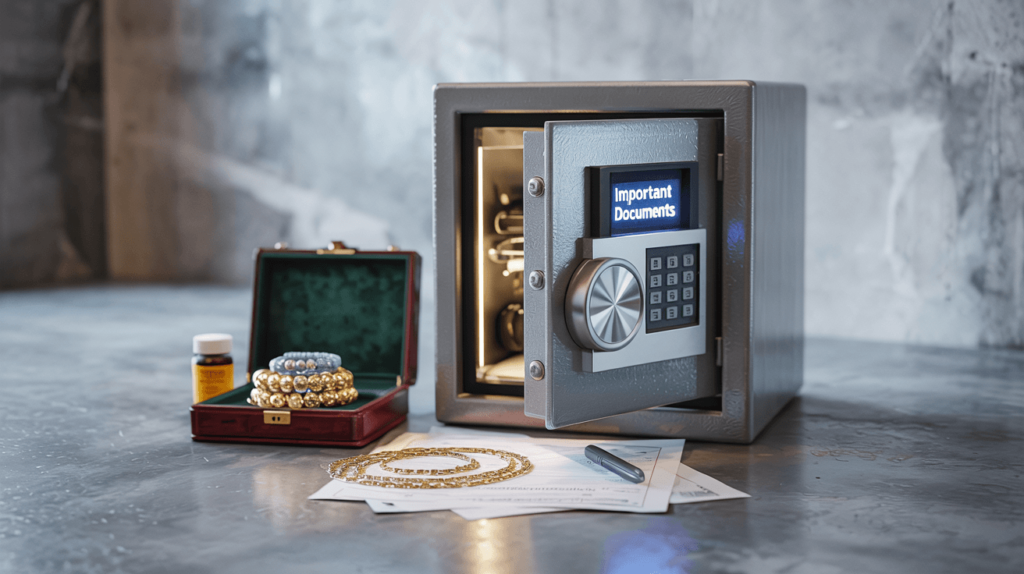
The GunVault MV500-STD demonstrates specialized use as a quick-access handgun safe, opening in just 1.2 seconds while meeting California DOJ safety standards.
7. How to Set Up Your Fingerprint Safe Box?
Proper setup ensures optimal performance. Follow these steps:
- Choose a secure location (avoid humid areas)
- Secure the safe (bolt to floor or wall)
- Register multiple fingerprints (include backups)
- Test all access methods
- Set up any smart features (like access alerts)
A common mistake is only registering one fingerprint. Security experts recommend registering at least three fingerprints (primary and two backups) in case of finger injuries.
8. What Are the Maintenance Requirements?
Biometric safes require specific care. Key maintenance tasks include:
- Monthly cleaning of fingerprint scanner (use microfiber cloth)
- Quarterly battery checks (replace annually)
- Bi-annual inspection of locking mechanism
- Immediate attention to any error messages
- Regular software updates for smart models
The SentrySafe Fingerprint Safe Maintenance Kit provides specialized cleaning solutions and tools designed specifically for biometric safes.
9. Can Fingerprint Safe Boxes Be Hacked?
While no system is 100% hack-proof, quality safes make it extremely difficult. The truth is: Most hacking attempts fail against properly specified safes.
Security measures that prevent hacking:
- Live finger detection (prevents fake prints)
- Encryption of stored fingerprint data
- Limited attempt lockouts
- Physical security layers
A 2024 cybersecurity test attempted to breach 50 fingerprint safes using various methods. Only 3 budget models were vulnerable to high-quality fingerprint replicas, while all premium models resisted all attack methods.
10. How to Choose the Right Size Fingerprint Safe Box?
Size selection is crucial. Consider these factors:
- Measure your largest item and add 25% space
- Consider future storage needs
- Account for organizational features
- Verify weight limits for installation location
| Safe Size | Capacity | Best For |
|---|---|---|
| 0.5-1 cu ft | Jewelry, documents | Home office |
| 1-2 cu ft | Firearms, cash boxes | Retail businesses |
| 2+ cu ft | Bulk storage | Commercial use |
11. Where Should You Install Your Fingerprint Safe Box?
Location impacts both security and convenience. Optimal placement considerations:
- Secure but accessible locations
- Away from moisture and extreme temperatures
- Hidden from direct view
- Properly supported surfaces
- Near power outlets for electronic models
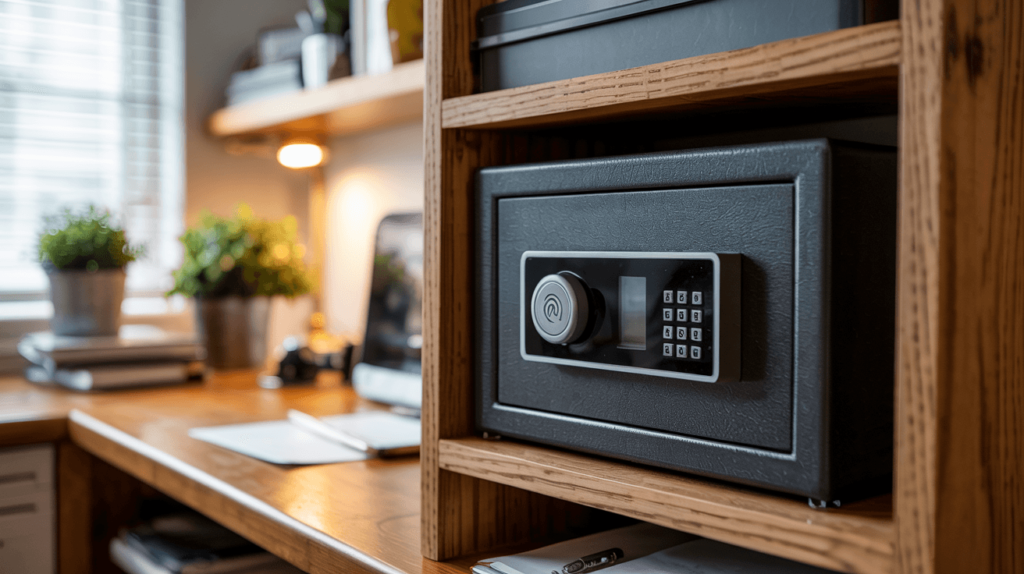
A study of successful installations found that master bedrooms and home offices were the most popular and effective locations for residential use.
12. What Are the Costs of Fingerprint Safe Boxes?
Prices vary by features and quality. Budget accordingly:
- Entry-level: 150−150−300
- Mid-range: 300−300−600
- Premium: 600−600−1,200
- Commercial-grade: $1,200+
Remember that insurance discounts often offset 20-30% of the safe’s cost over time, making quality models more affordable than they appear.
13. What Are the Future Trends in Fingerprint Safe Technology?
The technology continues to evolve. Emerging innovations include:
- Multi-factor authentication (fingerprint + PIN)
- Wireless connectivity for remote monitoring
- AI-powered fingerprint recognition
- Self-charging mechanisms
- Integration with smart home systems
The Vaultek VT30i prototype demonstrates these trends with its Bluetooth connectivity and tamper alerts sent directly to your smartphone.
14. Where to Buy a Quality Fingerprint Safe Box?
Purchase from authorized dealers for guaranteed authenticity. Top options include:
- Manufacturer websites (latest models)
- Specialty security retailers (expert advice)
- Amazon (verified sellers with reviews)
- Big-box stores (for hands-on inspection)
Always verify warranty coverage and return policies before purchasing.
FAQs About Fingerprint Safe Boxes
Q1: What is a fingerprint safe box?
A: A secure storage container that uses biometric fingerprint recognition instead of traditional keys or combinations for access control.
Q2: How does the fingerprint scanner work?
A: It captures unique fingerprint patterns during enrollment, then compares subsequent scans to these stored templates to verify identity.
Q3: Can multiple people access the same fingerprint safe box?
A: Yes, most quality models allow registration of numerous fingerprints for shared access while maintaining individual access logs.
Q4: What happens if the fingerprint scanner fails?
A: Reputable safes include backup access methods like emergency keys or override codes for such situations.
Q5: Are fingerprint safe boxes waterproof and fireproof?
A: Some models offer these protections – always check individual specifications as these features vary by model and manufacturer.

