 跳到内容
跳到内容 

To properly use and set your watch winder, you must align the turns per day and rotation direction with the specific requirements of your timepiece’s movement. Owning a collection of automatic watches is a mark of sophistication, but keeping them accurate while they are not on your wrist is a constant struggle. If you leave your watches idle, the internal lubricants can stagnate, and resetting complex moonphase or date complications becomes a daily headache. This is why investing in a luxury safe watch winder [https://jimbosafes.com/] is the ultimate solution for the serious horologist. By maintaining the mainspring’s tension and ensuring the movement stays active, you protect your investment while ensuring it is always ready to wear.
Why should you use a watch winder?
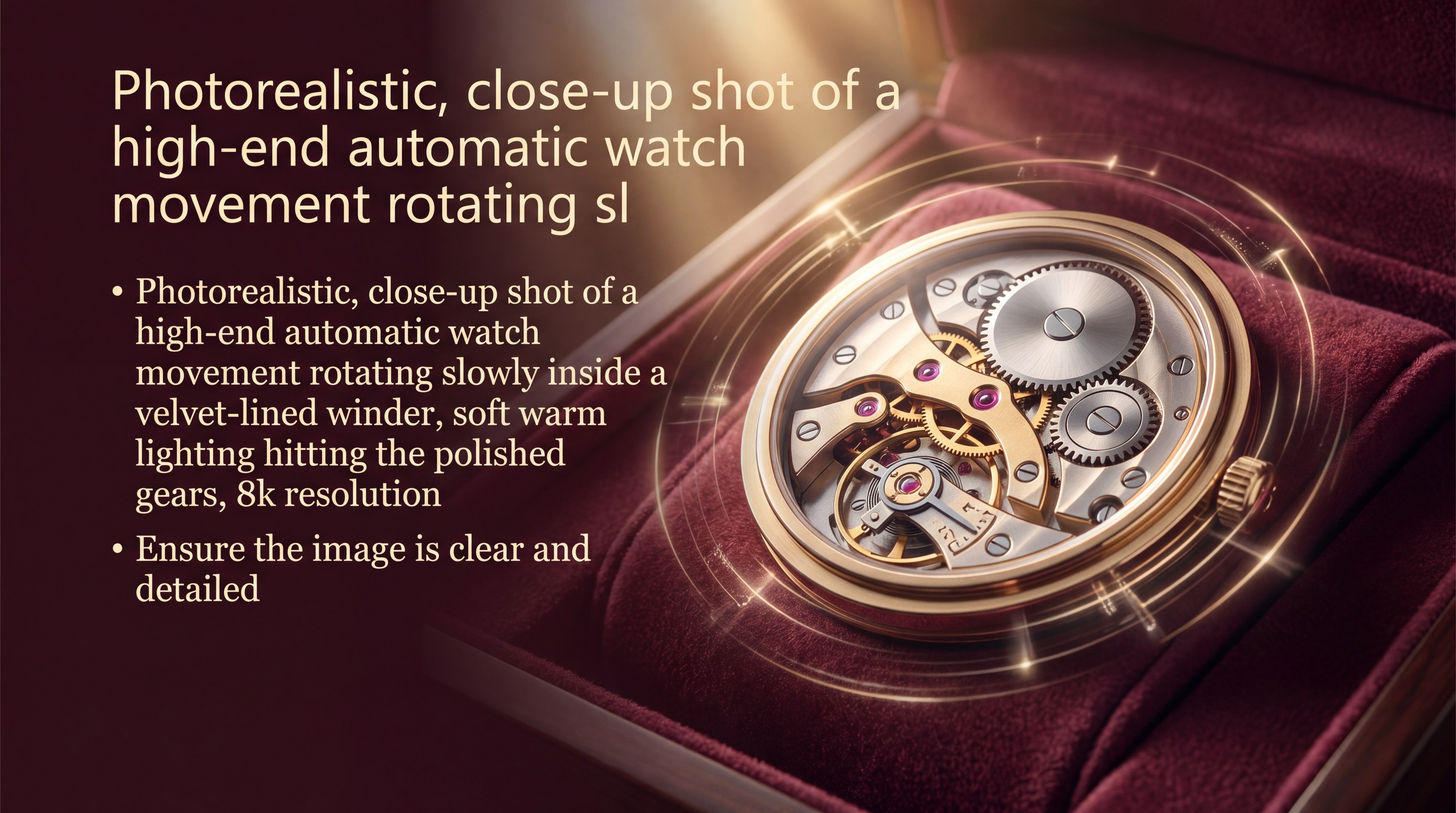
You should use a winder to prevent lubricant stagnation and save time resetting complicated timepieces. Integrating a luxury safe watch winder into your routine ensures that your automatic watches never lose their power reserve. This maintains the mechanical integrity of the movement by mimicking natural wrist motion throughout the day.
Does it benefit the movement?
Think about it: keeping the internal components in motion prevents the oils from settling or drying out over years of non-use.
- Prevents oil gumming in the escapement.
- Ensures immediate wearability for daily use.
- Saves the crown and seals from the wear of frequent manual setting.
Key Takeaway:
A watch winder is less about keeping time and more about preserving the mechanical health and convenience of your collection.
| Feature | Impact on Watch | Priority Level |
|---|---|---|
| Consistent Motion | Prevents oil gumming | High |
| Complication Sync | Maintains moonphase/date | High |
| Aesthetic Display | Visual appeal | Medium |
This data confirms that mechanical movement is the primary factor in long-term watch health and immediate readiness.
How do you determine your watch’s TPD?

You can determine the correct Turns Per Day (TPD) by checking the manufacturer’s documentation or a specialized horological database. Finding the right setting for your product collection ensures you are not under-winding the mainspring or putting unnecessary strain on the rotor. Using a luxury safe watch winder allows for the precision needed to match these specific requirements.
Where can you find TPD specs?
Here is the kicker: you can usually find these specific details in your original owner’s manual or on the brand’s official website.
- Check the technical specifications section.
- Look up the specific caliber number (e.g., Calibre 3135).
- Consult with a professional watchmaker if the data is unavailable.
Key Takeaway:
Starting with a lower TPD setting and increasing it only if the watch stops is the safest way to calibrate a new winder.
| Watch Category | Typical TPD Range | Recommended Baseline |
|---|---|---|
| Slim Dress Watches | 600 – 700 | 650 |
| Sports Chronographs | 800 – 950 | 900 |
| Heavy Divers | 900+ | 950 |
The table illustrates that heavier movements and complications generally require higher rotation counts to maintain a full power reserve.
What are the main rotation directions?
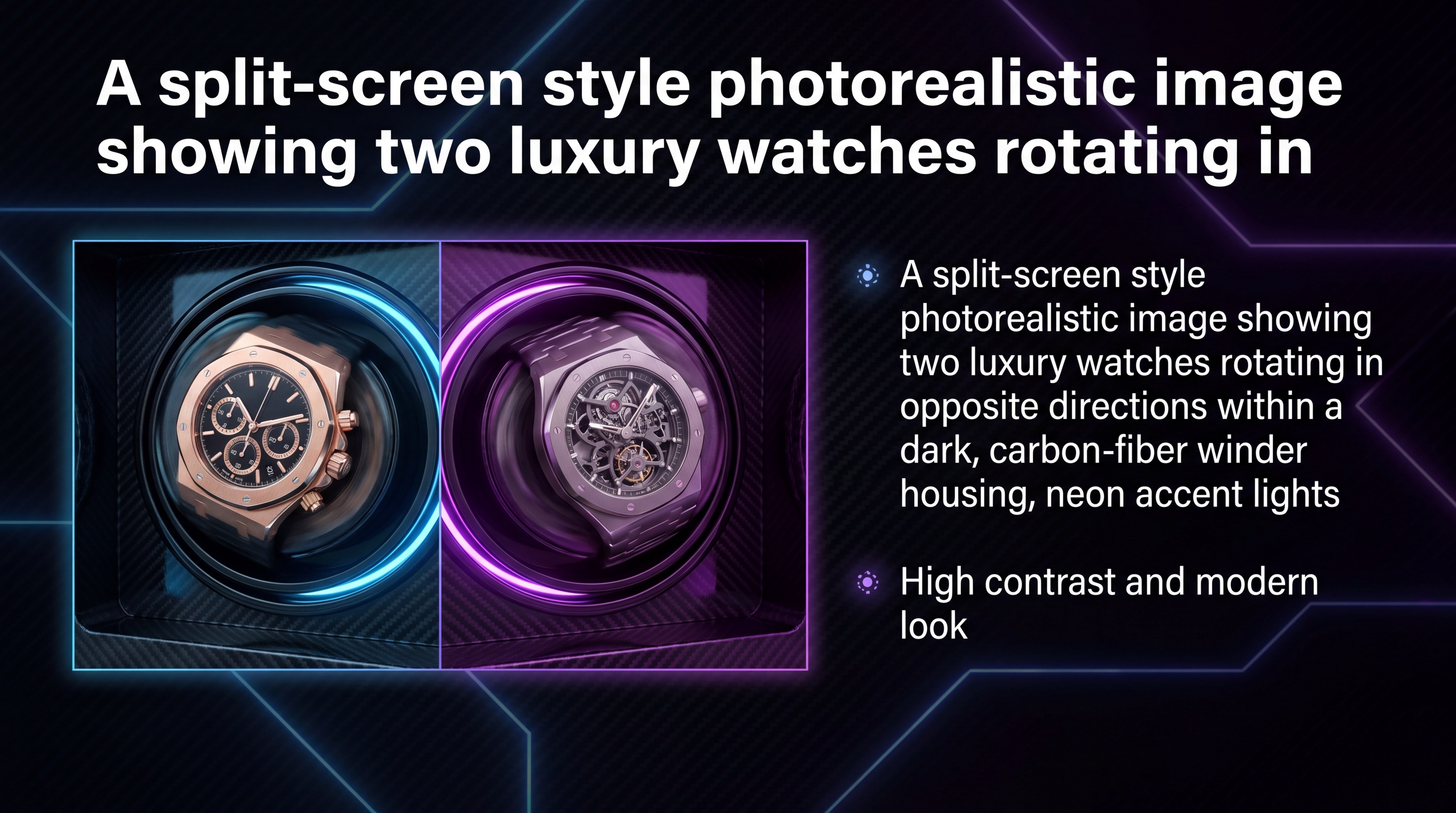
The three primary rotation directions for a winder are clockwise, counter-clockwise, and bi-directional. A luxury safe watch winder usually offers these three distinct settings to accommodate various calibers. Selecting the wrong direction will result in zero power gain, leaving your watch dead within days.
Why does the direction matter?
Look at it this way: the rotor inside your automatic watch may only engage the winding gear when swinging in a specific arc.
- Clockwise is required for many vintage movements.
- Counter-clockwise is specific to certain specialized calibers.
- Bi-directional is the standard for most modern Rolex and Omega pieces.
Key Takeaway:
Identifying your watch’s winding path is essential because a unidirectional movement will not wind if the motor turns the wrong way.
| Setting Mode | Compatibility | Primary Use Case |
|---|---|---|
| Clockwise | Specific Calibers (e.g., 7750) | Single-direction rotors |
| Counter-Clockwise | Rare vintage pieces | Specialized movements |
| Bi-directional | Standard modern watches | Daily wear collections |
Understanding these modes ensures that your winder is actually adding energy to the mainspring rather than just spinning the watch.
Which TPD settings are most common?
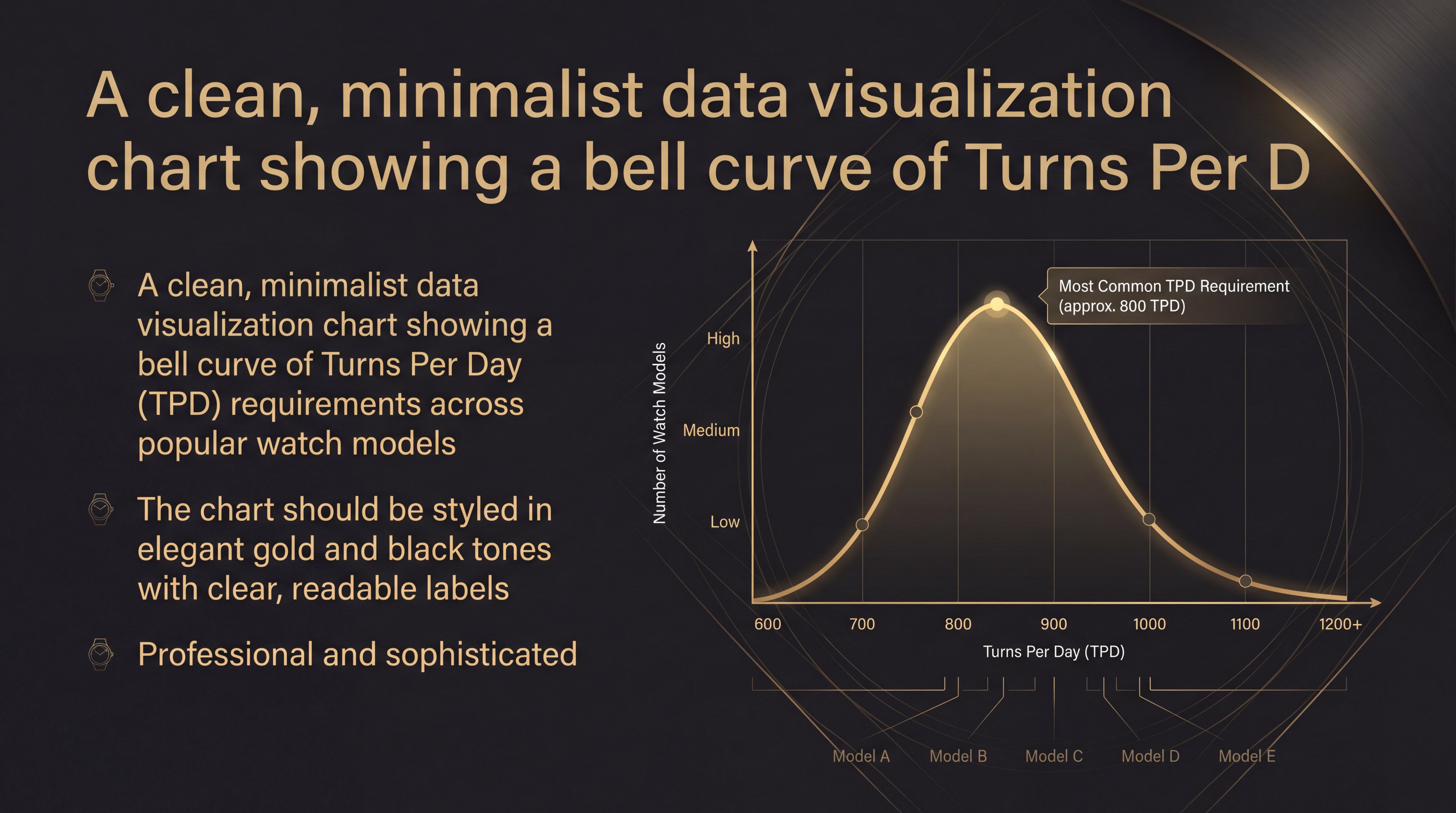
The most common TPD settings for modern watches range between 650 and 800 rotations per day. You can find more detailed guides on our blog to help you manage a diverse collection within a luxury safe watch winder. This range covers approximately 90% of all automatic watches currently in production today.
Is there a universal “safe” setting?
Think about it: 650 TPD in bi-directional mode is the industry standard baseline for almost any modern automatic movement.
- 650 TPD serves standard ETA and Sellita movements.
- 800 TPD is ideal for GMT and moonphase complications.
- 950+ TPD is reserved for high-complication “Grand” pieces.
Key Takeaway:
Over-winding is physically impossible in modern watches due to the “bridle” on the mainspring that allows it to slip once full.
| TPD Range | Percentage of Watches | Movement Examples |
|---|---|---|
| 600 – 700 | 65% | Rolex Submariner, Omega Seamaster |
| 700 – 900 | 25% | Zenith El Primero, Breitling B01 |
| 900+ | 10% | Patek Philippe Perpetual Calendars |
As the data shows, the vast majority of watches will stay perfectly wound using settings between 600 and 700 TPD.
How do you place the watch in the winder?

You place the watch in the winder by securing it tightly to the cushion and centering it within the rotor housing. Using a luxury safe watch winder requires a delicate touch to ensure the bracelet or strap is not stretched during the mounting process. Always ensure the watch face is parallel to the rotation plane for even weight distribution.
How do you choose the right cushion?
The truth is, most premium winders come with adjustable cuffs or foam inserts to accommodate varying wrist sizes.
- Compress the cushion fully before sliding the watch on.
- Ensure the clasp is locked to prevent the watch from shifting.
- Align the watch head so it does not rub against the glass or motor housing.
Key Takeaway:
Proper mounting prevents physical damage and ensures the motor operates silently without vibration from an unbalanced load.
| Mounting Step | Critical Action | Objective |
|---|---|---|
| 1 | Manual Wind | Provide initial power to the watch |
| 2 | Secure to Cuff | Prevent the watch from falling |
| 3 | Firm Insertion | Lock the cuff into the rotor |
Following these steps guarantees that your watch remains safe and the winding mechanism functions with maximum efficiency.
Can a winder actually damage your watch?
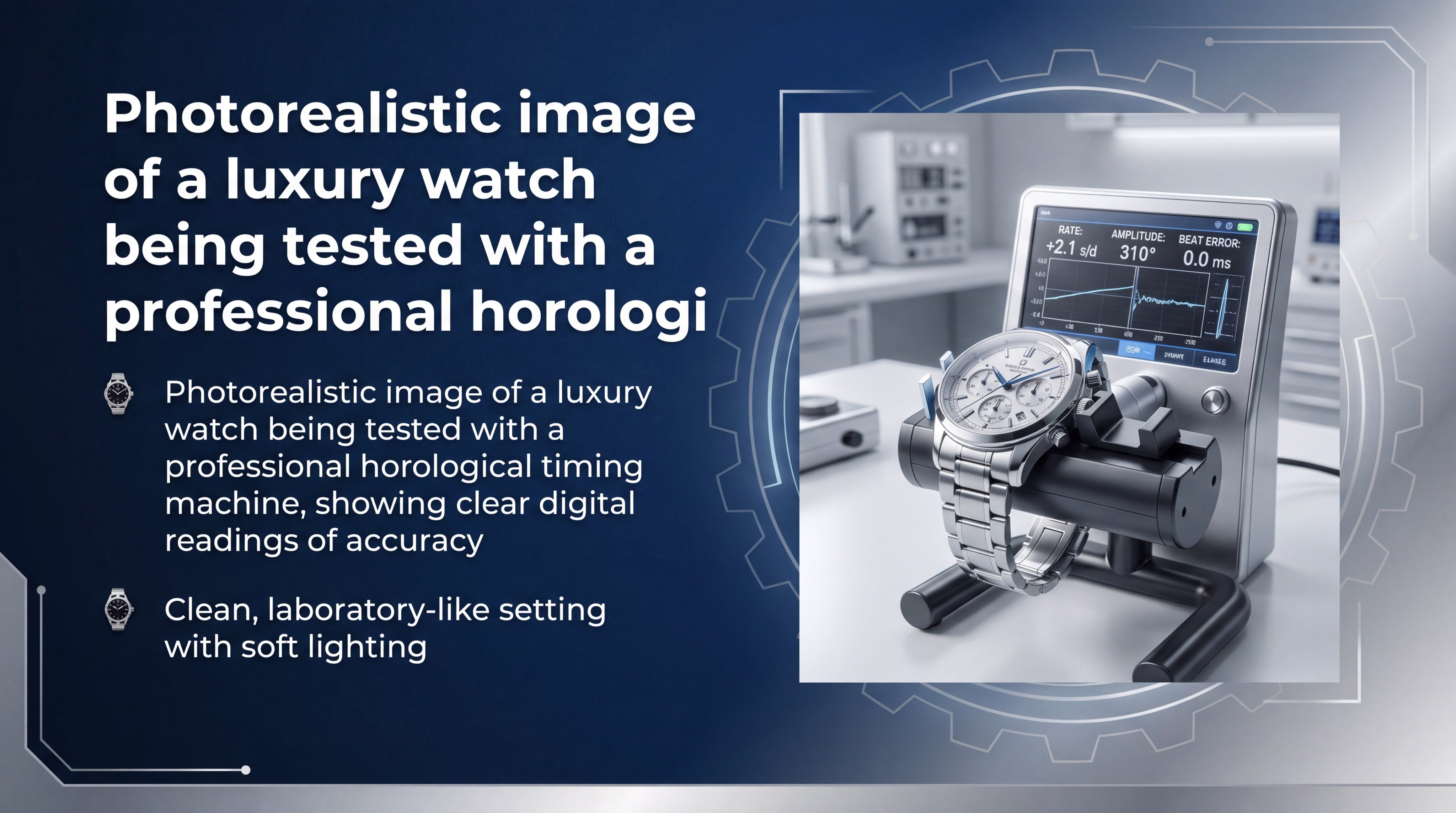
A high-quality winder will not damage your watch, as modern movements are designed to handle constant motion and include over-wind protection. Our about us page explains how we prioritize horological safety in every luxury safe watch winder we build. The only real risks come from low-quality units that lack magnetic shielding or proper rest cycles.
Is magnetization a real threat?
Believe it or not, the main danger with cheap winders is the unshielded motor which can magnetize your watch’s hairspring.
- Quality winders use shielded motors to block magnetic fields.
- Sleep cycles prevent mechanical fatigue by mimicking natural rest.
- Adjustable cuffs prevent the stretching of leather or metal straps.
Key Takeaway:
Investing in a premium unit with magnetization protection and programmable rest periods eliminates the risk of long-term mechanical wear.
| Potential Issue | Root Cause | Engineering Solution |
|---|---|---|
| Magnetization | Unshielded, cheap motors | Magnetic shielding plates |
| Mechanical Fatigue | Constant, non-stop rotation | Programmable “Sleep” modes |
| Surface Scratches | Loose or hard cushions | Soft-touch velvet or suede |
This analysis highlights that the quality of the winder itself is the most important factor in protecting your watch.
Why is a luxury safe winder better?
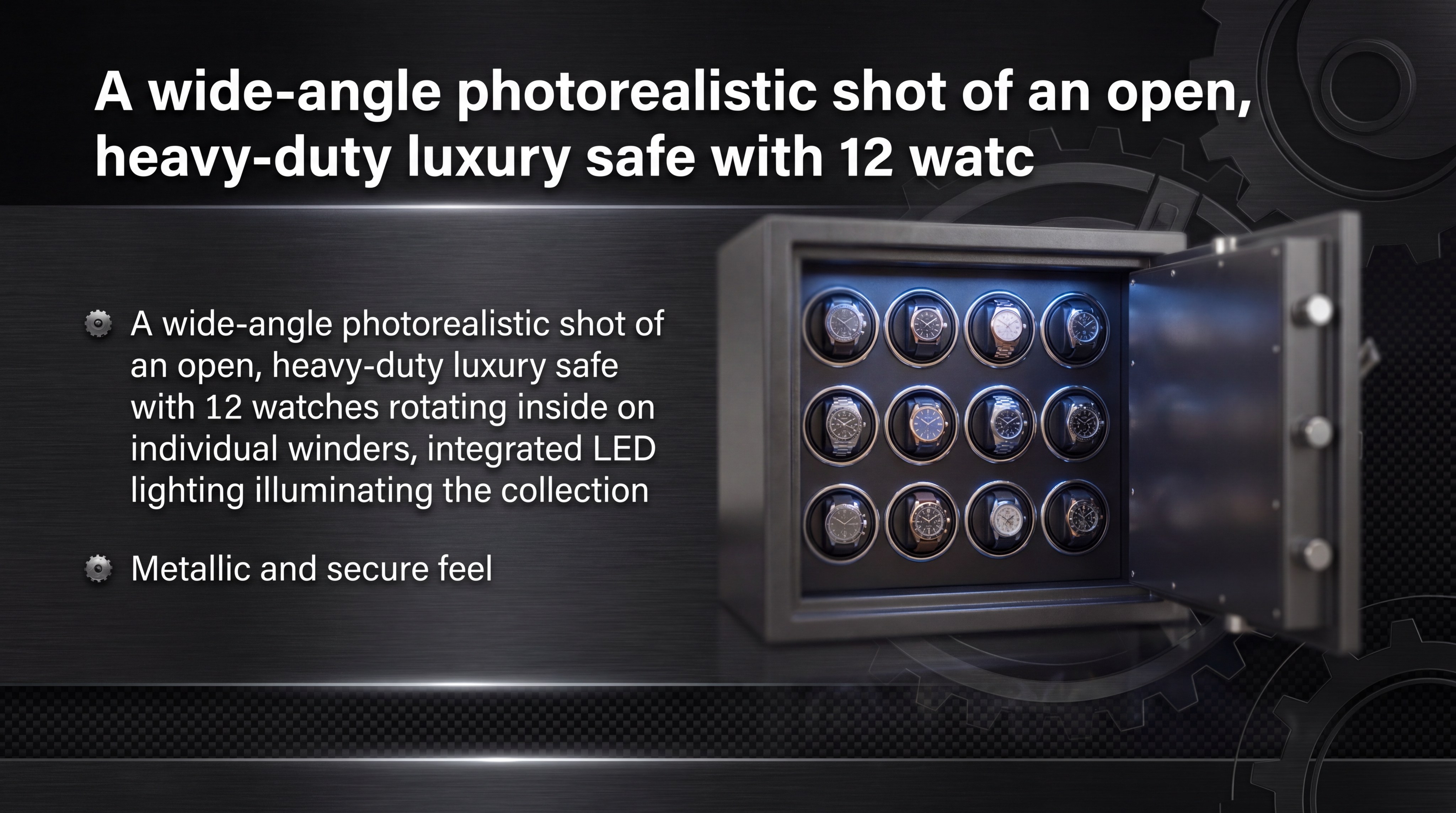
A luxury safe winder is superior because it combines professional-grade watch maintenance with ballistic-rated security for your entire collection. A luxury safe watch winder offers fireproofing and burglary protection that standard wooden display cases simply cannot provide. This dual-purpose design keeps your investments both running and safe from external threats.
What security features are included?
Think about it: why display your most valuable assets in a flimsy box when you can house them in a vault?
- Biometric fingerprint or digital keypad access.
- Thick steel plating and active locking bolts.
- Fire-resistant lining to protect movements from extreme heat.
Key Takeaway:
Luxury safe units provide individual motors for every watch, allowing you to customize settings for each piece in your collection.
| Feature | Standard Winder | Luxury Safe Winder |
|---|---|---|
| Physical Security | Low (Wood/Glass) | High (Ballistic Steel) |
| Fire Protection | None | 60 – 90 Minutes Rated |
| Programming | Global (All watches) | Individual (Per watch) |
The comparison clearly shows that safe-integrated winders provide a level of protection and customization that standalone units cannot match.
How do you maintain your winder over time?

You maintain your winder by performing regular dust cleanings and checking the motor’s sound levels for any signs of mechanical wear. To keep your system in peak condition, you should follow the maintenance guides available on our blog. A well-maintained luxury safe watch winder will last for decades, much like the watches it protects.
How often should you clean the unit?
Here is the truth: a quick monthly wipe-down of the glass and watch cushions is usually sufficient to prevent debris buildup.
- Use a microfiber cloth to avoid scratching the display.
- Check the power supply or batteries quarterly to ensure stability.
- Listen for unusual clicking noises which may indicate a loose cuff.
Key Takeaway:
Routine maintenance ensures the motors remain silent and the interior environment stays pristine for your luxury timepieces.
| Task | Recommended Frequency | Tools Required |
|---|---|---|
| Interior Dusting | Monthly | Microfiber cloth |
| Motor Sound Check | Every 3 Months | No tools needed |
| Battery Replacement | Annually (if applicable) | Replacement cells |
Consistent care prevents small issues from becoming expensive repairs, ensuring your winding safe remains a reliable horological tool.
Where is the best place for your winder?

The best place for your winder is a secure, climate-controlled environment away from direct sunlight and high humidity. Positioning your luxury safe watch winder in a walk-in closet or a bedroom suite allows for easy access while maintaining a discreet profile. Ensure the floor or cabinetry is reinforced to support the significant weight of a secure safe.
Is the bedroom a good choice?
Think about it: modern luxury winders use brushless DC motors that are virtually silent, making them perfect for sleep areas.
- Avoid windows where UV rays can fade watch dials.
- Stay away from laundry rooms where humidity levels fluctuate.
- Choose a location where the safe can be bolted to the floor.
Key Takeaway:
Strategic placement balances the need for daily accessibility with the necessity of long-term security and environmental stability.
| Location | Primary Advantage | Major Disadvantage |
|---|---|---|
| Master Suite | Maximum convenience | Potential weight limits |
| Walk-in Closet | Discreet and private | Limited lighting |
| Home Office | Professional display | More visible to guests |
This assessment shows that while convenience is key, the structural integrity and environmental safety of the location are equally vital.
How do you troubleshoot common issues?
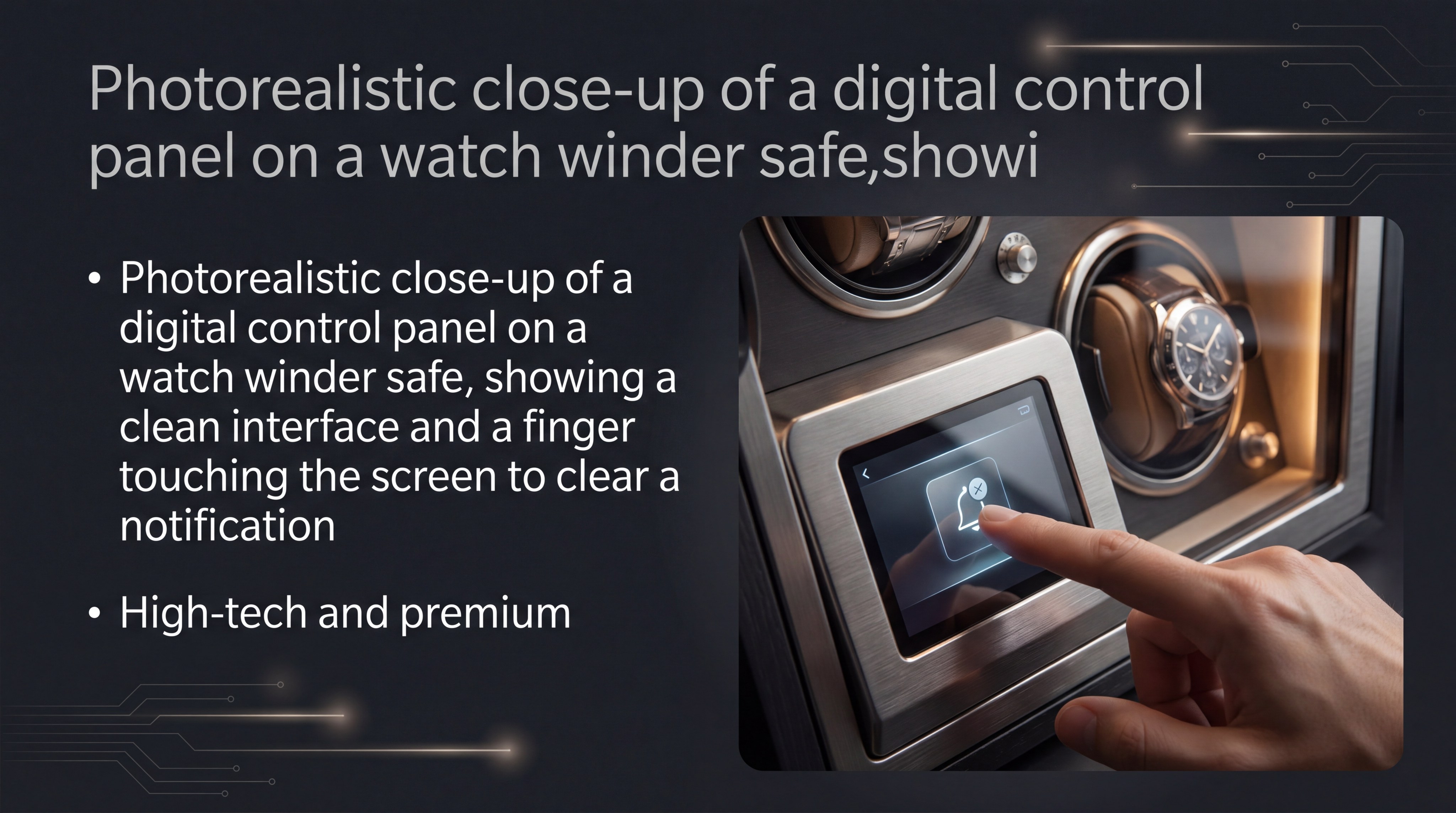
You can troubleshoot a stopping watch by increasing the TPD or verifying that the rotation direction matches the movement’s requirements. If you encounter technical hurdles, contact us today to speak with a specialist about your luxury safe watch winder. Most issues are easily solved by fine-tuning the digital program or reseating the watch cushion.
Why is my watch still losing time?
The solution is simple: a winder cannot fix a watch that is already magnetized or mechanically overdue for a professional service.
- If the watch stops, add 100 TPD to the setting.
- Ensure the power cable is firmly connected to the wall outlet.
- Use a cuff sleeve if the watch bracelet is loose on the cushion.
Key Takeaway:
Most “failures” are actually setting errors that can be corrected by consulting the manufacturer’s technical data for the specific watch caliber.
| Observed Problem | Most Likely Cause | Immediate Solution |
|---|---|---|
| Watch Stops | Insufficient TPD | Increase TPD by 100 |
| Motor Noise | Loose watch cuff | Re-seat and lock the cushion |
| No Power | Disconnected source | Check the plug or fuse |
The table provides a roadmap for resolving the most frequent operational challenges faced by collectors during initial setup.
Protecting your horological investment requires more than just a storage box; it demands a solution that balances mechanical health with absolute security. If you are struggling with dead movements and the vulnerability of unsecured displays, the right storage strategy can change everything. By integrating a professional-grade winding vault, you ensure your watches are always ready for the wrist while resting behind ballistic-grade protection. Contact us today to find the perfect fit for your home and take the next step in professional watch care. At Jimbo Safes, we believe that every masterpiece deserves a fortress.
FAQ
Can I use a winder for a manual wind watch?
No. Manual watches require the crown to be turned by hand and do not feature a rotor to benefit from a winder’s motion.
What’s the best TPD setting for a Rolex?
650 TPD in bi-directional mode. This setting covers almost all modern Rolex calibers and ensures the power reserve stays full without over-stressing the movement.
How do I know if my watch is winding?
Check if the watch is still running 48 hours after being placed in the winder. If the time and date are still accurate, the TPD and direction settings are correct.
Can I leave the winder on all the time?
Yes. Quality winders include programmed rest periods and sleep modes that prevent the motor from running 24/7 to mimic real-world wear patterns.
How do I know if my watch needs bi-directional winding?
Refer to the caliber number in your user manual. Most modern watches are bi-directional, but a few specific movements only wind in one direction.


