

Why invest in a 6 watch winder box?
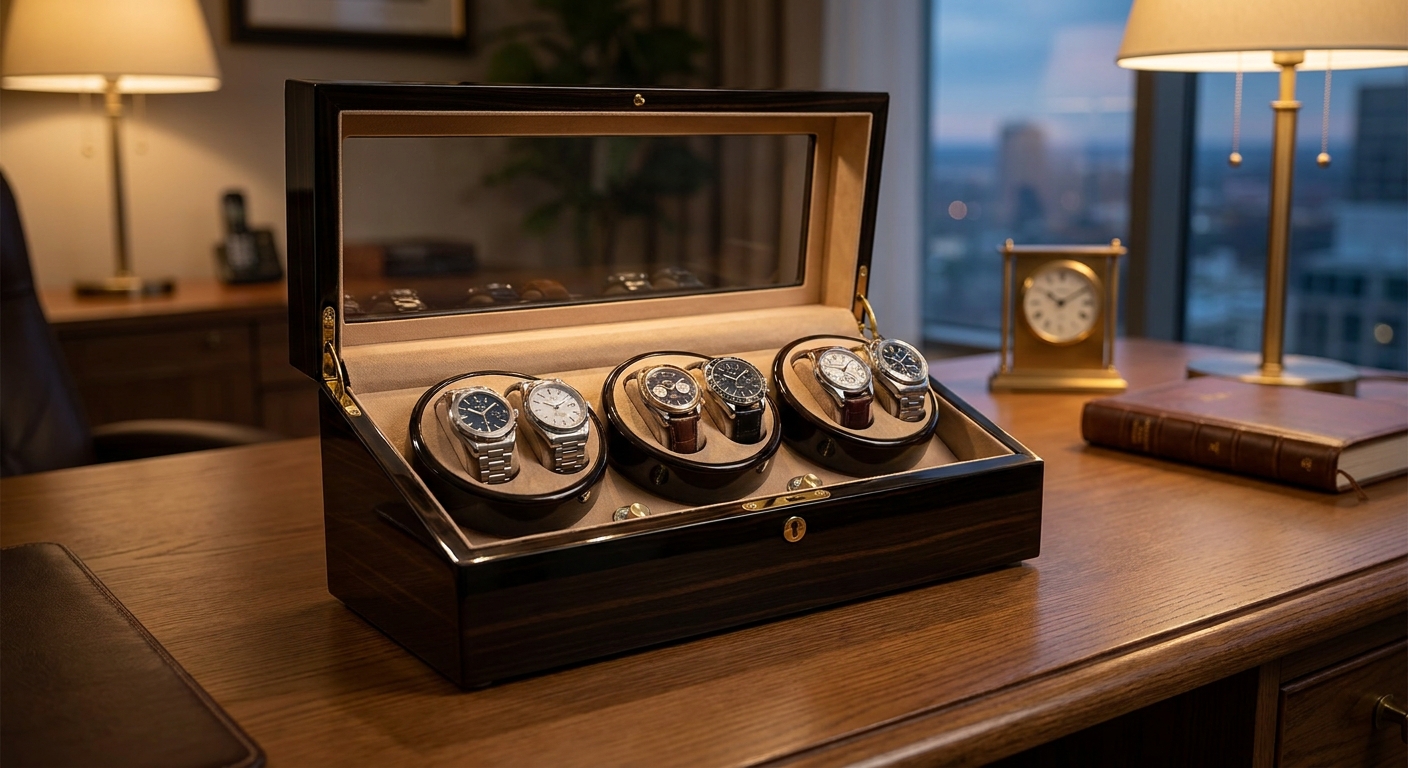
Investing in this specialized equipment ensures your automatic movements remain active, which prevents the internal oils from settling or drying out over time. A premium 6 watch winder box acts as both a protective environment and a functional maintenance tool for high-end calibers. It effectively eliminates the daily chore of manual winding while providing a central, elegant display for your most valued assets.
Is manual winding risky for automatics?
Manual winding can eventually put unnecessary stress on the crown seals and delicate winding stems if performed frequently. While watches are designed to be adjusted, a dedicated winder handles the energy replenishment through the rotor, which is the movement’s natural path.
- Reduced friction on crown gaskets.
- Consistency in mainspring tension.
- Protection from dust during handling.
Here is the kicker:
By using a automated system, you extend the lifespan of the internal seals and prevent the premature wear that often results from constant manual manipulation.
Key Takeaway: A winder replicates natural kinetic energy, protecting the crown and internal gears from the strain of manual winding cycles.
| Feature | Manual Winding | 6 Watch Winder Box |
|---|---|---|
| Wear on Crown | High Risk | Negligible |
| Oil Distribution | Irregular | Consistent |
| Ready to Wear | No (Requires Setup) | Yes (Always Ready) |
This comparison clearly shows that automated winding provides superior long-term health for luxury mechanical movements.
How many TPD settings are in a 6 watch winder box?
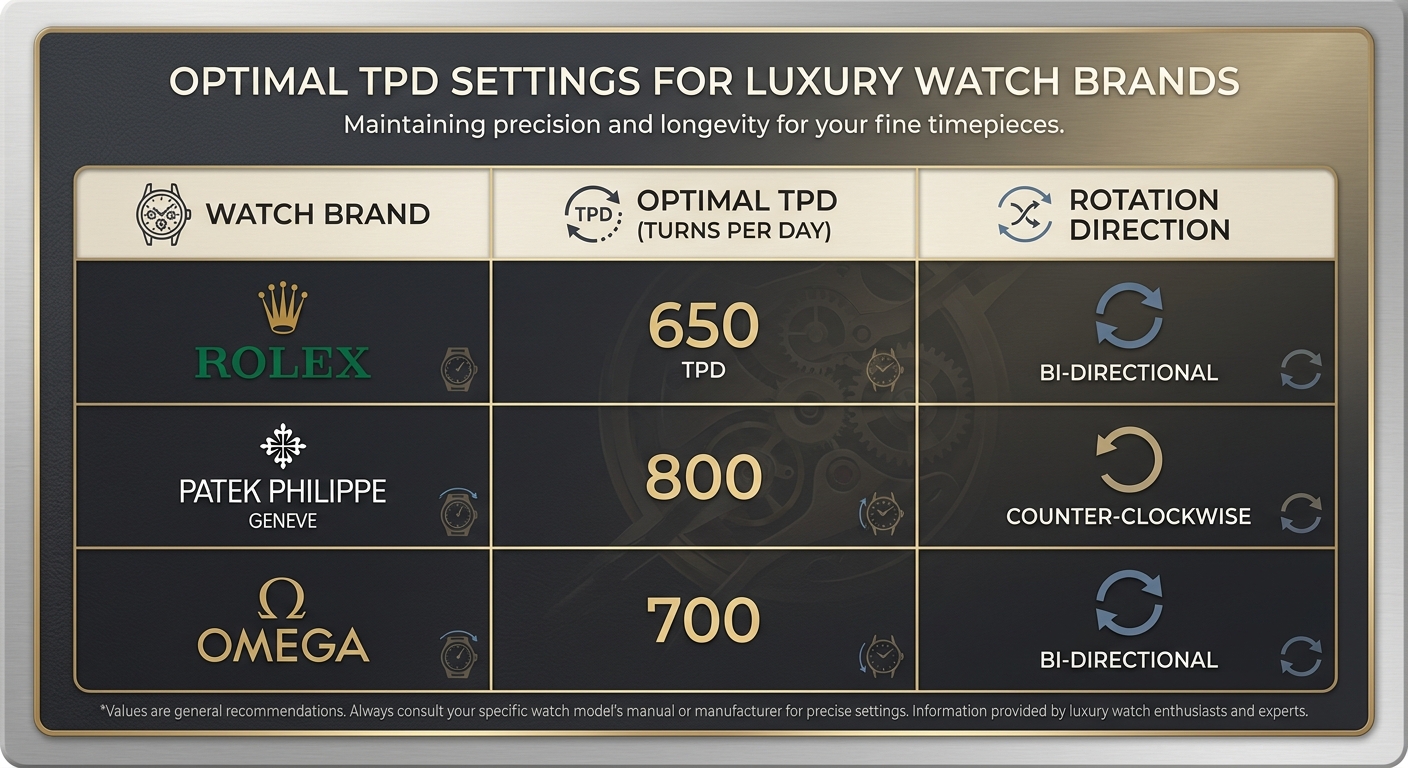
High-quality models typically offer a range from 650 to 1950 Turns Per Day (TPD) to accommodate various manufacturer specifications. A professional 6 watch winder box allows you to customize these settings for each individual rotor independently. This level of control is vital because a Rolex may require a different TPD count compared to a Patek Philippe or an Omega.
What is the importance of TPD accuracy?
TPD accuracy ensures that the mainspring is wound just enough to maintain the power reserve without triggering the slipping spring mechanism excessively. Every caliber has an “ideal” number of rotations that keeps it running within its chronometer specifications.
- 650 TPD: Standard for many modern Rolex calibers.
- 800 TPD: Common for complex Patek Philippe complications.
- 950+ TPD: Required for heavy-duty or older vintage movements.
Think about it:
If you provide too few turns, your watch will eventually stop; if you provide too many, you are putting unnecessary wear on the clutch mechanism.
Are programmable rotors necessary?
Programmable rotors are essential for a collection of six watches because different brands rarely share the same winding requirements. You need the flexibility to set one watch to clockwise and another to bi-directional movement simultaneously.
- Independent motor control.
- Specific directionality (CW, CCW, Both).
- Sleep phase cycles.
Wait, there’s more:
Advanced models even include “speed winding” modes for watches that have completely run out of power, getting them back to operational status quickly.
Key Takeaway: Precise TPD management prevents both under-winding and over-winding, ensuring each watch in your six-piece collection receives tailored care.
| Brand | Recommended TPD | Direction |
|---|---|---|
| Rolex | 650 | Bi-directional |
| Patek Philippe | 800 | Counter-Clockwise |
| Omega | 700 | Bi-directional |
Utilizing a programmable interface allows you to match these manufacturer-specific requirements with absolute precision.
What materials build a durable 6 watch winder box?
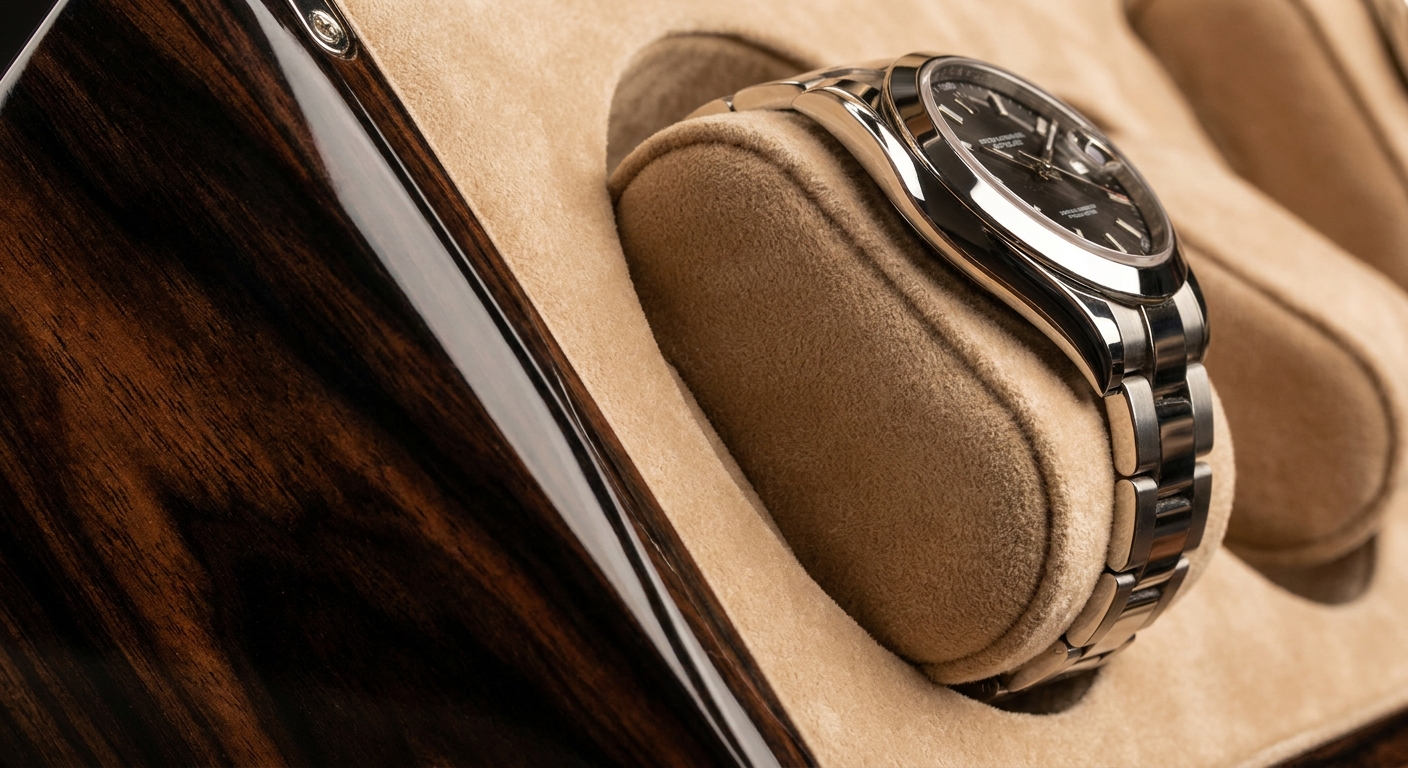
Luxury winders are crafted from high-density MDF or solid wood, often finished with multiple layers of piano lacquer for a glass-like sheen. A premium 6 watch winder box uses these materials to provide structural rigidity and dampen any vibration from the internal motors. The choice of material impacts not just the longevity of the box itself, but also the protection it offers your watches.
Is solid wood superior to carbon fiber?
Solid wood provides a classic, heavyweight feel that resonates with traditional watchmaking, while carbon fiber offers a modern, high-tech aesthetic. Both materials are excellent for durability, though wood typically offers better natural sound insulation for the motor housing.
- Multi-layer lacquer finishes.
- Hand-polished wood veneers.
- Scratch-resistant carbon composites.
Look at it this way:
Your choice of exterior material should reflect the style of your collection, whether it’s vintage gold pieces or modern steel divers.
Does the interior lining matter?
The interior lining must be made of non-abrasive materials like micro-suède or premium leather to prevent micro-scratches on polished watch cases. High-end units often feature padded watch pillows that adjust to fit different wrist sizes and bracelet lengths perfectly.
- Acid-free velvet linings.
- Soft-touch faux leather.
- Expandable watch cushions.
Believe it or not:
Poor quality linings can actually cause “case rash” or scuffing over years of use, making the choice of interior just as important as the exterior.
Key Takeaway: Opt for a combination of a rigid wood chassis and a soft, non-reactive interior to ensure both structural and surface protection.
| Material | Aesthetic | Durability | Sound Dampening |
|---|---|---|---|
| Solid Wood | Traditional | Very High | Excellent |
| Carbon Fiber | Modern | High | Moderate |
| Piano Lacquer | Luxury | High | Good |
Selecting premium materials ensures that your winder remains a centerpiece of your decor while functioning flawlessly for a decade or more.
Is a quiet motor vital for a 6 watch winder box?
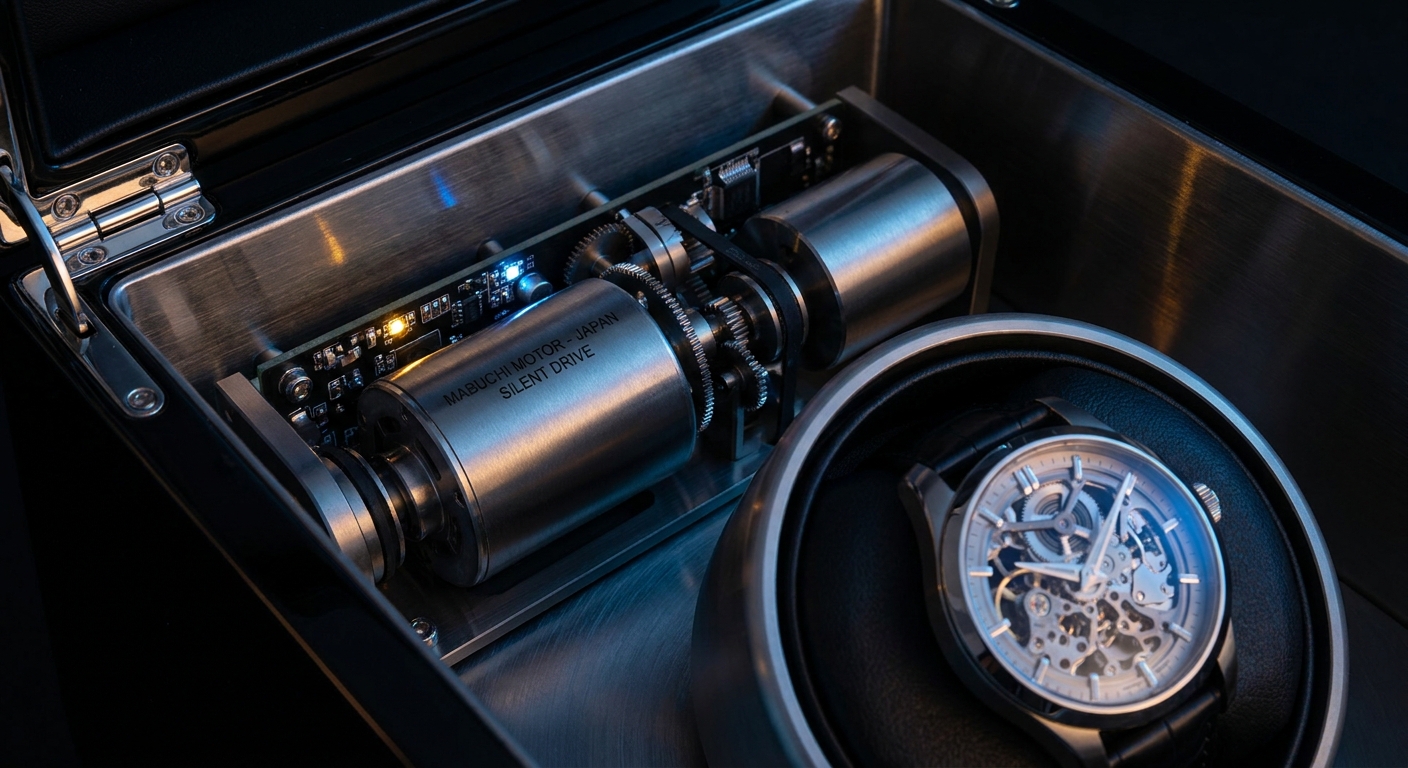
Silence is a hallmark of quality, especially if you intend to keep your collection in a bedroom or a quiet home office. A professional 6 watch winder box should operate at a noise level below 10 decibels, making it virtually imperceptible to the human ear. This is achieved through the use of high-grade Japanese motors and precision-engineered gear systems.
How silent are Japanese Mabuchi motors?
Mabuchi motors are the industry standard for luxury winders because they provide high torque with extremely low acoustic output. These motors are designed for longevity and can run for thousands of hours without developing the “whirring” or “grinding” sounds associated with cheaper alternatives.
- Brushless DC technology.
- Shielded magnetic components.
- Precision-balanced rotors.
Here is the deal:
A cheap motor might sound fine for the first month, but as the bearings wear down, the noise will become a constant distraction in your living space.
Why is noise level vital for bedrooms?
When your winder is located near your sleeping area, even a faint repetitive clicking or humming can disrupt your rest. Premium models utilize sound-dampening mounting systems that isolate the motor from the outer shell, ensuring total silence during night-time operation.
- Acoustic foam insulation.
- Rubberized motor mounts.
- Frictionless gear assemblies.
Think about it:
The ultimate luxury is a device that does its job perfectly without ever reminding you that it is actually running.
Key Takeaway: Prioritize Japanese Mabuchi motors to guarantee a silent operating environment and long-term mechanical reliability.
| Motor Type | Noise Level | Expected Lifespan | Energy Efficiency |
|---|---|---|---|
| Japanese Mabuchi | < 10 dB | 5-10 Years | High |
| Generic Chinese | 25-40 dB | 1-2 Years | Low |
| Swiss Micro-Motor | < 10 dB | 8-12 Years | Very High |
Investing in a silent motor prevents the annoyance of mechanical noise and ensures the winder integrates seamlessly into your personal sanctuary.
Does a 6 watch winder box offer extra storage?
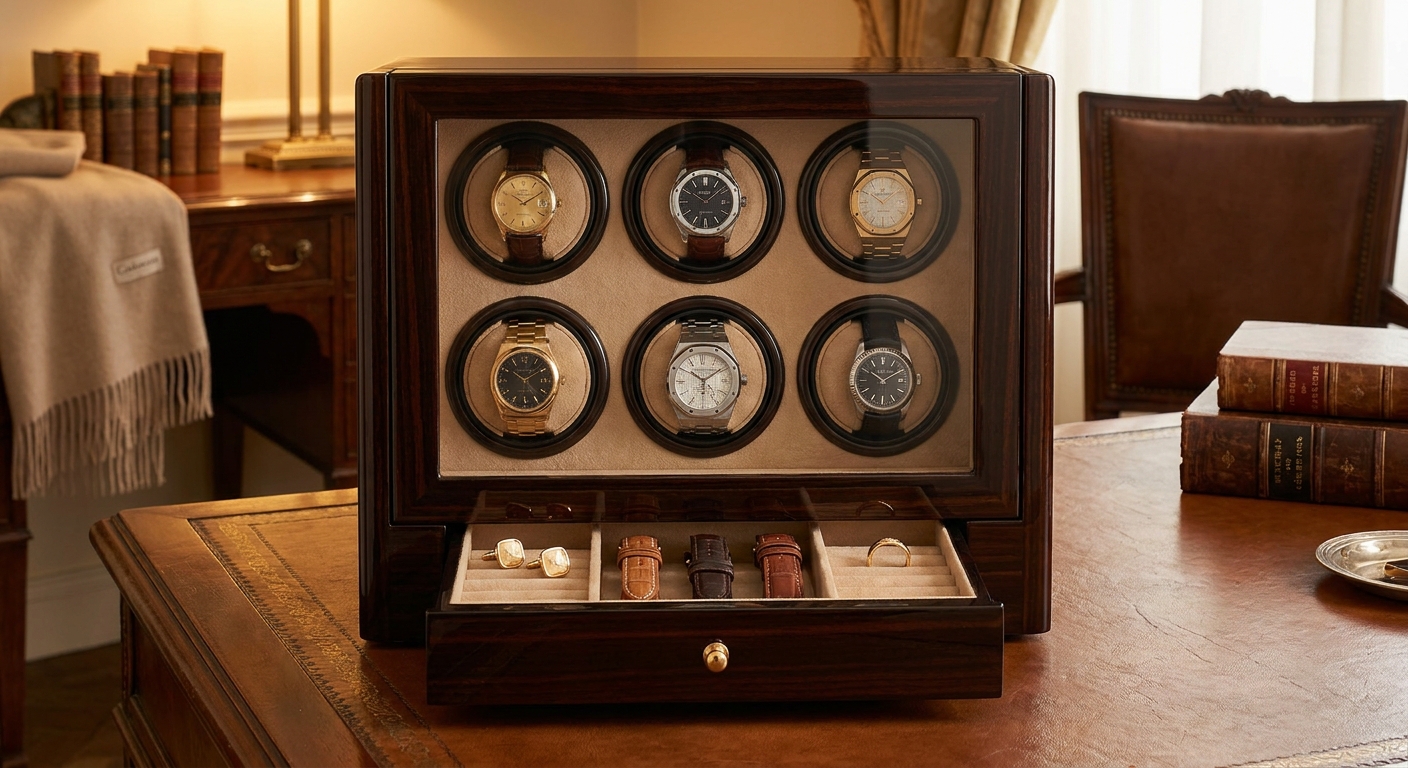
Many larger units incorporate additional static storage drawers to house quartz watches, jewelry, or manual-wind timepieces. A 6 watch winder box often serves as a comprehensive “valet” station, organizing your entire EDC (Everyday Carry) in one secure and beautiful location. This integration saves space on your dresser while keeping your most important accessories together.
Can it hold non-automatic watches?
While the rotors are designed for automatics, the static slots or drawers are perfect for your battery-operated or manual-winding pieces. This allows you to maintain a consistent aesthetic for your entire collection without needing separate storage boxes for different watch types.
- Dedicated quartz storage slots.
- Drawers for straps and tools.
- Compartments for cufflinks and rings.
But wait, there’s more:
Some high-end models feature “travel watch” slots within the drawer, allowing you to grab a protected case for your next business trip easily.
Are additional drawers worth it?
Additional drawers provide a significant boost to the utility of the winder by centralizing your luxury accessories. Instead of searching multiple boxes, you can keep your favorite rings, pens, and spare watch bracelets organized directly beneath your rotating timepieces.
- Soft-close drawer slides.
- Removable dividers.
- Matching interior materials.
You might be wondering:
Does the added size make the box too bulky? In most cases, the vertical integration of a drawer actually saves footprint compared to multiple smaller boxes.
Key Takeaway: Hybrid storage configurations provide the best value by consolidating your watch collection and accessories into a single, organized unit.
| Storage Type | Capacity (Avg) | Best For |
|---|---|---|
| Active Rotors | 6 Watches | Automatic Movements |
| Static Slots | 2-4 Watches | Quartz / Manual Watches |
| Utility Drawer | Variable | Cufflinks / Straps / Rings |
A winder with integrated storage maximizes organization and turns a functional tool into a complete horological workstation.
Is biometric security used in a 6 watch winder box?
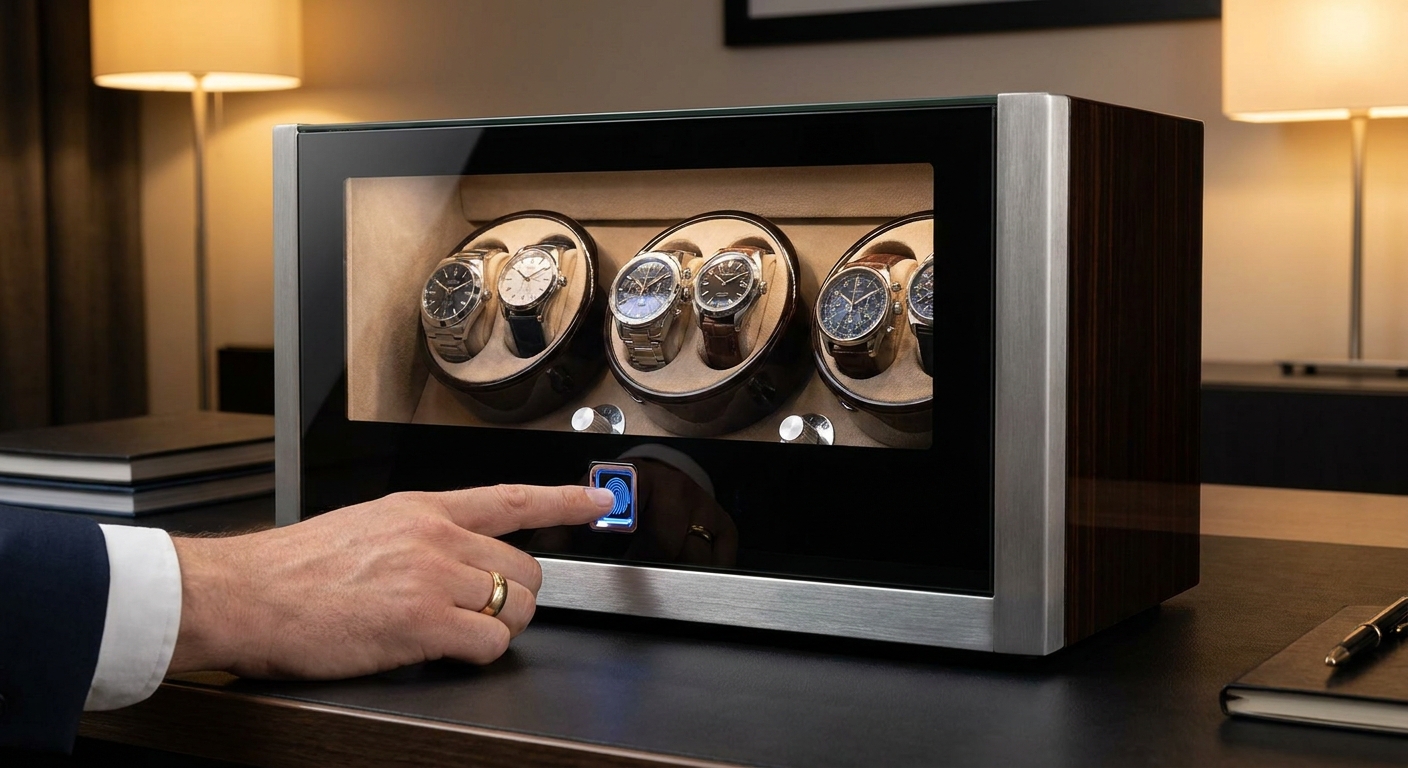
Modern security features like fingerprint scanners are increasingly common in high-end winding solutions. A professional 6 watch winder box equipped with biometric access ensures that only you can handle your valuable timepieces. This is particularly important if you frequently have guests, children, or staff in your home who might be curious about your collection.
Do you need a lock and key?
A physical lock and key provide a basic level of protection that prevents casual tampering or accidental damage. While not a substitute for a full safe, a locked glass door keeps fingers off the delicate crystals and prevents watches from being displaced from their rotors.
- Preventing accidental drops.
- Deterring unauthorized handling.
- Protecting against dust and spills.
Wait, there’s more:
Some systems even feature an “auto-stop” function that halts the rotors the moment the door is unlocked or opened for your convenience.
Is biometric access a better option?
Biometric sensors offer the ultimate combination of security and rapid access, eliminating the need to keep track of a physical key. With a simple touch, the tempered glass door unlocks, allowing you to select your watch for the day in seconds without compromising safety.
- 0.5-second recognition speed.
- Multiple fingerprint memory.
- Battery backup for power outages.
The kicker is:
Biometric systems often include a hidden manual override key, ensuring you are never locked out of your collection if the electronics fail.
Key Takeaway: Advanced security features like biometrics protect your investment from unauthorized access while maintaining the “grab-and-go” convenience of a winder.
| Security Level | Feature | Primary Benefit |
|---|---|---|
| Standard | Key Lock | Basic child/guest protection |
| Professional | Digital Code | Keyless entry for multiple users |
| Elite | Biometric Sensor | Instant access with maximum security |
Upgrading to a biometric model provides peace of mind that your most valuable assets are secured against both accidents and theft.
How do rotation modes work in a 6 watch winder box?
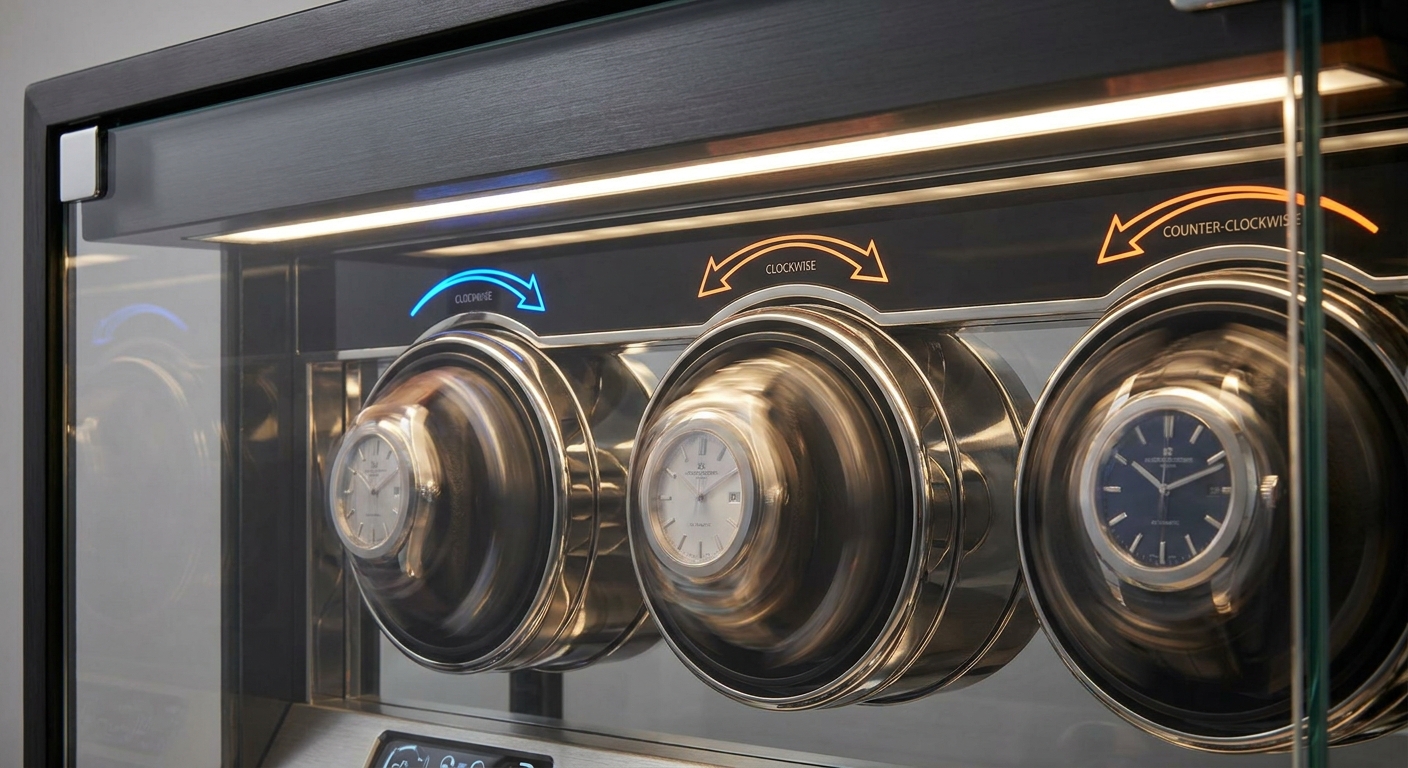
Rotation modes dictate the direction the rotor spins to engage the winding mechanism of the specific movement inside. A 6 watch winder box must offer clockwise, counter-clockwise, and bi-directional modes to be compatible with every luxury brand. Selecting the wrong mode won’t damage the watch, but it will fail to wind the mainspring, leading to a stopped timepiece.
Should you use clockwise or bi-directional?
The correct mode depends entirely on the caliber of the watch; for example, many Valjoux movements only wind in one specific direction. Bi-directional modes are excellent for most modern Rolex and Omega watches, as they rotate in both directions to keep the power reserve topped up.
- Clockwise (CW): For specific ETA and older calibers.
- Counter-Clockwise (CCW): Essential for certain Patek movements.
- Bi-Directional: Most efficient for modern sport watches.
Think about it:
The goal is to provide the movement with enough energy to stay in the middle of its power reserve, where it is most accurate.
Can over-winding damage your collection?
Modern automatic watches have a built-in safety clutch that prevents the mainspring from being over-wound. However, a high-quality winder includes “sleep cycles” or “rest periods” to ensure the internal components aren’t under constant tension, mimicking the way a watch rests on your wrist at night.
- 12-hour rest cycles.
- Intermittent rotation patterns.
- Power reserve preservation.
Here is the kicker:
Continuous rotation without rest can lead to premature wear on the slipping spring, so a winder with a “12 hours on, 12 hours off” mode is always preferable.
Key Takeaway: Always match the rotation direction to your watch’s movement specifications and utilize sleep modes to mimic healthy wearing habits.
| Mode | Motion Pattern | Typical Use Case |
|---|---|---|
| Clockwise | Continuous right-hand spin | Specific ETA/Sellita movements |
| Counter-Clockwise | Continuous left-hand spin | Patek Philippe / Miyota |
| Bi-Directional | Alternating left and right | Rolex / Omega / Breitling |
Understanding these modes ensures that your winder works in harmony with your watches rather than against them.
Does LED light improve a 6 watch winder box?
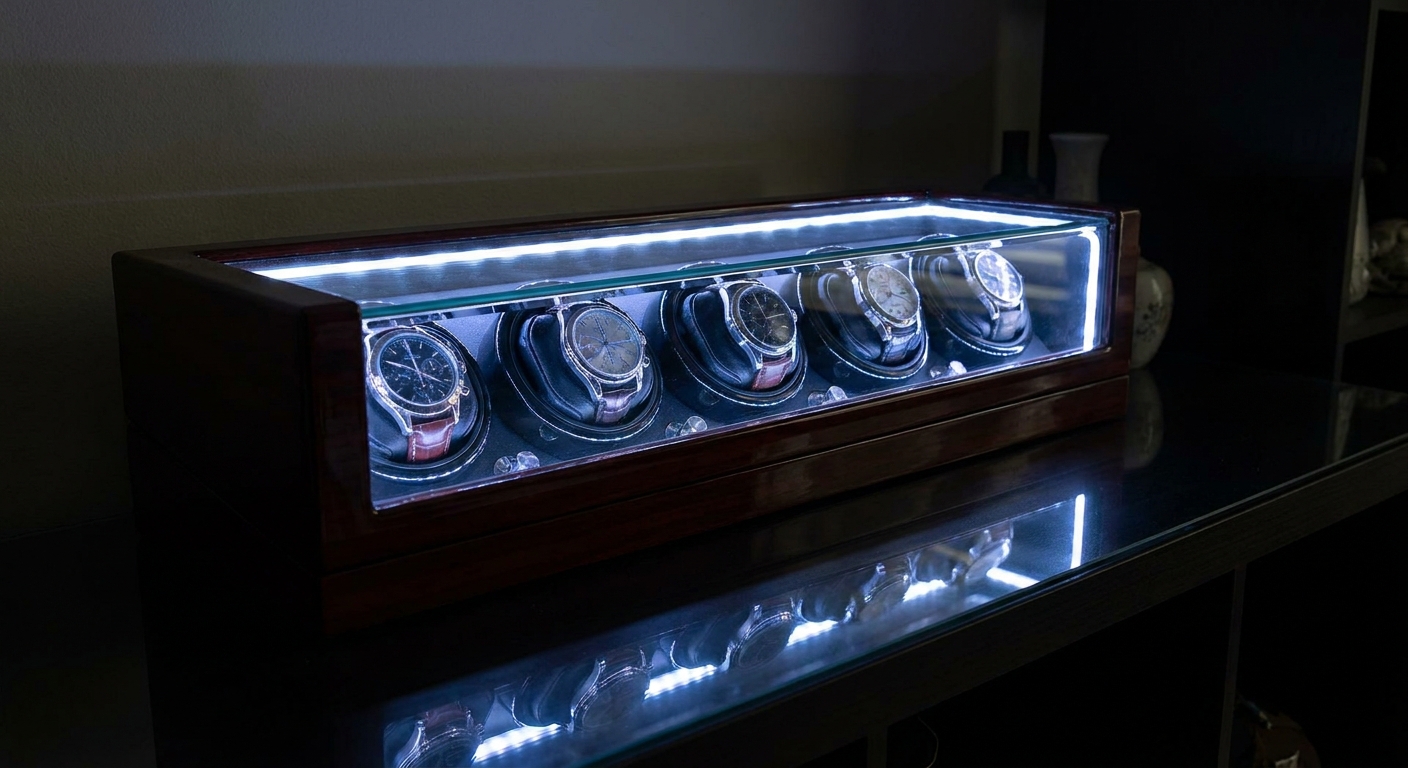
Integrated LED lighting transforms your storage solution into a stunning visual gallery that highlights the craftsmanship of your timepieces. A professional 6 watch winder box uses “cool” LED technology that does not emit heat, ensuring that the lubricants inside your watches remain at a stable temperature. This lighting is perfect for dimly lit rooms or offices where you want your collection to serve as a focal point.
Does interior light affect the movement?
Unlike halogen or incandescent bulbs, high-quality LEDs do not generate infrared heat that could potentially degrade the synthetic oils in a watch movement. You can leave the display lights on for extended periods without worrying about the thermal impact on the delicate gears or hairsprings.
- Zero-heat LED arrays.
- Adjustable brightness levels.
- Remote-controlled lighting.
Wait, there’s more:
Some winders feature “mood lighting” that can cycle through different colors to match your interior design or the specific colors of your watch dials.
Is blue LED better for night viewing?
Blue or cool-white LED lighting provides a modern, “technological” look that makes steel and white gold watches pop with brilliance. Warm-white lighting is often preferred for vintage collections or gold pieces, as it enhances the rich tones of the precious metals and leather straps.
- Cool White: Best for modern divers.
- Blue: Great for futuristic or steel pieces.
- Warm White: Ideal for gold and dress watches.
Believe it or not:
The right lighting can make even a modest collection look like a high-end boutique display, increasing the enjoyment you get from your hobby.
Key Takeaway: Use heat-free LED lighting to enhance the visual appeal of your collection without risking any thermal damage to the watch movements.
| Light Type | Heat Output | Best Aesthetic |
|---|---|---|
| LED | Negligible | Modern / Clean |
| Incandescent | High (Dangerous) | Do Not Use |
| RGB LED | Negligible | Customizable |
Properly implemented lighting ensures that your collection is always the star of the room, day or night.
Will large faces fit in a 6 watch winder box?
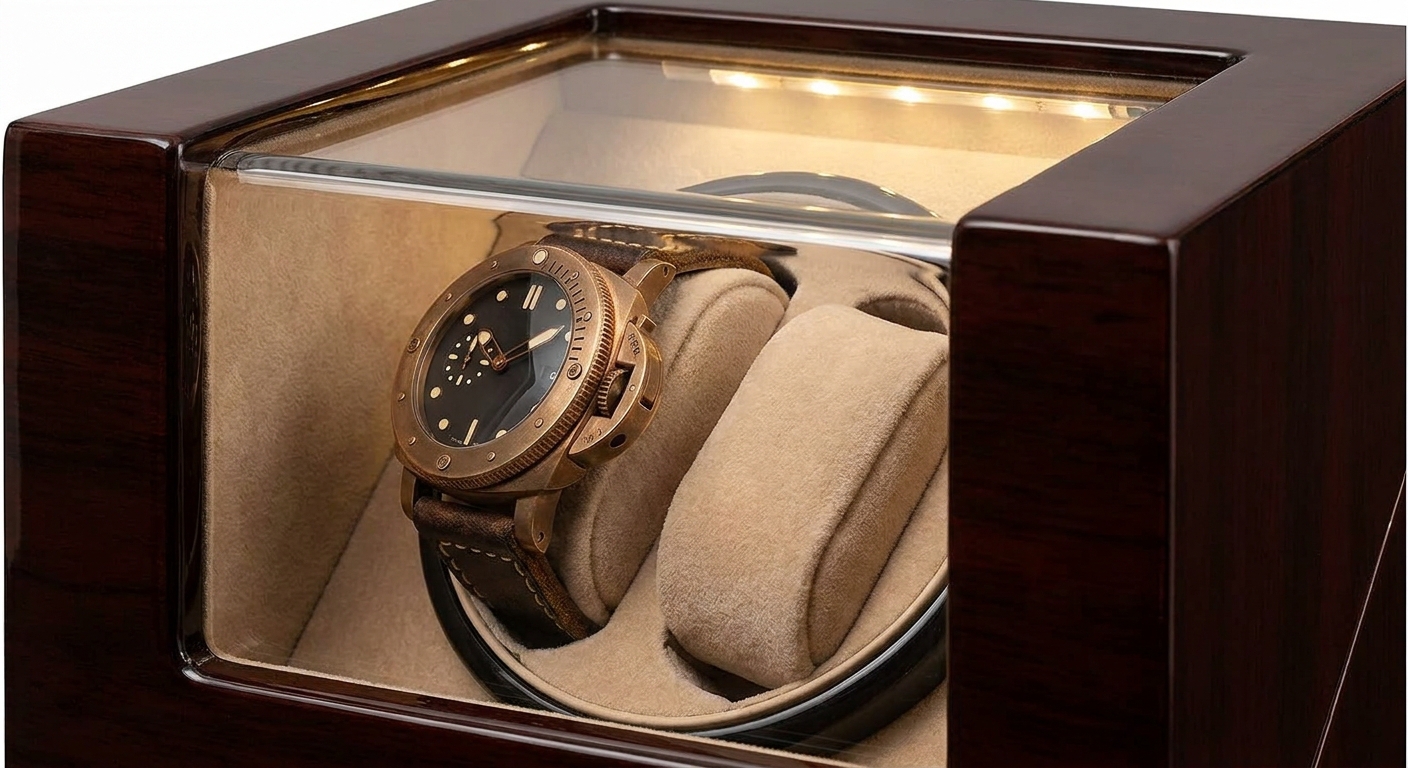
“Watch crowding” is a common issue in lower-end models, but premium winders are designed with enough clearance for oversized 50mm+ cases. A 6 watch winder box should feature widely spaced rotors to prevent two adjacent watches from touching each other during rotation. This is critical for collectors of large diver watches or thick pilot chronographs that require more physical space.
Are the pillows adjustable for size?
Watch pillows must be compressible or come in multiple sizes to accommodate both small lady-sized watches and large masculine bracelets. A high-quality pillow ensures the watch is held firmly in place, preventing it from rattling or falling off the rotor during its spin cycle.
- Memory foam cushions.
- Spring-loaded holders.
- Removable outer sleeves.
Look at it this way:
If your watch is too loose on the pillow, the gravity-assisted winding won’t work correctly, and you risk scratching the bracelet against the rotor walls.
Is there enough clearance for thick cases?
Clearance refers to the distance between the watch crystal and the glass door of the winder. Professional models provide deep rotor housings to ensure that even a thick Panerai or Hublot can rotate freely without making contact with the front window.
- Deep-well rotor design.
- Reinforced glass doors.
- Wide-diameter rotor cups.
Now, here’s the kicker:
Always check the “Maximum Watch Diameter” specification before purchasing, as some vintage-style winders are only built for smaller 36-40mm timepieces.
Key Takeaway: Verify that the winder uses oversized rotors and adjustable pillows to safely accommodate large-diameter and thick-cased luxury watches.
| Watch Size | Rotor Requirement | Pillow Type |
|---|---|---|
| Small (<36mm) | Standard | Extra-padded / Small |
| Medium (38-42mm) | Standard | Standard / Medium |
| Large (>44mm) | Oversized / Wide | Compressible / Large |
Selecting a winder with generous spacing protects the exterior finish of your watches from accidental contact during the winding process.
What is the cost of a luxury 6 watch winder box?
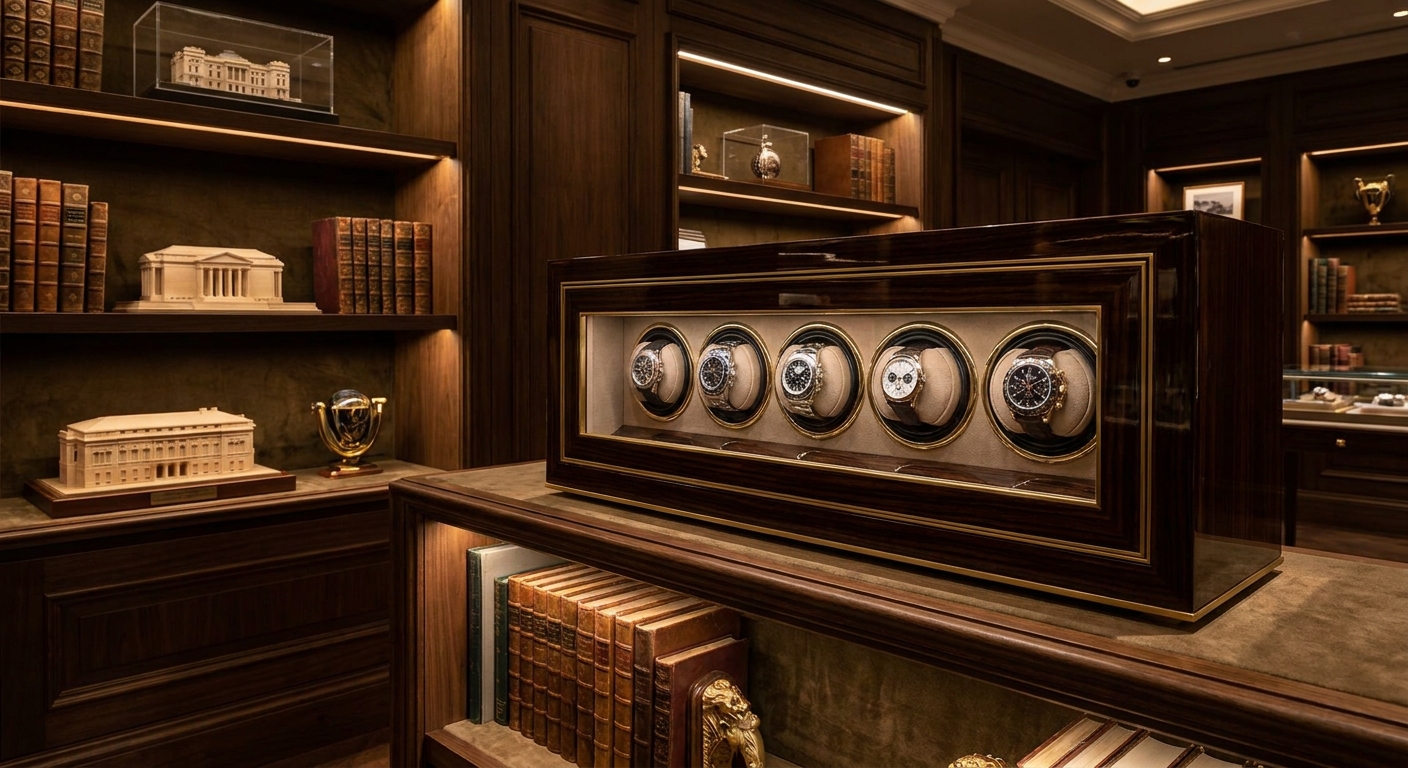
A reliable 6-watch unit typically ranges from $300 to $1,500 depending on the materials used and the level of technological integration. While you can find cheaper alternatives, they often cut corners on motor quality and interior linings, which can lead to mechanical failure or damage to your watches. Think of the cost as an insurance policy for your collection, which likely worth tens of thousands of dollars.
Is price a true indicator of quality?
In the world of watch accessories, price usually reflects the quality of the motors, the precision of the programming, and the durability of the exterior finish. A mid-range winder offers the best “bang for your buck” by providing silent Japanese motors and a beautiful wood finish without the massive markup of certain high-end brand names.
- Investment in motor longevity.
- Quality of electronic controllers.
- Thickness of protective glass.
Think about it:
Does it make sense to put a $10,000 watch on a $20 motor that might fail and let the oils settle?
What is the ROI on watch maintenance?
The “Return on Investment” for a winder is measured in the money you save on expensive mechanical services. A watch that is kept running consistently often requires less frequent overhauls compared to one that is left to sit idle for months at a time.
- Prevention of oil coagulation.
- Reduced wear on the crown.
- Maintenance of timekeeping accuracy.
Believe it or not:
A single full service for a luxury chronograph can cost more than the price of a high-end 6-watch winder.
Key Takeaway: Expect to invest between $400 and $800 for a professional-grade winder that balances premium features with long-term mechanical reliability.
| Price Tier | Key Features | Best For |
|---|---|---|
| $300 – $500 | Basic wood/Mabuchi motors | New Collectors |
| $600 – $1,000 | Biometrics / LED / Drawers | Serious Enthusiasts |
| $1,500+ | Bespoke / Exotic Woods | High-Net-Worth Portfolios |
Investing in a quality winder today prevents thousands of dollars in maintenance costs tomorrow while significantly enhancing your daily wearing experience.
Conclusion
This guide has explored how a 6 watch winder box solves the complex challenges of maintaining a growing horological collection. By providing silent operation, programmable rotation modes, and secure, beautiful housing, these devices ensure your timepieces remain in peak mechanical condition. At Jimbo Safes, our vision is to provide the ultimate assurance in luxury protection and display excellence, crafting products that respect the legacy of your collection. If you are ready to secure your assets and elevate your storage solution, please contact us today for expert guidance on the perfect model for your needs.
Frequently Asked Questions
Can I use a 6 watch winder box for different watch brands?
Absolutely, because premium models feature independent rotors that allow you to set specific TPD and rotation directions for each watch individually. This ensures a Rolex and a Patek can be maintained side-by-side with perfect accuracy.
What’s the best way to determine the correct TPD for my watch?
You should consult your watch’s user manual or a manufacturer’s database, as most luxury brands require between 650 and 800 TPD. If you are unsure, starting with a bi-directional setting at 650 TPD is a safe and effective baseline for most modern movements.
How do I know if my winder is loud enough to hear at night?
Premium winders use Japanese motors that operate at less than 10dB, which is quieter than a human whisper. If you can hear a whirring sound from more than two feet away, the unit is likely using lower-quality components.
Can I leave my watches in the winder indefinitely?
Yes, provided the winder has a built-in “sleep mode” or rest cycle to prevent constant tension on the mainspring. These cycles mimic real-world wear patterns and are completely safe for long-term storage.
How do I know if a 6 watch winder box will fit my large diver watch?
Check the rotor diameter and the clearance between the pillow and the glass door before purchasing. Most professional units are designed to accommodate cases up to 52mm in diameter and significant case thickness.

