

You should use a watch winder to ensure your automatic timepieces maintain mechanical precision and remain ready to wear at a moment’s notice. Imagine the frustration of reaching for your prized Rolex or Patek Philippe before a gala, only to find the hands frozen and the perpetual calendar days behind. You have invested significant capital into a masterpiece of horology, yet leaving it idle allows the intricate movement to lose its pulse.
The problem is that mechanical movements rely on constant kinetic energy to stay healthy. When a watch sits stationary, the internal lubricants can settle, and resetting complex complications risks unnecessary wear on the crown. Investing in a luxury watch winder provides the continuous, gentle motion needed to keep your collection in peak condition.
Why buy a luxury watch winder for your collection?
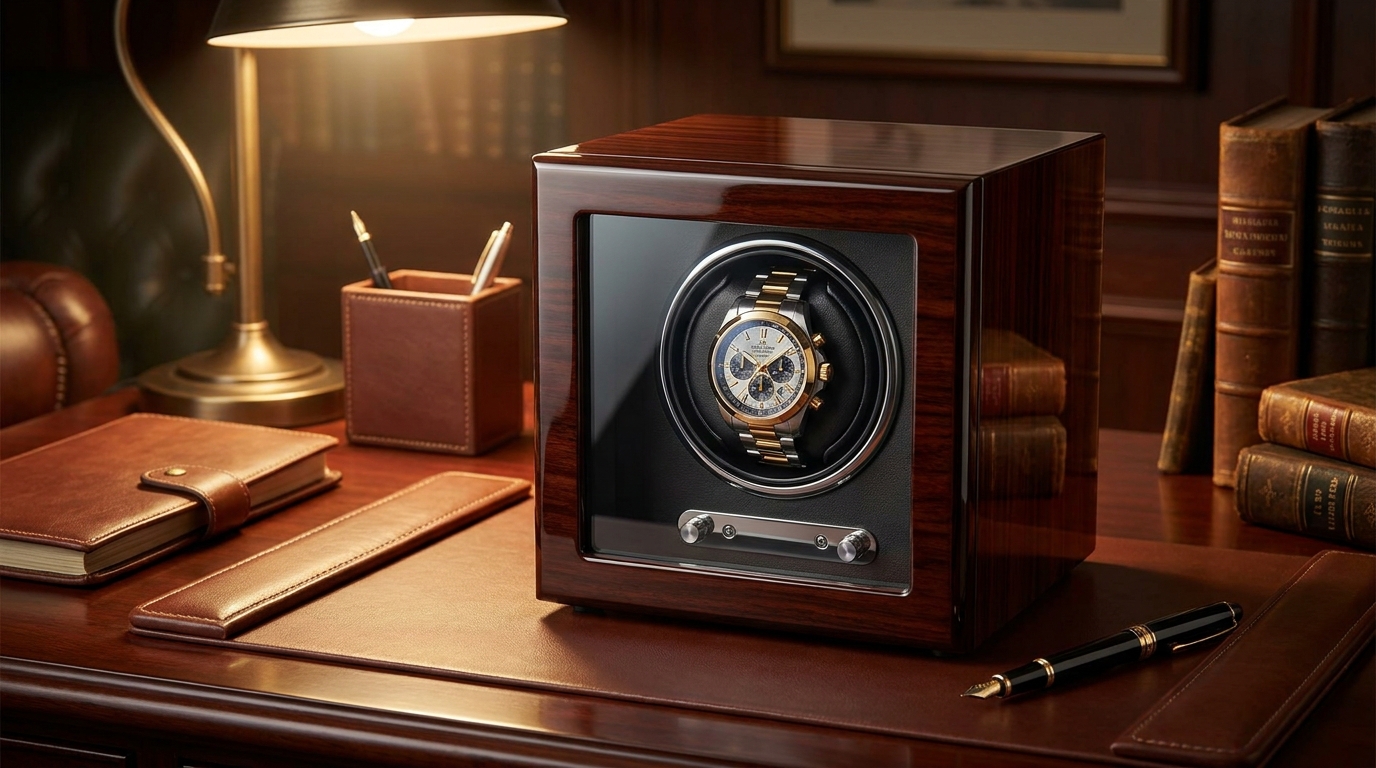
Buying a luxury watch winder is the most effective way to preserve the mechanical longevity and daily convenience of your high-end timepieces. A luxury watch winder simulates the natural movement of your wrist, ensuring that the mainspring stays wound and the gears stay in motion. This prevents the “death” of the movement that occurs when a power reserve is fully depleted.
What is the primary function of a winder?
A winder’s main job is to keep the self-winding mechanism engaged without overstressing the internal components. It provides a controlled rotation that mimics human activity through precise mechanical intervals.
Think about it:
- Maintains the energy levels of the mainspring.
- Ensures complications like moon phases stay synced.
- Provides a secure, aesthetic display for your office.
Why are automatic movements motion-dependent?
Automatic watches use an internal rotor that spins with gravity to tighten the mainspring. Without this consistent kinetic input, the tension vanishes and the watch stops ticking within hours.
Look at it this way:
- Gravity-fed rotors require 360-degree rotation.
- Kinetic energy is the only fuel for mechanical calibers.
- Stagnation is the primary enemy of precision gears.
Is it better than manual winding?
Manual winding often puts excessive pressure on the winding stem and gaskets, whereas a winder provides a much gentler energy transfer. Constant manual manipulation increases the risk of stripping threads or introducing moisture through the crown.
But here is the kicker:
- Reduces physical handling of the delicate crown.
- Provides consistent torque to the movement.
- Eliminates the need for daily manual interaction.
Key Takeaway: A winder acts as a mechanical heartbeat, ensuring that your investment is always operational and protected from the stresses of manual resetting.
| Winding Method | Impact on Crown | Consistency | Convenience |
|---|---|---|---|
| Manual Winding | High Wear | Low | Low |
| Natural Wear | Moderate | High | Moderate |
| Watch Winder | Minimal | Perfect | Maximum |
Using a professional winder ensures the mainspring never loses tension, which is the foundation of long-term accuracy and part preservation.
How does a luxury watch winder protect your watch?
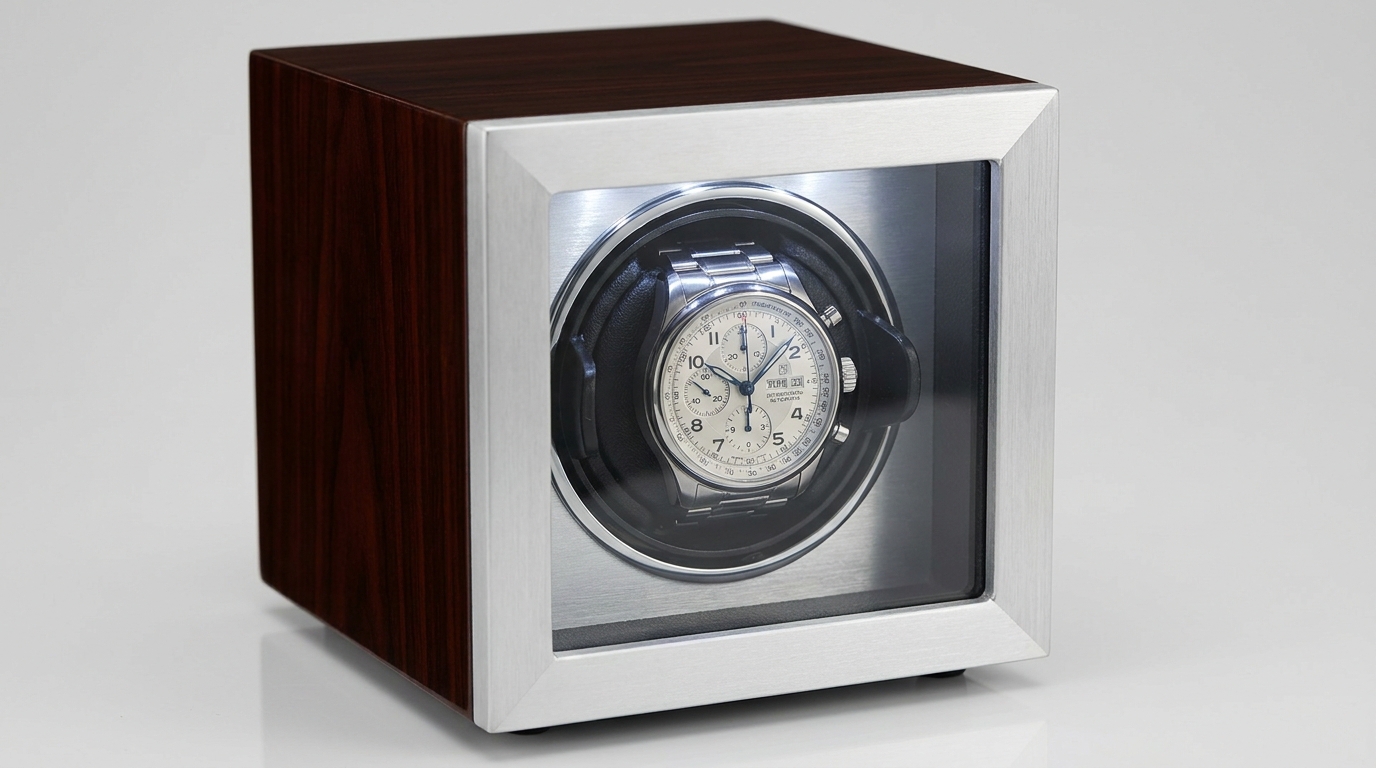
A luxury watch winder protects your watch by maintaining internal lubrication and reducing the mechanical strain associated with frequent manual setting. By utilizing a luxury watch winder, you ensure that the delicate internal components are never subjected to the “cold starts” that can occur after weeks of inactivity.
How does it preserve internal lubrication?
The specialized oils inside a caliber are designed to be distributed across moving parts, and consistent rotation prevents these lubricants from pooling or drying out. If a watch stays still for months, these oils can congeal, leading to increased friction once the watch is restarted.
It boils down to this:
- Keeps synthetic oils fluid and evenly spread.
- Reduces metal-on-metal friction during startup.
- Extends the time between professional services.
Can it prevent wear on the winding crown?
The crown is one of the most vulnerable parts of a watch, and frequent unscrewing to reset the time can lead to seal failure or thread damage. A winder keeps the time set, meaning you rarely have to touch the crown at all.
Believe it or not:
- Prevents cross-threading of screw-down crowns.
- Protects the stem from lateral pressure.
- Maintains the integrity of the water-resistance seals.
Key Takeaway: Consistent movement keeps your watch mechanically fluid and significantly reduces the physical wear and tear on the external control components.
| Component Protected | Benefit of Winder | Risk Without Winder |
|---|---|---|
| Internal Gears | Constant Lubrication | Oil Congealing |
| Winding Crown | Reduced Manipulation | Stripped Threads |
| Mainspring | Even Tension | Power Depletion |
Maintaining a regular rotation cycle is the best defense against the mechanical lethargy that plagues high-end complications.
Is a luxury watch winder necessary for accuracy?
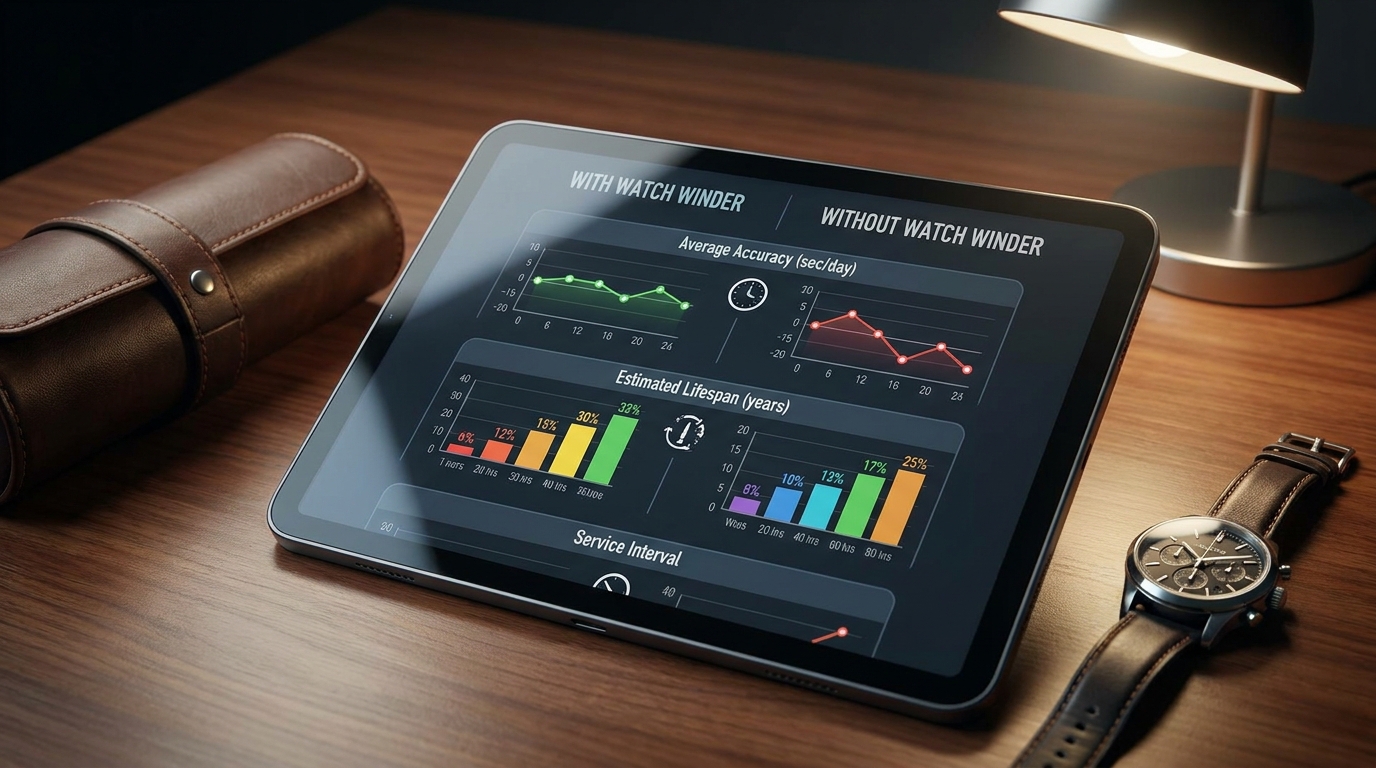
A luxury watch winder is necessary for accuracy because it maintains the consistent power reserve required for the escapement to beat at its intended frequency. Every luxury watch winder is engineered to provide a steady supply of energy, which prevents the time-drift that happens when a mainspring is nearly empty.
Does constant motion reduce time drift?
Mechanical watches tend to lose or gain time as the power reserve drops, but a winder keeps the tension in the “sweet spot” of the power curve. This ensures the balance wheel oscillates with maximum stability throughout the day.
Here is the truth:
- Consistent torque leads to stable amplitude.
- Reduces the standard deviation of daily timing.
- Keeps the watch within its COSC parameters.
Why are perpetual calendars hard to reset?
Resetting a perpetual calendar or moon phase complication can be a nightmare, often requiring multiple specialized tools and hours of careful adjustment. Keeping these watches on a winder ensures they are always perfectly synced with the current date and moon cycle.
But here is the kicker:
- Avoids complex “danger zones” when setting dates.
- Ensures leap year indicators remain accurate.
- Saves you from the frustration of a 30-minute reset.
Key Takeaway: For owners of complicated timepieces, the winder is an essential tool for maintaining the synchronization of calendars and the stability of the beat rate.
| Complication Type | Reset Difficulty | Winder Benefit |
|---|---|---|
| Standard Date | Low | Convenience |
| Moon Phase | High | Accuracy |
| Perpetual Calendar | Extreme | Vital Necessity |
Keeping your caliber at a steady state of wind is the only way to ensure the delicate escapement performs at its factory-certified level of precision.
Can a luxury watch winder prevent oil congealing?

Yes, a luxury watch winder prevents oil congealing by ensuring that synthetic lubricants are constantly distributed across the pivots and jewels of the movement. When you utilize a luxury watch winder, the kinetic energy keeps the caliber active and the lubrication fluid.
What happens to lubricants in idle watches?
In an idle watch, the specialized oils can settle into the lower parts of the movement or begin to dry out due to lack of movement. This creates “dry spots” on gears that will cause significant wear the moment the watch is eventually worn again.
The reality is simple:
- Oils need movement to maintain their viscosity.
- Settled oil attracts microscopic debris.
- Dry pivots lead to permanent metal scoring.
How does consistent rotation help?
Consistent rotation ensures that the lubricants are carried by the spinning gears to every contact point within the movement. This “active lubrication” is exactly what the watchmakers intended when they designed the high-frequency caliber.
The best part?
- Reduces the need for early movement overhauls.
- Maintains the smooth sweep of the seconds hand.
- Ensures the rotor remains silent and efficient.
Key Takeaway: By keeping the lubricants in motion, you are effectively performing preventative maintenance on the movement every single day.
| Lubrication Status | Movement Impact | Long-term Result |
|---|---|---|
| Active (Wound) | Low Friction | Extended Life |
| Stagnant (Idle) | High Friction | Accelerated Wear |
| Congealed | Mechanical Blockage | Costly Repair |
A winder is the simplest insurance policy you can buy to protect the high-value internal components of your horological collection.
How to choose the best luxury watch winder?
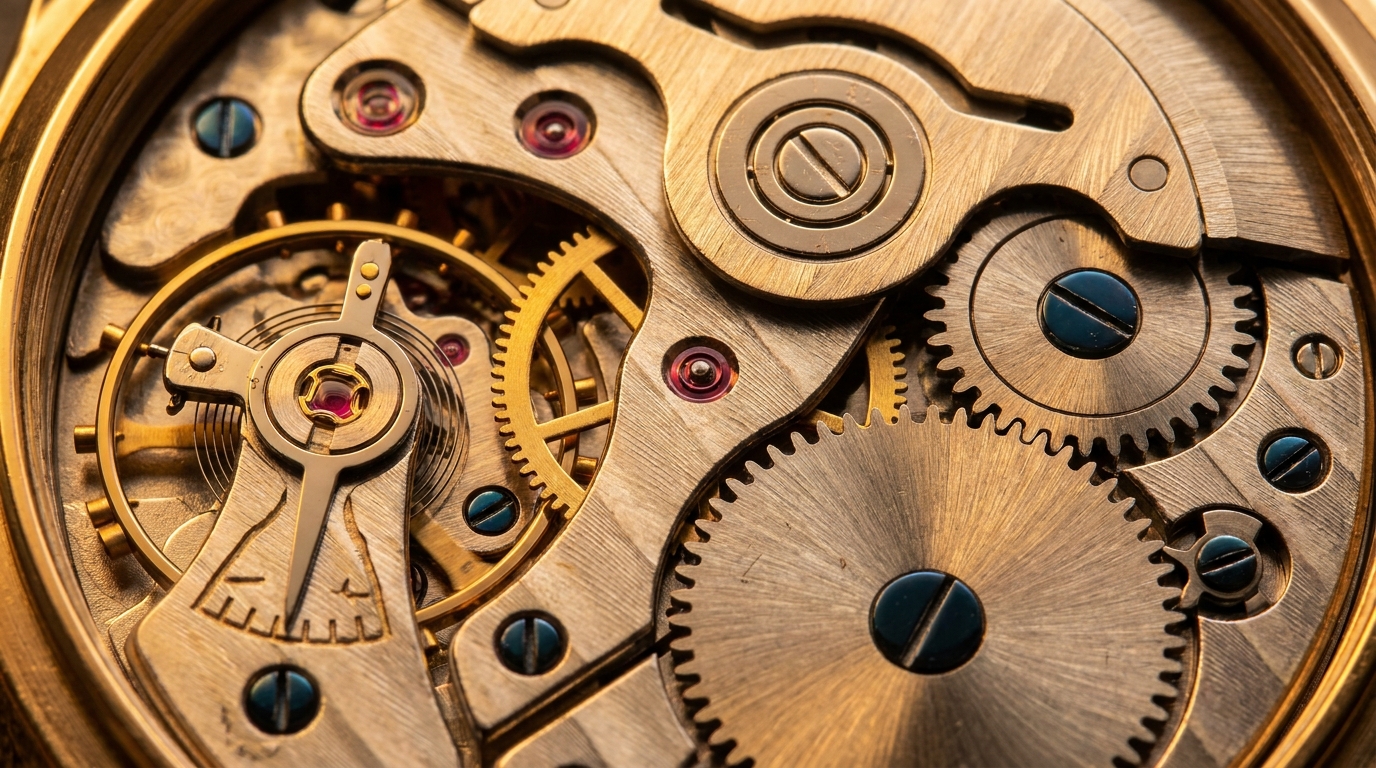
To choose the best luxury watch winder, you must evaluate the motor’s noise level, the programmability of the rotations, and the quality of the magnetic shielding. A luxury watch winder should offer silent operation and customizable settings to match the specific requirements of your various calibers.
Should you look for silent motors?
A high-quality motor is the heart of a winder, and it should be virtually inaudible even if placed on a nightstand. Cheap motors often develop a grinding sound over time, which can be disruptive and indicative of poor internal build quality.
You see:
- Brushless motors offer the longest lifespan.
- Silent operation indicates precision engineering.
- Lower vibration levels protect the watch’s hairspring.
Is build material like wood or leather better?
While the exterior material is largely a matter of aesthetic preference, the interior materials should be soft and non-abrasive to protect the finish of your watch. Premium wood or leather cases also provide better natural insulation and structural durability.
It gets better:
- Solid wood provides a stable, heavy base.
- Genuine leather interiors prevent strap scratching.
- Glass or acrylic covers protect against household dust.
Does the cushion size matter for my wrist?
Yes, because a cushion that is too large can stretch your leather straps or stress your metal bracelets. Look for winders that offer adjustable or “memory foam” cushions that can accommodate both small and large wrist sizes securely.
Think about it:
- Prevents the watch from rattling during rotation.
- Ensures proper alignment with the rotor’s axis.
- Protects the deployant clasp from unnecessary pressure.
Key Takeaway: Choosing the right winder requires a balance of mechanical specifications and physical protection features to suit your specific lifestyle and collection.
| Feature to Check | Premium Standard | Budget Risk |
|---|---|---|
| Motor Type | Brushless / Silent | Loud / Unreliable |
| Rotation Settings | Fully Programmable | Fixed / Limited |
| Shielding | Multi-layer Magnetic | None |
Investing in a winder with a high-quality motor and adjustable cushions ensures your watches are cared for as well as they are displayed.
Do luxury watch winder safes add extra security?
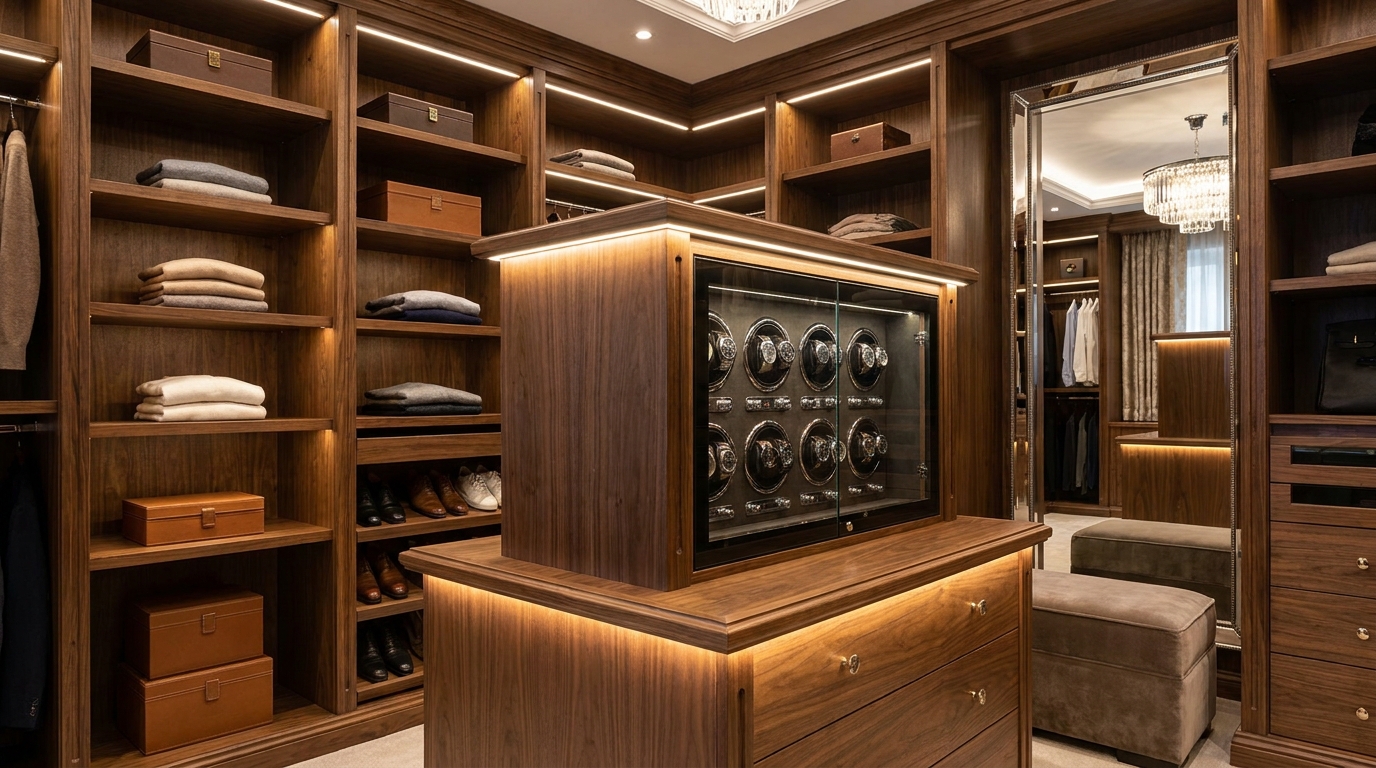
Luxury watch winder safes add extra security by combining high-grade physical protection with the active maintenance of your automatic movements. By integrating a luxury watch winder into a fortified safe, you eliminate the need to choose between keeping your watch wound and keeping it hidden from theft.
Why combine winding with anti-theft protection?
Standard safes protect against theft but leave your watches idle, while standard winders display your watches but offer no protection against burglars. A combined solution ensures your assets are both mechanically primed and physically impenetrable behind steel bolts.
Look at it this way:
- Provides a “one-stop” storage and care solution.
- Removes high-value items from plain sight.
- Integrates biometric access for rapid retrieval.
Are fireproof safe boxes necessary?
For high-value collections, fire protection is essential because heat can melt internal lubricants and damage delicate dial materials even without direct flame contact. A fireproof winder safe acts as a thermal barrier for your horological investments during a disaster.
Here is the truth:
- UL-rated fire protection guards against extreme heat.
- Dual-walled steel construction offers impact resistance.
- Protects original boxes and paperwork alongside watches.
Key Takeaway: An integrated safe solution offers the ultimate peace of mind by defending your collection against both mechanical decay and external threats.
| Protection Type | Benefit | Security Level |
|---|---|---|
| Open Winder | Mechanical Care Only | Low |
| Standard Safe | Theft Protection Only | Medium |
| Winder Safe | Combined Defense | Maximum |
Upgrading to a winder safe is the logical choice for any collector whose assets require professional-grade security and maintenance.
Why is TPD vital in a luxury watch winder?
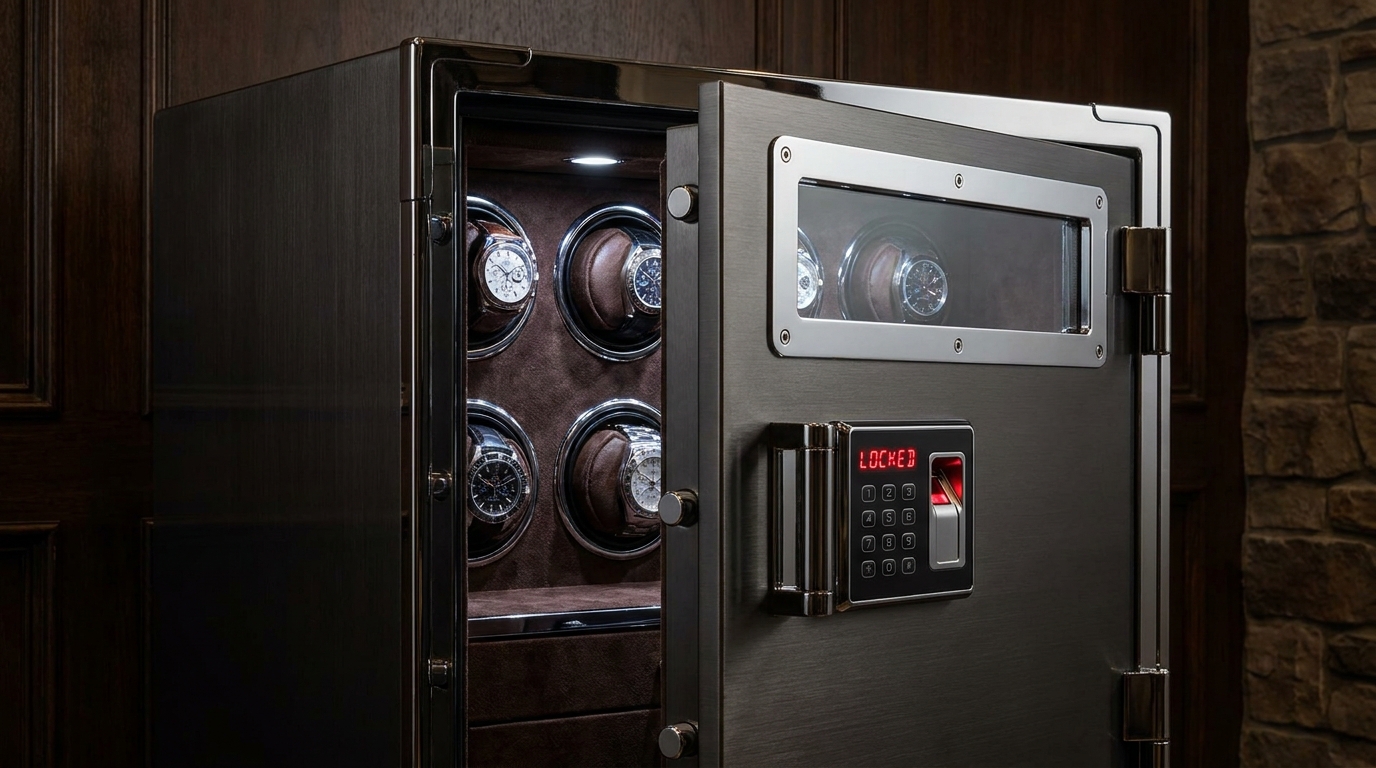
TPD, or Turns Per Day, is vital because it determines if your luxury watch winder is providing enough energy to keep the watch running without causing excessive mechanical stress. Every luxury watch winder must be calibrated to the specific TPD requirements of your caliber to ensure optimal performance.
What does Turns Per Day actually mean?
TPD refers to the total number of full 360-degree rotations the winder completes over a 24-hour period. Most modern automatic watches require between 650 and 950 TPD to maintain a full power reserve without taxing the slipping clutch.
It boils down to this:
- Measured in total revolutions per 24 hours.
- Prevents the mainspring from unwinding fully.
- Matches the efficiency of the specific rotor design.
Can you overwind an automatic watch?
Technically, you cannot overwind an automatic watch because they are equipped with a slipping clutch that prevents the mainspring from breaking once it is fully tight. However, running a winder at excessive TPD causes unnecessary wear on that clutch mechanism.
But here is the kicker:
- The slipping clutch is a safety feature, not a winding method.
- Excessive rotation wastes motor life and energy.
- Correct TPD minimizes friction within the barrel.
Key Takeaway: Understanding and setting the correct TPD for each watch is the hallmark of a responsible collector who values mechanical efficiency.
| Watch Requirement | Recommended TPD | Result of Incorrect TPD |
|---|---|---|
| Under-wound | < 600 | Watch eventually stops |
| Optimized | 650 – 950 | Perfect health and power |
| Over-wound | > 1200 | Unnecessary clutch wear |
Precise TPD control is what separates professional-grade equipment from generic alternatives that may strain your movement.
Can a luxury watch winder shield from magnets?
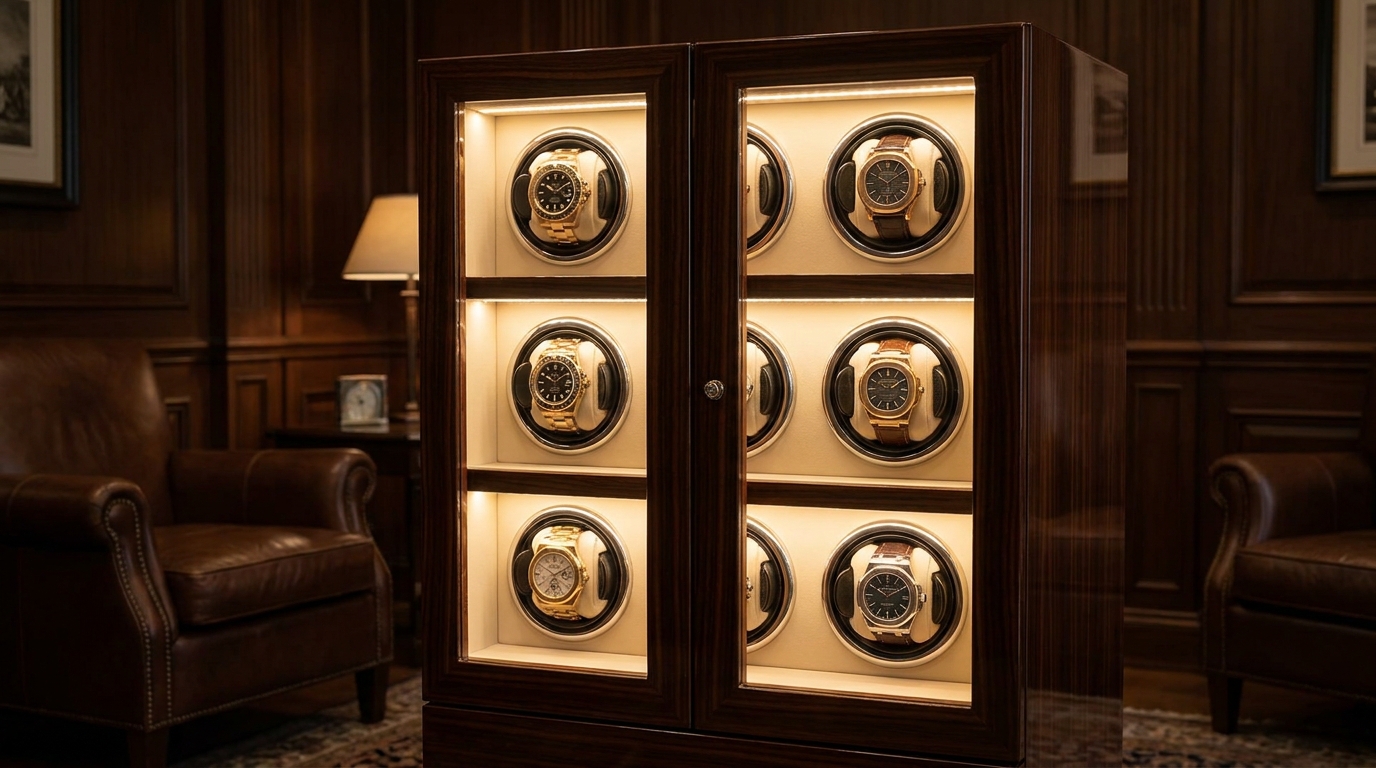
A luxury watch winder can shield from magnets if it is designed with high-quality motor positioning and specialized shielding materials. By selecting a luxury watch winder with integrated magnetic protection, you safeguard your watch’s hairspring from the invisible forces that cause timing errors.
How does magnetization affect precision?
When a watch becomes magnetized, the coils of the hairspring stick together, effectively shortening the spring and causing the watch to run several minutes fast per day. This is one of the most common reasons for a sudden loss of accuracy in mechanical timepieces.
Believe it or not:
- Magnets are found in speakers, tablets, and phones.
- Magnetized watches often require professional demagnetization.
- Severe cases can cause the movement to stop entirely.
Do premium winders offer magnetic shielding?
Yes, premium winders use shielded motors and strategic spacing to ensure that the electromagnetic field of the motor never reaches the watch caliber. This is a critical feature often missing from budget winders, which can actually magnetize your watch over time.
The best part?
- Allows for close-proximity storage in multi-watch units.
- Protects the sensitive balance wheel assembly.
- Ensures the watch remains as accurate as the day it was made.
Key Takeaway: Magnetic shielding is an essential “invisible” feature that ensures your winder is a protector of precision, not a cause of mechanical failure.
| Source of Magnetism | Risk to Watch | Prevention Method |
|---|---|---|
| Unshielded Motors | Very High | Use Shielded Winders |
| Consumer Electronics | High | Maintain Safe Distance |
| Industrial Equipment | Extreme | Specialized Safe Storage |
Ensuring your winder has built-in magnetic defense is the only way to guarantee your collection remains immune to modern environmental interference.
Who needs a luxury watch winder for their home?
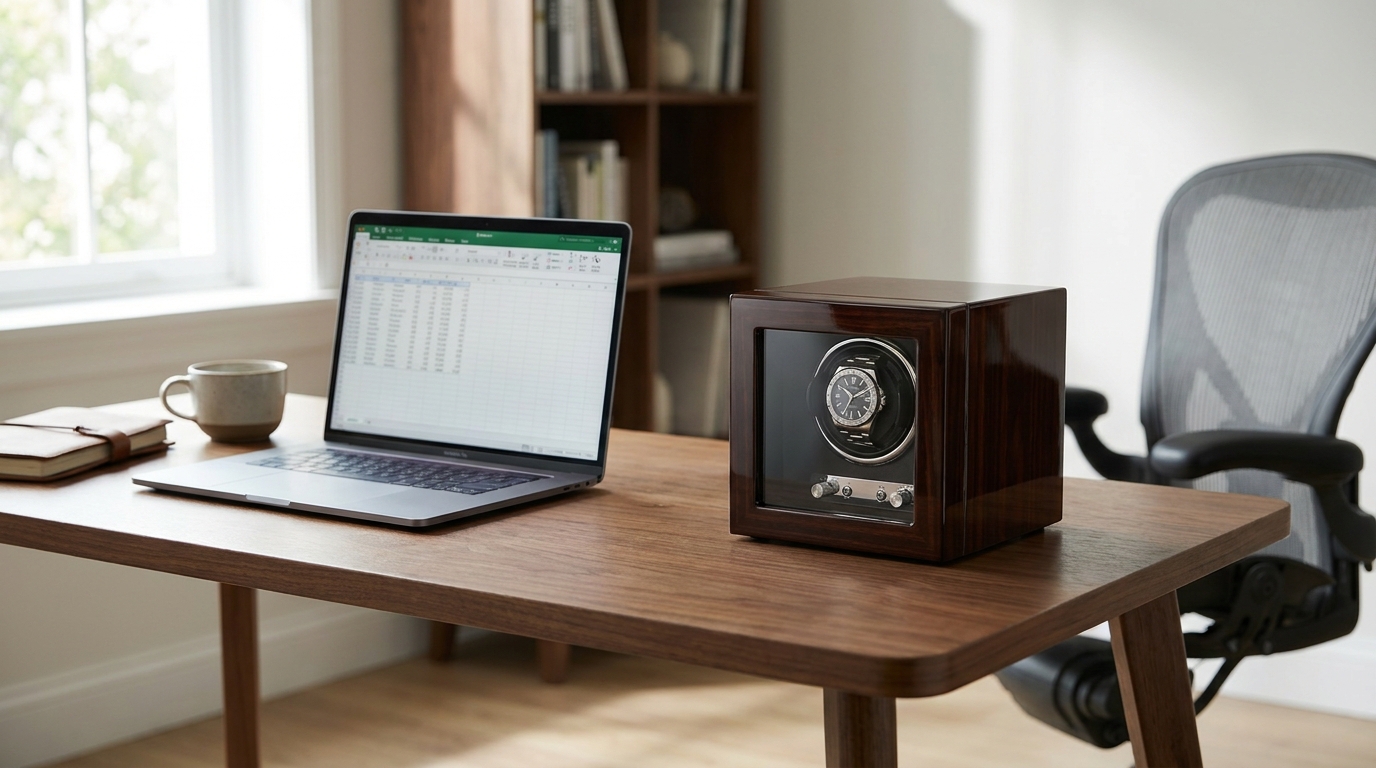
Any enthusiast with more than two automatic watches needs a luxury watch winder to manage their collection efficiently and preserve the health of their movements. A luxury watch winder is not just a luxury; it is a management tool for anyone who rotates through multiple pieces during the week.
Is it best for multi-watch collectors?
For collectors, a winder serves as a “ready-to-wear” hub that allows you to swap watches without the tedious process of setting the time and date for each one. It transforms your collection from a storage project into a functional wardrobe that is always in sync.
The reality is simple:
- Reduces prep time during your morning routine.
- Provides a centralized, elegant display for your pieces.
- Encourages regular wear of your entire collection.
Why do busy professionals benefit most?
Busy professionals often don’t have the time to carefully reset a complex perpetual calendar or moon phase watch every few days. A winder ensures that when you need your watch for an important meeting, it is already ticking and perfectly accurate.
You see:
- Time is your most valuable asset.
- Eliminates the risk of setting the watch incorrectly in a rush.
- Maintains a professional image with a perfectly set timepiece.
Key Takeaway: Whether you are a dedicated collector or a time-pressed professional, a winder adds a layer of convenience and mechanical safety that is indispensable.
| User Type | Primary Benefit | Necessity Level |
|---|---|---|
| Single Watch Owner | Aesthetic Display | Optional |
| Multi-Watch Collector | Collection Management | High |
| Complication Owner | Mechanical Health | Essential |
A winder bridges the gap between high-end horological art and the practical needs of a modern, fast-paced lifestyle.
How to maintain your new luxury watch winder?
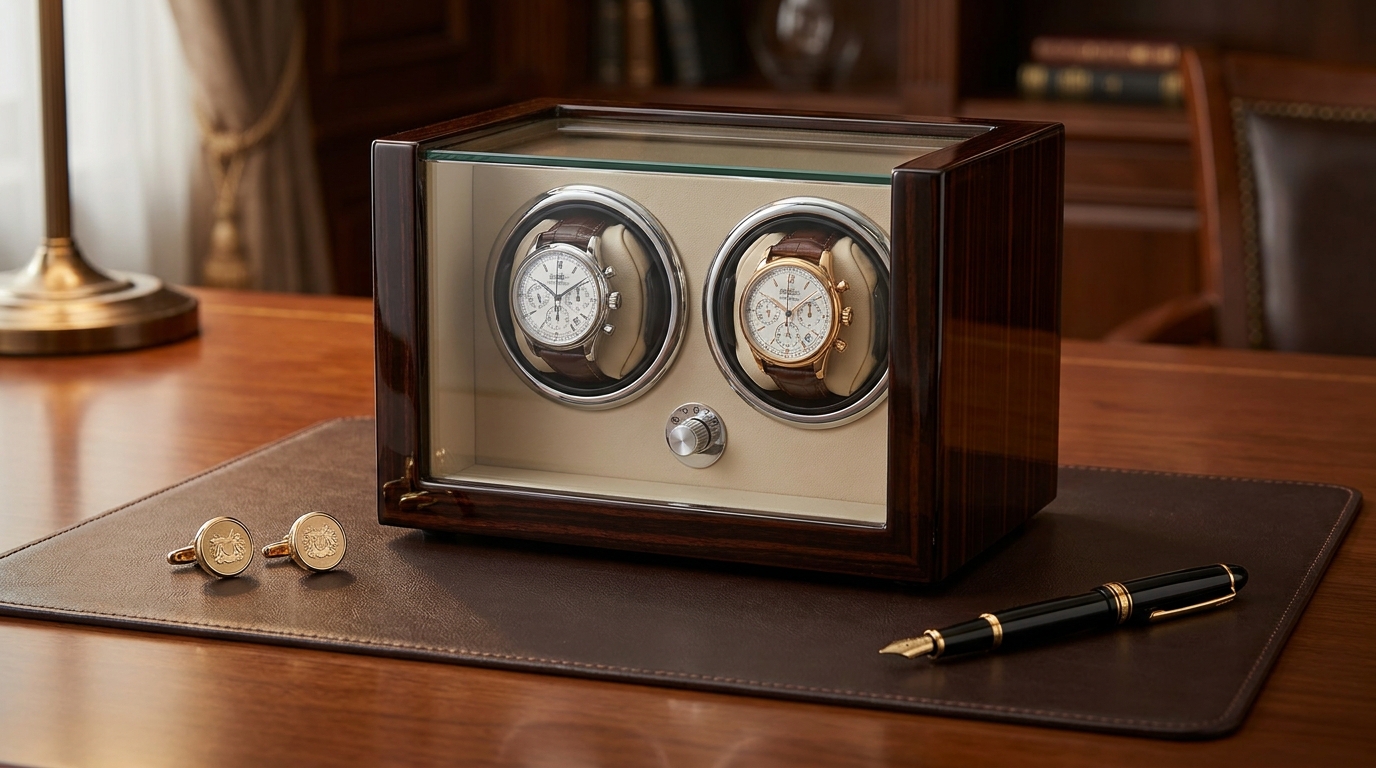
You maintain your new luxury watch winder by keeping the interior dust-free, periodically checking the motor for noise, and ensuring the TPD settings remain correct for your changing collection. By visiting the luxury watch winder shop for accessories and upgrades, you can ensure your device remains in top-tier condition for years to come.
How often should you clean the cushions?
Cushions should be wiped down with a damp, lint-free cloth every few months to remove oils and sweat transferred from your watch straps. This prevents the buildup of residue that could eventually degrade the interior lining of the winder.
Look at it this way:
- Clean surfaces prevent strap discoloration.
- Dust-free environments protect the motor gears.
- Microfiber cloths are the safest tool for the job.
Do you need to update the TPD settings?
Yes, if you add a new watch to your collection, you must check its specific winding direction and TPD requirements. Using the wrong settings for a particular caliber can result in the watch stopping even while on the winder.
It gets better:
- Newer movements often have different efficiencies.
- Proper settings maximize the life of the winder’s motor.
- Ensures every piece in your safe is equally cared for.
Key Takeaway: Simple, regular maintenance of your winder ensures that it continues to provide the high level of care your luxury watches deserve.
| Maintenance Task | Frequency | Purpose |
|---|---|---|
| Dusting | Monthly | Protect Aesthetics & Motor |
| Setting Review | Per New Watch | Optimize Winding |
| Motor Noise Check | Bi-Annually | Identify Early Wear |
Proactive care of your winding equipment ensures a long-lasting, silent, and reliable environment for your most valuable horological assets.
Conclusion
A luxury watch winder is far more than a simple accessory; it is a vital maintenance tool that preserves the accuracy, lubrication, and long-term value of your horological investments. By choosing a solution that offers silent operation, magnetic shielding, and programmable TPD, you ensure that your masterpieces are always ready to wear and mechanically sound. To secure your collection with the ultimate combination of protection and precision, contact us today to find the perfect integrated safe solution tailored to your needs. At Jimbo, we are committed to providing the anti-theft excellence and mechanical care your success deserves.
FAQ
Can I leave my watch in a winder 24/7?
Yes, it is perfectly safe as long as the winder is programmed to the correct TPD and includes periodic resting phases.
What’s the best TPD for my high-end timepieces?
Most premium Swiss movements require between 650 and 950 turns per day to maintain their full power reserve.
How do I know if my luxury watch winder is overwinding?
It is physically impossible to overwind an automatic watch because the mainspring features a slipping clutch that releases tension once full.
Will a winder stop my watch from losing time?
A winder maintains the current power reserve but cannot correct the mechanical inaccuracies inherent in the watch’s own calibration.
Can a cheap winder actually damage my luxury watch?
Low-quality units often lack magnetic shielding, which can magnetize your hairspring and cause the watch to run significantly fast.

