 跳到内容
跳到内容 

Owning a luxury watch collection is a significant investment that unfortunately makes you a prime target for theft and environmental damage. The thought of a lifetime of curation vanishing in a single home burglary or being ruined by moisture is enough to keep any enthusiast awake at night. You deserve the peace of mind that comes with knowing your horological treasures are impenetrable. By installing a small watch safe and implementing a layered security strategy, you can enjoy your collection without constant worry.
Why invest in a small watch safe for your home?
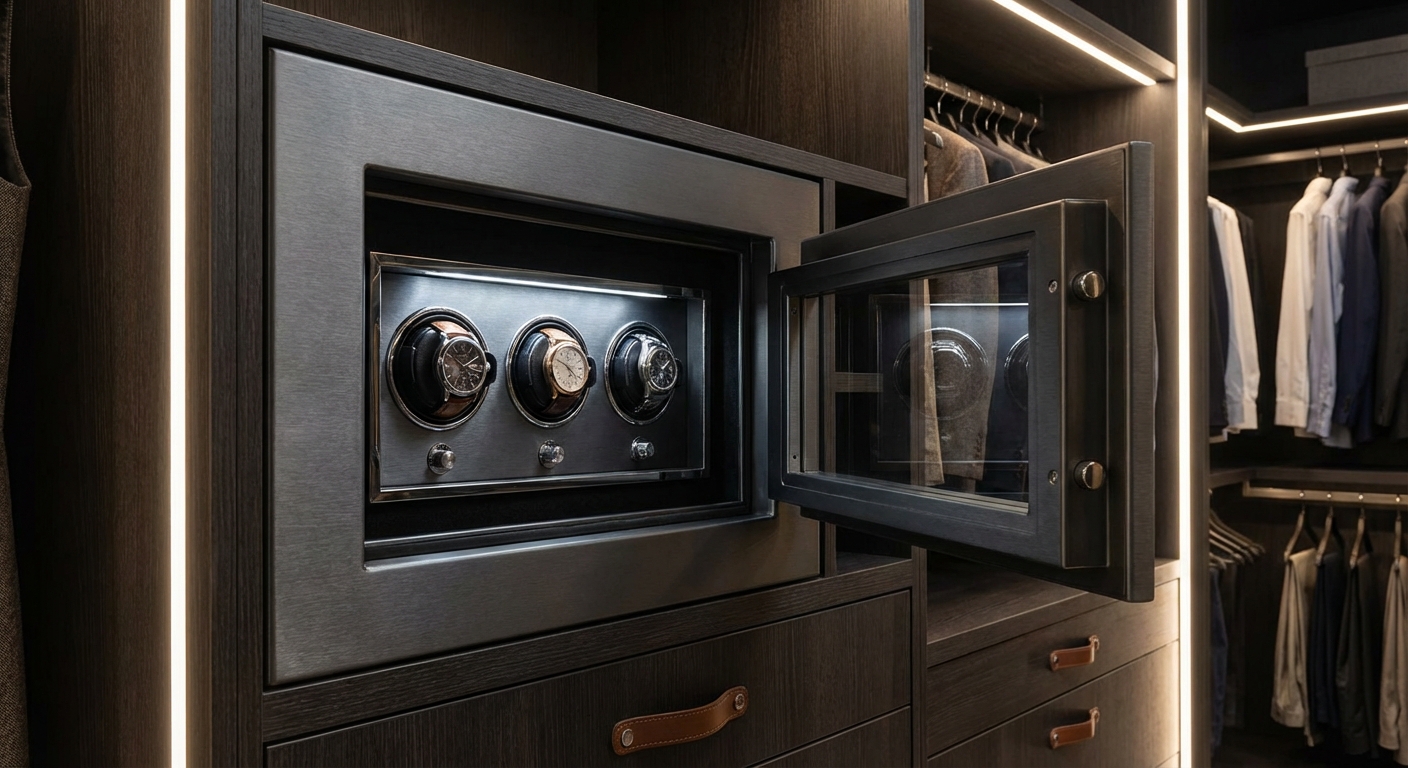
Investing in a specialized safe ensures your timepieces are protected against both targeted theft and unforeseen disasters like house fires. Standard lockboxes lack the structural integrity to withstand professional prying tools or high-heat environments. You need a dedicated solution that offers UL-rated burglary protection and certified fire resistance to truly safeguard your assets.
What features define high-security safes?
You should look for a safe that features solid steel construction and a complex locking mechanism. High-security units often include active relockers that trigger if the primary lock is tampered with or drilled.
- UL-rated burglary resistance (RSC or higher).
- Thick, multi-walled steel body and door.
- Advanced biometric or digital keypad access.
- Hardened anti-drill plates protecting the lock.
Here is the kicker:
A safe is only effective if it cannot be moved. You must ensure your unit is bolted directly to the floor or wall studs to prevent “carry-away” theft.
Are anchoring and fire protection basics?
Every quality safe must be permanently anchored to your home’s foundation to prevent thieves from simply wheeling it out. Fire protection is equally vital, as the delicate gaskets and oils in a mechanical watch can be destroyed by even brief exposure to high temperatures.
Key Takeaway: Physical security requires a combination of heavy-duty materials, advanced locking tech, and permanent installation.
| Feature | Importance | Benefit |
|---|---|---|
| Floor Anchoring | Critical | Prevents removal of the entire safe. |
| Fire Rating | Essential | Protects internal watch components from heat. |
| Steel Thickness | High | Resists drilling and prying attempts. |
Properly mounting your safe is the single most effective way to stop a quick smash-and-grab robbery from becoming a total loss.
How does insurance protect your small watch safe?
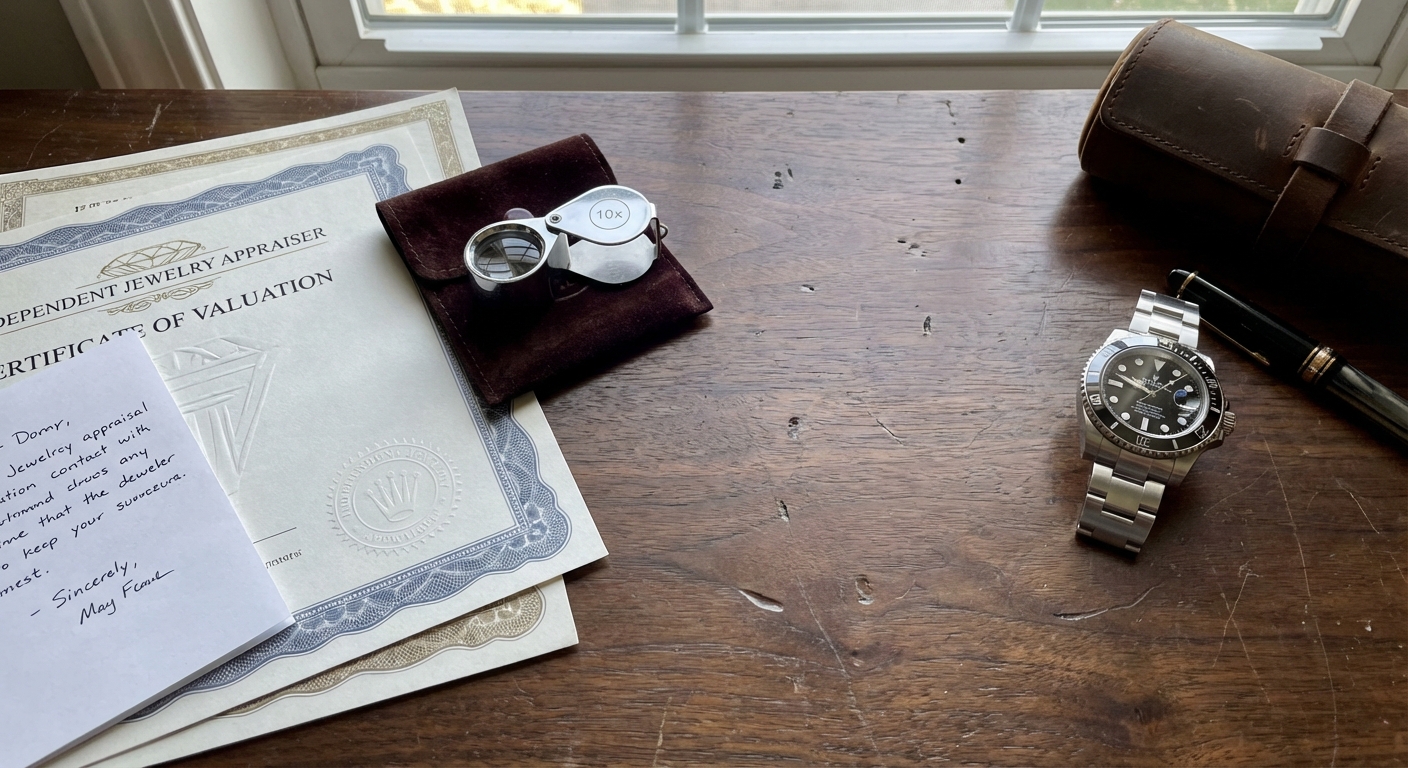
Insurance serves as your financial safety net, ensuring you can recover the monetary value of your collection if a small watch safe is ever compromised. While physical security prevents loss, insurance mitigates the impact of “mysterious disappearance” or accidental damage that a safe cannot stop. You must have an up-to-date policy that reflects current secondary market prices.
What is the difference in policies?
You need to understand the distinction between a standard homeowners rider and a standalone scheduled personal property policy. Standard homeowners insurance often has very low limits for jewelry and watches, sometimes capping coverage at just $1,500.
- Homeowners Riders: Usually lower limits and higher deductibles.
- Standalone Policies: Offer specialized coverage for “all risks.”
- Agreed Value: Pays out a pre-set amount rather than “market value.”
- Worldwide Coverage: Protects your watch while you are traveling.
But wait, there’s more:
Standalone policies often cover partial damage or the loss of a single part, which is vital for high-end vintage pieces.
Does homeowners insurance cover luxury?
Most basic homeowners policies are insufficient for serious collectors because they do not account for market appreciation. You should provide your insurer with professional appraisals every two years to ensure your coverage limits remain accurate.
Key Takeaway: Financial protection requires specialized policies and regular appraisals to match the actual market value of your watches.
| Policy Type | Coverage Scope | Recommended For |
|---|---|---|
| Standard Homeowners | Limited/General | Entry-level collections only. |
| Scheduled Property | Specific/Broad | High-value luxury timepieces. |
| Specialized Jewelry | Full/Global | Professional and active collectors. |
Relying on a general home policy often leads to massive out-of-pocket losses when a high-value watch is stolen.
Where should you store your small watch safe?
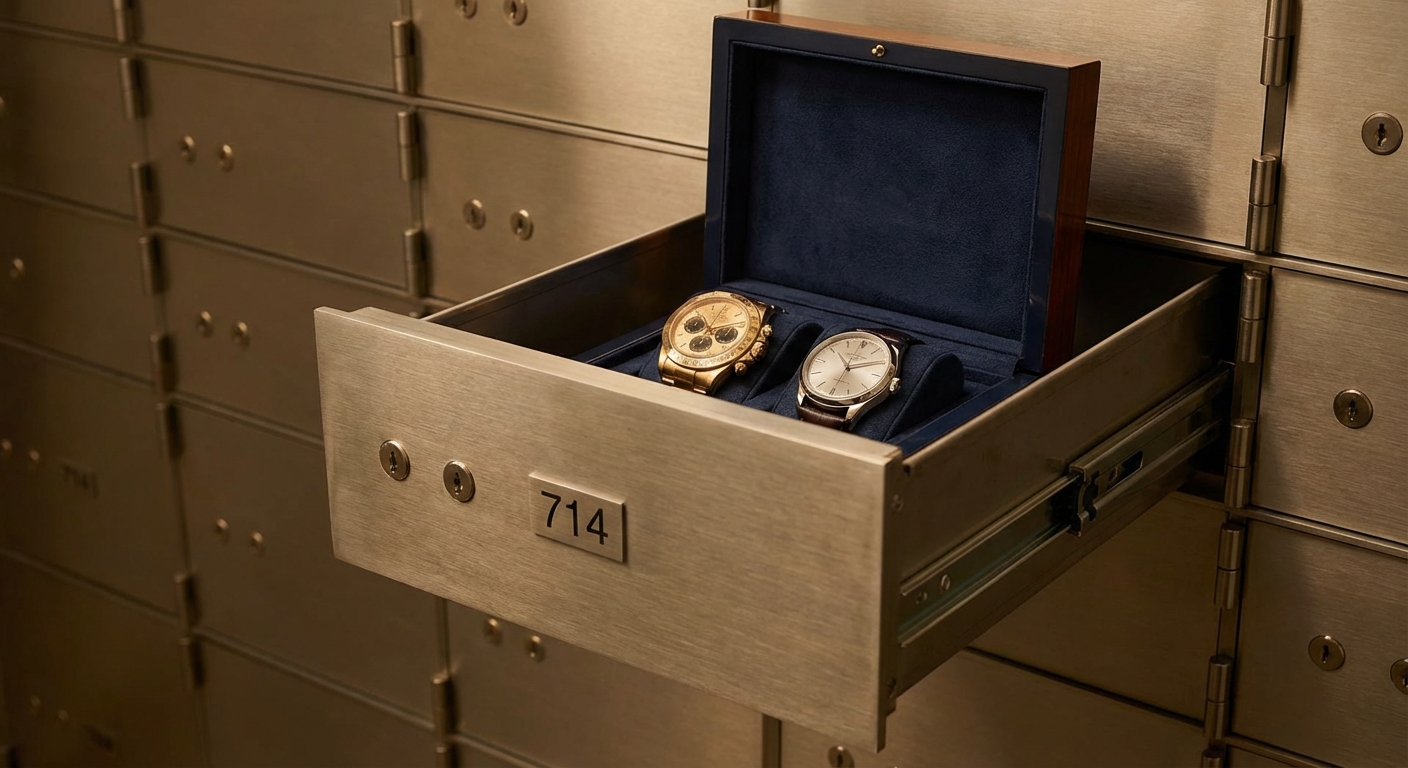
Selecting the right location for your safe involves balancing daily accessibility with maximum concealment from prying eyes. You want to place your safe in a reinforced area of the home, such as a concrete basement floor or a hidden closet. Keeping the location confidential is your first and best line of defense against targeted burglary.
Is a bank vault better for you?
A bank safe deposit box offers immense security but suffers from significant accessibility issues during evenings and weekends. You may find it frustrating to plan your watch rotations days in advance around bank operating hours.
- Maximum physical security via bank infrastructure.
- Protection from home-based disasters.
- Limited access (Bank hours only).
- Bank insurance may be minimal or non-existent.
The truth is:
Most collectors prefer a home safe because it allows for a spontaneous change of watches for dinner or events.
Can home accessibility beat bank security?
A home-based small watch safe offers the convenience of daily wear while maintaining a high level of physical protection. Modern residential safes are designed to be integrated into furniture or walls, making them nearly invisible to visitors.
Key Takeaway: Choose a home safe for convenience and a bank box only for pieces you rarely intend to wear.
| Location | Security Level | Convenience |
|---|---|---|
| Bank Vault | Extremely High | Very Low |
| Home Safe | High | Very High |
| Hidden Drawer | Low | Moderate |
A home safe provides the best balance for the active collector who enjoys rotating their timepieces frequently.
Why is humidity control vital in a small watch safe?
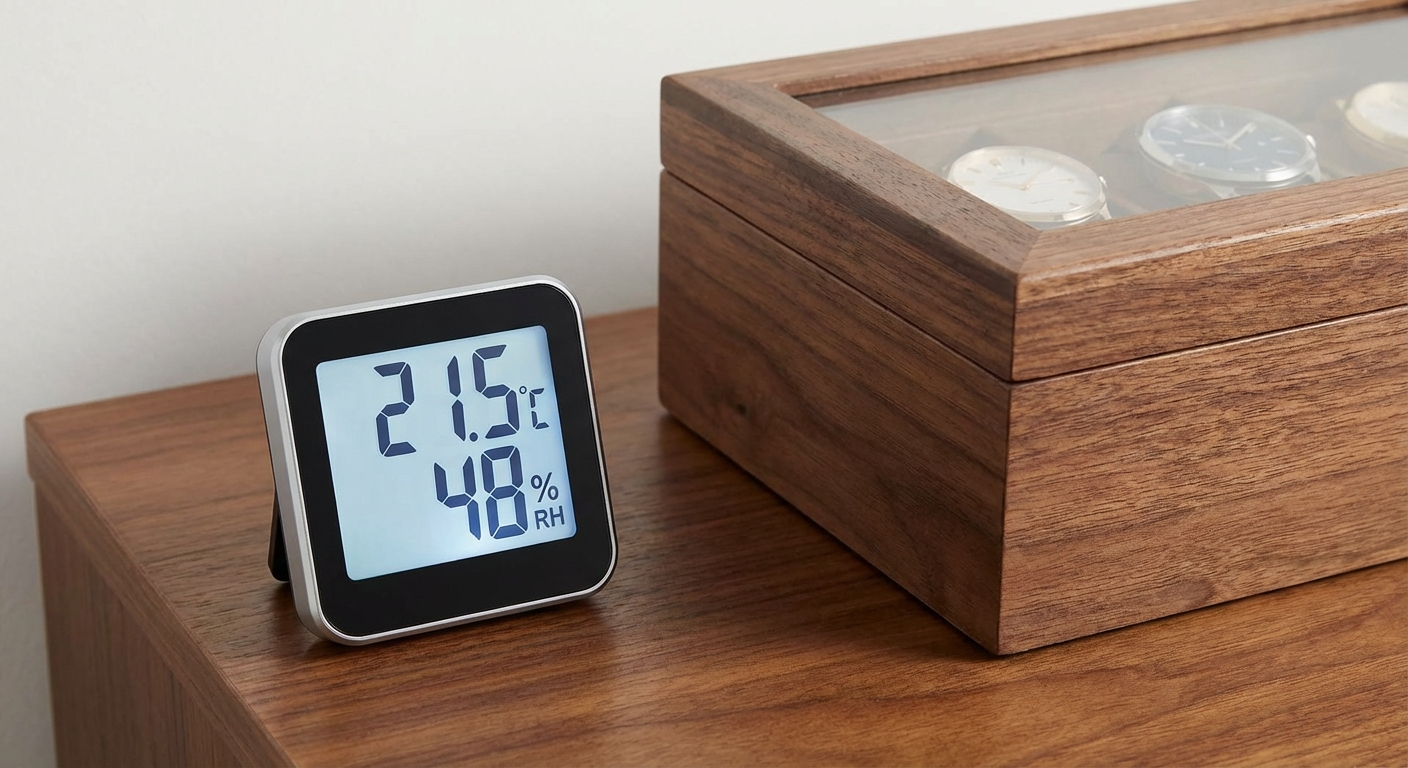
Humidity control is essential because excessive moisture can lead to dial oxidation and the degradation of internal lubricants in a small watch safe. Mechanical watches are precision instruments that require a stable environment to maintain their accuracy over decades. Without climate management, you risk your vintage dials “tropicalizing” or developing mold that destroys their value.
How does moisture damage movements?
Moisture that enters the case through aged gaskets can cause internal rust on the movement’s steel components. You will notice a drop in power reserve and accuracy as the lubricants become thick or acidic due to humidity.
- Rusting of the hairspring and balance wheel.
- Discoloration or spotting on the watch dial.
- Premature drying of synthetic oils.
- Corrosion of the hands and hour markers.
Believe it or not:
Even a waterproof dive watch can suffer from internal condensation if stored in a humid safe for years.
Should you use a dehumidifier inside?
You should utilize desiccant packs or an electronic dehumidifier rod to keep the relative humidity inside your safe between 35% and 50%. Many high-end safes include a pre-drilled hole for a power cord to support these climate-control devices.
Key Takeaway: Consistent environmental stability is just as important as physical security for long-term watch health.
| Humidity Level | Impact | Action Required |
|---|---|---|
| Above 60% | High Risk of Rust | Add desiccant or dehumidifier. |
| 35% – 50% | Ideal Range | Monitor with digital hygrometer. |
| Below 20% | Gasket Drying | Rare; avoid extreme dryness. |
Monitoring humidity with a digital hygrometer allows you to catch environmental spikes before they cause permanent damage.
How can you maintain value with a small watch safe?

Maintaining the value of your collection requires protecting not just the watch itself, but also the original packaging and documentation. A “full set” with box and papers can command a 20% to 30% premium over a “naked” watch on the secondary market. You should use your safe to store these critical documents in a separate, fireproof compartment.
Why keep original boxes and papers?
Collectors value provenance, and having the original warranty card and bill of sale proves the watch’s authenticity and history. You should treat these items as carefully as the timepieces themselves to maximize your future return on investment.
- Original inner and outer boxes.
- Warranty papers or digital NFC cards.
- Service records from authorized centers.
- Original hangtags and spare bracelet links.
Here’s the deal:
Missing papers are the number one reason high-end watch sales fall through or lose value during negotiations.
Is regular professional servicing required?
You must have your mechanical watches serviced by an authorized professional every five to seven years to ensure the movement remains safe from wear. During a service, gaskets are replaced to maintain the water resistance that keeps the internal components dry.
Key Takeaway: Value retention is a holistic process involving physical protection, document storage, and mechanical maintenance.
| Item | Value Impact | Storage Recommendation |
|---|---|---|
| Original Papers | High (20%+) | Fireproof safe compartment. |
| Outer Box | Moderate | Dry, climate-controlled closet. |
| Service Records | High | Digital backup + safe storage. |
Protecting the accessories of your watch is just as important for your net worth as protecting the watch itself.
What are travel security tips for your small watch safe?
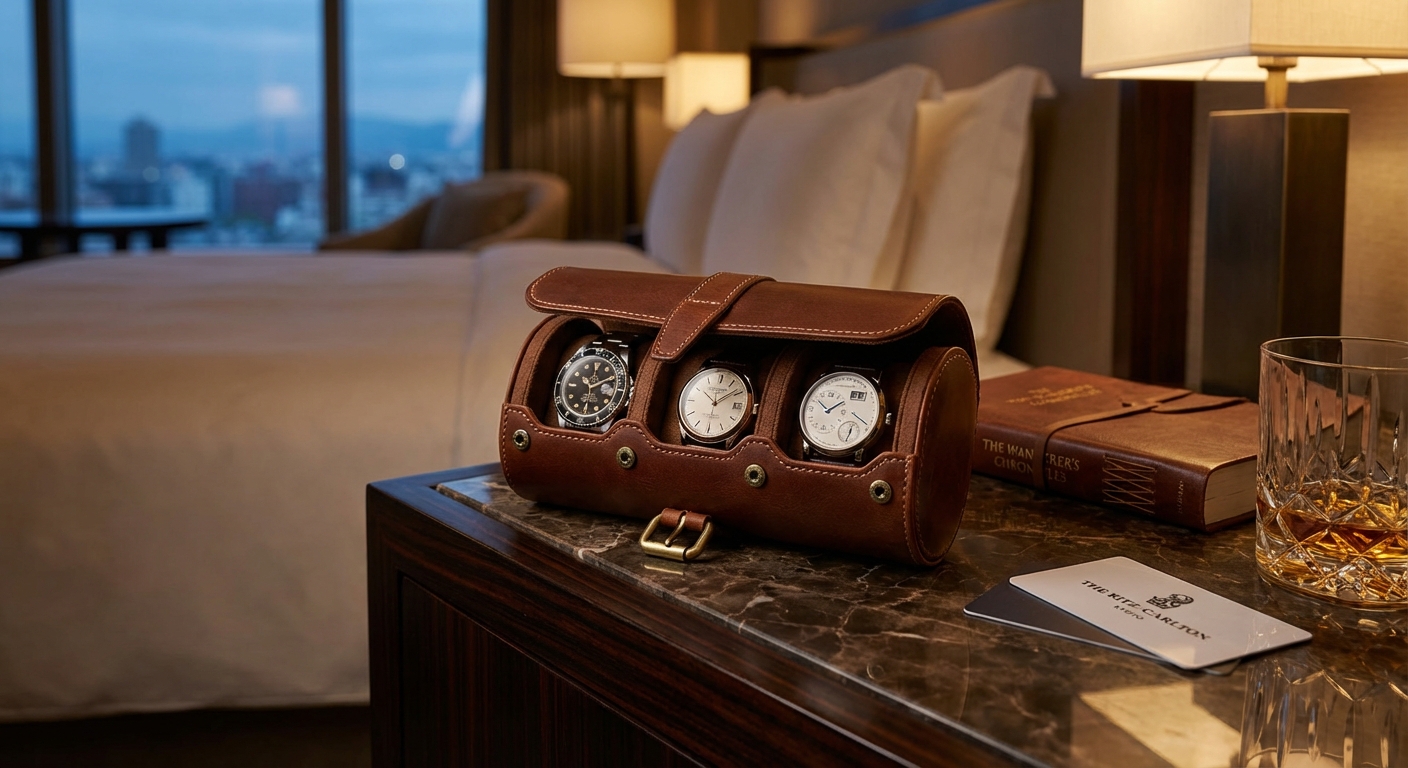
Traveling with high-value watches requires a “stealth” approach to avoid becoming a target for “spotters” in airports or hotels. You should never store your timepieces in checked luggage; they must remain in your carry-on or on your wrist at all times. When you arrive at your destination, a small watch safe in your hotel room is better than nothing, but it is far from impenetrable.
Are hotel safes actually secure enough?
Hotel safes are notoriously easy to bypass with “master codes” or simple tools, making them a risky place for a six-figure watch. You should consider using a portable safe or keeping your most valuable piece on your wrist when leaving the room.
- Low-grade locking mechanisms.
- Fixed locations that are obvious to staff.
- Potential for internal “master key” theft.
- Vulnerability to being pried off a shelf.
Make no mistake:
A hotel safe should be your last resort, used only if you absolutely cannot carry the watch with you.
Should you use a leather watch roll?
A high-quality leather watch roll provides physical protection from scratches while fitting discreetly inside your carry-on bag. You should choose a roll with individual cushions to prevent the watches from touching each other during transit.
Key Takeaway: Travel security is about being discreet and keeping your most valuable items within your direct sight.
| Travel Method | Risk Level | Protection Strategy |
|---|---|---|
| Checked Bag | Extreme | Never check high-value watches. |
| Hotel Safe | Moderate | Use for short durations only. |
| Watch Roll | Low | Keep in your personal carry-on. |
The safest way to travel is to wear your most valuable timepiece and keep your backups in a discreet, padded roll.
Does a winder aid a small watch safe collection?
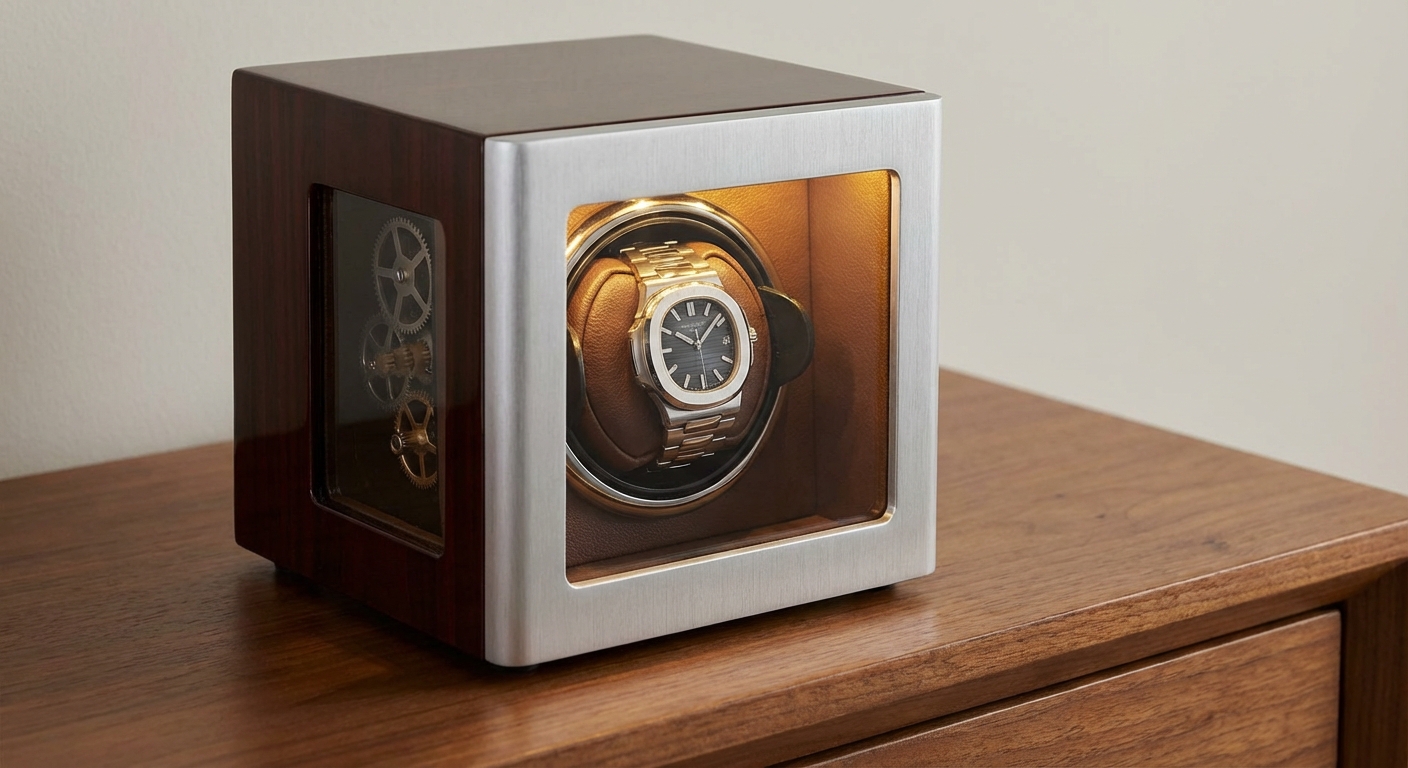
A watch winder is a valuable tool for keeping automatic movements ready to wear and preventing internal oils from congealing over time. If you have watches with complex complications, like perpetual calendars, a winder saves you the hassle of a lengthy manual reset. You can find high-end safes with integrated winders that provide both motion and security simultaneously.
How do winders prevent internal wear?
By keeping the watch in motion, a winder ensures that the lubricants stay evenly distributed across the gears and pivots. You prevent the “gumming up” that occurs when a mechanical movement sits idle for several months.
- Maintains readiness for immediate wear.
- Prevents lubricant settling in complications.
- Reduces wear on the crown and winding stem.
- Keeps calendar functions perfectly synced.
The kicker is:
Modern winders allow you to set specific directions to match the requirements of your specific movement.
Can you program specific turn settings?
You should match the “Turns Per Day” (TPD) setting on your winder to your watch manufacturer’s specifications to avoid unnecessary tension on the mainspring. Over-winding is rarely a risk with modern slip-clutches, but excess motion can still lead to premature part wear.
Key Takeaway: Integrated winders in a safe provide the ultimate combination of mechanical health and physical security.
| Movement Type | Winder Benefit | Recommended Setting |
|---|---|---|
| Simple Automatic | Moderate | 650 – 800 TPD. |
| Perpetual Calendar | Very High | Constant Sync Required. |
| Manual Wind | None | Do not use a winder. |
Using a programmable winder ensures your watch is always accurate and ready for your next big event.
Why use cameras near your small watch safe location?
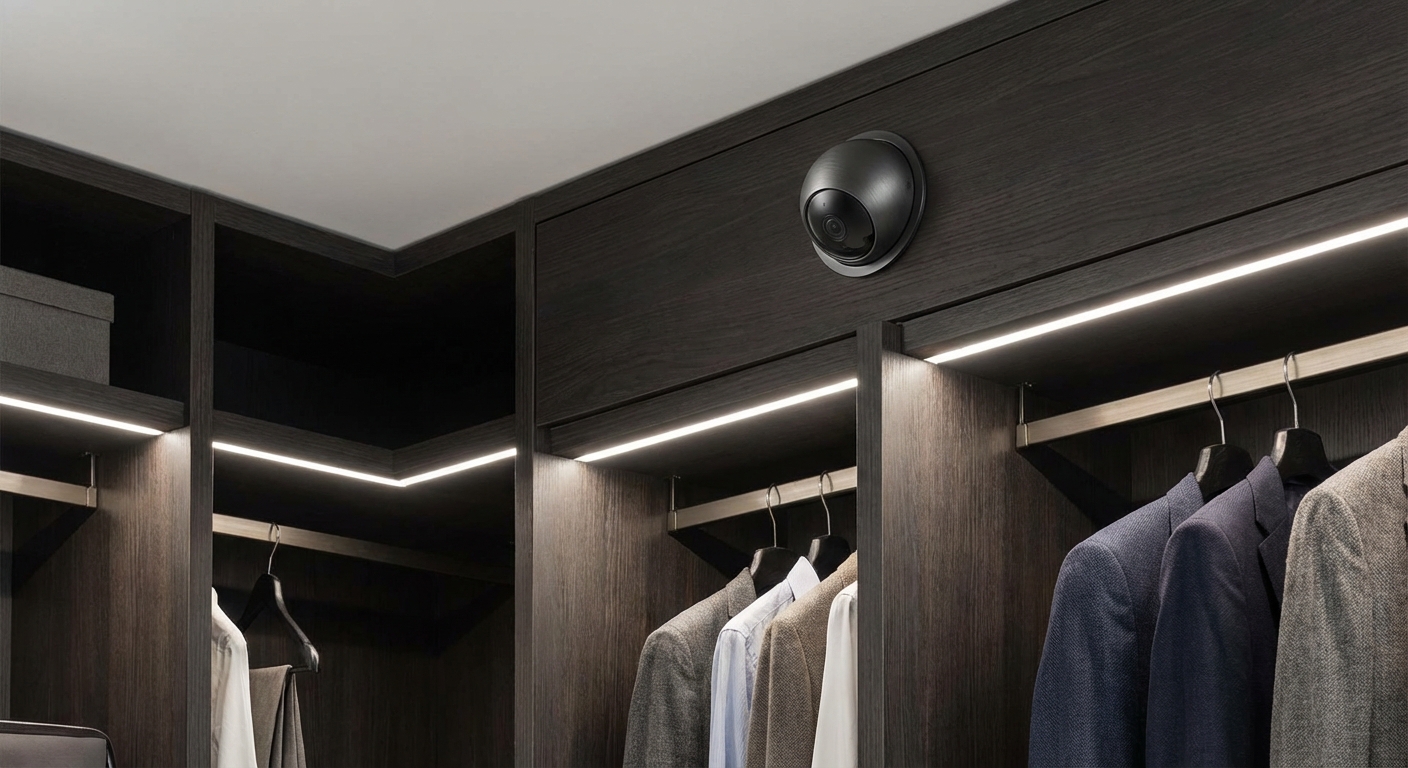
Discreet security cameras act as a vital deterrent and provide forensic evidence if a thief manages to locate your small watch safe. You should implement a “layered” security approach where the safe is the final barrier, but not the only one. Smart cameras can alert your phone the moment motion is detected in the room where your collection is stored.
Can redundant security stop a thief?
Redundant security involves multiple systems that a thief must bypass, significantly increasing the time they spend in your home. The longer a criminal spends trying to crack your defenses, the higher the chance they will be caught or flee.
- Motion sensors on the room’s entrance.
- Vibration sensors attached to the safe.
- Cloud-based video recording for evidence.
- Silent alarms that notify local police.
Think about this:
A visible camera might be disabled, but a hidden, secondary camera will capture the intruder’s face clearly.
Where is the best spot for cameras?
You should place your cameras at eye level to capture facial features rather than just the top of an intruder’s head. Aim one camera at the entrance to the room and another at a wide angle that covers the safe’s location.
Key Takeaway: Cameras and alarms provide the early warning system that protects the safe from being attacked in private.
| Security Layer | Function | Goal |
|---|---|---|
| Perimeter Alarm | Early Warning | Detect entry into the home. |
| Smart Camera | Visual Evidence | Capture intruder identity. |
| Safe Sensors | Final Defense | Detect physical safe tampering. |
A well-placed camera system can prevent a burglary by scaring off intruders before they even reach your safe.
How do you clean watches for a small watch safe?
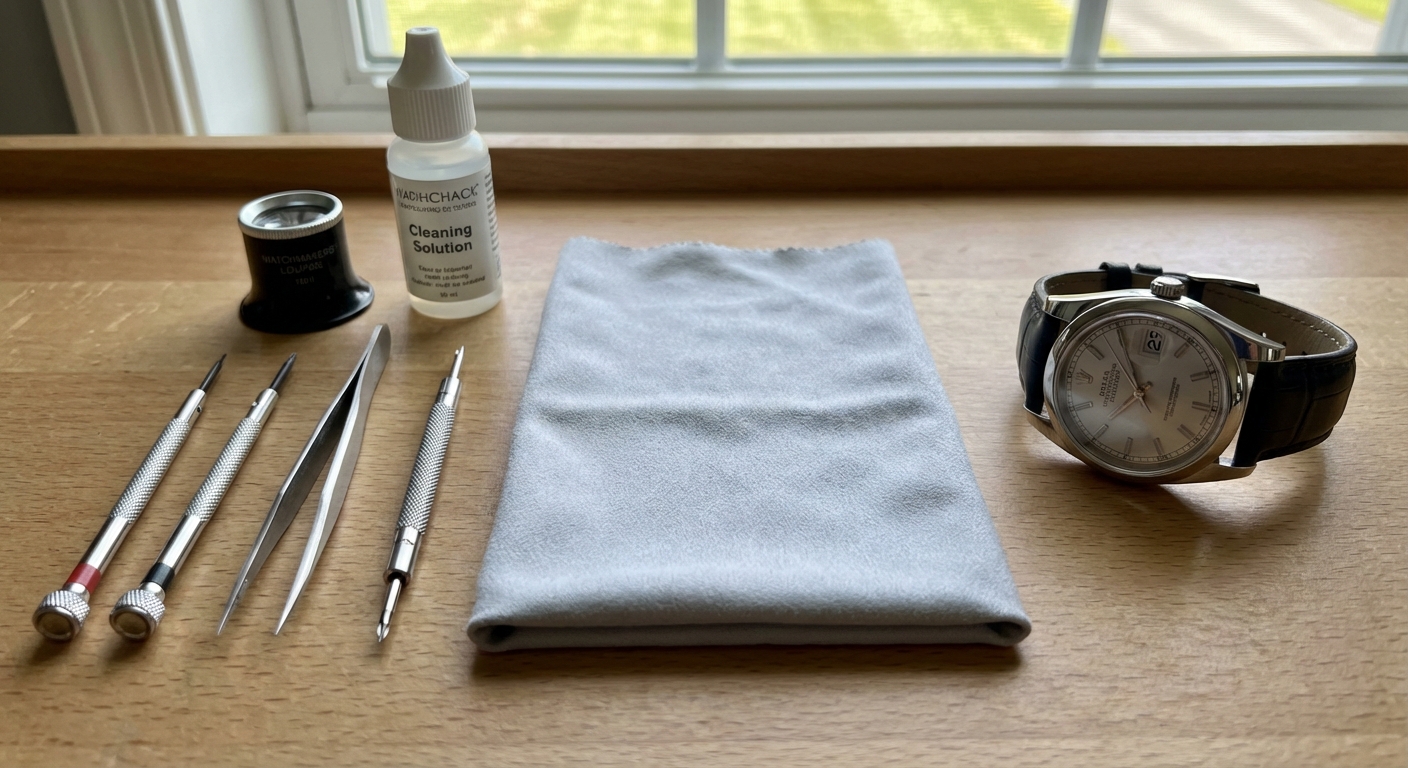
Properly cleaning your watches before storing them prevents the buildup of skin oils and grit that can cause “bracelet stretch” over time. You should never store a watch that is covered in sweat or salt water, as these can slowly corrode the steel or gold surfaces. A simple routine using specialized tools will keep your collection looking brand new for years.
What tools are safe for home cleaning?
You should use a soft-bristled brush, a microfiber cloth, and a gentle cleaning solution specifically designed for luxury watches. Avoid using harsh household chemicals or ultrasonic cleaners for the watch head, as the vibrations can damage mechanical movements.
- Ultra-soft horological brushes.
- High-quality lint-free microfiber.
- Mild, pH-neutral soap or specialized spray.
- Blower or compressed air for drying.
Here is the kicker:
An ultrasonic cleaner is great for the metal bracelet, but you must remove it from the watch head first.
Is salt water damage a major risk?
If you wear your watch in the ocean, you must rinse it thoroughly in fresh water immediately afterward to remove salt crystals. Salt is highly abrasive and can destroy the gaskets that keep your watch water-resistant and safe from humidity.
Key Takeaway: Cleanliness is the first step in physical preservation, preventing long-term surface and structural damage.
| Part | Cleaning Method | Frequency |
|---|---|---|
| Watch Case | Soft cloth + Mild soap | After every few wears. |
| Metal Bracelet | Ultrasonic (detached) | Every 6 months. |
| Leather Strap | Specialized conditioner | Yearly. |
Regular cleaning ensures that grit doesn’t act as an abrasive, wearing down the tight tolerances of your watch’s bracelet.
How to safely wear watches from a small watch safe?
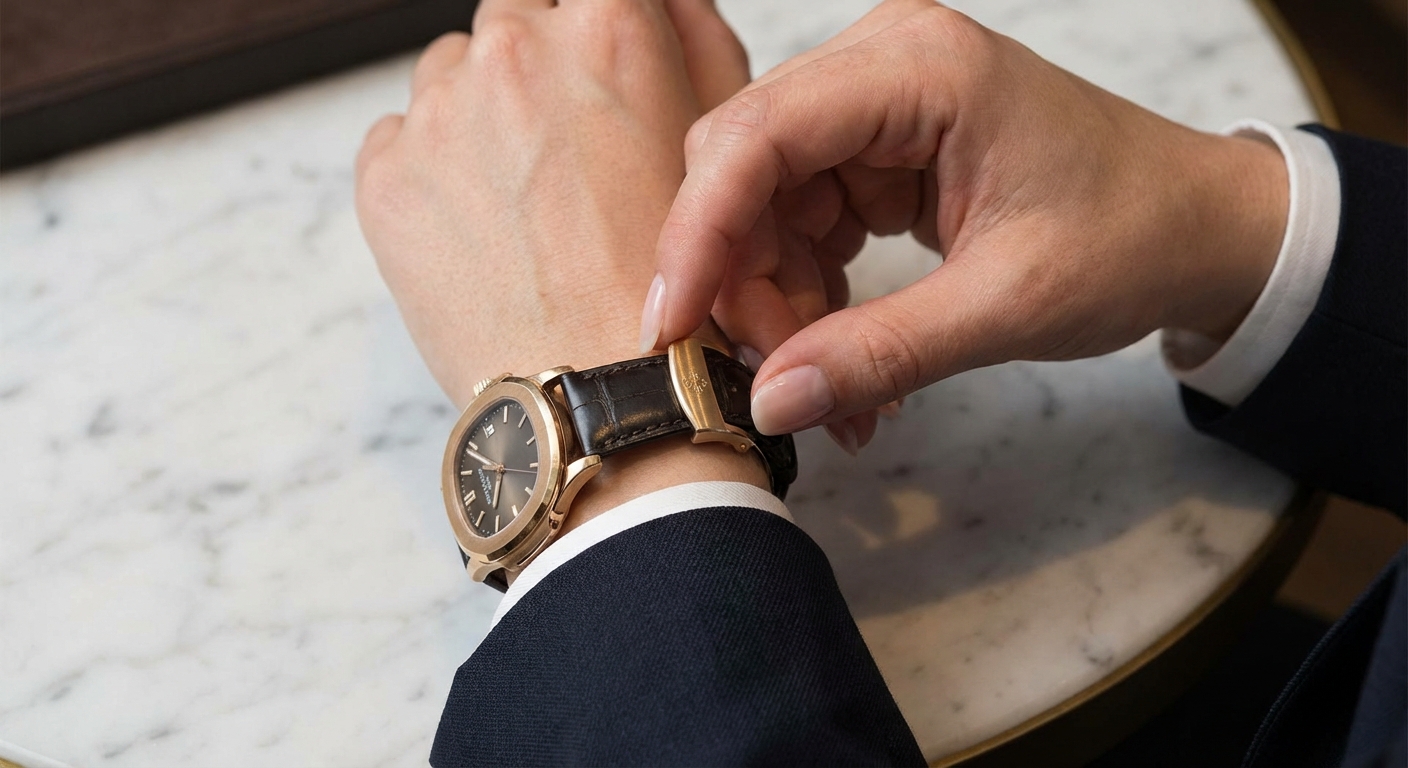
vvSafely wearing your watch involves being mindful of your environment and avoiding hazards that could cause mechanical failure or aesthetic damage. You should be especially careful around strong magnetic fields, which are increasingly common in modern electronics. Even a small watch safe won’t help if your watch is magnetized and losing minutes every day while on your wrist.
How can you avoid magnetic field damage?
You should keep your mechanical watches away from magnets found in laptop speakers, magnetic tablet covers, and MRI machines. Magnetism causes the coils of the balance spring to stick together, making the watch run incredibly fast.
- Laptops and smartphone speakers.
- Magnetic clasps on bags or jewelry.
- High-powered medical equipment.
- Induction cooktops in modern kitchens.
But wait, there’s more:
If your watch starts running minutes fast per day, a simple “demagnetizer” tool can usually fix the issue in seconds.
Is “desk diving” ruining your luxury clasp?
“Desk diving” refers to the scratches that occur on a watch clasp from rubbing against a desk or laptop while typing. You can prevent this by being mindful of your wrist position or choosing watches with brushed finishes that hide wear more effectively.
Key Takeaway: Awareness of your surroundings is the final layer of protection for any luxury timepiece.
| Hazard | Effect | Solution |
|---|---|---|
| Magnetism | Time loss/gain | Use a demagnetizer. |
| Hard Impacts | Mechanical shock | Remove for high-impact sports. |
| Surface Friction | Scratches/Dents | Be mindful of hard surfaces. |
Developing good wear habits ensures your watch remains in pristine condition, preserving both its beauty and its market value.
*
Frequently Asked Questions
Can I use a document safe for my watches?
Generally, no. Document safes are designed to keep the internal temperature low during a fire by releasing moisture, which can actually damage the delicate movements of your watches.
What is the best way to hide a safe?
The best way is to integrate it into your home’s architecture, such as behind a false wall, inside a custom-built cabinet, or under a floorboard in a low-traffic room.
How often should I service my watch safe?
You should check the batteries in your electronic lock every year and test the mechanical bolts every six months to ensure they move freely without friction.
Is it safe to store watches in a winder long-term?
Yes, provided you use a high-quality winder with programmable settings that don’t overstress the mainspring or slip-clutch mechanism.
What should I do if my watch gets magnetized?
You can buy an inexpensive demagnetizer online or take it to any local watchmaker; the process takes less than a minute and is completely safe.
Secure Your Legacy Today
True watch safety is never about a single product; it is a comprehensive strategy that combines physical security, environmental stability, and financial protection. From the moment you lock your collection into a high-security safe to the habits you develop while wearing them, every detail matters in preserving your horological legacy. Don’t wait for a disaster to occur before taking action. To find the perfect high-security solution tailored for your unique collection, contact us today and let our experts help you build a fortress for your timepieces.


