 跳到内容
跳到内容 

Investing in a high-end horological storage solution ensures your timepieces remain both secure and mechanically pristine. Many luxury watch owners live in constant fear of a home invasion or the silent degradation of their movements due to oil coagulation. Leaving a $50,000 Patek Philippe in a bedside drawer isn’t just risky; it’s an invitation for a total loss of both financial value and family history. A professional watch winding safe provides the ultimate fix by combining bank-grade security with precision movement maintenance.
Why Should You Invest in a Watch Winder Safe Today?
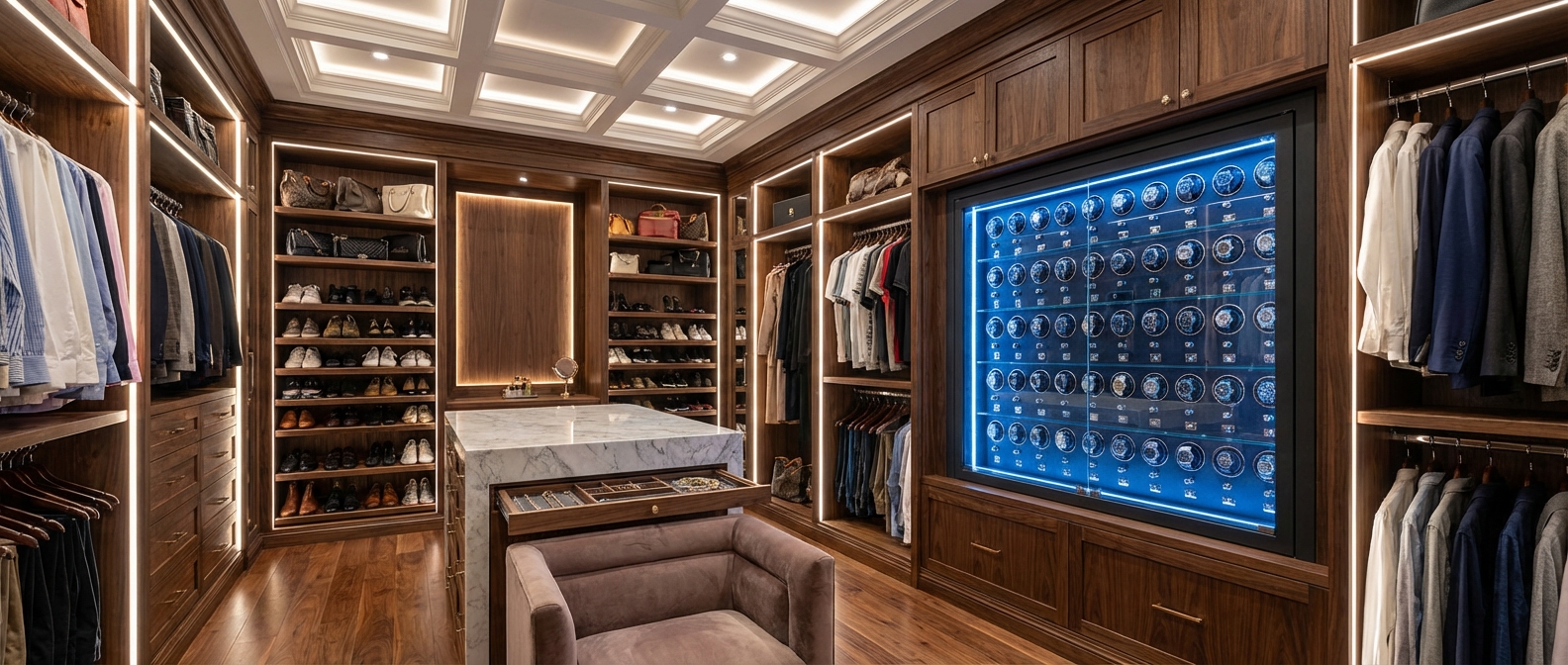
You should invest in this technology to provide a dual-layered defense against physical theft and internal mechanical failure. A modern watch winding safe ensures that your automatic movements never sit static for long enough for lubricants to harden. This proactive approach saves you thousands of dollars in avoidable service costs while keeping your collection ready to wear at a moment’s notice.
Why basic storage is a risk for automatic movements?
Storing a luxury watch without regular motion can lead to significant timing errors and costly overhauls.
Look:
- Oil stagnation occurs when movements remain idle for months.
- Dust accumulation can penetrate non-hermetic cases over time.
- Mainspring tension can fluctuate without consistent winding cycles.
But here is the kicker:
You aren’t just protecting the metal; you are protecting the complex heartbeat of the machine. When you utilize a professional system, you ensure the escapement remains lubricated and the gaskets stay supple through active use.
| Feature | Residential Safe | Luxury Winder Safe |
|---|---|---|
| Security Level | Low to Medium | High (Bank Grade) |
| Mechanical Care | None (Static) | Active (Precision Winding) |
| Interior Lining | Felt or Carpet | Acid-free Microfiber |
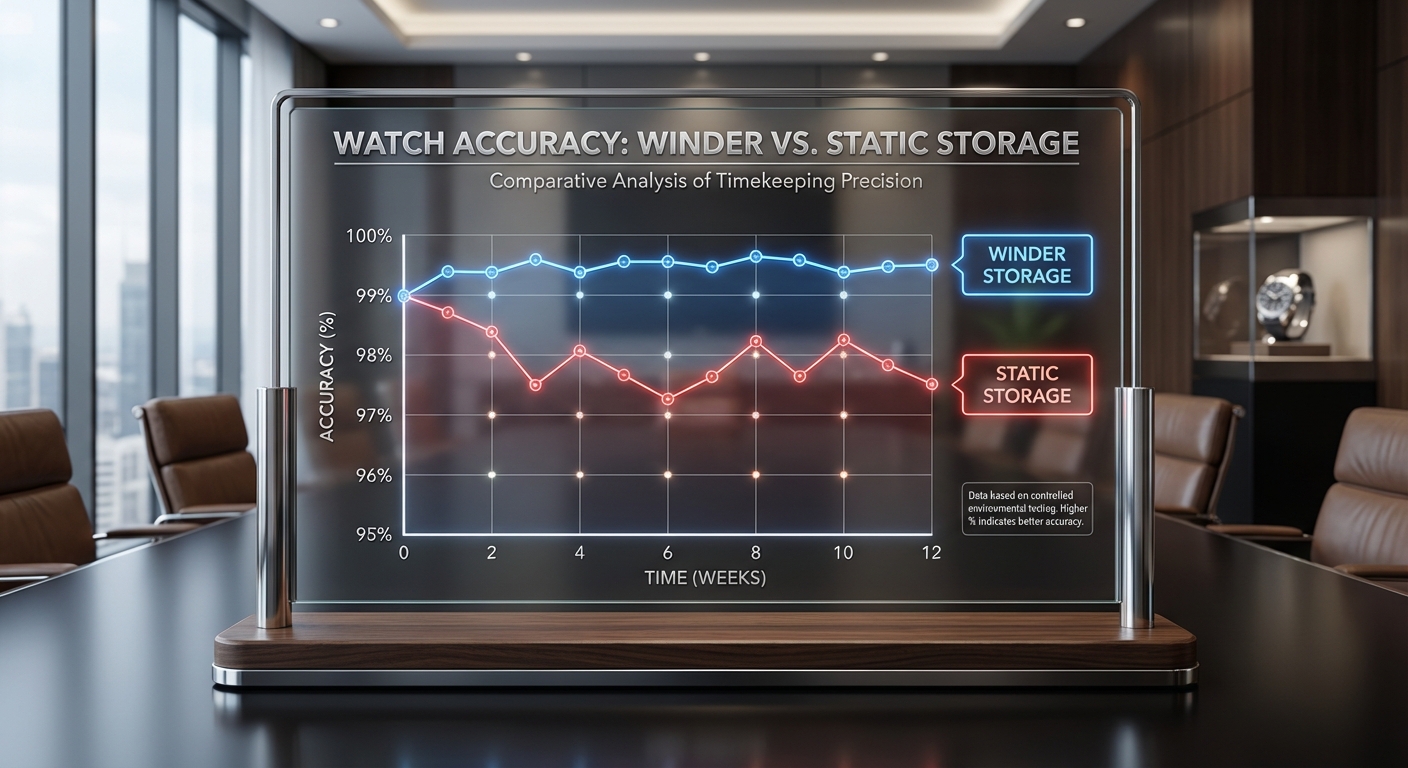
The following data illustrates how specialized environments outperform generic storage options in every metric.
Key Takeaway: A dedicated winder safe is the only solution that simultaneously addresses security and horological health.
What Essential Security Features Define a Luxury Safe?
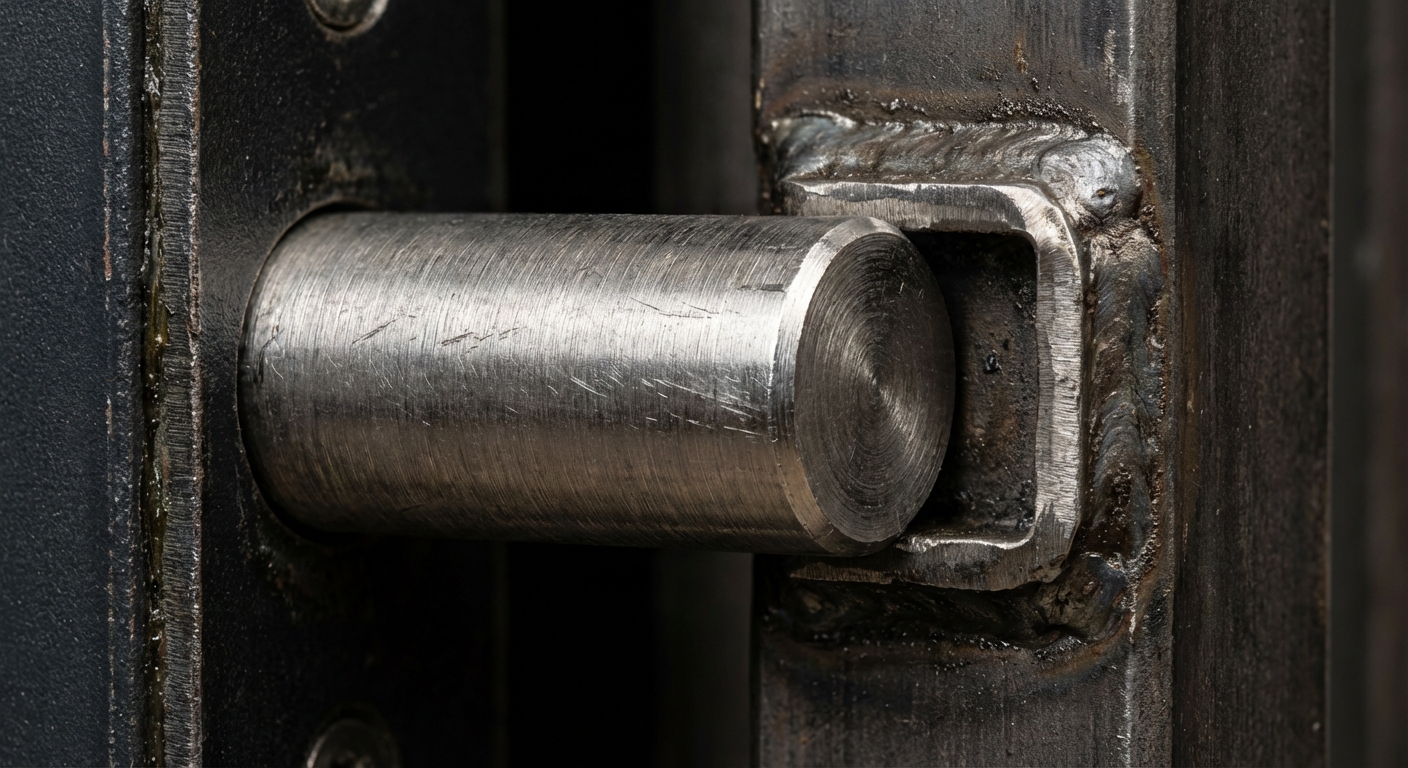
Luxury security is defined by high-tensile steel construction, multi-way active locking bolts, and certified fire resistance. Every high-quality watch winding safe must utilize a door plate at least 10mm thick to resist drilling and prying attempts. These units often weigh hundreds of pounds, making it nearly impossible for a thief to remove the entire unit from your home.
The importance of reinforced steel and anti-pry bolts
Solid steel bolts provide the physical barrier necessary to withstand forced entry tools like crowbars.
Think about this:
- Active bolts extend into the frame on all four sides of the door.
- Anti-drill plates protect the vital locking mechanism from high-speed bits.
- Heavy-duty hinges are often concealed to prevent grinding attacks.
But that’s not all:
You need a safe that feels like a fortress but operates like a precision instrument. By choosing a unit with reinforced structural integrity, you create a “time-delay” factor that discourages even the most determined intruders.
| Security Spec | Standard Requirement | Luxury Benchmark |
|---|---|---|
| Door Thickness | 3-5mm | 10mm+ |
| Bolt Diameter | 15-20mm | 30mm+ |
| Fire Rating | 30 Minutes | 90-120 Minutes |
Physical weight and bolt diameter are just as critical as the digital locking mechanism for total peace of mind.
Key Takeaway: Physical resistance through thick steel and multi-point locking is the foundation of any serious security investment.
How Does Advanced Winding Technology Protect Your Watches?
Advanced technology protects your watches by simulating the natural motion of the wrist through programmed rotation cycles. A watch winding safe uses specialized electronics to control the “Turns Per Day” (TPD), ensuring the mainspring is never overstressed. This precision prevents the slip-clutch from wearing out prematurely, which is a common issue in low-quality winders.
Why are individual TPD settings necessary for Rolex or Patek?
Every movement caliber requires a specific number of rotations to maintain an optimal power reserve.
Look:
- Rolex movements often require 650 TPD in a bidirectional pattern.
- Patek Philippe calibers frequently need 800+ TPD clockwise.
- Incorrect settings can lead to a depleted reserve or unnecessary friction.
Let’s look closer:
You shouldn’t settle for a “one-size-fits-all” rotation speed for a diverse collection. Utilizing individual motors allows you to tailor the environment to the specific needs of each masterpiece you own.
| Brand | Recommended TPD | Direction |
|---|---|---|
| Rolex | 650 | Bidirectional |
| Patek Philippe | 800 | Clockwise |
| Omega | 700 | Bidirectional |
Customizing these settings prevents unnecessary wear on the mainspring and maintains chronometric precision over years of ownership.
Key Takeaway: Precision-matched TPD settings are vital for preventing mechanical stress and ensuring long-term movement accuracy.
Which Capacity Best Suits Your Growing Timepiece Collection?
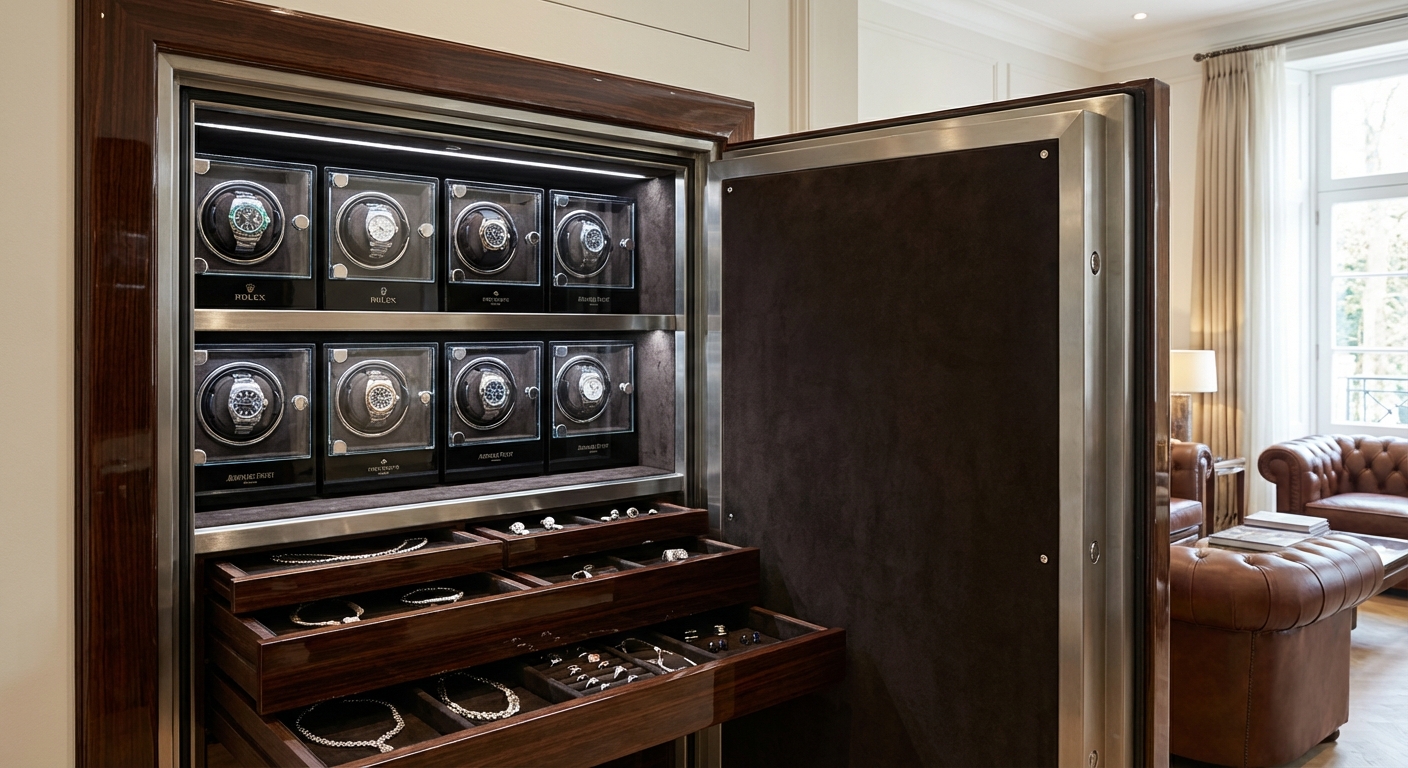
The ideal capacity is one that accommodates your current collection while leaving at least 25% room for future acquisitions. Selecting a watch winding safe with integrated storage drawers allows you to consolidate your watches, jewelry, and legal documents in one secure location. This centralized approach simplifies your morning routine and ensures all valuables are protected under a single fire-rated shell.
Should you buy for the collection you have or the one you want?
Experienced collectors always recommend purchasing a unit that allows for growth over the next five years.
Think about this:
- Multi-watch units (8 to 12 winders) are the most popular mid-range choice.
- Integrated drawers provide space for static watches and straps.
- Modular safe interiors can sometimes be reconfigured as your needs change.
But here is the kicker:
You will likely add more pieces to your collection sooner than you anticipate. Buying a larger unit now prevents the need for a secondary safe purchase and additional installation costs later.
| Collection Size | Recommended Capacity | Storage Feature |
|---|---|---|
| 1-3 Watches | 4-6 Winders | Small Accessory Drawer |
| 4-8 Watches | 12 Winders | Large Jewelry Tray |
| 10+ Watches | 24+ Winders | Document/Valuable Compartment |
Future-proofing your storage ensures that your investment remains relevant as your passion for horology expands.
Key Takeaway: Always select a capacity larger than your current count to avoid the logistical headache of upgrading too soon.
What Materials Ensure Maximum Durability and Elegance?
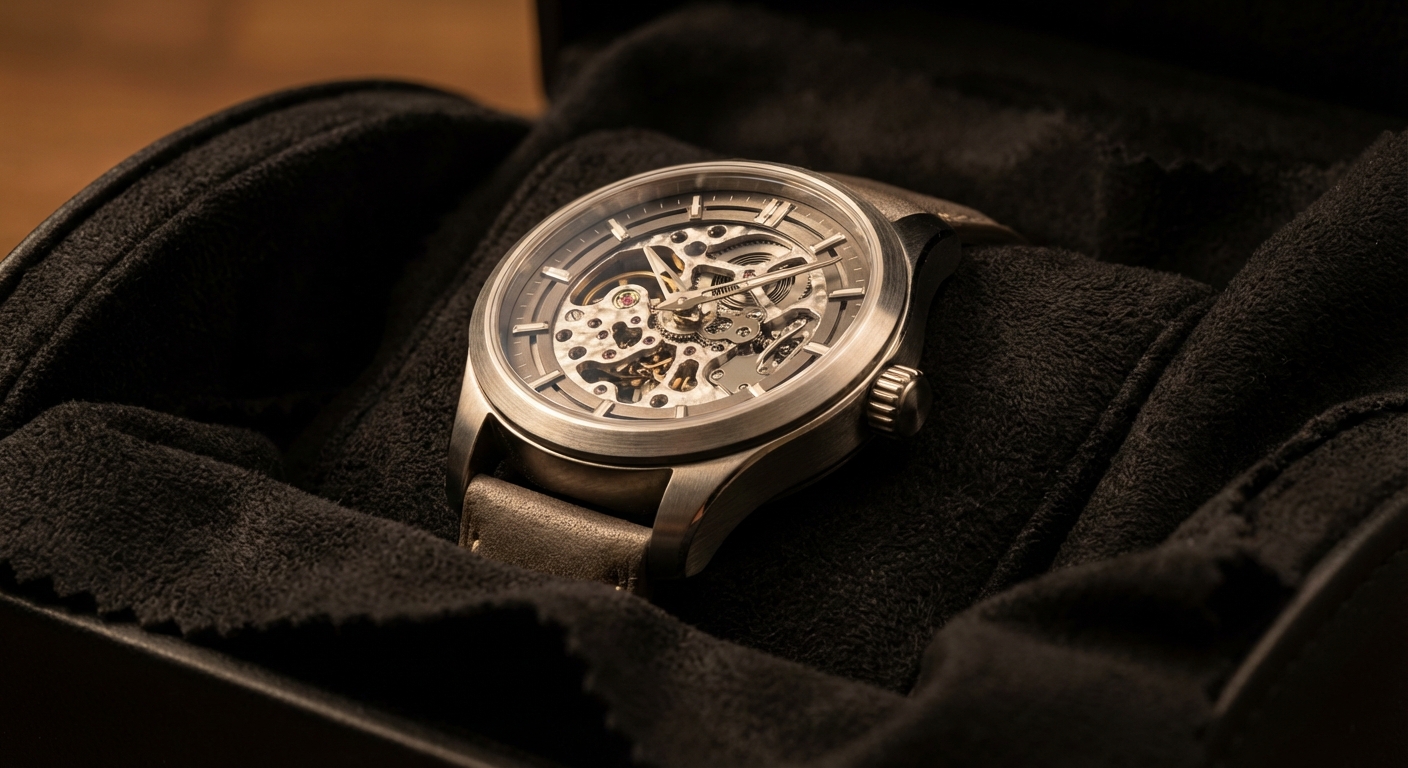
Maximum durability is achieved through the use of carbon steel exteriors and acid-free microfiber leather interiors. A premium watch winding safe avoids cheap plastics or abrasive fabrics that could scratch high-polish gold or platinum cases. The exterior finish should be a multi-layer powder coating or high-gloss lacquer to resist corrosion and maintain a luxury aesthetic.
Is microfiber or leather better for scratch prevention?
Modern synthetic microfiber is often superior to traditional leather because it does not contain tanning acids.
Look:
- Acid-free materials prevent the long-term tarnishing of precious metals.
- High-density foam cushions adapt to different strap and bracelet sizes.
- Velvet-touch finishes provide a soft landing for delicate skeletonized movements.
The best part?
You get to enjoy the tactile feel of luxury every time you reach for your watch. High-end materials reflect the value of the contents and ensure the safe becomes a centerpiece of your home office.
| Material | Durability | Scratch Resistance | Long-term Safety |
|---|---|---|---|
| Microfiber Leather | High | Excellent | Acid-Free (Safe) |
| Standard Leather | Medium | Good | Potential Acid Residue |
| Cheap Velvet | Low | Poor | Sheds Fibers |
Choosing non-abrasive, chemically neutral materials is a non-negotiable requirement for protecting polished watch surfaces.
Key Takeaway: Interior lining must be acid-free and non-abrasive to prevent chemical reactions and physical scratches on your timepieces.
How Do Do Biometric Systems Enhance Your Daily Accessibility?
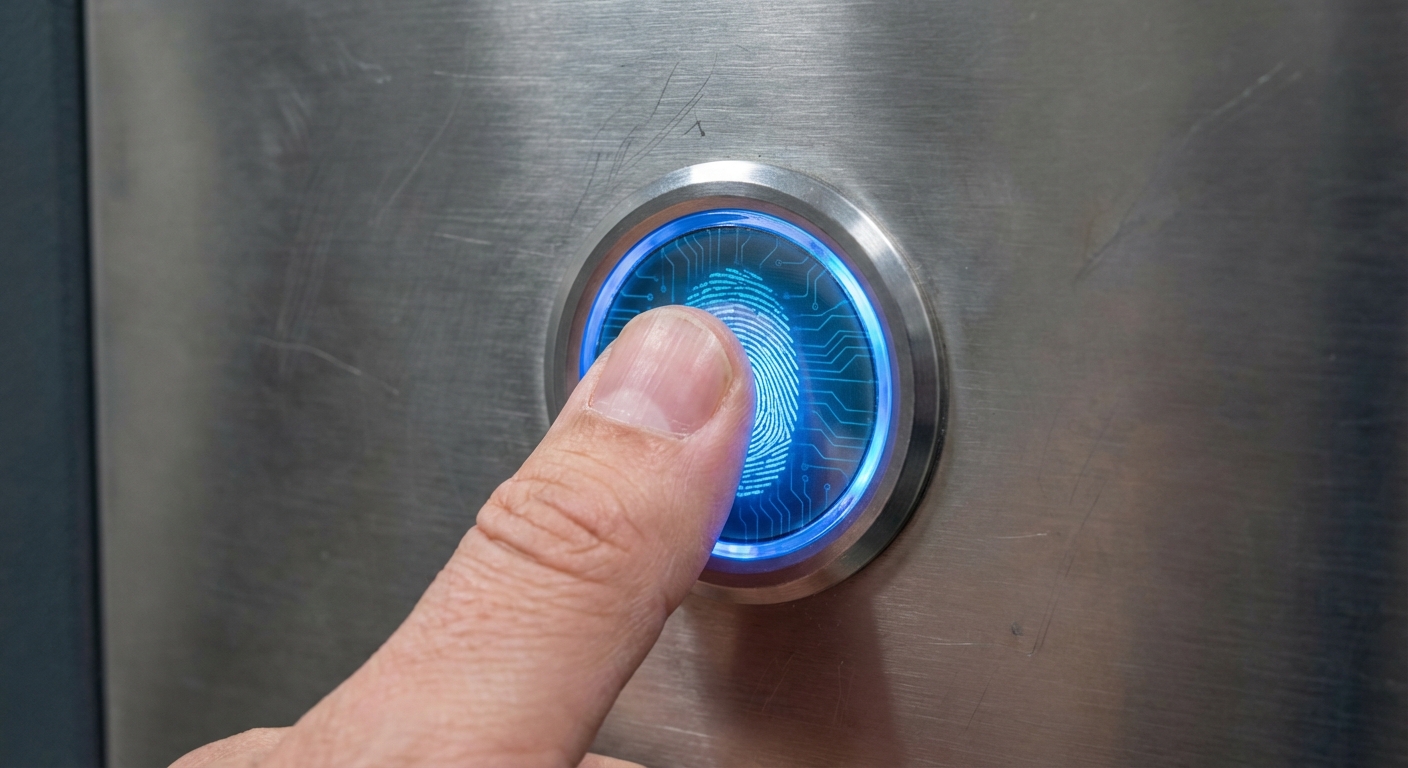
Biometric systems enhance accessibility by providing sub-second entry without the need to memorize complex codes or carry physical keys. In a high-end watch winding safe, fingerprint recognition technology allows you to access your collection instantly while maintaining military-grade encryption. This eliminates the risk of “code-surfing” or lost keys, which are common vulnerabilities in traditional safe designs.
Why is fingerprint recognition faster than traditional dials?
Digital scanning bypasses the manual dexterity required for mechanical wheels or slow keypad entries.
Believe it or not:
- Modern scanners can store up to 100 unique fingerprints for different users.
- False rejection rates have dropped significantly with 3D thermal imaging.
- Emergency override keys are still included for complete fail-safe security.
But that’s not all:
You can grant temporary access to a spouse or trusted staff member without disclosing your primary security code. This layer of “access management” makes high-value storage much more practical for a busy lifestyle.
| Access Method | Speed | Ease of Use | Security Level |
|---|---|---|---|
| Biometric | < 1 Second | Very High | Excellent |
| Digital Keypad | 3-5 Seconds | High | High |
| Mechanical Dial | 20+ Seconds | Low | High |
Modern biometric scanners offer the perfect balance of immediate convenience and robust protection for daily users.
Key Takeaway: Biometric technology provides the fastest path to your collection while adding an extra layer of encrypted identity verification.
What Are the Most Common Buyer Mistakes to Avoid?
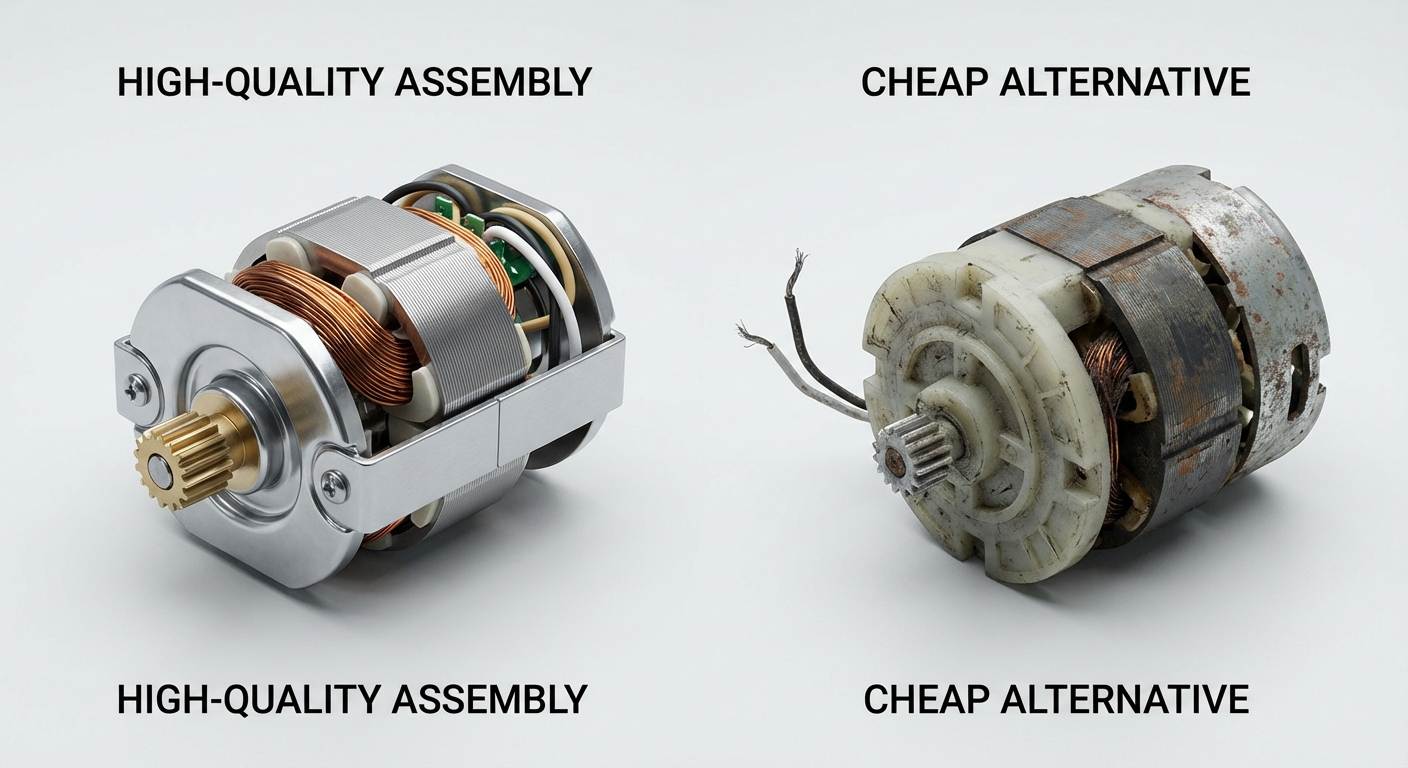
The most common mistake is sacrificing motor quality and security certifications for a lower initial price point. A cheap watch winding safe often uses noisy, “brushed” motors that generate magnetic interference and fail within a year. Additionally, many buyers overlook the fire rating, leaving their collection vulnerable to heat damage during a home emergency.
The hidden cost of cheap, noisy motors
Low-quality gears often produce vibrations that can actually harm the delicate balance wheel of your watch.
Wait, there’s more:
- Magnetic leakage from unshielded motors can magnetize your watch’s hairspring.
- Inconsistent rotation speeds can lead to erratic timing and power loss.
- Replacement parts for generic units are often impossible to source.
Think about this:
You are placing tens of thousands of dollars worth of equipment inside a box. Saving $500 on a safe only to suffer a $2,000 repair bill for a magnetized movement is a poor financial trade-off.
| Red Flag | Potential Consequence | Better Alternative |
|---|---|---|
| Noisy Gears | Mechanical Friction | Brushless Motors |
| No Fire Rating | Total Melt Loss | UL-Certified Fire Resistance |
| Single TPD Mode | Movement Wear | Programmable Controls |
Investing in a high-quality motor assembly prevents the hidden mechanical risks associated with budget winding systems.
Key Takeaway: A noisy or uncertified winder is a liability; always prioritize motor technology and fire protection over upfront savings.
How Do You Correctly Configure Your Winder Settings?
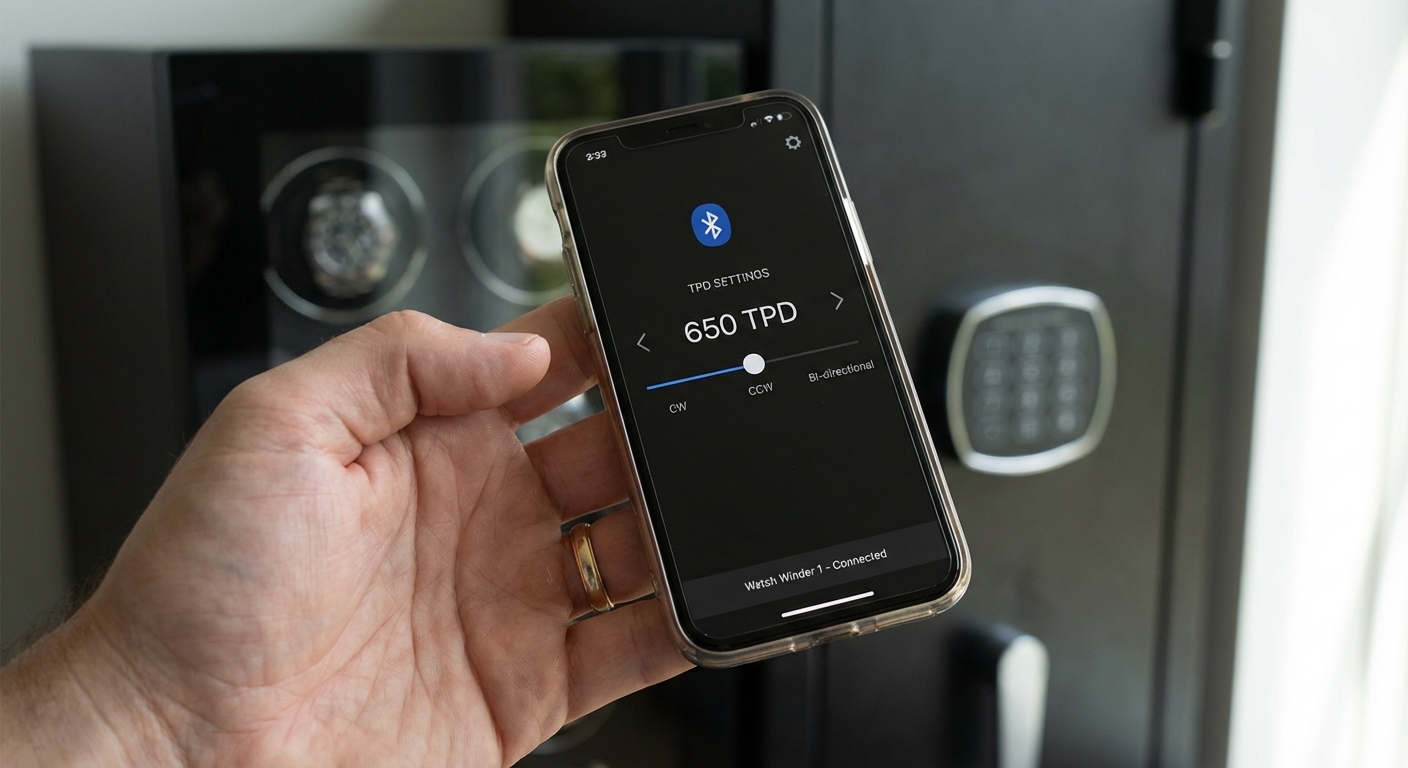
You correctly configure your settings by matching the winder’s TPD and rotation direction to your watch’s specific movement manual. Most modern watch winding safe units offer Bluetooth or LCD control panels to make these adjustments effortless. It is essential to understand whether your watch winds clockwise, counter-clockwise, or bidirectionally to avoid a dead power reserve.
Is it possible to overwound an automatic watch?
Modern automatic watches feature a slip-clutch mechanism that prevents the mainspring from snapping, but excessive winding still causes wear.
You might be wondering:
- Programmed “sleep modes” allow the mainspring to unwind slightly, simulating natural use.
- Most Rolex models perform best at 650 TPD bidirectionally.
- Vintage pieces may require lower TPD settings to preserve aging components.
Look:
You should always check a reliable database or your manufacturer’s guide before setting your rotation pattern. Using an app-controlled system allows you to update settings instantly as you swap watches in and out of the winder.
| Setting Type | Purpose | Recommended For |
|---|---|---|
| Clockwise | Single-direction winding | Most Patek/Japanese movements |
| Bidirectional | Dual-direction winding | Most Rolex/Swiss movements |
| Sleep Mode | Prevents mechanical fatigue | All luxury watches |
Matching these parameters to your specific caliber ensures the movement remains in peak condition without unnecessary friction.
Key Takeaway: Correct TPD and direction settings are the “prescription” for your watch’s health; follow manufacturer specs for best results.
Why Is Brushless Motor Technology the Industry Standard?
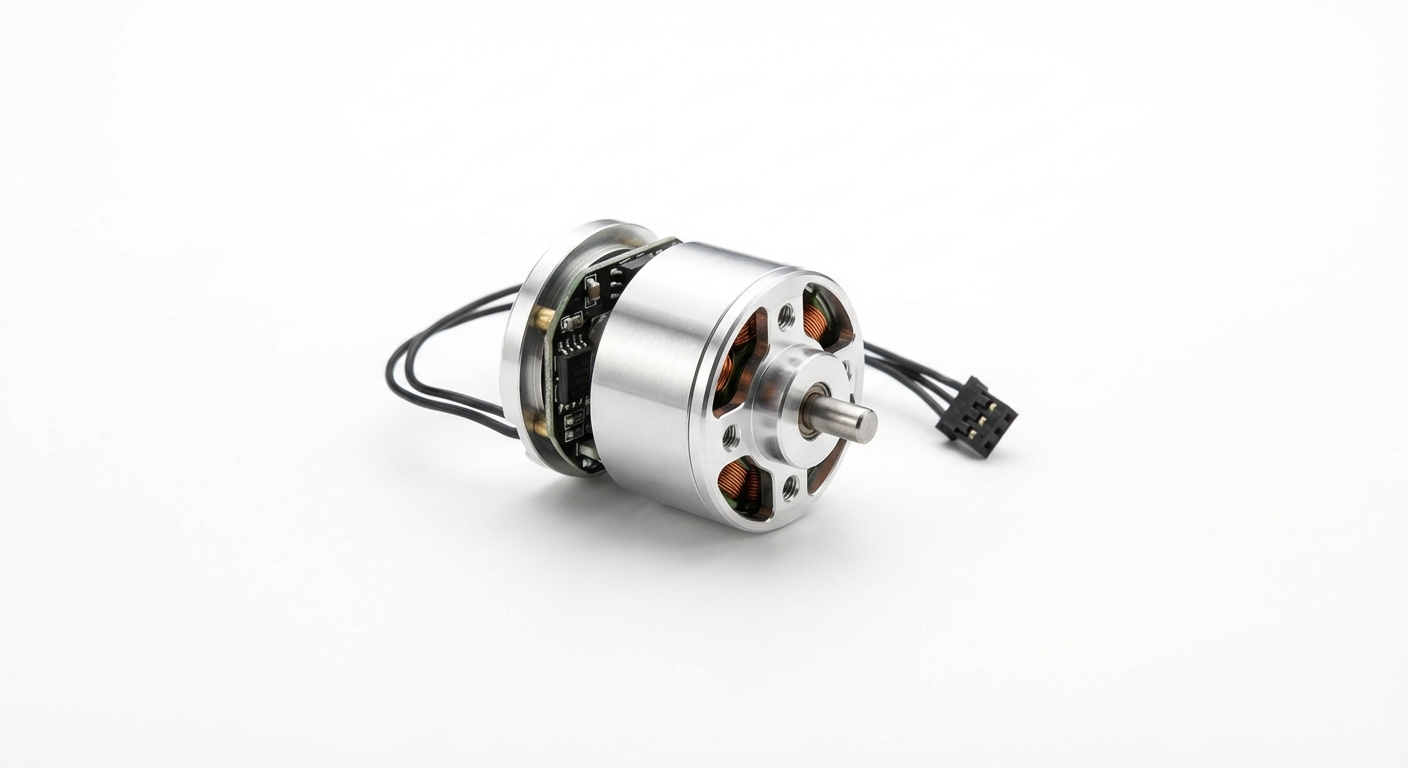
Brushless motor technology is the industry standard because it offers silent operation, zero magnetic interference, and extreme longevity. In a watch winding safe, these motors utilize electronic commutation instead of physical brushes, eliminating the friction that causes noise and heat. This makes them ideal for installation in master bedrooms or quiet home offices where a buzzing motor would be a distraction.
How does brushless operation extend the safe’s lifespan?
By removing physical contact points within the motor, the internal components suffer significantly less wear and tear.
It gets even better:
- Brushless motors are up to 90% more energy-efficient than traditional types.
- The absence of sparks prevents electrical noise that could interfere with sensors.
- They provide more consistent torque, ensuring heavy watches rotate smoothly.
Look:
You want a system that you can set and forget for a decade. Brushless technology provides the “silent partner” reliability required to manage high-precision horological instruments day in and day out.
| Motor Type | Noise Level | Lifespan | Magnetism Risk |
|---|---|---|---|
| Brushless | Near-Silent | 10+ Years | Extremely Low |
| Brushed | Audible Hum | 1-2 Years | Higher |
| Budget Gearbox | Loud Grinding | < 12 Months | High |
Mechanical differences between motor types are the primary factor in determining the long-term reliability of your safe.
Key Takeaway: Brushless motors are the only acceptable choice for high-end collections due to their silence and lack of magnetic discharge.
How Do You Choose the Perfect Location for Your Safe?
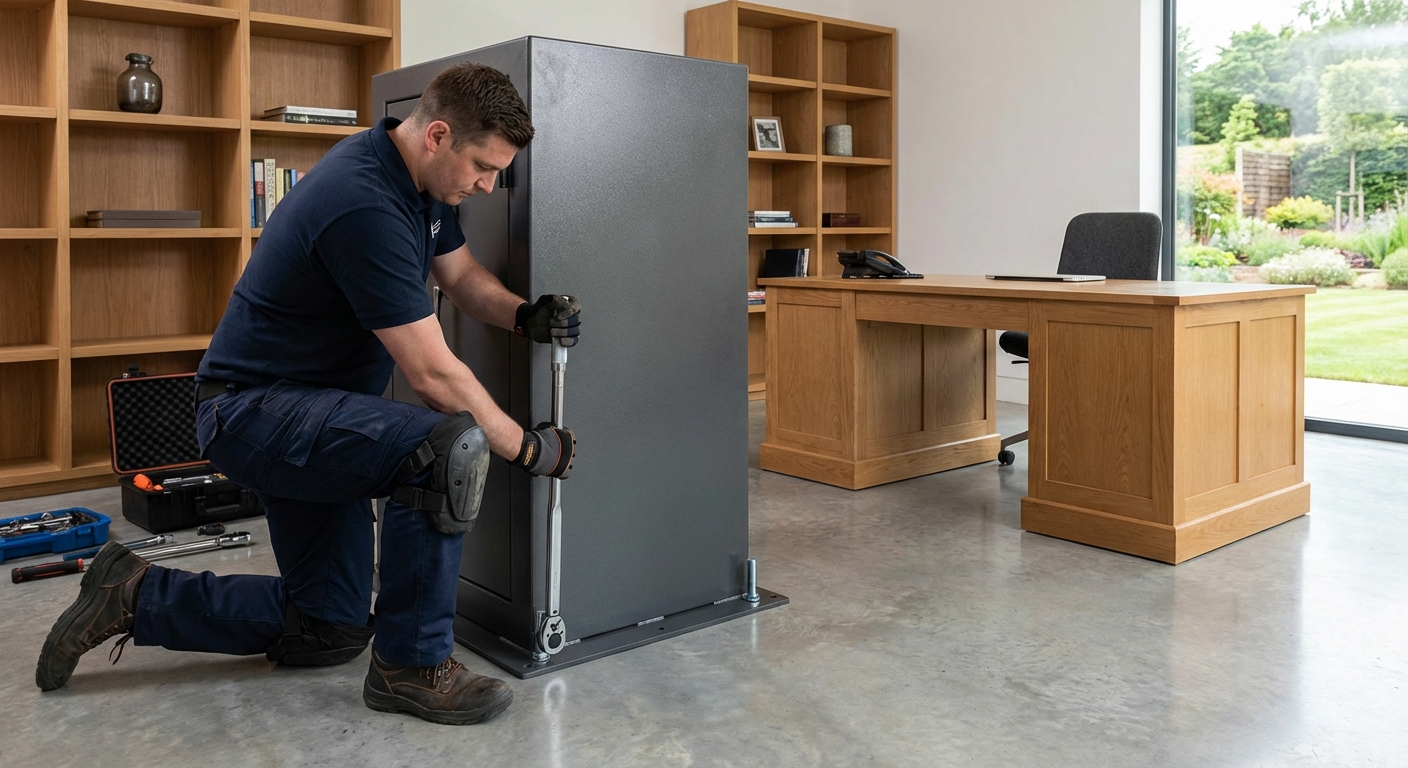
The perfect location is a ground-floor reinforced concrete surface that allows the unit to be bolted directly to the foundation. Choosing a location for your watch winding safe requires balancing accessibility with concealment to minimize the risk of a “smash and grab” attack. Professional installers often recommend walk-in closets or dedicated home offices where the safe can be integrated into custom cabinetry.
Is floor reinforcement necessary for heavy safes?
Large safes weighing over 500 lbs require a structural assessment to ensure the floor joists can support the concentrated load.
Bottom line:
- Bolting the safe to the floor increases its security effectiveness by over 300%.
- Basement or ground-floor concrete provides the most stable mounting surface.
- Avoid areas with high humidity or extreme temperature fluctuations to protect electronics.
Think about this:
You need a spot that is convenient enough for daily use but hidden enough to avoid casual observation by visitors. A safe that is bolted down and hidden behind a cabinet door is nearly impossible for a common thief to defeat.
| Location | Security Rating | Accessibility | Humidity Risk |
|---|---|---|---|
| Master Closet | High | Excellent | Low |
| Home Office | High | Good | Low |
| Garage | Medium | Low | High (Not Recommended) |
Professional installation ensures the safe is immobile and situated in a climate-controlled environment that preserves the watches.
Key Takeaway: Bolting your safe to a concrete floor in a discreet, climate-controlled room is the gold standard for home security.
*
Summary: Securing Your Horological Legacy
This guide has explored the critical intersection of high-grade security and mechanical precision. By choosing a system with brushless motors, biometric access, and programmable TPD settings, you solve the primary problems of theft and movement degradation. At Jimbo Safes, we understand that your collection is more than just jewelry—it’s a legacy. We can provide custom-engineered solutions that fit your specific capacity needs and security requirements. Our brand vision is to deliver peace of mind through unyielding craftsmanship and innovative security technology. If you are ready to upgrade your collection’s home, contact us today for a professional consultation.
*
Frequently Asked Questions
Can I store jewelry in a watch winder safe?
Yes. Most luxury units include integrated drawers lined with acid-free materials specifically for rings, necklaces, and loose gemstones.
What’s the best way to prevent my watch from being magnetized?
Ensure your safe uses shielded brushless motors. High-quality winders are designed to keep magnetic fields away from the movement’s hairspring.
Can I change the TPD settings for each watch individually?
Yes. Professional safes feature independent motors, allowing you to set different rotation patterns for a Rolex and a Patek Philippe simultaneously.
Do I need an electrician to install a watch winder safe?
Usually no. Most units use standard power outlets, though some collectors choose to hardwire their safes during a home renovation for a cleaner look.
What happens if the power goes out?
Most units feature a backup battery system or manual override keys to ensure you can always access your collection during a blackout.


