

Keeping luxury watches safe at home requires a multi-layered security strategy focused on physical fortification and tactical concealment. Owning high-end timepieces brings constant anxiety about theft or accidental damage that can occur in an instant. Relying on basic drawers or display cases leaves your investments vulnerable to a quick grab-and-go during a burglary. The ultimate protection comes from an in wall watch safe that hides your collection from prying eyes while providing a hardened physical barrier.
Why is an in wall watch safe necessary for collectors?
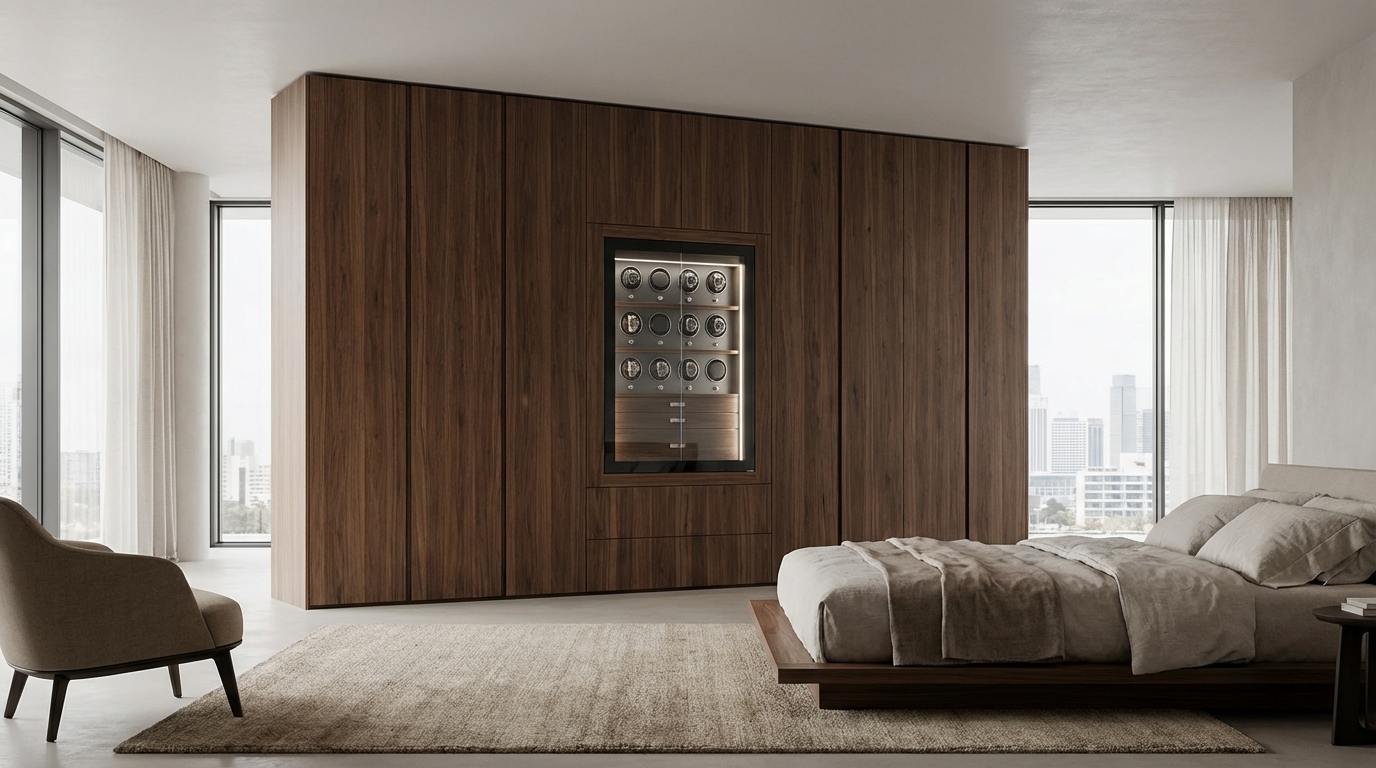
An in wall watch safe is necessary because it offers a discrete, permanent security point that prevents unauthorized access by houseguests or intruders. Storing valuables in an in wall watch safe ensures that your most prized assets are not left in plain sight. This level of organization also helps you manage your collection more effectively.
How does physical security deter theft?
Physical security acts as the primary deterrent by making it difficult for an opportunist to access your watches. A hardened safe prevents the common “smash and grab” scenarios that plague residential areas.
- High-grade steel prevents prying.
- Hidden locations reduce target visibility.
- Anchored frames stop the entire unit from being taken.
Can security lower your insurance costs?
Here is the deal:
Insurance providers often require certified storage for high-value items to maintain full coverage. By proving you use a rated safe, you demonstrate a commitment to risk mitigation that can lead to lower premiums. Most carriers view professional storage as a mandatory requirement for significant horological portfolios.
Key Takeaway: Using a dedicated safe secures your financial investment and ensures compliance with strict insurance policies.
| Security Aspect | Primary Benefit |
|---|---|
| Material Strength | Resists physical tampering |
| Concealment | Prevents targeted theft |
| Insurance Proof | Validates asset protection |
Integrating a fixed security point is the only way to transform a standard room into a secure horological vault.
Are portable units as secure as an in wall watch safe?
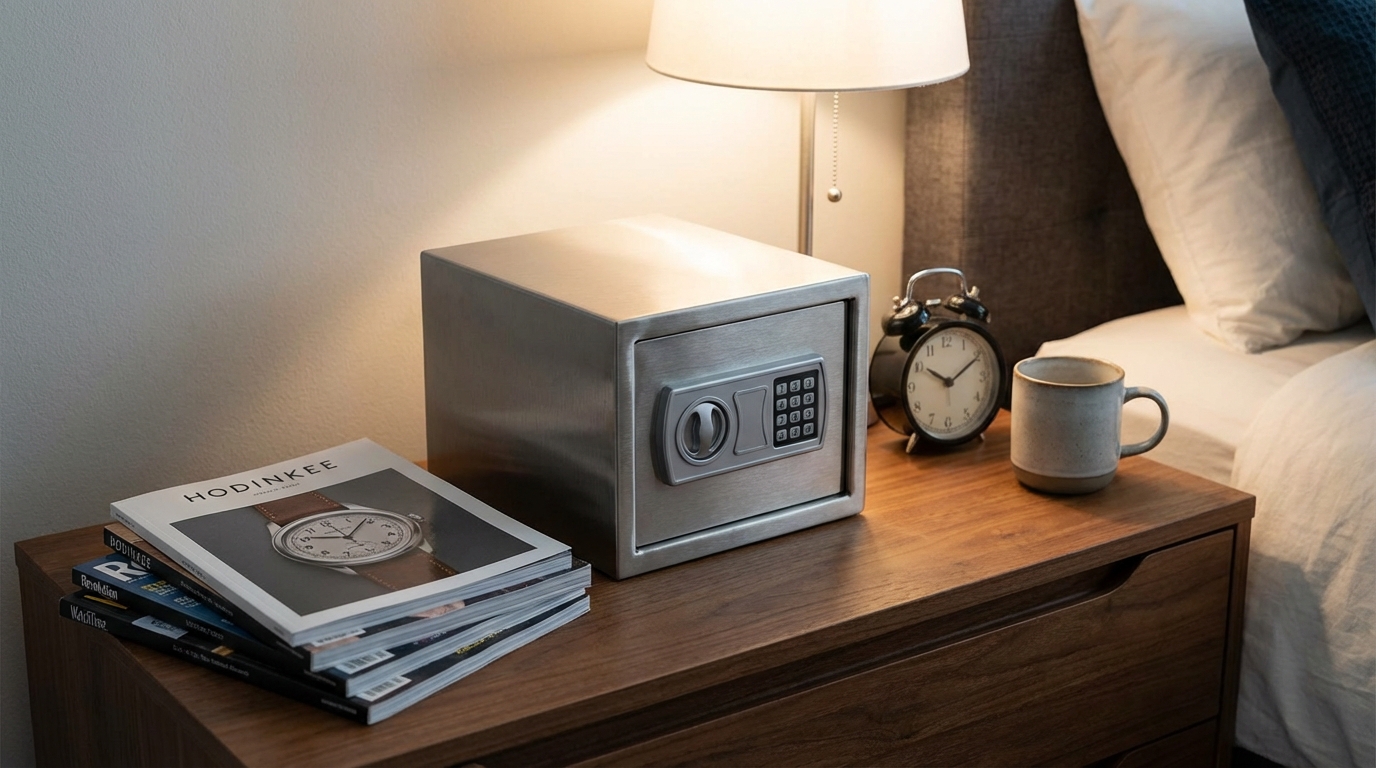
Portable units are significantly less secure because their lack of structural anchoring allows a thief to simply carry the entire safe away. While an in wall watch safe is bolted to the home’s framing, portable options are often lightweight enough to be removed in seconds. This mobility makes them a liability rather than a solution for permanent home storage.
What are the risks of lightweight safes?
The main risk is the ease of relocation by an intruder who cannot open the lock on-site. Thieves prefer to take a small safe to a secondary location where they can use heavy tools without interruption.
- They are easy to hide in a bag.
- No structural integration exists.
- Weight is usually under 40 pounds.
When should you use portable options?
Think about this:
Portable safes are best reserved for temporary travel or hotel stays where permanent options are unavailable. They provide a basic layer of protection against “curiosity theft” from hotel staff or casual visitors. However, they should never be the primary defense for a multi-piece collection at your residence.
Key Takeaway: Avoid relying on portable safes for high-value assets to prevent the loss of your entire collection in one move.
| Safe Type | Portability | Security Level |
|---|---|---|
| Portable Box | High | Low |
| Fixed Wall Unit | None | High |
| Floor Safe | None | Maximum |
The lack of structural integration in portable units makes them an easy target for professional burglars.
What makes an in wall watch safe superior for concealment?
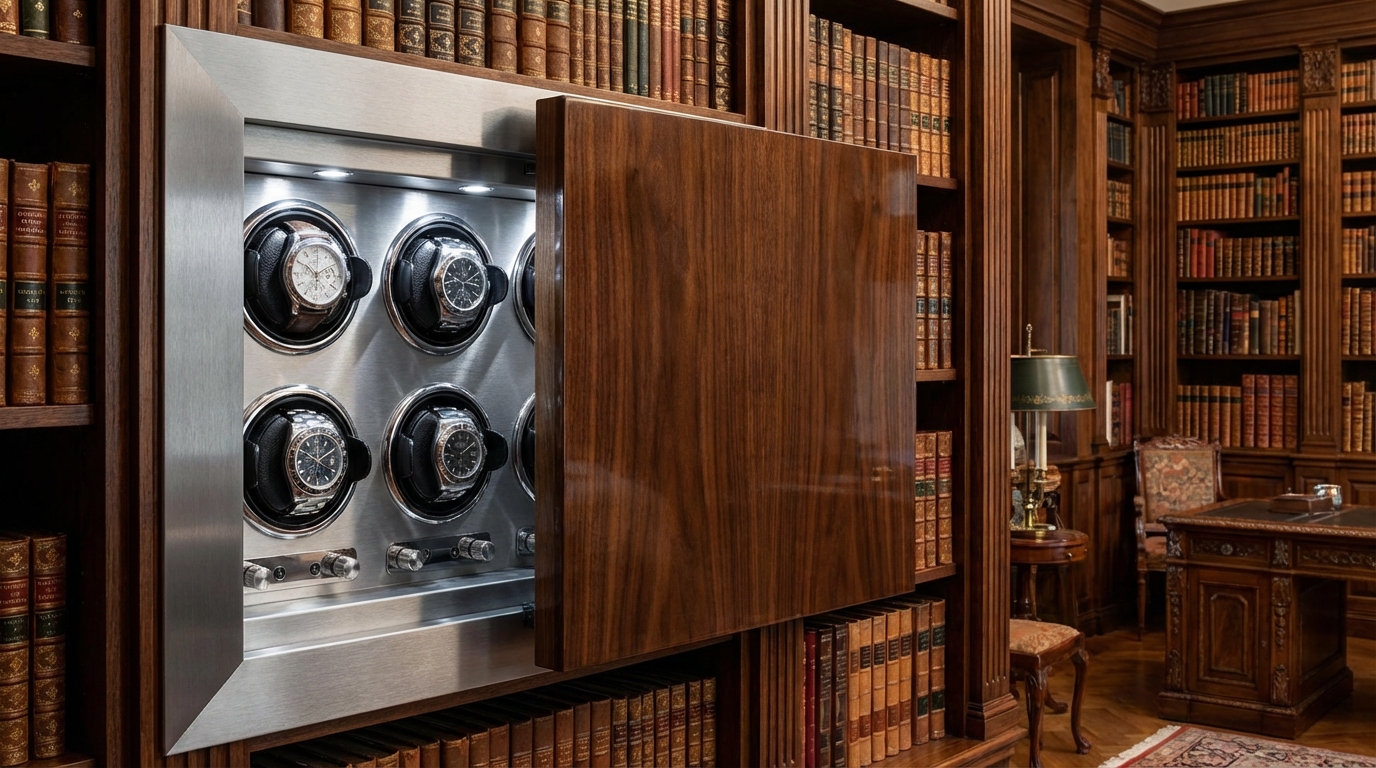
The primary advantage is the ability to hide the safe behind paintings, mirrors, or false panels, making it invisible to the naked eye. An in wall watch safe utilizes the empty space between wall studs to create a flush-mounted security cabinet. This “out of sight, out of mind” strategy is often the most effective form of protection.
Why is hidden security more effective?
Burglars are usually on a very tight timeline and will rarely spend time searching for hidden compartments. If they cannot find the safe within the first few minutes, they are likely to leave with less valuable items.
- It prevents the safe from becoming a target.
- Mirrors and art provide perfect camouflage.
- Flush mounting allows for seamless interior design.
How does placement impact visibility?
Here is why it matters:
Placing the unit in a low-traffic area like a master closet or a private study further reduces the chance of discovery. Even if a thief enters the home, they are less likely to stumble upon a safe hidden within a secondary storage area. Proper placement turns a structural feature into a secret vault.
Key Takeaway: Stealth is your greatest ally, as a safe that cannot be found cannot be attacked.
| Concealment Method | Visibility | Effectiveness |
|---|---|---|
| Artwork Overlay | Zero | High |
| Closet Recess | Low | Moderate |
| Exposed Floor | High | Low |
Strategic invisibility adds a psychological layer of defense that physical steel alone cannot provide.
How do floor safes compare to an in wall watch safe?
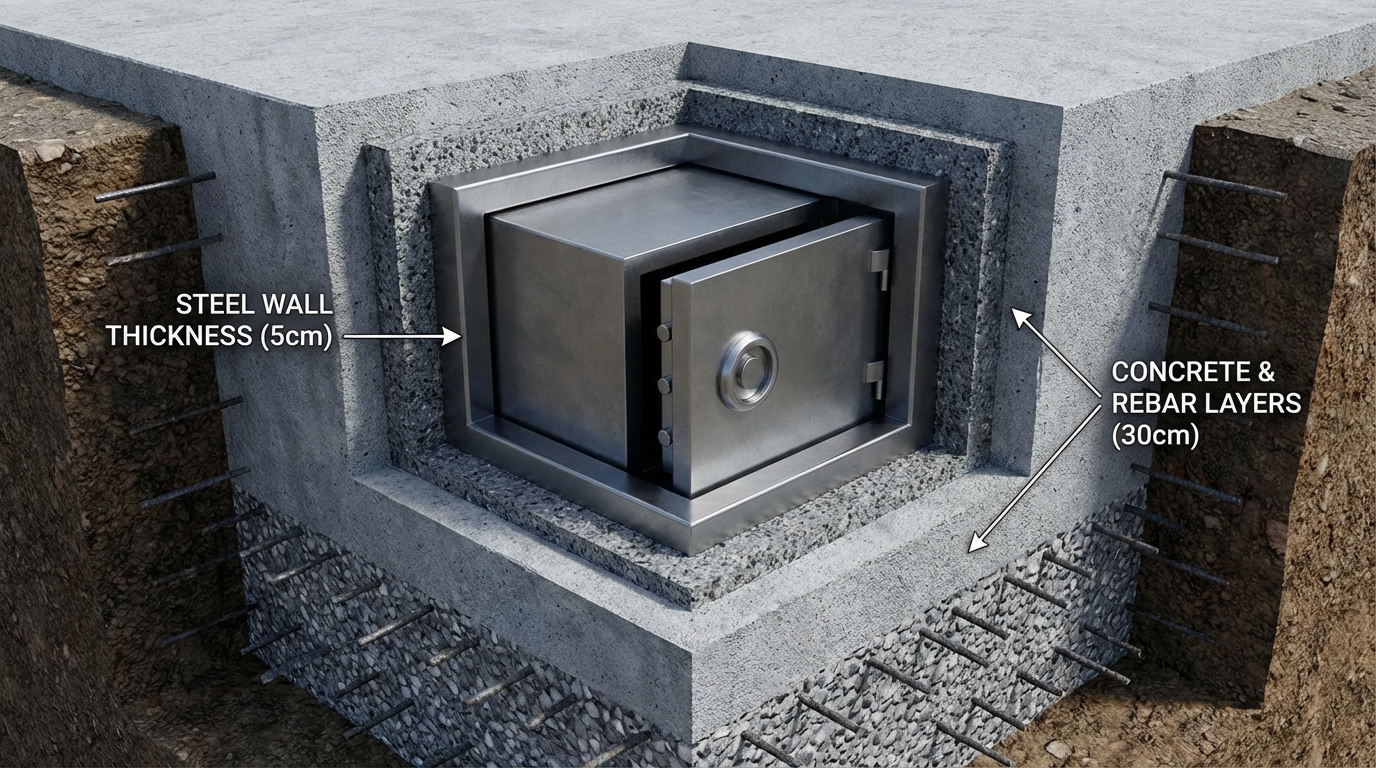
Floor safes offer superior resistance to prying but are more difficult to access daily than an in wall watch safe located at eye level. While an in wall watch safe provides convenience, a floor safe is encased in the concrete foundation of the building. This makes the floor safe nearly impossible to remove without heavy machinery and hours of labor.
What are the benefits of concrete encasement?
Concrete surrounds five of the six sides of the safe, leaving only the door as a potential point of entry. This structural reinforcement prevents any attempts to leverage the safe’s body or cut through the side walls.
- Extreme resistance to prying tools.
- Protection against heavy physical impacts.
- Massive weight prevents any removal.
Is floor storage convenient for daily wear?
Wait, there is more:
The trade-off for this extreme security is the physical strain of bending down to reach the floor every time you want to change your watch. Many collectors find this repetitive motion frustrating for their daily drivers. Therefore, floor safes are often reserved for “grail” pieces or long-term investments that are rarely worn.
Key Takeaway: Choose a floor safe for maximum theft resistance if you do not need to access your collection frequently.
| Feature | Floor Safe | Wall Safe |
|---|---|---|
| Pry Resistance | Extreme | High |
| Daily Access | Difficult | Easy |
| Installation | Complex | Moderate |
Floor-based security offers the highest level of physical fortification for assets that stay in long-term storage.
Which lock is best for an in wall watch safe access?
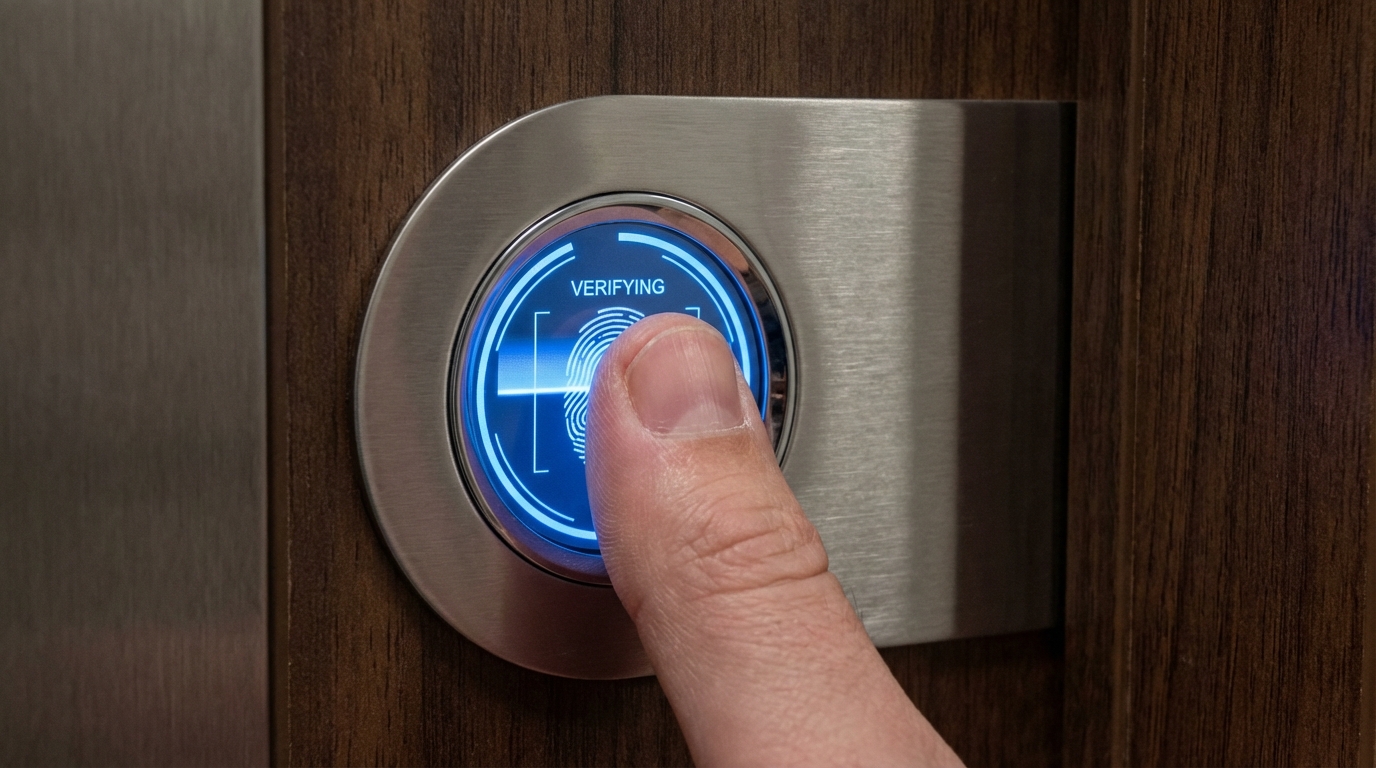
Biometric scanners combined with digital keypads offer the fastest and most secure access for the modern watch owner. Using an in wall watch safe with a fingerprint reader ensures that only you can open the unit in seconds. This eliminates the need to hide physical keys or memorize complex mechanical dial sequences.
Why choose biometric technology?
Biometrics use unique biological markers that cannot be easily replicated or stolen like a physical key. This technology has advanced to the point where false rejection rates are incredibly low for authorized users.
- Fast entry during emergencies.
- No physical keys to lose.
- Multiple fingerprints can be programmed.
Are mechanical locks still reliable?
Here is the truth:
Mechanical dial locks remain the choice for purists because they do not rely on batteries or electronics. They are immune to EMP threats and electronic malfunctions, providing a “failsafe” longevity that spans decades. However, they are significantly slower to operate and require precise manual dexterity.
Key Takeaway: Biometric locks provide the best balance of speed and high-tech security for active collectors who wear their watches daily.
| Lock Type | Speed | Reliability |
|---|---|---|
| Biometric | Instant | High |
| Digital Keypad | Fast | High |
| Mechanical Dial | Slow | Extreme |
Modern biometric systems have revolutionized safe access by merging high-level security with unprecedented user convenience.
Should an in wall watch safe have fire resistance?
Yes, fire resistance is critical because the intense heat of a house fire can melt internal lubricants and destroy delicate mechanical movements. An in wall watch safe with a certified fire rating uses specialized insulation to keep internal temperatures low. Without this protection, your watches could be ruined even if the safe’s exterior remains intact after a blaze.
How does fire insulation work?
Fire-rated safes use materials that release moisture or expand when heated to create a thermal barrier. This technology ensures that while the outside might be glowing red, the inside remains at a survivable temperature for your watches.
- 60-minute ratings are standard for homes.
- Insulation prevents heat soak.
- Seals expand to block smoke.
Does heat damage mechanical parts?
It gets worse:
High temperatures cause the specialized oils inside a watch to evaporate or “bake” onto the gears. This leads to friction damage and can require a complete movement replacement, which is often prohibitively expensive. Protecting against thermal damage is just as important as preventing theft for mechanical timepieces.
Key Takeaway: A fire-rated safe is essential insurance against environmental disasters that could render your collection worthless.
| Fire Rating | Duration | Target Temperature |
|---|---|---|
| Class 350 | 1 Hour | Below 350°F |
| Class 125 | 2 Hours | Below 125°F |
| Unrated | 0 Mins | No Protection |
Thermal protection is a non-negotiable requirement for anyone living in areas prone to wildfires or older residential structures.
How do alarms complement an in wall watch safe setup?
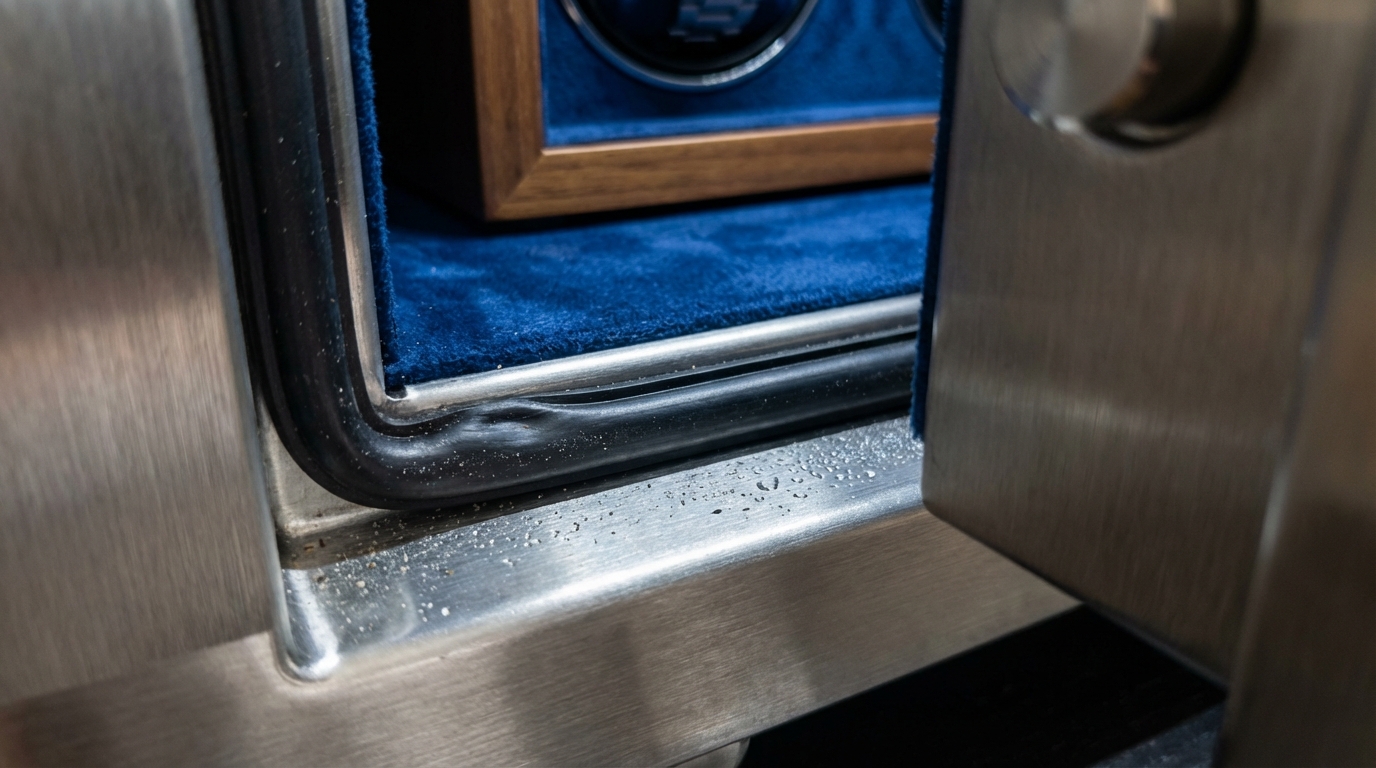
Alarms provide the early detection necessary to limit the time a burglar has to attempt a breach of your in wall watch safe. A safe is designed to buy time, and an alarm ensures that the time is spent under the pressure of a blaring siren and police dispatch. This combination creates a “ticking clock” that most intruders are unwilling to challenge.
Can alarms deter entry entirely?
Visible cameras and alarm signs often discourage thieves from even attempting to enter the premises. Most residential burglars look for easy targets, and a well-protected home usually convinces them to move to a different street.
- External sirens alert neighbors.
- Motion sensors detect early movement.
- Smart alerts notify your phone instantly.
Why is time the enemy of the thief?
Consider this:
A professional safe might be rated to withstand 15 to 30 minutes of tool attacks. If the alarm goes off the moment a window is broken, the thief knows they have less than five minutes before help arrives. This forced haste often leads to mistakes or an early retreat.
Key Takeaway: Integrated home security systems act as a force multiplier for the physical strength of your safe.
| Security Layer | Role | Result |
|---|---|---|
| Alarm System | Detection | Limits intruder time |
| Wall Safe | Physical Barrier | Prevents asset access |
| Monitoring | Response | Dispatches authorities |
The synergy between electronic monitoring and physical fortification provides the most robust defense for a luxury home.
How does a maker impact your in wall watch safe quality?
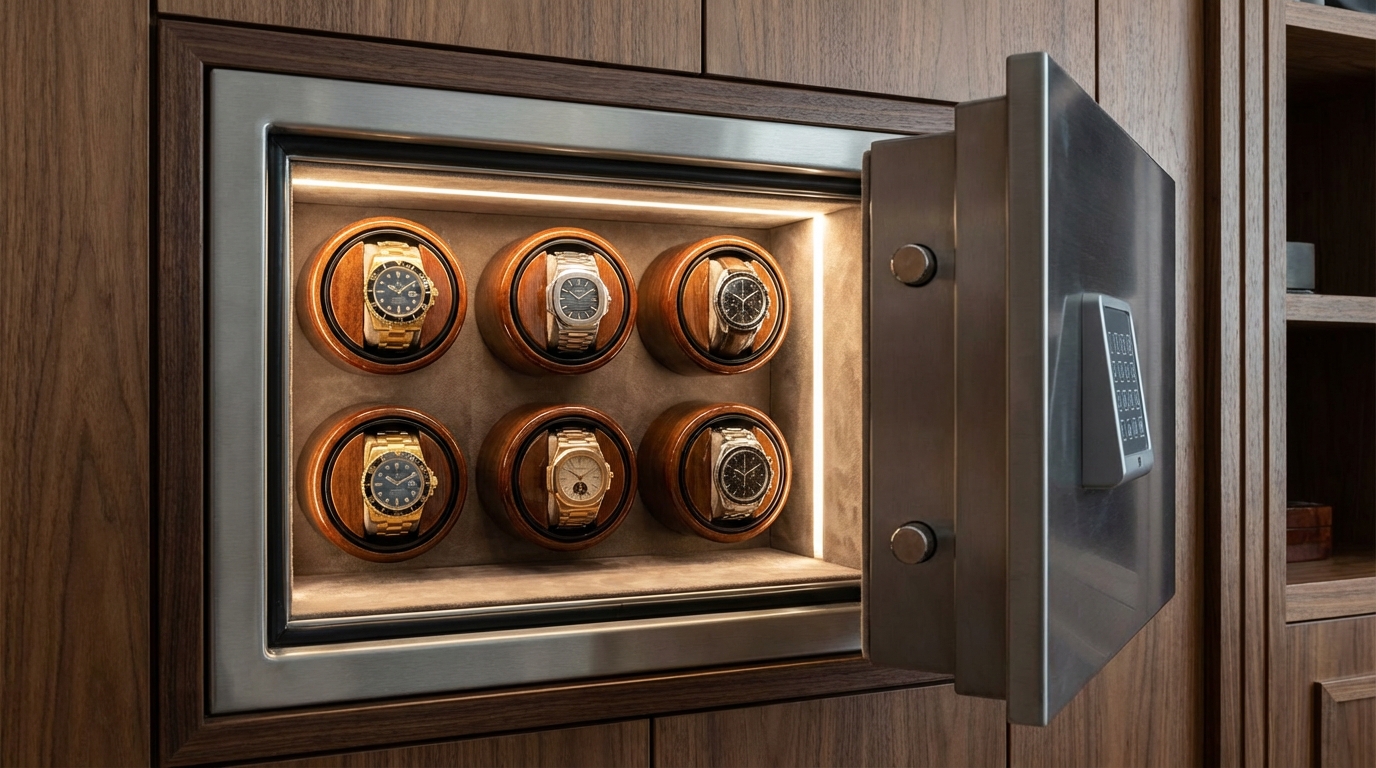
The manufacturer determines the ultimate durability of the unit through their choice of steel gauge, bolt work engineering, and locking hardware. An in wall watch safe from a reputable specialist will feature tighter tolerances and higher-grade materials than a generic retail box. Choosing a quality maker ensures that the safe will function perfectly for decades without mechanical failure.
What are the signs of high-quality engineering?
Premium safes feature heavy-duty hinges, reinforced door jambs, and sophisticated relocking devices that trigger if the primary lock is attacked. You should look for units that feel substantial and operate smoothly without any rattling or loose components.
- Thick steel plates (gauge 10 or better).
- Multiple active locking bolts.
- Hardened drill-resistant plates.
Why does independent testing matter?
The bottom line is:
Independent certifications from organizations like UL (Underwriters Laboratories) prove that the safe has actually been tested against real-world attacks. These ratings provide an objective measure of security that goes beyond marketing claims. A certified safe offers peace of mind backed by rigorous laboratory evidence.
Key Takeaway: Investing in a safe from a specialist manufacturer guarantees that your security meets international standards for protection.
| Quality Metric | Importance | Indicator |
|---|---|---|
| Steel Thickness | High | Weight and gauge |
| Certification | Critical | UL or Euro Ratings |
| Bolt Action | High | Smoothness of handle |
The pedigree of your safe manufacturer is the primary indicator of how well your collection will survive a professional attack.
Can winders fit inside an in wall watch safe interior?

Yes, many modern units are specifically designed to accommodate automatic winders, keeping your watches ready to wear inside your in wall watch safe. This integration prevents the lubricants in automatic movements from settling while maintaining the highest level of security. It allows you to grab a watch and go without having to set the time and date manually.
How do you power internal winders?
Most high-end safes include internal power outlets or pre-drilled holes for wiring to pass through. This allows you to plug in a multi-watch winder unit or individual battery-operated modules directly inside the protected area.
- Internal AC power is most reliable.
- Battery packs avoid external wires.
- USB ports support modern winders.
Does winding improve watch longevity?
Here is why it’s useful:
Keeping a watch wound ensures that the mechanical oils are distributed evenly across the gears and pivots. While not strictly necessary for modern watches, it prevents the inconvenience of resetting perpetual calendars or moon phase complications. It also ensures the watch is always running at its peak accuracy.
Key Takeaway: Integrated winders combine the mechanical health of your timepieces with the security of a hardened vault.
| Winder Feature | Benefit |
|---|---|
| Constant Rotation | Keeps movement active |
| Interior Lighting | Enhances display quality |
| Safe Storage | Protects while winding |
Combining horological maintenance with physical security is the gold standard for managing a large collection of automatic timepieces.
Where is the best spot for an in wall watch safe?
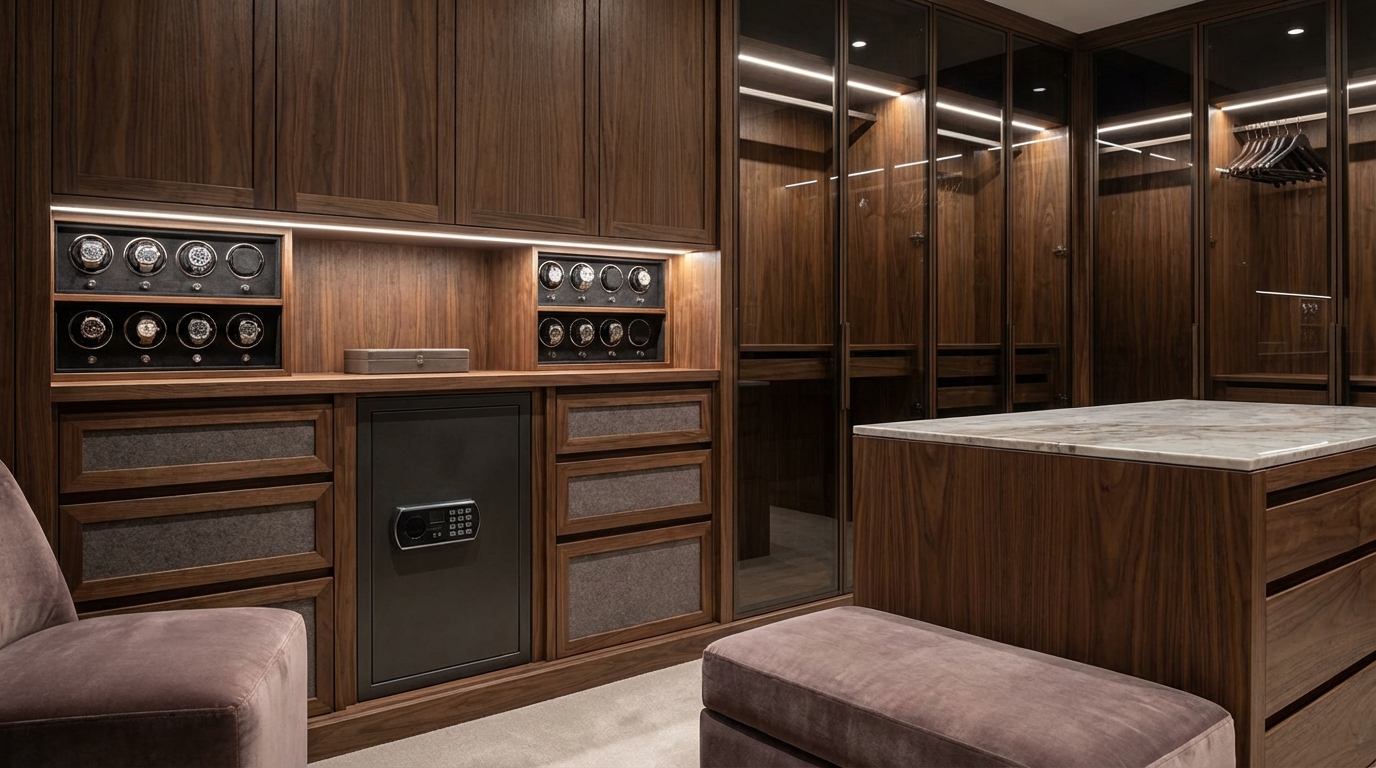
The best spot is a low-traffic, private area like a walk-in closet or a home office that is not visible from main hallways. An in wall watch safe should be installed at a height that allows you to view and access your collection comfortably. Proper placement ensures that the unit remains a secret from casual visitors while being convenient for your daily routine.
Why avoid common areas?
Kitchens, living rooms, and entryways are high-traffic zones where contractors, delivery personnel, or guests could easily spot the safe. You want to keep the location known only to immediate family members to maintain the advantage of concealment.
- High privacy reduces social engineering risks.
- Closet mounting allows for “hidden in plain sight” options.
- Lower visibility prevents accidental disclosure.
Are there structural limits for walls?
Take note of this:
You must ensure the chosen wall is an interior wall with standard stud spacing and is not a load-bearing wall containing major plumbing or electrical mains. Consulting with a professional ensures that the installation is structurally sound and does not damage the home’s infrastructure. Proper planning prevents costly mistakes during the installation process.
Key Takeaway: Strategic placement is the final piece of the security puzzle, ensuring your safe remains both accessible and invisible.
| Ideal Location | Pros | Cons |
|---|---|---|
| Master Closet | Very Private | Tight space |
| Home Office | Convenient | Guest access |
| Private Study | Discreet | May require renovation |
Selecting a location that balances daily utility with maximum discretion is essential for long-term security satisfaction.
Conclusion
Securing a high-value watch collection is a multifaceted challenge that requires a blend of physical strength, tactical concealment, and environmental protection. By moving away from basic storage and investing in a professional security ecosystem, you solve the constant problem of anxiety and vulnerability. We provide the expertise and hardware needed to transform your home into a secure sanctuary for your investments. Our vision is to ensure that every masterpiece in your collection remains preserved and protected for the next generation. If you are ready to upgrade your home security, please contact us today to find the perfect solution for your needs.
*
FAQ
Can I install a wall safe myself in my master closet?
Yes, but it is generally recommended to hire a professional to ensure the safe is perfectly anchored to the studs and the wall’s structural integrity remains intact.
What’s the best way to handle a dead battery in a digital safe?
Most modern safes include a manual override key or an external battery jump-start port to allow access even if the internal power fails completely.
How do I know if a safe is truly fireproof?
No safe is “fireproof” forever, so you must look for an independent UL or ETL certification label that specifies exactly how long the unit can withstand high temperatures.
Can I store my watch’s original papers and boxes inside the safe?
Yes, as long as the interior dimensions allow, keeping documentation in a fire-rated safe is an excellent way to preserve the provenance and resale value of your pieces.
What’s the best height for an eye-level wall installation?
The ideal height is usually between 48 and 60 inches from the floor, allowing you to easily view your watches and operate the lock without bending or stretching.

