 跳到内容
跳到内容 

Using a watch winder extends the life of your timepiece by keeping internal lubricants distributed and reducing the mechanical strain associated with frequent crown adjustments. Imagine the disappointment of reaching into your safe for a high-end perpetual calendar, only to find the movement has stopped and the date is weeks behind. This scenario often leads to the tedious and risky process of manual recalibration, which places repetitive stress on delicate winding stems and gaskets. A watch safe winder provides a seamless solution by maintaining your collection’s mechanical health while ensuring every piece is ready to wear at a moment’s notice. Explore our curated selection of professional watch safe winders to protect your horological assets from both mechanical stagnation and external threats.
Do Watch Winders Truly Extend a Watch’s Life?

Yes, they proactively prevent lubricant stagnation and minimize the physical wear caused by frequent manual adjustments. Investing in a watch safe winder ensures that the delicate internal oils stay fluid and evenly coated across critical pivot points. This consistent movement prevents the “gumming up” of synthetic lubricants that can occur during months of storage.
How do lubricants react to movement?
The micro-components of your movement rely on precision oils that perform best when in motion.
- Movement prevents oil from pooling in one area.
- Constant rotation keeps pivots properly lubricated.
- Fluid oils reduce friction during the gear train’s operation.
Think about it: a watch is like a high-performance engine.
The best part is that you don’t need to be a watchmaker to provide this level of care. By keeping the movement active, you are effectively delaying the need for a full overhaul.
Key Takeaway: Consistent motion via a winder prevents oil coagulation, which is the leading cause of mechanical friction in luxury watches.
| Lubricant State | With Winder | Without Winder |
|---|---|---|
| Distribution | Uniformly spread | Likely pooled/migrated |
| Friction Level | Consistently low | High upon startup |
| Component Wear | Minimal | Accelerated over time |
Maintaining a watch on a winder ensures that lubricants stay exactly where the watchmaker intended.
How Does a Watch Safe Winder Protect Your Investment?
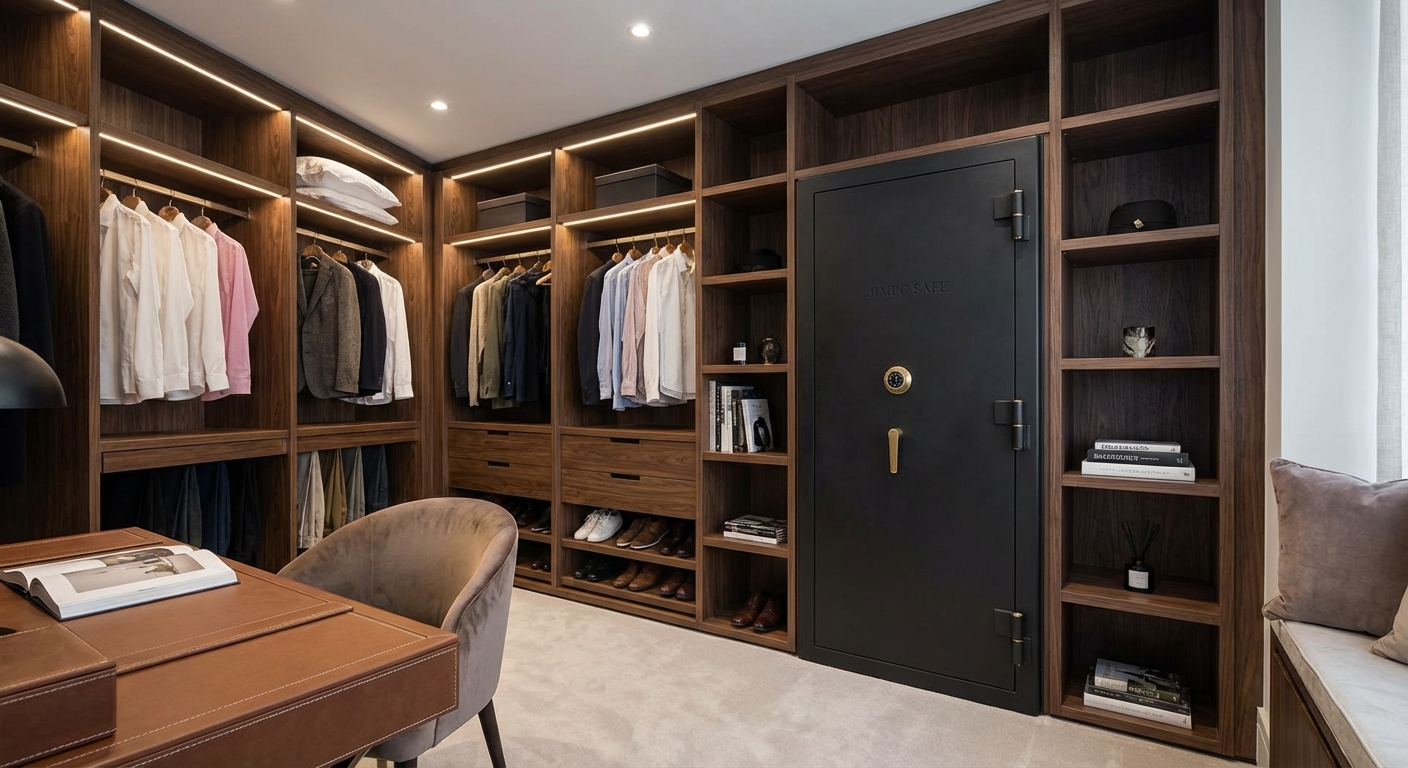
A watch safe winder shields your collection from mechanical degradation while providing industrial-grade physical security. While a standard tabletop unit keeps the movement running, it leaves your valuable assets vulnerable to theft or environmental hazards. This dual-purpose solution creates a controlled environment where your timepieces are physically fortified and mechanically maintained.
Why combine security with rotation?
Your collection represents a significant financial and emotional investment that deserves multi-layered protection.
- Steel walls protect against physical impact.
- Sealed interiors keep dust and humidity at bay.
- Internal rotors keep the movements in peak condition.
The truth is, standard storage is often just a hiding spot.
But with an integrated winding safe, you are building a fortress for your timepieces. You can sleep soundly knowing your watches are both secure and perfectly synchronized.
Key Takeaway: An integrated safe winder offers the only solution that addresses both mechanical longevity and total physical security.
| Hazard Type | Protection Level | Safety Feature |
|---|---|---|
| Mechanical Inactivity | High | Automated Rotors |
| Theft/Burglaries | Maximum | Reinforced Steel Walls |
| Dust/Environmental | High | Sealed Enclosure |
By housing winders within a safe, you create a zero-compromise environment for your most valuable assets.
Is Manual Winding Harmful to Automatic Timepieces?
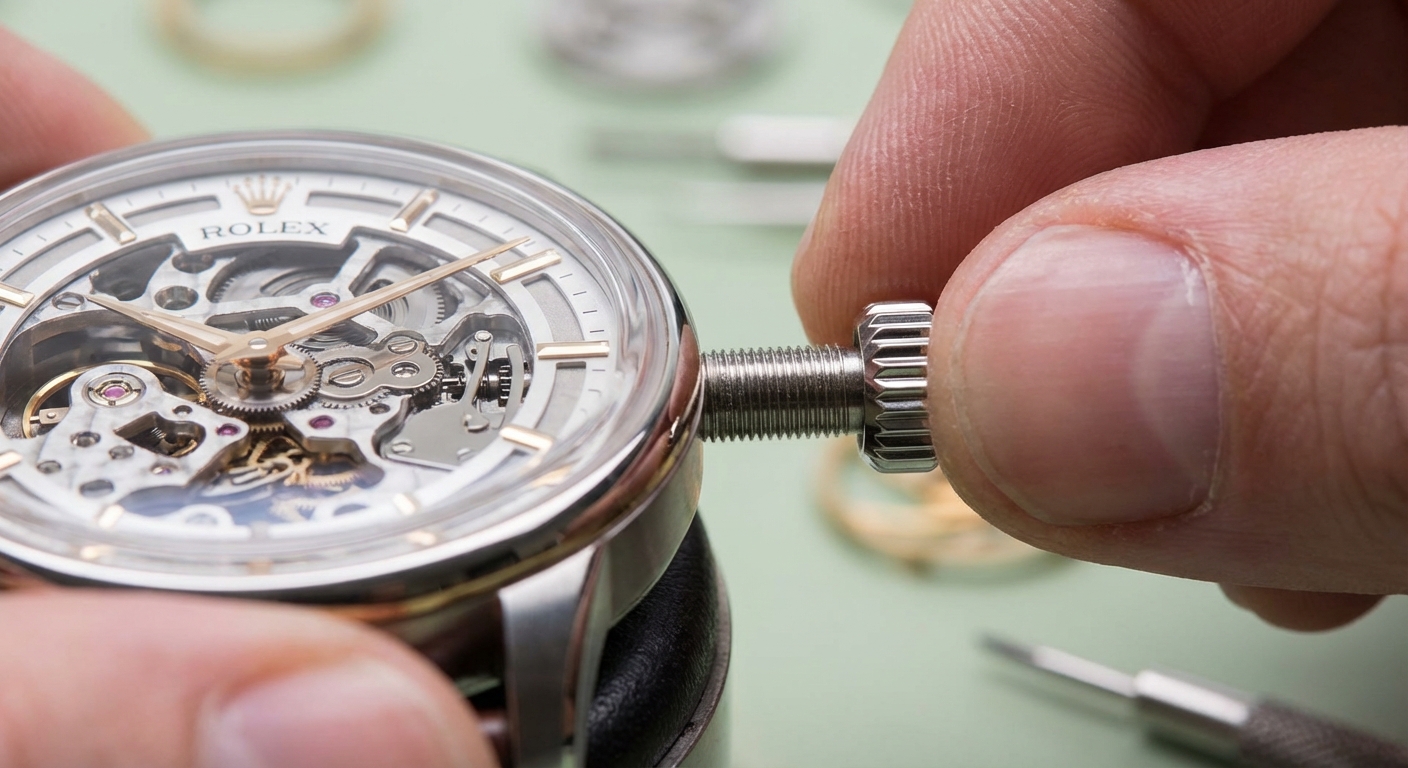
Frequent manual winding through the crown can lead to stripped threads and compromised water-resistance seals over time. By utilizing a watch safe winder, you remove the need for daily crown manipulation, which is often the most fragile point of a luxury watch. Every time you unscrew a crown, you risk cross-threading the tube or over-compressing the rubber O-rings.
What are the risks of crown fatigue?
The crown and stem are among the few parts of a watch that interact directly with the outside world.
- Repeated pulling can loosen the setting lever.
- Unscrewing wears down the delicate thread profiles.
- Overtightening eventually crushes the internal gaskets.
Here is the truth: most repair shop visits involve crown-related issues.
The best part? You can bypass these risks entirely by letting the winder’s rotor handle the energy transfer. Your crown remains seated and your seals remain intact.
Key Takeaway: Minimizing crown usage through consistent winder use preserves the watch’s structural integrity and water resistance.
| Component | Manual Risk | Winder Benefit |
|---|---|---|
| Crown Threads | Stripping/Wearing | Zero interaction |
| Rubber Gaskets | Compression set | Seals stay seated |
| Setting Lever | Mechanical fatigue | Remains in “wear” position |
Preventing crown wear is one of the most effective ways to avoid mid-cycle professional repairs.
Can Inactivity Lead to Mechanical Failure?
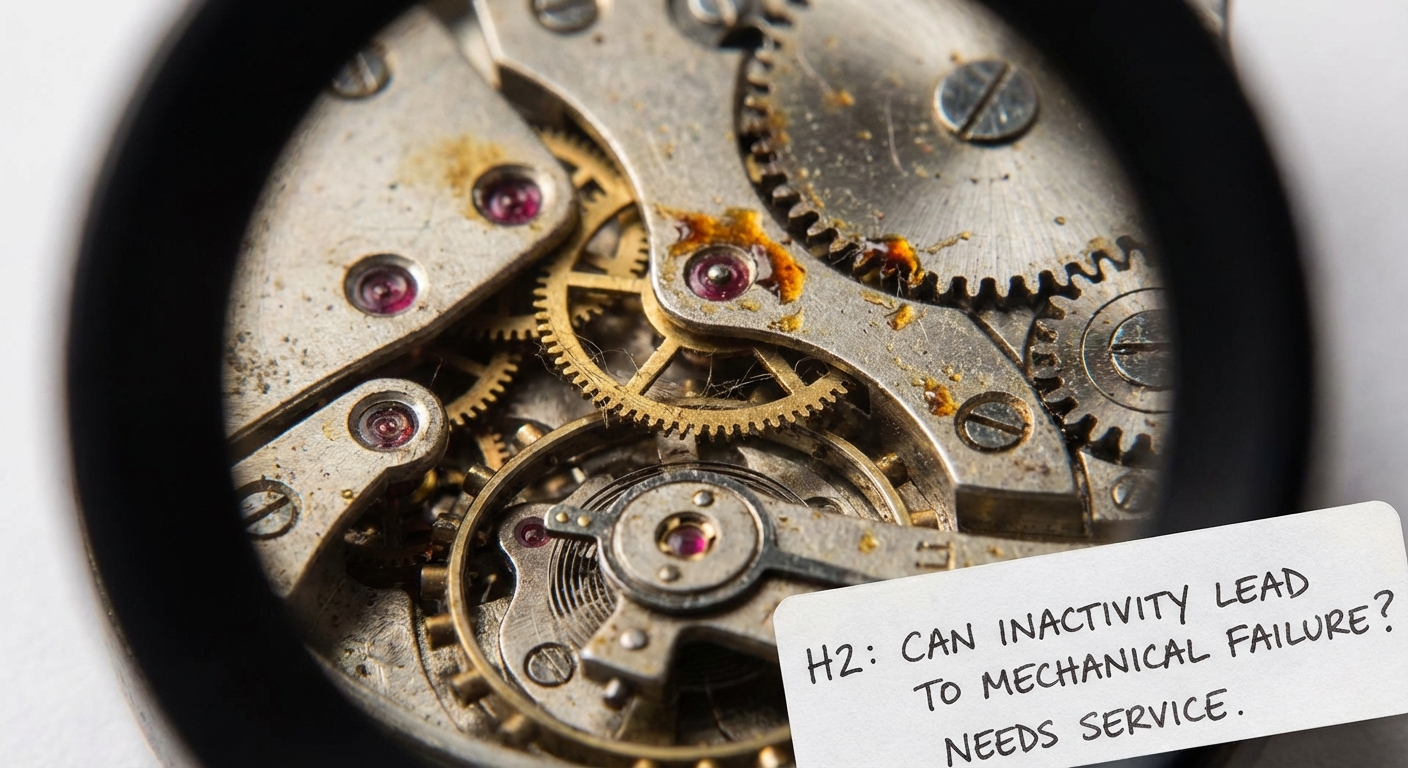
Prolonged inactivity causes synthetic oils to migrate and gaskets to dry out, potentially leading to seized parts or moisture intrusion. A watch safe winder keeps these micro-components “exercised,” ensuring the movement doesn’t experience the gumming effect associated with static storage. When a watch sits idle, the lack of thermal energy from the wrist or motor can cause lubricants to lose their intended viscosity.
Does oil migration affect precision?
When oil moves away from the balance staff or escapement, friction increases dramatically.
- Dry jewels can cause microscopic scratching.
- Stagnant oil can collect dust particles.
- Uneven lubrication leads to timing fluctuations.
You might wonder if “resting” a watch is beneficial.
Actually, mechanical devices thrive on regular operation. A winder mimics natural usage cycles to ensure the movement remains supple and responsive whenever you choose to wear it.
Key Takeaway: Periodic movement is essential to keep the internal micro-mechanisms from seizing or suffering from “dry” starts.
| Inactivity Effect | Component Impact | Winder Solution |
|---|---|---|
| Gasket Hardening | Loss of water resistance | Constant seating |
| Oil Migration | Jewel wear | Uniform distribution |
| Gear Binding | Difficulty restarting | Continuous operation |
Mechanical failure is often a symptom of neglect; a winder provides the necessary “exercise” for longevity.
What Are TPD Settings and Why Do They Matter?

Turns Per Day (TPD) settings ensure your watch receives exactly the amount of energy needed to stay wound without overtaxing the mechanism. A modern watch safe winder allows you to customize these rotations based on the specific caliber requirements of your luxury collection. If you provide too few turns, the watch will eventually stop; too many, and you engage the slipping spring mechanism more than necessary.
How to match TPD to your caliber?
Every movement has a specific “sweet spot” for winding efficiency.
- Rolex movements typically thrive at 650 TPD.
- Patek Philippe calibers often require 800-900 TPD.
- Directional settings (clockwise or bi-directional) vary by brand.
The best part? You don’t have to guess.
Most premium safes feature programmable controls for each individual watch head. This allows you to tailor the winding program to the exact manufacturer specifications for every piece in your vault.
Key Takeaway: Proper TPD calibration prevents the mainspring from being under constant, maximum tension, which preserves the barrel’s lifespan.
| Movement Type | Typical TPD | Direction |
|---|---|---|
| Rolex 3135 | 650 | Bi-directional |
| Valjoux 7750 | 800 | Clockwise |
| Patek 324 | 800 | Counter-clockwise |
Bespoke TPD settings ensure that each caliber is wound with the precision it was engineered for.
Does Magnetic Interference Affect Winder Performance?
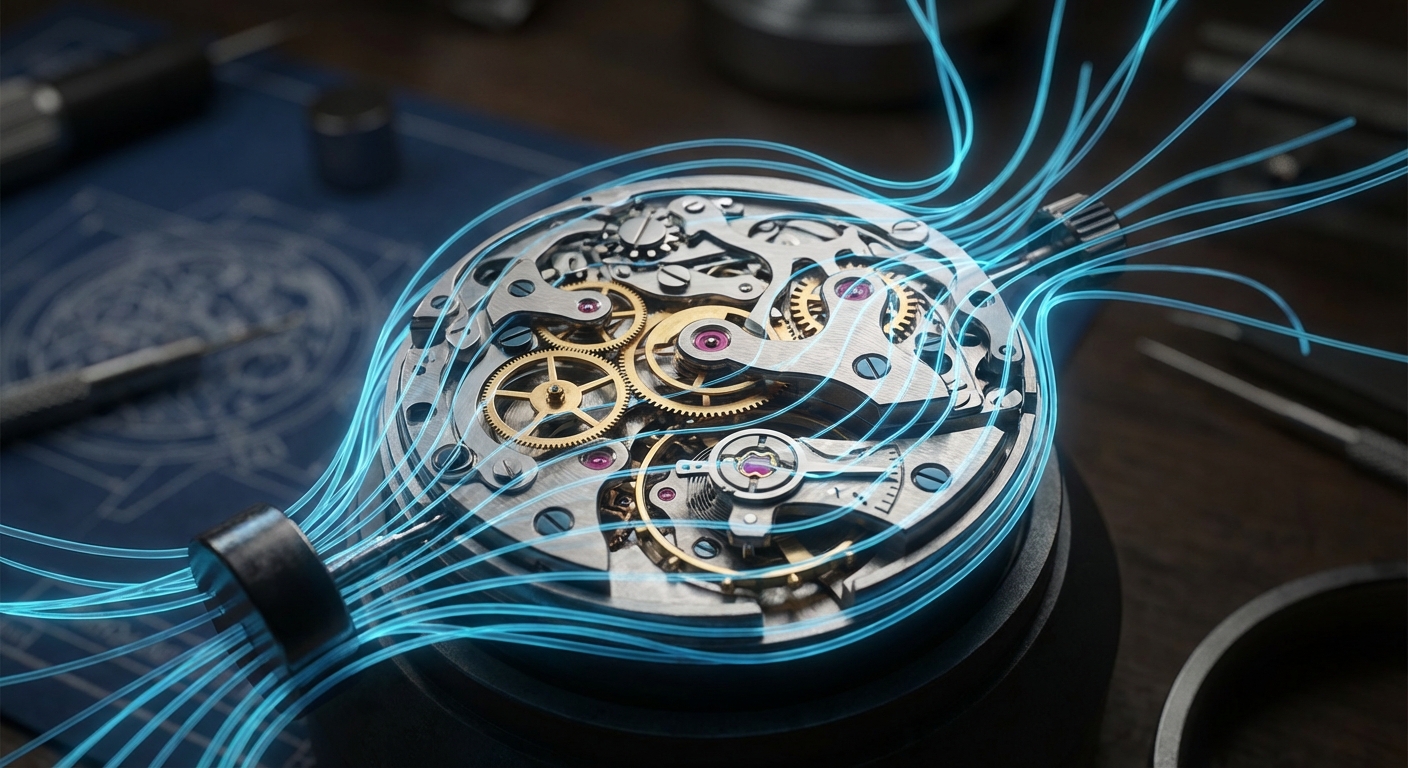
Poorly shielded motors in cheap units can magnetize the hairspring, but high-end models eliminate this risk with electromagnetic shielding. A watch safe winder from a reputable manufacturer uses brushless, low-EMI motors to protect the chronometric accuracy of your balance spring. Magnetization is a leading cause of watches running fast, as the hairspring coils stick together under magnetic influence.
Why is motor shielding non-negotiable?
The motors that spin the watch are essentially magnets themselves.
- Shielding redirects magnetic flux away from the watch.
- Distance from the motor helps reduce EMI exposure.
- Brushless motors produce significantly less interference.
The truth is, a cheap winder can do more harm than good.
But a professional-grade unit is engineered like a Faraday cage for your wrist. It provides the motion you need without the invisible threats that compromise timing.
Key Takeaway: Only use winders with shielded, low-EMI motors to ensure your hairspring remains unaffected by magnetic fields.
| Motor Quality | Magnetic Risk | Impact on Watch |
|---|---|---|
| Standard DC | High | Hairspring sticks (runs fast) |
| Shielded Brushless | Minimal | Consistent chronometry |
| Jimbo Safe Motors | Zero | Maximum movement health |
Magnetic protection is a critical, yet often overlooked, component of professional watch maintenance.
Which Watch Features Benefit Most from Constant Motion?
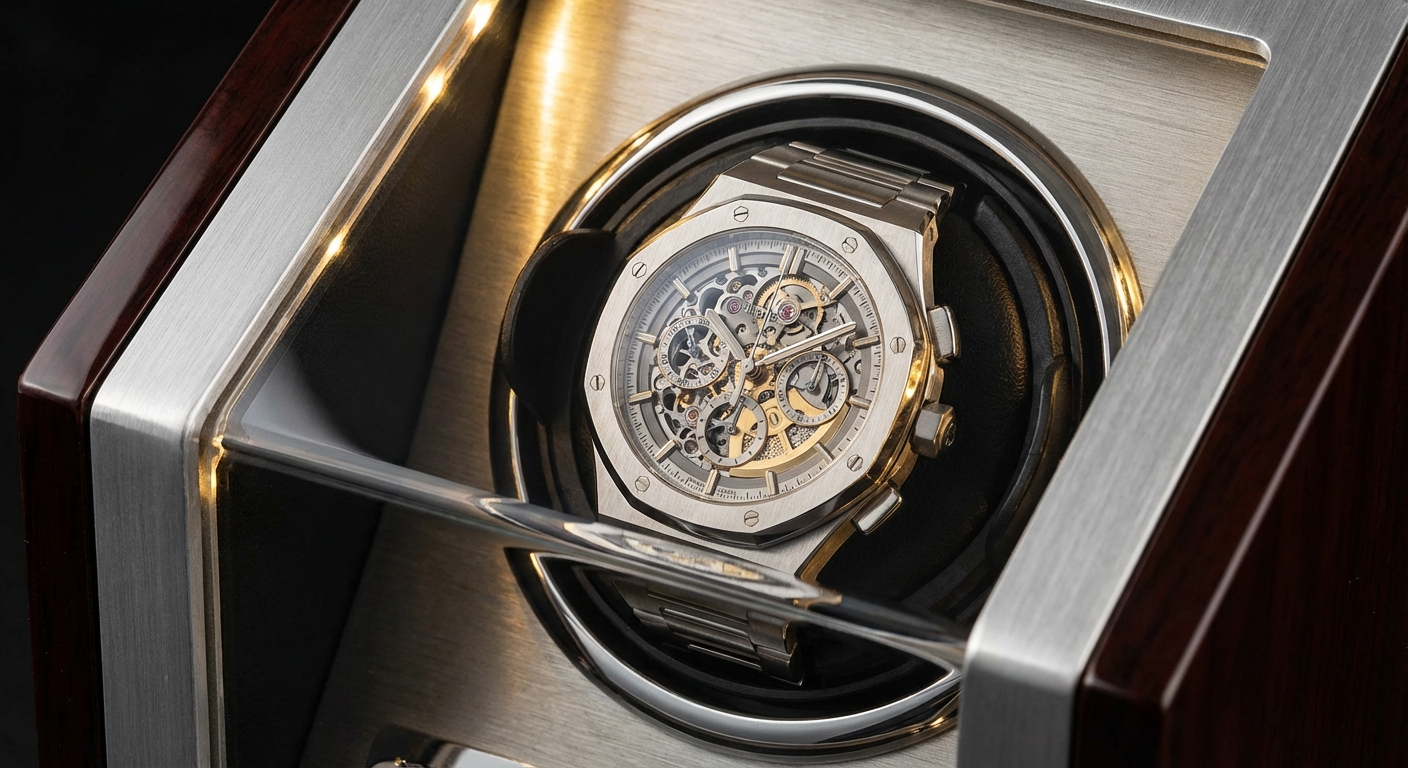
High complications like perpetual calendars and moon phases benefit most because they require intensive labor to reset once they stop. A watch safe winder maintains the synchronization of these complex displays, preventing the user error that often happens during manual calendar adjustments. For these “grand complications,” the act of resetting the time can actually be more stressful on the movement than constant operation.
Are complications safer on a winder?
The intricate gears of an annual or perpetual calendar are designed for continuous, slow transition.
- Moon phases stay aligned with the lunar cycle.
- Day/Date indicators avoid the “danger zone” of manual setting.
- Mainspring tension remains consistent for better accuracy.
The best part? You never have to reach for a setting stylus again.
Imagine the convenience of having your perpetual calendar ready at all times. It is the ultimate luxury for a collector who appreciates both precision and ease of use.
Key Takeaway: Complicated watches require winders to avoid the mechanical strain and potential damage associated with complex manual resets.
| Complication | Reset Complexity | Winder Necessity |
|---|---|---|
| Time Only | Low | Recommended |
| Annual Calendar | Medium | High |
| Perpetual Calendar | Extreme | Essential |
For the serious collector, keeping complications synchronized is as much about safety as it is about convenience.
How Do Modern Winders Prevent Overwinding?
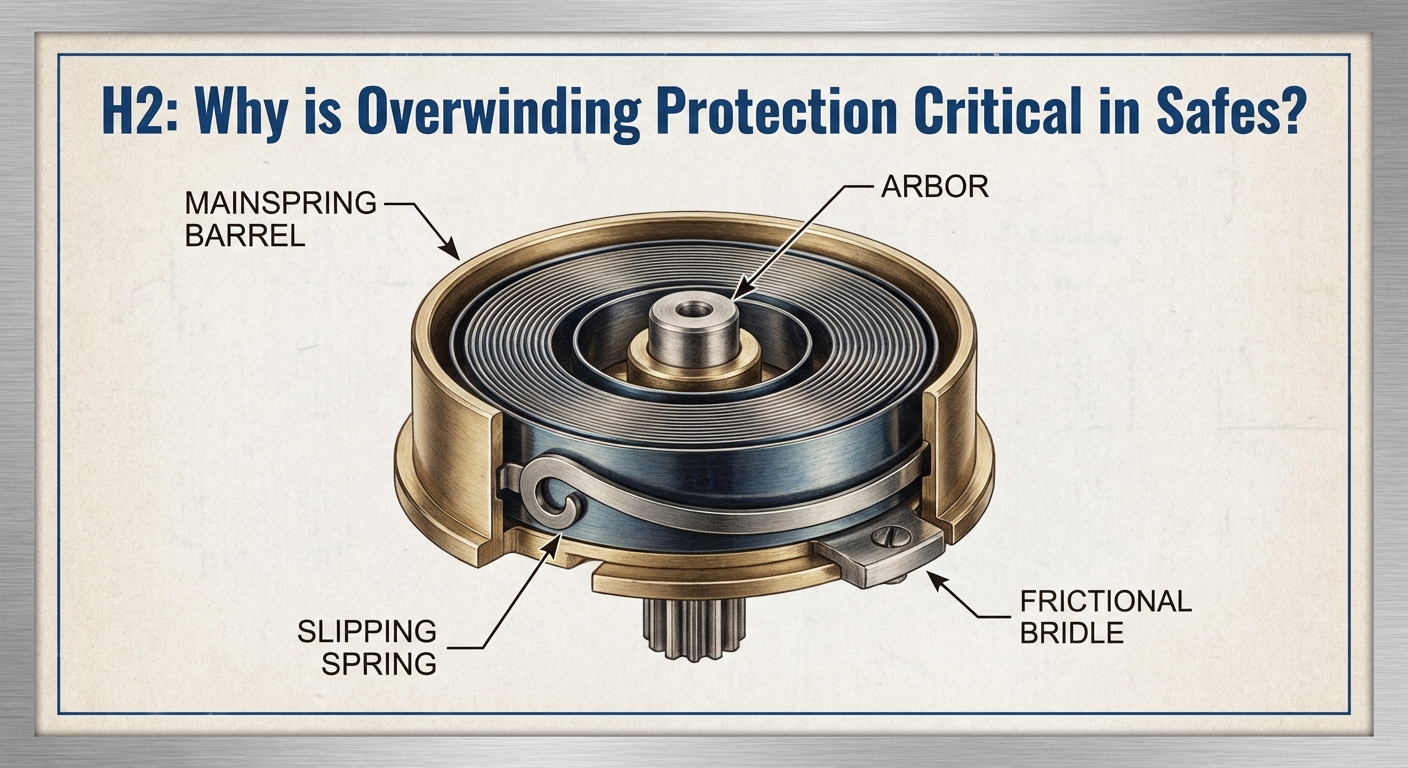
They use intermittent sleep cycles and programmable pauses to allow the mainspring to relax, mimicking natural wear patterns. A watch safe winder is engineered to stop before the slipping spring mechanism experiences excessive friction or wear. Modern movements have a built-in “bridle” that prevents snapping, but constant slipping can eventually wear down the barrel walls.
What is the role of sleep cycles?
A winder that spins 24/7 is not mimicking reality.
- Sleep cycles allow the mainspring to unwind partially.
- Rest periods prevent internal friction from overheating oils.
- Programmable logic ensures the watch stays in the “ideal” torque range.
Think about it: your watch doesn’t move when you are sleeping.
The best part is that smart winders replicate this rhythm perfectly. By allowing the movement to rest, you are extending the life of the mainspring and the entire gear train.
Key Takeaway: Intelligent winding programs prevent the mainspring from being “over-stretched,” ensuring the slipping spring isn’t overworked.
| Phase | Action | Purpose |
|---|---|---|
| Rotation | Winding | Recharging power reserve |
| Rest | Paused | Relieving mainspring tension |
| Sleep Mode | Long Pause | Mimicking overnight downtime |
Controlled rotation cycles are the secret to maintaining a mechanical movement without causing fatigue.
Is a Watch Safe Winder Worth the Initial Cost?
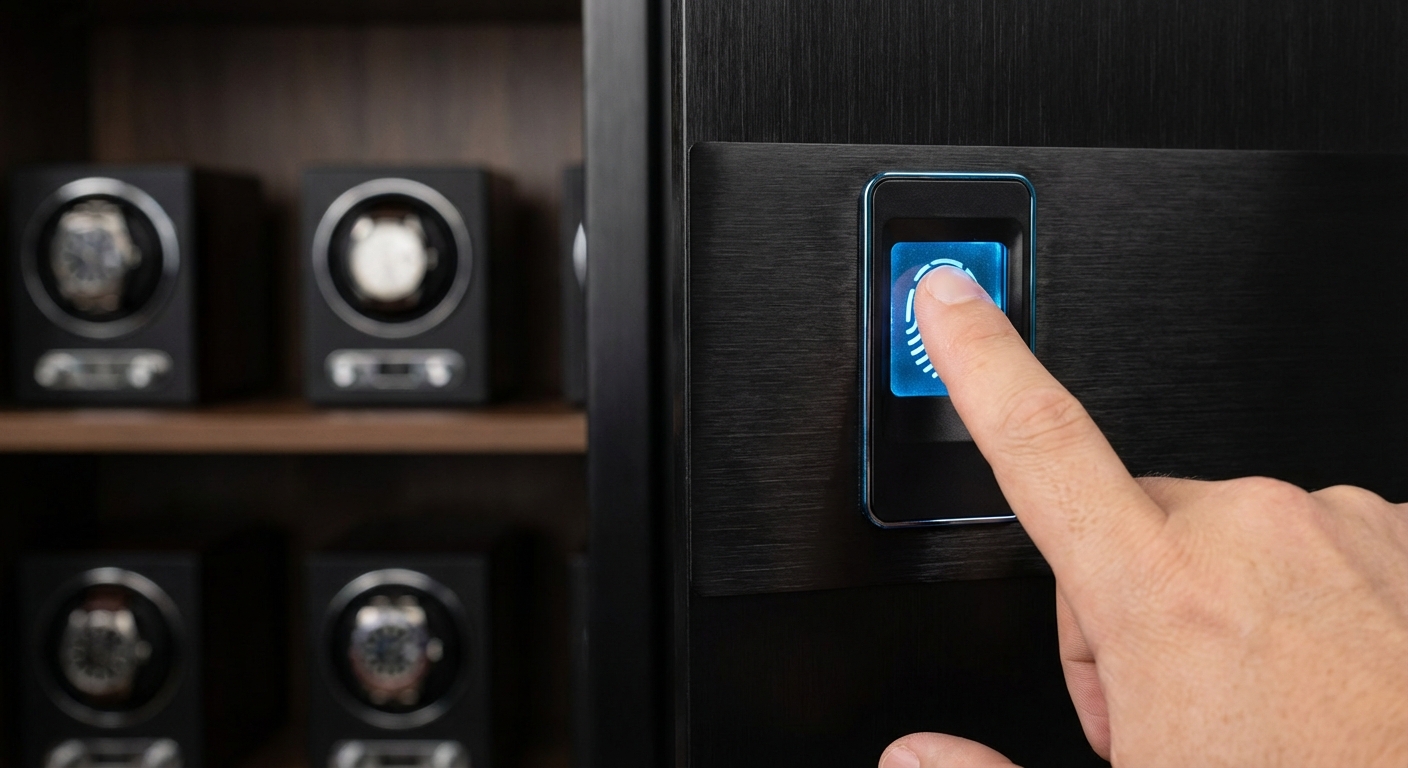
The cost is easily justified by the reduction in service frequency and the preservation of the watch’s resale value and water integrity. A premium watch safe winder acts as an insurance policy, protecting your assets from both mechanical failure and unauthorized access. When you consider that a single service for a Swiss complication can cost thousands, the winder pays for itself within a few years.
How to calculate long-term savings?
Maintenance isn’t just a cost; it’s an investment in the asset’s future.
- Deferred service intervals save thousands over a decade.
- Preventing crown replacement avoids costly part sourcing.
- Secure storage can potentially lower insurance premiums.
Here is the truth: neglect is the most expensive part of watch ownership.
The best part is that you are protecting the “condition” of the watch. A well-maintained movement and a crisp, un-stripped crown significantly boost the value if you ever decide to trade or sell.
Key Takeaway: A high-quality winder is a cost-effective tool that reduces the total cost of ownership for luxury timepieces.
| Expense Factor | Without Winder | With Safe Winder |
|---|---|---|
| Service Interval | Every 3-5 years | Every 7-10 years |
| Crown Repair | High probability | Near zero |
| Resale Value | Standard | Premium (Proof of care) |
The upfront cost of a quality safe winder is a fraction of the price of a major mechanical restoration.
How to Select the Right Winder for Your Collection?
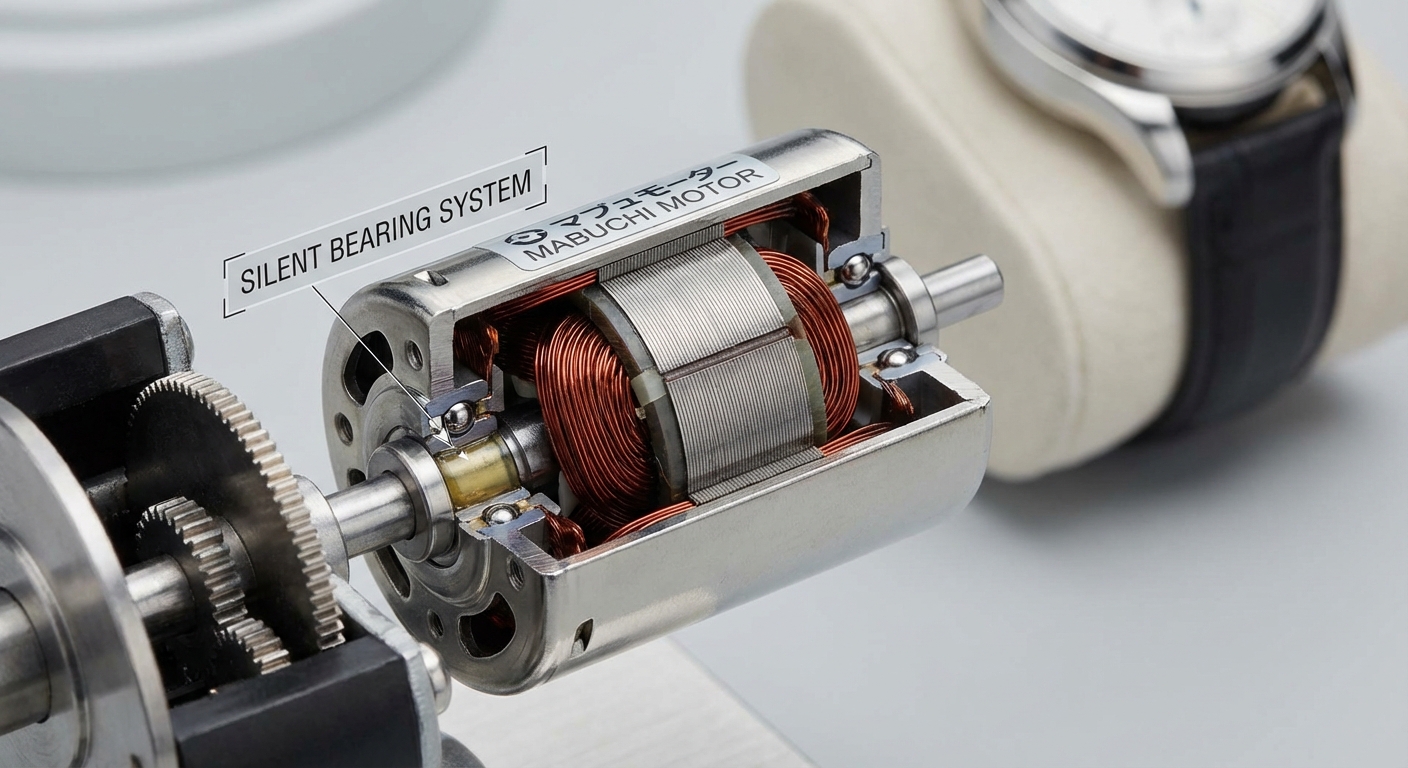
You should prioritize units with individual rotor controls, silent Japanese motors, and high-quality interior finishes. Selecting the right watch safe winder ensures that every piece in your expanding collection receives bespoke care tailored to its specific mechanical needs. Cheaper models often use a single program for all watches, which can lead to under-winding or excessive wear.
What motor specs should you look for?
The motor is the heart of the winder and determines its reliability.
- Mabuchi motors are the industry standard for silence.
- Brushless designs offer longer life and less EMI.
- Individual controls allow for different TPD settings per watch.
The truth is, you get what you pay for in motor technology.
But when you invest in quality, you get a whisper-quiet operation that lasts for decades. Your collection deserves the same level of engineering as the movements themselves.
Key Takeaway: Prioritize modular systems and high-quality motor brands to ensure your winding solution scales with your collection.
| Feature | Importance | What to Look For |
|---|---|---|
| Motor Brand | Essential | Mabuchi / Japanese Brushless |
| Programming | High | Individual rotor settings |
| Build Quality | High | Steel construction / Suede lining |
Choosing a winder with superior motor technology ensures your collection remains healthy and your home remains quiet.
Frequently Asked Questions
Can I leave my watch in a winder forever?
Yes, as long as the winder includes programmed rest periods and correct TPD settings, it is perfectly safe and beneficial to leave your watch in the winder indefinitely.
What’s the best TPD for a luxury diver?
Most modern divers, such as those with Rolex or Omega movements, perform best between 650 and 800 TPD with a bi-directional rotation setting.
How do I know if my watch needs a winder?
If you have an automatic watch that you do not wear every day, or if you own watches with complex complications like perpetual calendars, a winder is highly recommended.
Can I use a winder for a manual watch?
You can place a manual watch in a winder for storage, but it will not wind the watch, as manual-wind pieces lack the oscillating rotor necessary for kinetic charging.
What’s the best way to prevent magnetization?
Ensure your winder uses high-quality shielded motors and keep your watch safe away from unshielded household electronics like large speakers or subwoofers.
Conclusion
Maintaining the longevity of a luxury timepiece requires a strategic blend of mechanical activity and physical security. A watch safe winder is the ultimate tool for the modern collector, ensuring that every movement remains lubricated and accurate while staying protected from external threats. By reducing crown wear and preventing lubricant stagnation, you are making a direct investment in the future of your horological collection.
At Jimbo Safes, we specialize in creating the most secure and technologically advanced environments for your treasures. Don’t wait for your movement to seize or your security to be compromised. To discover the perfect winding solution for your unique collection, contact us today for a personalized consultation.


