 跳到内容
跳到内容 

A watch winder promotes watch longevity by maintaining movement lubrication, reducing mechanical stress from manual resetting, and protecting delicate components within a controlled environment. Leaving a high-end automatic watch sitting idle for weeks can lead to stagnant lubricants and the annoyance of constant resetting. Every time you manually unscrew the crown to fix the time, you risk wearing down the threads and compromising the water-resistant seals of your investment. Integrating your collection into a watch winder safe ensures your timepieces are always ready to wear while receiving the gentle motion they were engineered for.
Why is a watch winder safe essential for luxury watches?
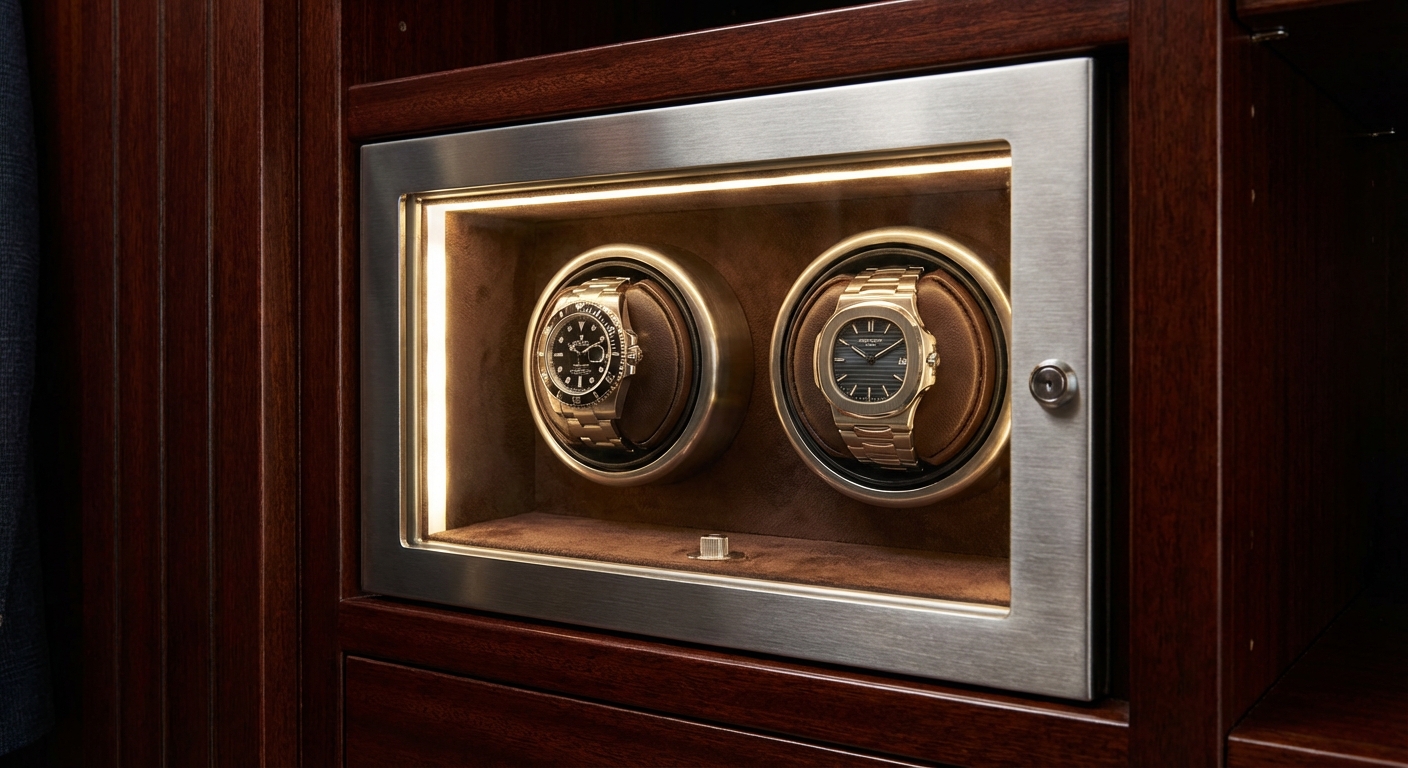
A watch winder safe is essential because it provides the dual benefit of physical anti-theft security and mechanical maintenance for complex automatic movements. By housing your timepieces in a reinforced vault that also mimics wrist motion, you prevent both external damage and internal degradation.
Is it just for convenience or long-term care?
Many collectors view these devices as a luxury convenience, but the reality is deeply rooted in mechanical preservation. An automatic movement is a micro-engineered system that relies on consistent energy distribution to function with precision over decades.
Think about it:
- Constant motion prevents parts from seizing.
- Security features protect against environmental dust.
- Ready-to-wear accessibility reduces handling risks.
The dual benefit of physical security and maintenance
Integrating your winding system into a high-grade vault ensures that your most valuable assets are shielded from unauthorized access. This combined approach addresses the two biggest threats to your collection: theft and mechanical stagnation.
The best part?
You no longer have to choose between keeping your watch safe and keeping it running. A Key Takeaway is that a winding vault acts as a comprehensive life-support system for your horological investments.
| Feature | Benefit to Longevity |
|---|---|
| Steel Reinforcement | Protection from physical impacts and theft |
| Controlled Rotation | Maintenance of mechanical synchronization |
| Soft Cushions | Prevention of bracelet or case scratches |
This table illustrates how a unified security and winding solution addresses both external and internal threats.
How does consistent motion preserve internal watch oils?
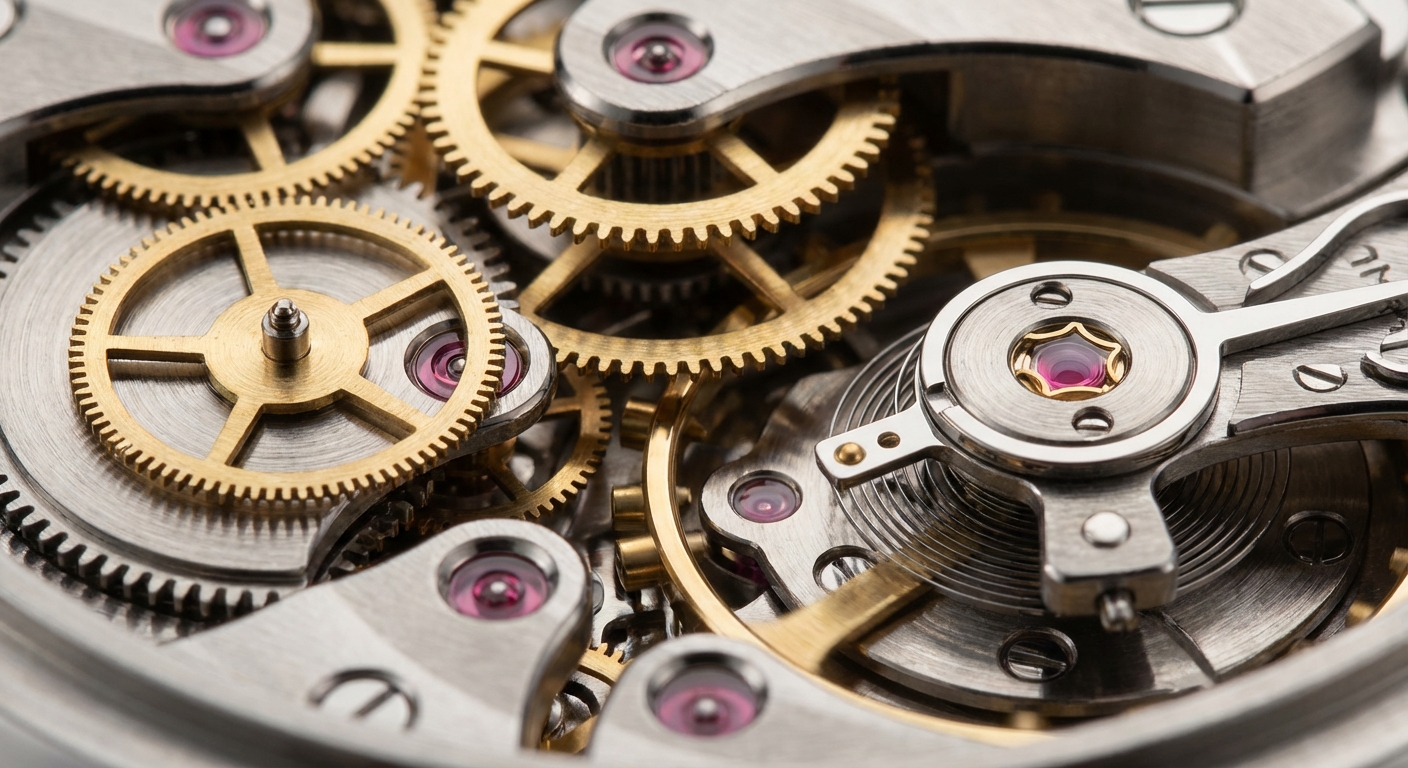
Consistent motion prevents synthetic lubricants from migrating away from critical friction points like pivots and jewels. Keeping your collection in a watch winder safe ensures these oils stay evenly distributed across the gear train.
Keeping synthetic lubricants evenly distributed
Modern watches use advanced synthetic oils designed to resist evaporation, yet they still follow the laws of gravity. When a watch sits in one position for months, these oils can slowly pool, leaving dry spots on microscopic contact surfaces.
Believe it or not:
- Rotation forces oil back into the jewels.
- Movement prevents the “setting” of lubricants.
- Fresh distribution reduces friction at startup.
What happens when oils settle during long inactivity?
When lubricants settle, the initial friction when you finally pick up the watch can cause microscopic wear on the pivots. Over time, this cumulative damage leads to a loss of accuracy and shorter intervals between expensive professional services.
Wait, there’s more.
You also face the risk of “gumming” in older movements, though this is less common with modern synthetics. A Key Takeaway is that movement is the natural state for these machines, and a winder mimics the active environment they were built for.
| Condition | Effect on Lubrication |
|---|---|
| Stationary | Oil migration and pooling at bottom pivots |
| Continuous Rotation | Uniform film across all moving components |
| Programmed Winding | Optimal energy without over-stressing oils |
Maintaining a regular winding schedule is the most effective way to ensure your movement remains friction-free.
What are the mechanical risks of letting a watch stop?
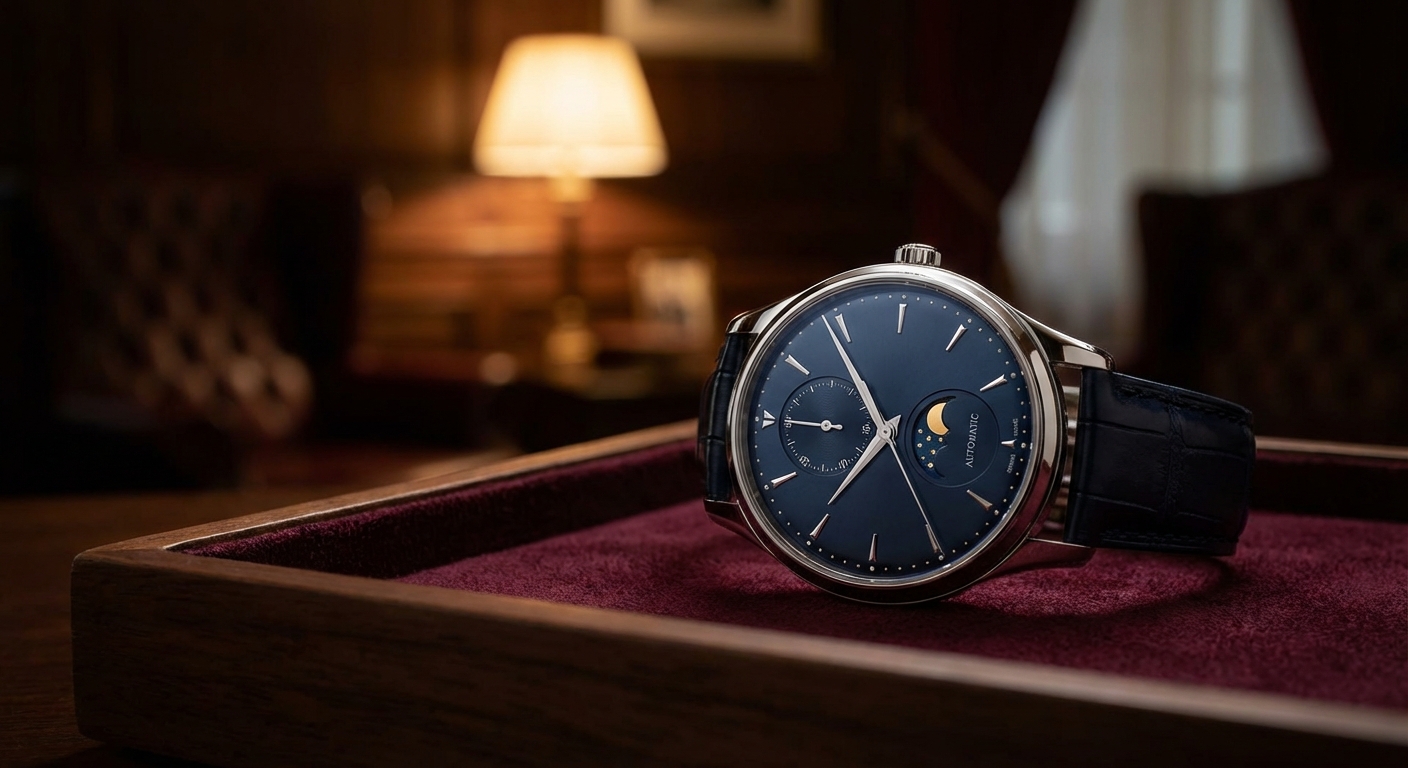
Letting a watch stop frequently forces the mainspring to undergo complete cycles of tension loss and sudden winding, which can affect long-term precision. Using a watch winder safe keeps the movement at an optimal energy state, preventing the mechanical “re-starting” shock.
The impact of routine downtime on movement precision
When a movement stops, the balance wheel loses its rhythm, and the escapement sits under zero tension. While not immediately damaging, the constant cycle of stopping and starting can lead to minor fluctuations in timekeeping accuracy over several years.
Consider this:
- Mainsprings prefer to stay in the middle of their tension curve.
- Geartrains benefit from a steady flow of torque.
- Stop-start cycles can lead to inconsistent beat rates.
Why is resetting complications a hidden danger?
The greatest risk of a stopped watch is the human element involved in resetting complex functions like moon phases or perpetual calendars. Forcing a date change during the movement’s “danger zone” can snap delicate pins and gears inside the calendar module.
It gets better.
By keeping the watch running, you never have to engage the setting mechanism, which is often the most fragile part of the movement. A Key Takeaway is that avoiding manual intervention is the best way to prevent accidental mechanical damage to high-complication pieces.
| Risk Factor | Impact of Winding |
|---|---|
| Mainspring Fatigue | Reduced by maintaining consistent tension levels |
| Geartrain Wear | Minimized by eliminating dry-start friction |
| Human Error | Negated by removing the need for manual resets |
Consistency in motion translates directly to consistency in mechanical health and timekeeping reliability.
Why does a watch winder safe prevent crown and gasket wear?
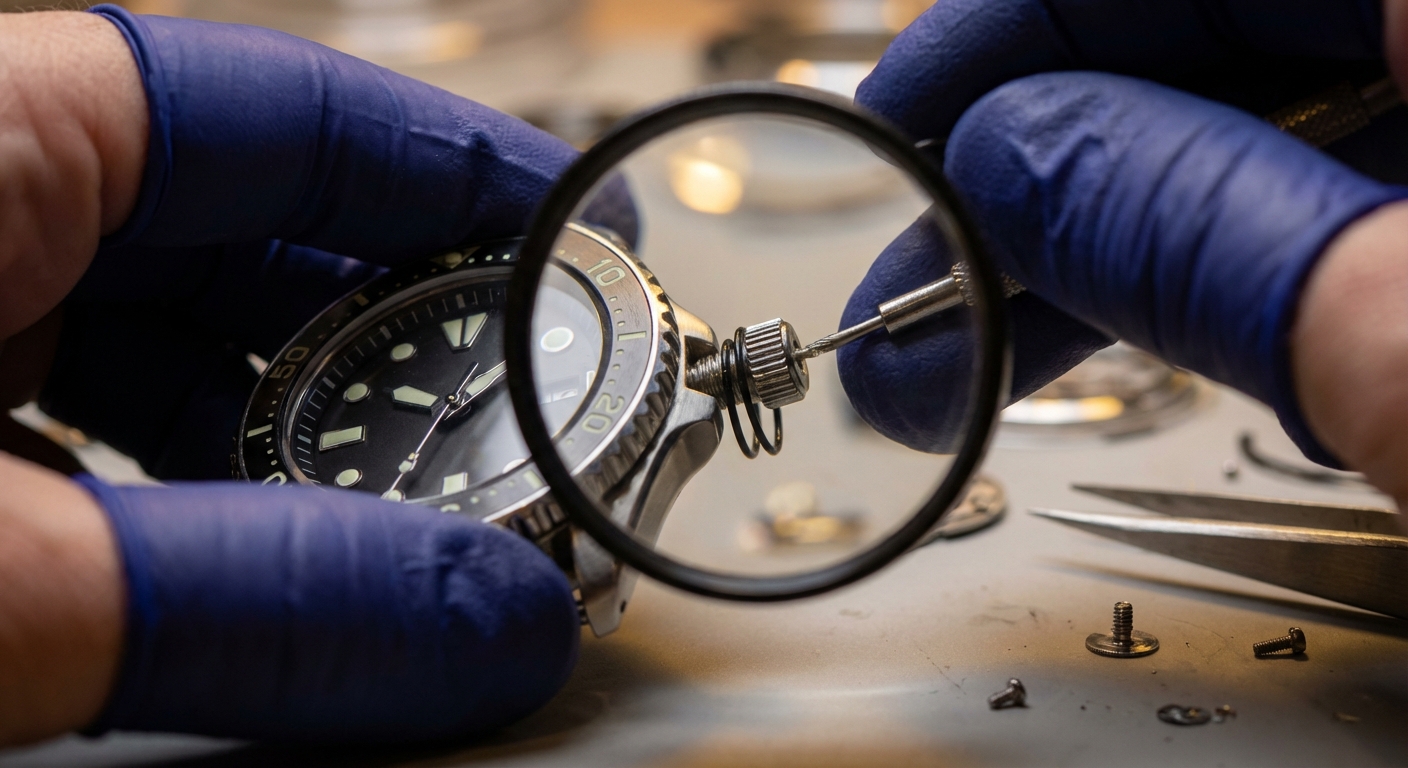
A watch winder safe prevents crown and gasket wear by eliminating the need for frequent manual time and date adjustments. A watch winder safe protects these external interfaces from the repetitive stress that eventually leads to water-resistance failure.
Reducing the frequency of manual time adjustments
The crown is the only direct link between the outside world and the movement, making it a primary point of failure. Each time you unscrew it to set a stopped watch, you are wearing down the metal threads of the tube and the crown itself.
The reality is simple:
- Metal-on-metal friction creates microscopic shavings.
- Repetitive use leads to “stripped” threads.
- Frequent settings increase the chance of stem breakage.
How does excessive crown use compromise water resistance?
Most luxury watches rely on rubber O-rings, or gaskets, inside the crown to maintain a watertight seal. These gaskets are compressed and uncompressed every time the crown is pulled out, leading to premature drying, cracking, and loss of elasticity.
Why does this matter?
You don’t want to discover a failed seal during a swim or even a rainy day. A Key Takeaway is that preserving the integrity of your gaskets is a critical part of maintaining the “insurance” of your watch’s water resistance.
| Component | Wear Cause | Winder Solution |
|---|---|---|
| Crown Threads | Repetitive screwing/unscrewing | Eliminates the need to open the crown |
| O-Ring Gaskets | Mechanical compression cycles | Keeps seals in a static, protected state |
| Winding Stem | Side-loading during manual winding | Removes manual torque from the equation |
Limiting crown use is one of the most effective ways to preserve the factory-sealed environment of a luxury timepiece.
How do turns per day (TPD) settings impact longevity?

TPD settings impact longevity by ensuring the mainspring receives enough energy to stay wound without overtaxing the slipping clutch mechanism. A high-quality watch winder safe allows you to tailor the rotation count to match the exact specifications of your movement.
Finding the ideal winding zone for your specific movement
Every automatic caliber has a specific requirement for how much rotation it needs to maintain its power reserve. Most modern movements require between 650 and 950 TPD to stay in the “sweet spot” of the mainspring’s tension.
Here is why:
- Too few turns allow the watch to stop eventually.
- Too many turns engage the safety clutch too often.
- Correct TPD mimics active, daily human wear.
Can over-winding cause unnecessary mechanical stress?
Automatic watches are designed with a “slipping clutch” that prevents the mainspring from snapping once fully wound. However, if a winder spins 24/7 without rest, that clutch is constantly rubbing against the inside of the barrel, creating unnecessary friction and wear.
That’s just the beginning.
A programmable winder prevents this by stopping once the target TPD is reached. A Key Takeaway is that “more” is not “better” when it comes to winding; precision settings are the key to longevity.
| Brand Example | Typical TPD Range | Rotation Direction |
|---|---|---|
| Rolex (Modern) | 650 | Bi-directional |
| Patek Philippe | 800 | Counter-clockwise |
| Breitling | 650 – 800 | Bi-directional |
Using specific TPD settings ensures your watch receives exactly the energy it needs, and nothing more.
When should you use specific rotation directions?

You should use specific rotation directions when a movement is “uni-directional,” meaning the rotor only adds energy to the mainspring when turning one way. A watch winder safe provides the necessary customization to support clockwise, counter-clockwise, or bi-directional winding modes.
Clockwise, counter-clockwise, or bi-directional?
If you place a counter-clockwise winding watch in a clockwise-only winder, it will simply spin without gaining any power reserve. This leads to the watch stopping despite being on a winder, which defeats the purpose of the device.
How does it work?
- Clockwise (CW): The rotor winds the spring when turning right.
- Counter-Clockwise (CCW): The rotor winds when turning left.
- Bi-directional: The rotor winds in both directions.
How to find your manufacturer’s winding specifications
Most manufacturers provide this information in the user manual, or you can find it through reputable horological databases. Knowing your movement’s caliber number is the most reliable way to ensure you select the correct settings on your watch winder safe.
Think about it:
Do you want your watch to sit on a spinner for 12 hours and still be dead in the morning? A Key Takeaway is that directionality is just as important as the number of turns for effective maintenance.
| Movement Type | Winding Efficiency | Required Setting |
|---|---|---|
| Valjoux 7750 | Uni-directional | Clockwise Only |
| Rolex 3135 | Bi-directional | CW + CCW |
| Patek 240 | Uni-directional | Counter-Clockwise |
Correct rotation settings ensure that every turn of the winder is actually contributing to the watch’s power reserve.
Can rest cycles and sleep modes extend a watch’s life?
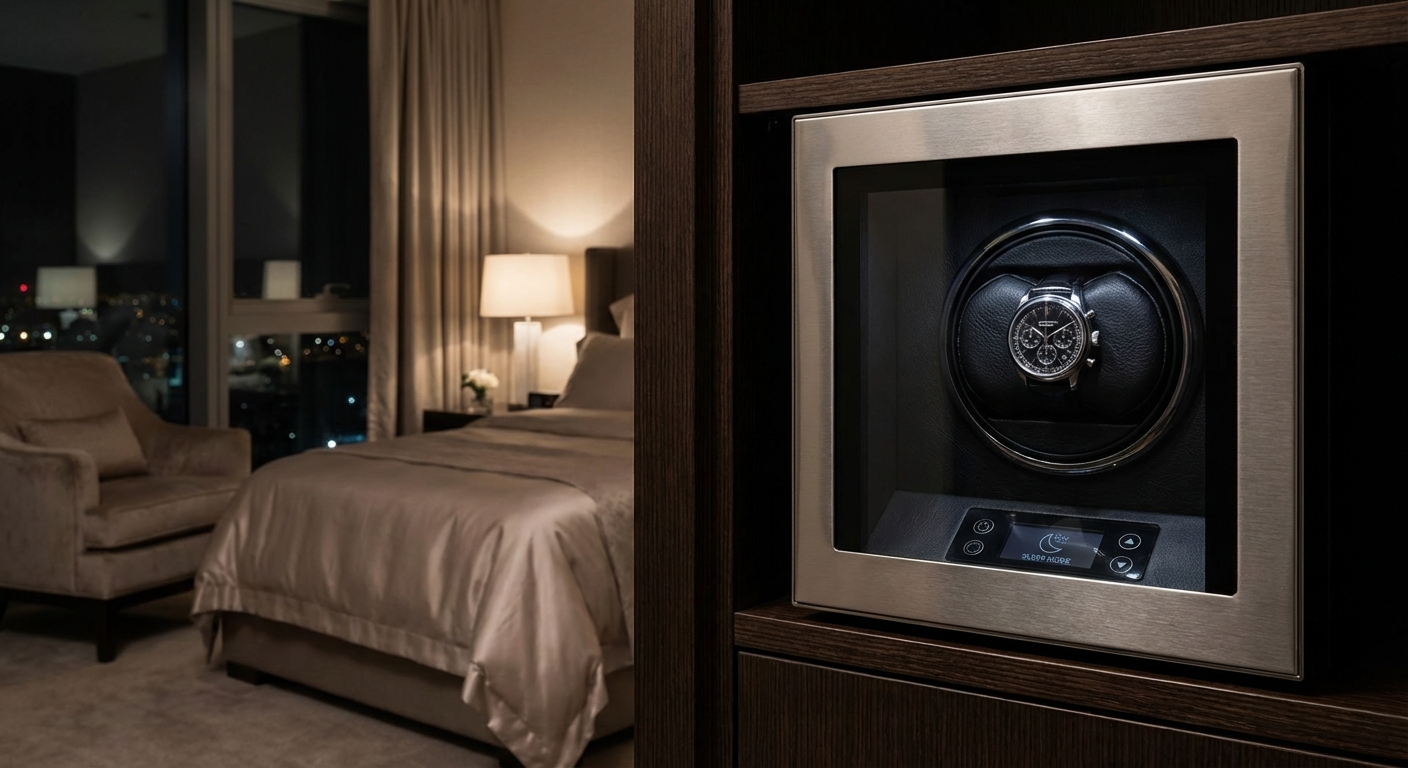
Rest cycles and sleep modes extend a watch’s life by mimicking the natural intermittent motion of a human wrist, which prevents the movement from being under constant torque. A watch winder safe with sleep functions ensures the mainspring can partially unwind, maintaining its elasticity.
Why constant spinning is detrimental to the mainspring
A mainspring that is held at 100% tension for months at a time can develop “set,” where it loses its ability to return to its original shape and store maximum energy. Controlled pauses allow the spring to relax, which is essential for its long-term health.
Consider this:
- Constant rotation keeps the slipping clutch active.
- Rest periods prevent internal heat buildup.
- Sleep modes reduce wear on the winder’s motor.
Mimicking the natural rhythm of human wear
Your watch does not move while you sleep, and a quality winding system should reflect that reality. Advanced units allow you to set a “sleep” period where the winder remains stationary for 12 hours, allowing the watch to run off its internal reserve.
But that’s not all.
This rhythm also ensures that the lubricants are not constantly being pushed by centrifugal force in one direction. A Key Takeaway is that intermittent motion is the healthiest state for any mechanical timepiece.
| Mode | Mainspring State | Mechanical Benefit |
|---|---|---|
| Continuous | Fully Tense | High immediate power, higher wear |
| Sleep Cycle | Variable Tension | Mimics wear, preserves spring elasticity |
| Intermittent | Stable Tension | Optimal balance of readiness and care |
The inclusion of rest cycles distinguishes professional-grade winding systems from simple, non-programmable hobbyist tools.
How does environmental protection inside a safe help?
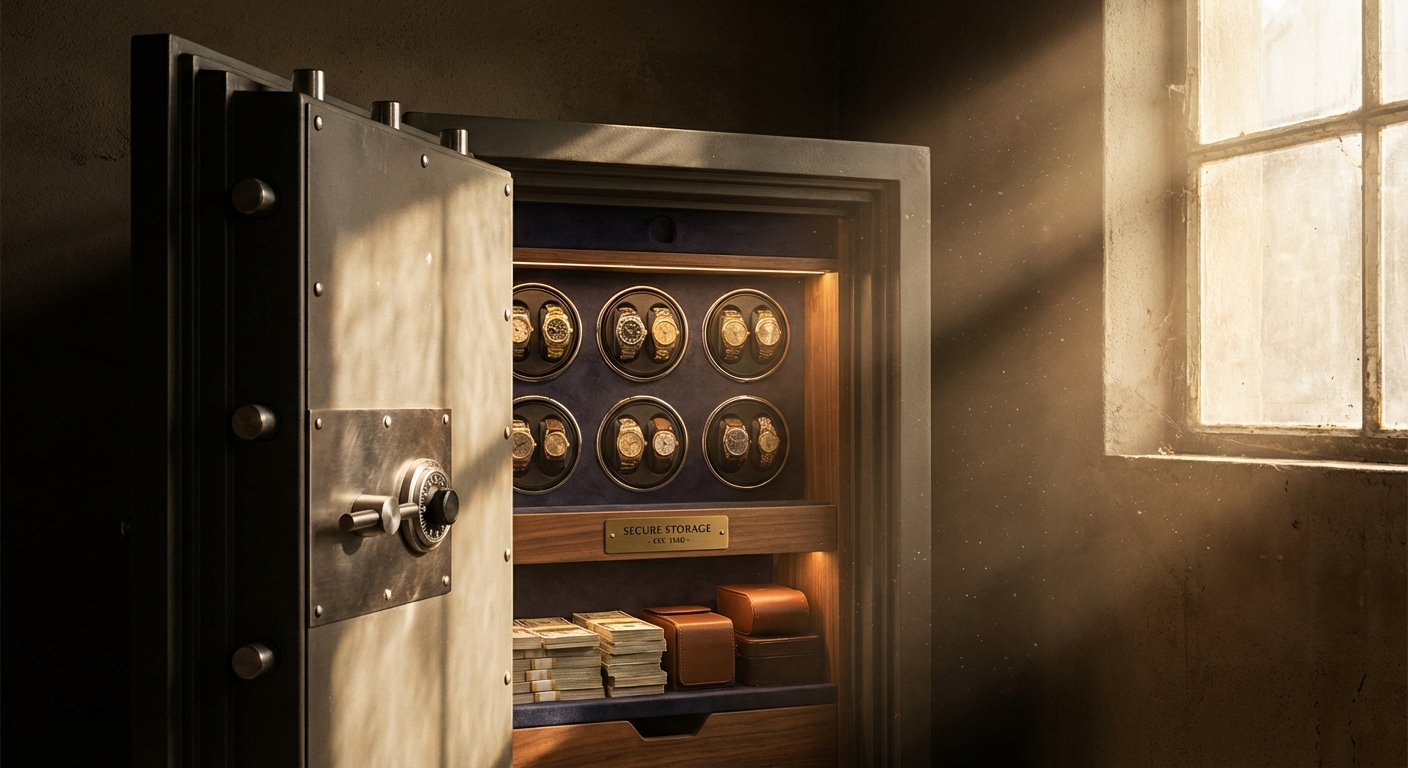
Environmental protection inside a safe helps by creating a stable microclimate that shields delicate watches from dust, moisture, and temperature fluctuations. A watch winder safe provides a sealed barrier that keeps external pollutants away from the movement’s lubricants and seals.
Shielding your collection from dust and humidity
Dust is the silent enemy of mechanical watches; even a single microscopic particle entering through a seal can disrupt the timing of the balance wheel. High humidity can cause internal corrosion or “fogging” if the watch’s gaskets have any minor weaknesses.
Here is why it matters:
- Sealed safes prevent particulate ingress.
- Interior linings wick away excess moisture.
- Steel walls provide a thermal buffer against room changes.
Is your dresser exposing watches to temperature shifts?
Watches left out on a nightstand are subject to the heating and cooling cycles of the room, which can cause metal components to expand and contract. This “thermal cycling” can eventually fatigue the seals and affect the viscosity of the internal oils.
Wait, there’s more.
Exposure to direct sunlight can fade dials and dry out leather straps prematurely. A Key Takeaway is that a safe offers a dark, stable, and clean environment that preserves the aesthetic and mechanical value of your collection.
| Environmental Factor | Damage Potential | Safe Solution |
|---|---|---|
| UV Light | Dial fading, strap drying | Total darkness |
| Humidity | Internal rust, oil breakdown | Controlled interior air |
| Airborne Dust | Movement friction, scratches | Hermetic-style barrier |
A controlled environment is the ultimate foundation for preserving the “New Old Stock” condition of luxury timepieces.
Which types of timepieces actually benefit from winders?
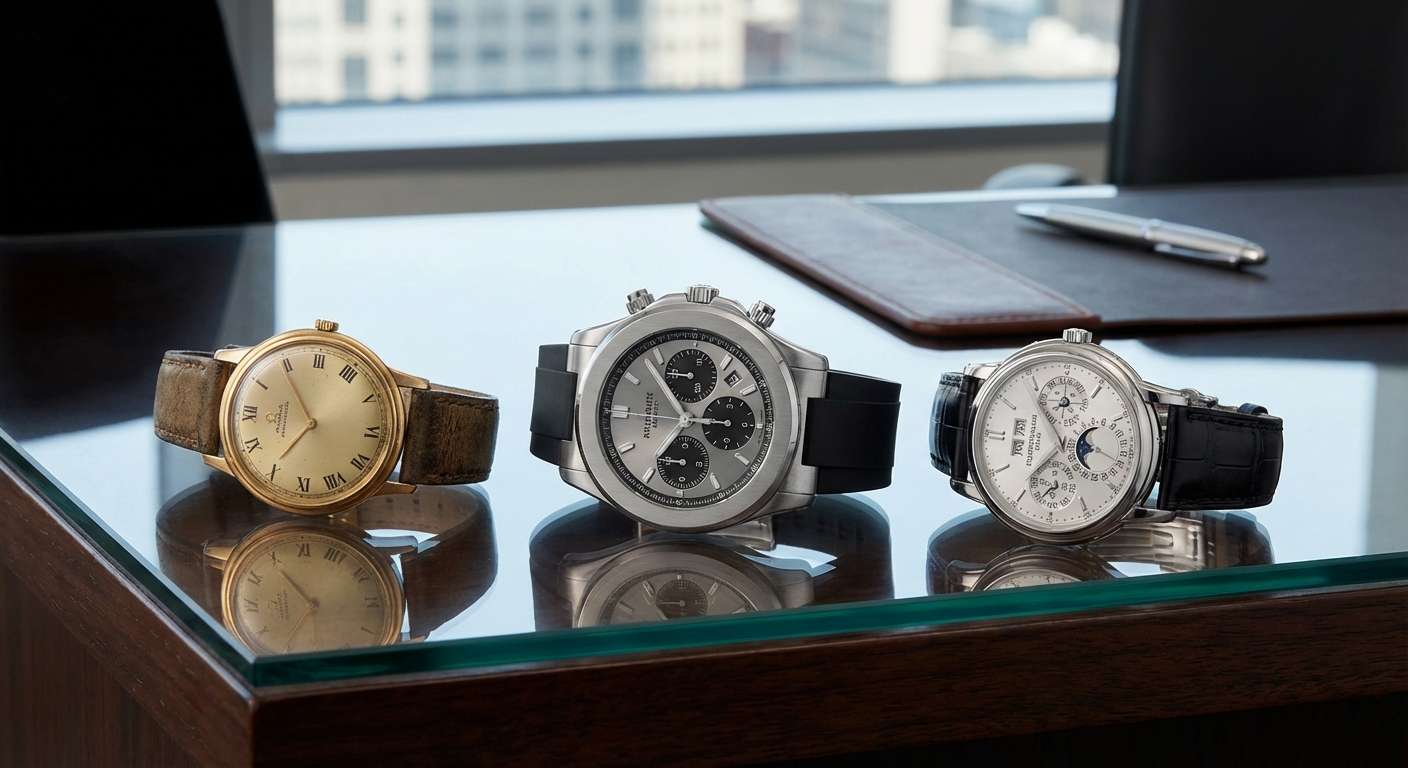
Automatic watches with complex calendar complications benefit most from winders because they require labor-intensive manual resetting if they stop. While simple automatics enjoy the lubrication benefits, a watch winder safe is a necessity for annual or perpetual calendars.
Comparing automatic, manual, and quartz movements
Manual-wind watches generally do not belong on a winder because they lack a rotor to translate external motion into power. Quartz watches are battery-operated and stay running regardless of movement, so they only require the security aspect of a safe.
Think about it:
- Automatics: Benefit from motion for power and oil health.
- Manuals: Need hand-winding; use the safe for security only.
- Quartz: Minimal maintenance; just need physical protection.
Why are perpetual calendars the most important to wind?
A perpetual calendar tracks day, date, month, and leap years, often for centuries. If one stops, resetting it to the correct alignment can take 20 minutes of careful work—or even require a trip to a watchmaker if the sequence is messed up.
The best part?
A winder ensures your perpetual calendar is always “in sync” and ready for your next event. A Key Takeaway is that the more complicated your watch is, the more value you get from a consistent winding environment.
| Watch Type | Winder Necessity | Primary Reason |
|---|---|---|
| Perpetual Calendar | Critical | Prevents complex resetting errors |
| Standard Automatic | High | Maintains oil flow and readiness |
| Manual Wind | Not Needed | Winder motion does not charge movement |
Matching the tool to the movement type ensures you are investing in the right care for each specific piece.
Why is quality engineering better than budget options?
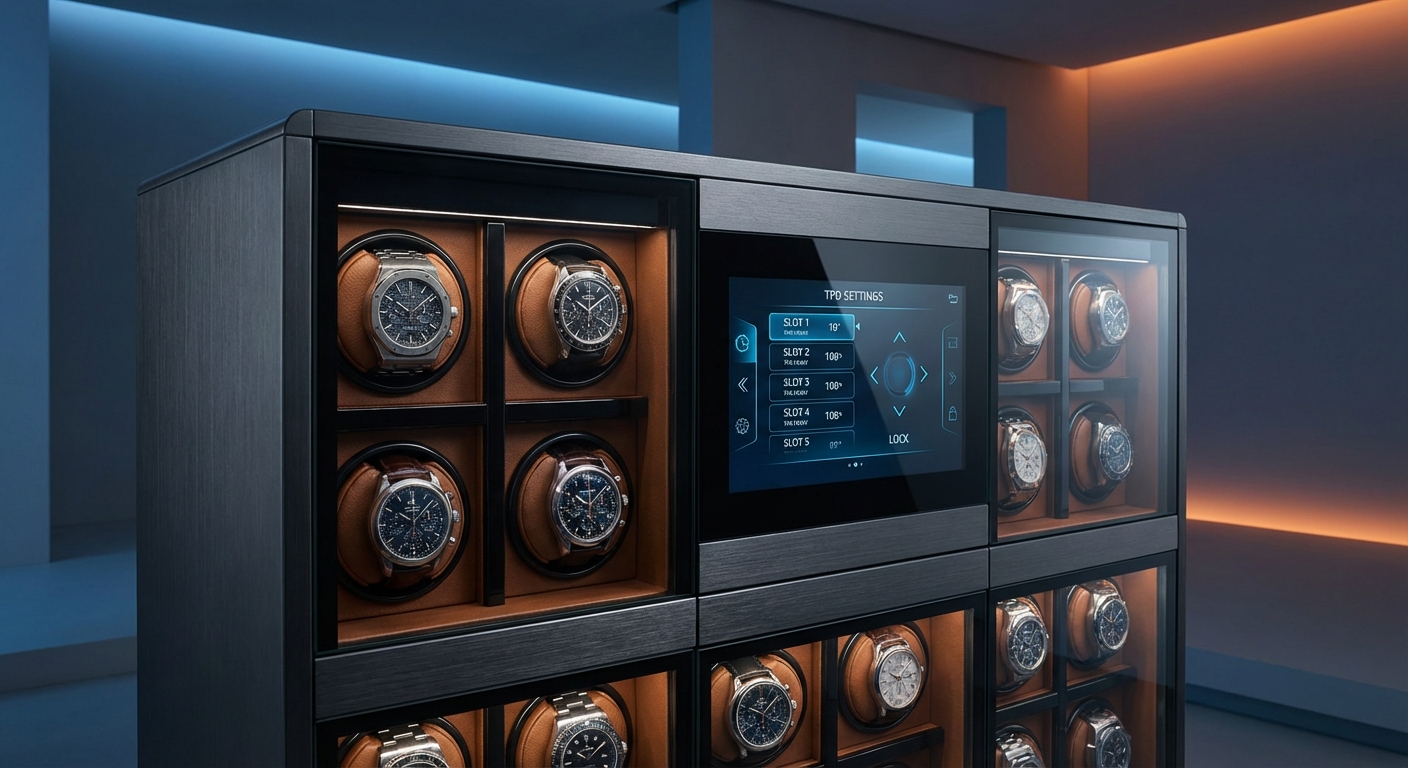
Quality engineering is better because it prevents magnetic interference and uses quiet, shielded motors that won’t damage your movement. A watch winder safe designed with premium components offers the longevity and precision that cheap, plastic alternatives lack.
The danger of cheap motors and magnetic interference
Low-end winders often use unshielded motors placed too close to the watch. These motors emit magnetic fields that can magnetize the balance spring of your watch, causing it to run extremely fast and requiring a professional demagnetization service.
Believe it or not:
- Quality winders use non-magnetic materials.
- Shielded motors protect the hairspring.
- Silent operation indicates better mechanical tolerances.
Investing in a modular and reliable winding system
A premium system allows you to replace or upgrade individual winding units without replacing the entire safe. This modularity ensures that as your collection grows or technology changes, your security and maintenance infrastructure remains relevant.
It gets better.
Quality winders also feature better “cuff” designs that won’t stretch your leather straps or scratch your polished gold bracelets. A Key Takeaway is that a budget winder can cost you thousands in repairs; a quality one is an insurance policy for your movement.
| Component | Budget Winder | Premium Safe Winder |
|---|---|---|
| Motor | Loud, unshielded | Silent, magnetically shielded |
| Materials | Plastic, cheap foam | Metal, leather, microfiber |
| Programming | None or very limited | Individual TPD and direction |
Investing in high-end engineering ensures that your winder protects your watch rather than becoming a source of damage.
*
Summary of Longevity Solutions
Preserving a luxury watch collection requires a holistic approach that balances mechanical


