 跳到内容
跳到内容 

You have spent years curating a collection that represents your milestones, your taste, and your hard-earned success. The thought of a smash-and-grab thief or a devastating house fire turning your mechanical legacy into a pile of melted scrap is enough to keep you up at night. Complacency is the greatest threat to your assets, and relying on “clever” hiding spots is a gamble you will eventually lose.
To safely store your watches at home, you must utilize a high-security storage solution that combines physical weight, fire resistance, and advanced locking mechanisms. True security is not about hiding your valuables but about making them impossible to take. By investing in a professional watch safe, you transition from being a target of opportunity to a hardened environment that protects your horological investments around the clock.
Is a watch safe better than a bank deposit box?
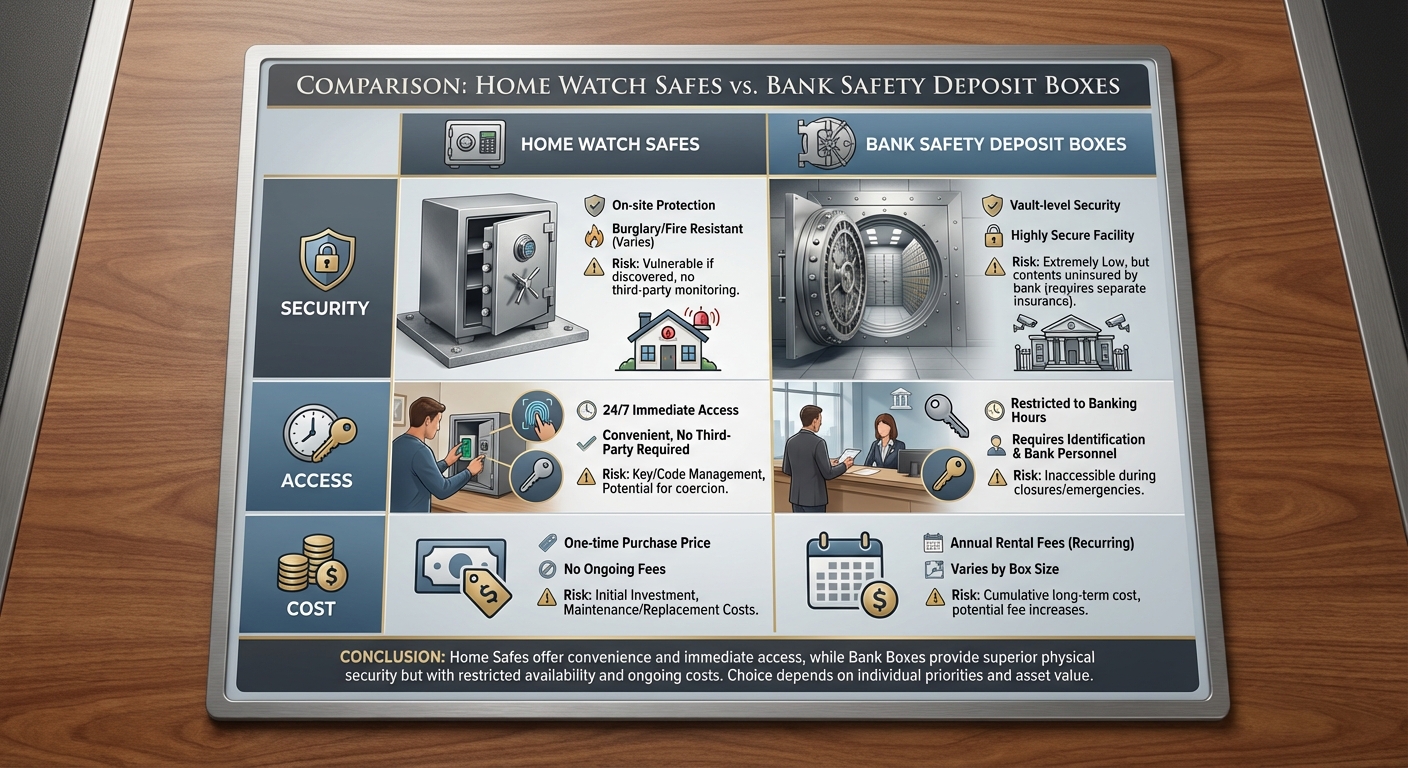
A professional storage unit at home provides 24/7 accessibility and immediate control over your collection that a bank simply cannot offer. While banks provide high-level security, they restrict your access to limited business hours and often lack the insurance coverage necessary for high-value horology.
- Home units allow you to rotate your daily wear instantly.
- Bank boxes often require appointments and travel time.
- You maintain physical custody of your assets at all times.
The bottom line:
If you enjoy wearing your watches, a bank box acts as a barrier to your own hobby.
Why choose immediate home access?
Immediate access allows you to enjoy your collection on your own terms without logistical hurdles. Having your timepieces at arm’s length means you are more likely to wear and maintain them properly.
- Spontaneous events shouldn’t be limited by bank hours.
- Home storage facilitates easier cleaning and winding.
- You can appreciate your collection in private.
Believe it or not:
Most collectors who use banks eventually stop wearing their best pieces entirely.
Is bank security really more reliable?
Bank security is formidable but lacks the personal oversight and modern biometric options available in high-end home units. Furthermore, the contents of a bank box are typically not insured by the bank itself, requiring you to carry a separate policy.
- Banks are vulnerable to internal theft and clerical errors.
- Institutional access can be frozen during legal or economic crises.
- Home units can be integrated into your existing alarm systems.
The reality is:
Your home is your fortress, and you control the perimeter.
Key Takeaway
Home storage wins on convenience and utility, while modern engineering ensures that the security gap between home units and bank vaults is narrower than ever.
| Feature | Home Security Unit | Bank Safety Box |
|---|---|---|
| Accessibility | 24/7/365 | Bank Hours Only |
| Privacy | Absolute | Subject to Bank Policy |
| Maintenance | Ease of Winding/Cleaning | Requires Travel |
This comparison highlights that home-based security is the superior choice for the active collector who values both protection and lifestyle integration.
Where should you install a compact watch safe?
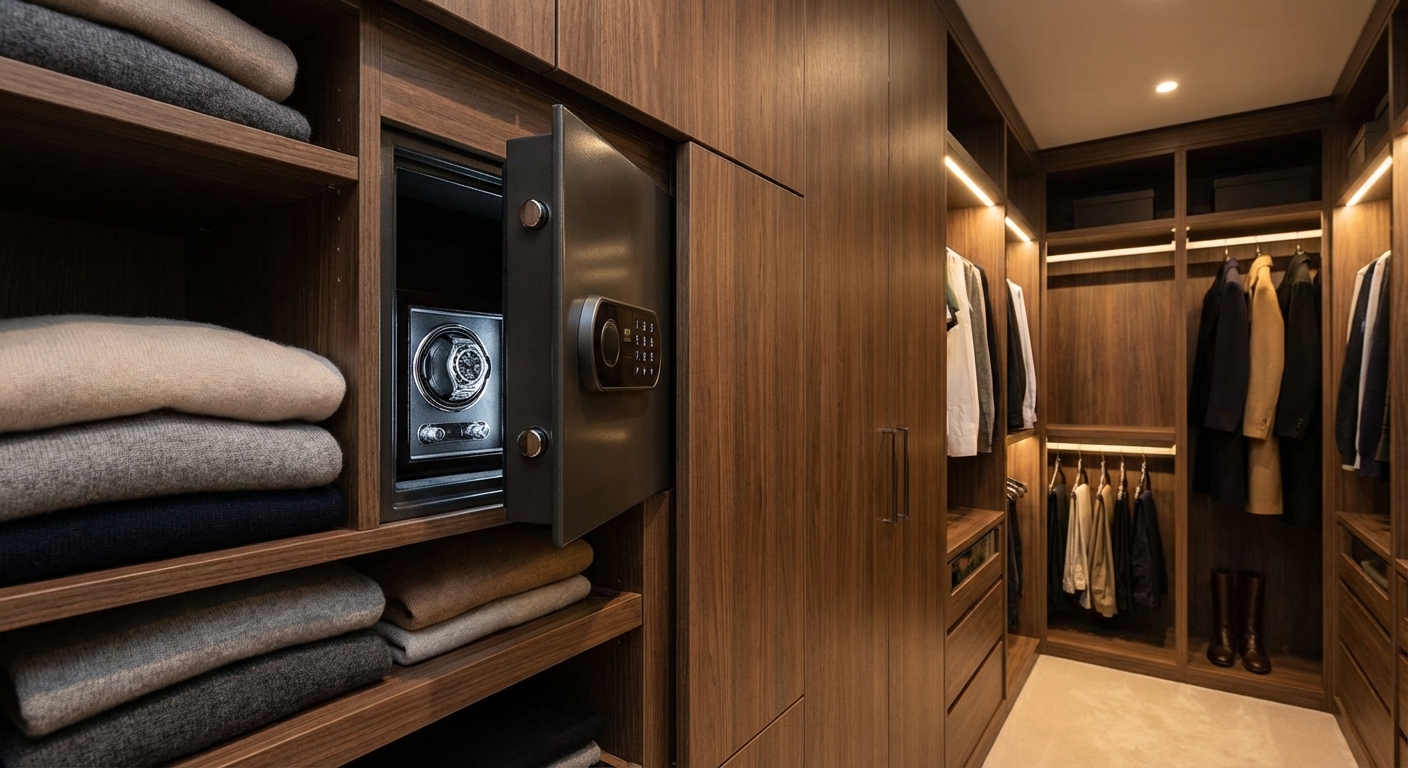
You should install your watch safe in a structurally sound location that balances concealment with ease of daily use. A master closet or a reinforced bedroom alcove provides the necessary privacy while ensuring you can secure your timepiece as soon as you take it off.
- Closets offer a natural “secondary” perimeter within the home.
- Reinforced shelving can hide the unit from casual observers.
- Proximity to your dressing area encourages consistent use.
Think about it:
A security device is only effective if you actually use it every single night.
Should you hide the unit in a closet?
Hiding your unit in a closet is an excellent secondary layer of defense that forces a thief to waste precious time searching. Professional intruders are on a strict clock, and every minute they spend looking for your valuables increases their risk of capture.
- Use built-in cabinetry to mask the unit’s silhouette.
- Keep the area well-lit to prevent fumbling with codes.
- Ensure the floor joists can support the concentrated weight.
Here is the kicker:
Even if they find it, a properly bolted unit isn’t going anywhere.
Is the master bedroom a security risk?
The master bedroom is the first place a burglar looks, so your security strategy must rely on physical strength rather than just secrecy. While it is a high-traffic area for you, it must be a “dead end” for anyone else attempting to access your gear.
- Integrate the unit into a heavy piece of furniture.
- Ensure the room has its own secondary alarm contact.
- Avoid placing the unit near windows where it might be seen from outside.
But wait, there is more:
Modern designs are so sleek they can blend perfectly into high-end bedroom aesthetics.
Key Takeaway
Location is about operational security; place your unit where it is convenient for you but requires significant effort and time for an intruder to exploit.
| Location Type | Security Benefit | Practicality |
|---|---|---|
| Master Closet | High Concealment | Excellent for Daily Use |
| Basement Slab | Maximum Bolting Strength | Poor for Daily Access |
| Home Office | Professional Integration | Moderate Accessibility |
Strategic placement ensures that your security measures do not interfere with your lifestyle while providing a formidable barrier against unauthorized access.
Does a watch safe need to look industrial?
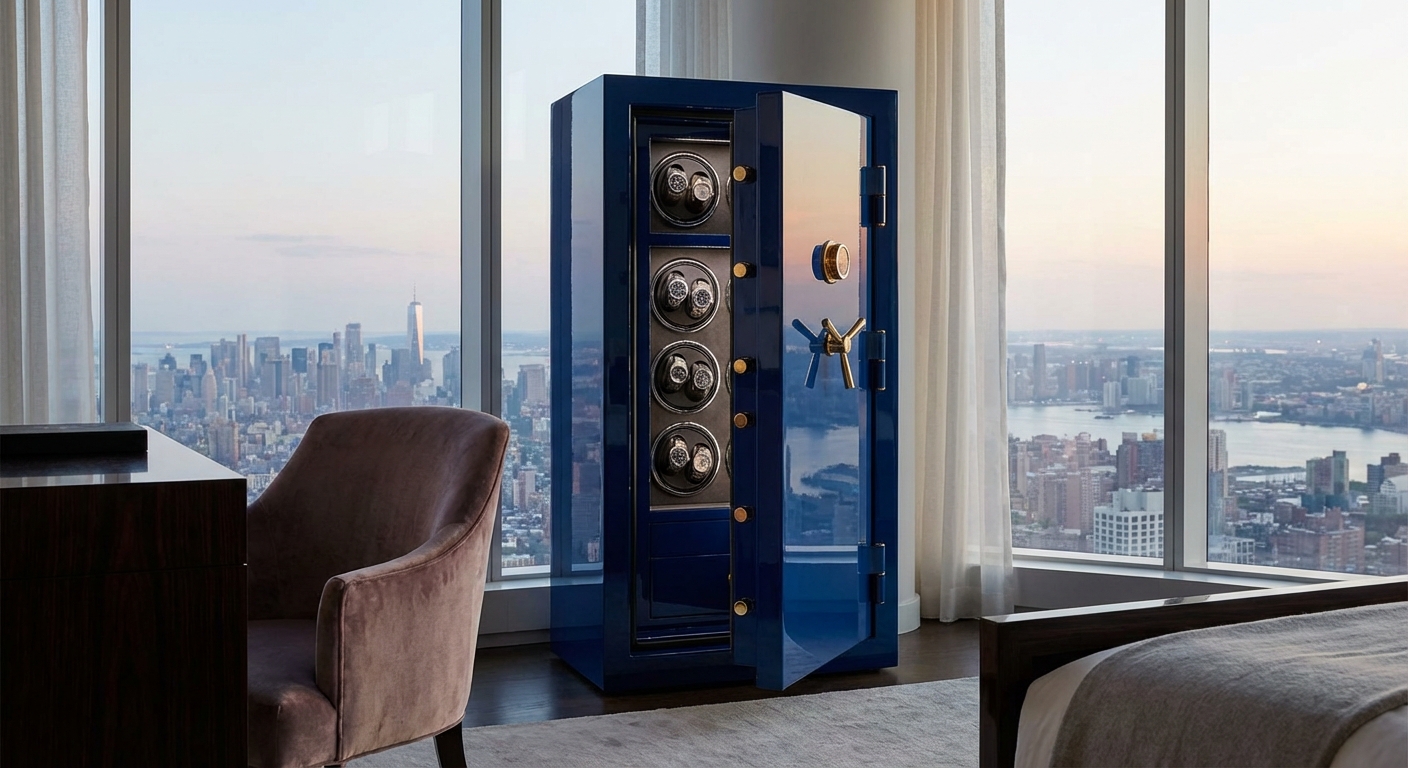
Modern security solutions do not need to look like heavy machinery; instead, they can be designed as bespoke furniture that complements your interior design. High-end finishes and custom colors allow your security hardware to exist in plain sight without alerting guests to its true purpose.
- Custom paint jobs can match your home’s palette.
- Luxury hardware options replace the standard “locker” look.
- Sleek profiles allow for placement in high-visibility areas.
The truth is:
You shouldn’t have to sacrifice your home’s beauty for the sake of your collection’s safety.
Can aesthetics improve your home security?
Aesthetics can actually enhance security by allowing you to place the unit in more frequent use areas without it looking out of place. When a security unit looks like a piece of high-end furniture, it is less likely to be identified as a high-value target by service workers or visitors.
- Discreet designs don’t scream “valuables inside.”
- Better integration leads to more frequent and consistent use.
- Designer units often feature better ergonomic handles.
Make no mistake:
A beautiful safe is still a steel fortress under the skin.
Why choose a bespoke finish for your home?
Choosing a bespoke finish at Jimbo Safes ensures that your security solution is as unique as the timepieces it protects. Your home is a reflection of your personality, and your security equipment should be no exception to that standard of excellence.
- High-gloss finishes provide a sophisticated, modern look.
- Leather wrapping can add a tactical yet refined texture.
- Chrome or gold-plated bolts add a touch of class to the interior.
But that’s not all:
A custom-built unit holds its value better as a permanent home fixture.
Key Takeaway
Style and substance are not mutually exclusive; a well-designed unit provides world-class protection while serving as a centerpiece of your home’s decor.
| Design Element | Impact on Home | Security Function |
|---|---|---|
| Custom Color | Blends with Interior | Visual Concealment |
| High-End Finish | Looks like Fine Furniture | Low Profile |
| Internal Lighting | Showcases Collection | Ease of Access |
Integrating a high-security unit into your home’s aesthetic creates a seamless environment where protection feels like a natural part of your daily life.
Is a watch safe appropriate for an office?
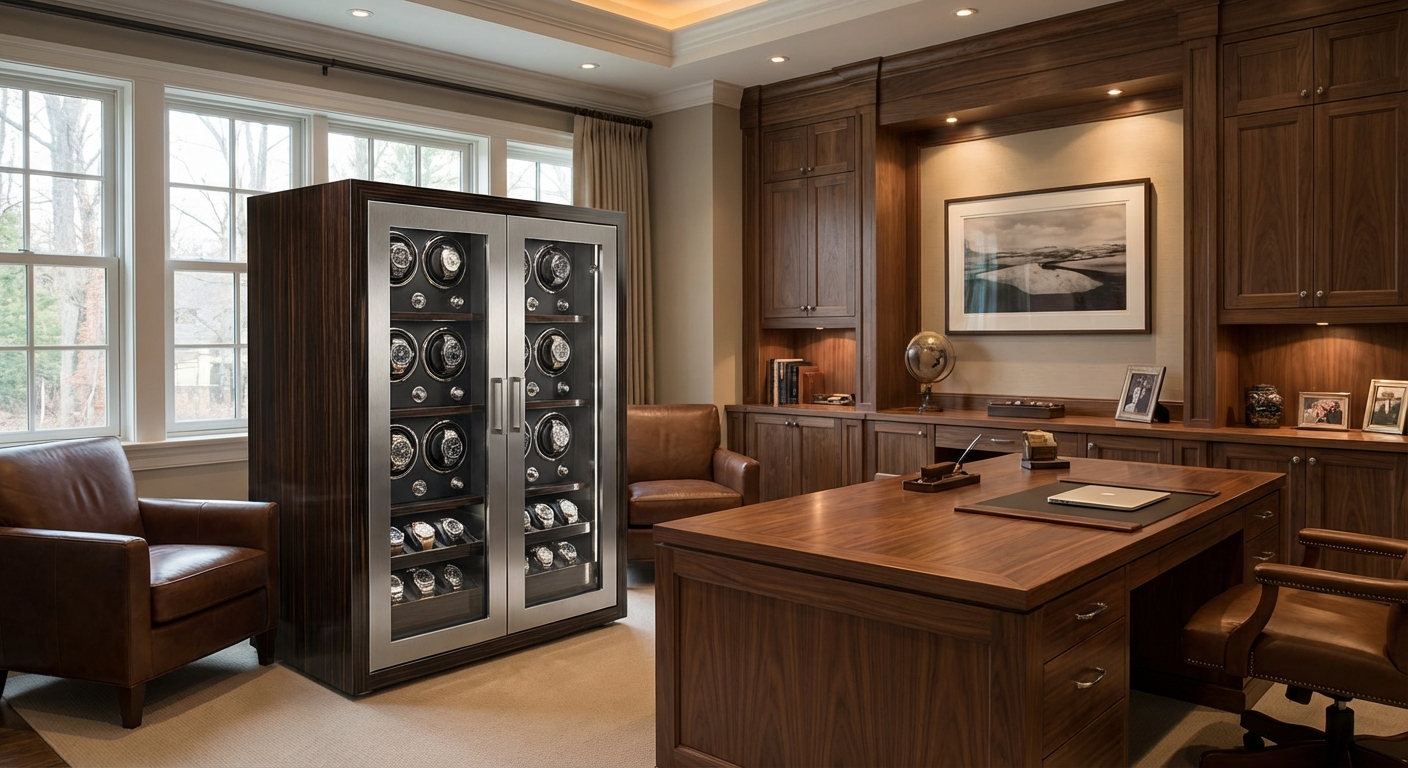
Installing a watch safe in your home office is a strategic move that places your collection in a room you likely spend the most time in during the day. This proximity allows you to monitor your assets while you work and provides a secure location for “desk diver” watches and professional documents.
- Home offices are often more secure than common living areas.
- You can easily swap watches between meetings or calls.
- The unit can serve as a heavy-duty base for office equipment.
The reality is:
Your office is often the most controlled environment in your entire household.
Why centralize security in the office?
Centralizing your security in the office allows you to keep an eye on your most prized possessions without leaving your workspace. It also provides a professional setting for when you want to show a specific piece to a fellow collector or advisor.
- Keep your collection away from children or high-traffic guest areas.
- Consolidate your watches with other critical business backups.
- Benefit from the “active occupancy” of the room during the day.
Bottom line:
Security is more effective when you are physically present to oversee it.
How do office units stay discreet?
Office units can be tucked into desk alcoves or disguised as file cabinets to maintain a professional atmosphere. By choosing a low-profile design from Jimbo Safes, you ensure your office remains a place of productivity rather than a showroom for your wealth.
- Standard dimensions often fit perfectly under executive desks.
- Matte finishes reduce glare and maintain a somber tone.
- Silent operation modes prevent distracting noises during calls.
But wait, there is more:
An office-based safe is an excellent place to store your original watch boxes and papers.
Key Takeaway
The home office is the ideal secondary location for collectors who want to bridge the gap between their professional life and their horological passion.
| Office Benefit | Description | Strategic Value |
|---|---|---|
| Proximity | Close to your daily workspace | High |
| Privacy | Usually a “no-go” zone for guests | Maximum |
| Utility | Can store papers and watches | Excellent |
A professional office setup provides a sophisticated and secure environment that reflects the serious nature of your horological investments.
Why must you bolt down your watch safe?
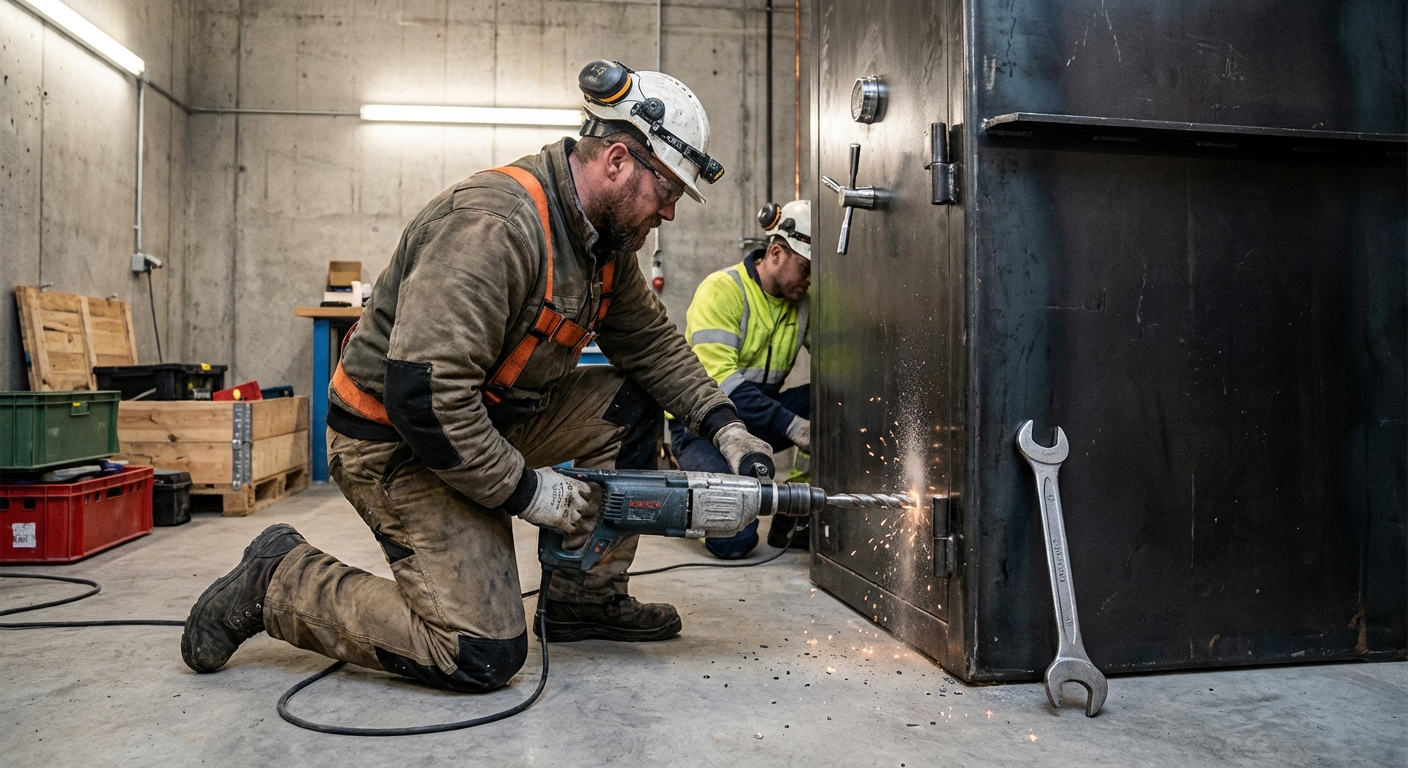
Bolting down your watch safe is the most critical step in installation because it prevents thieves from simply carrying the entire unit away. No matter how much the safe weighs, a team of two motivated burglars with a furniture dolly can remove an unanchored unit in minutes.
- Anchoring creates a massive physical disadvantage for the thief.
- Proper bolting utilizes the home’s structural mass as a counterweight.
- It prevents the unit from tipping over during a forced entry attempt.
The reality is:
If a safe can be moved, it can be cracked at a secondary, more private location.
Is concrete anchoring necessary?
Anchoring into a concrete slab is the gold standard for security because it is virtually impossible to pull a bolt out of cured cement without specialized machinery. If your home has a basement or a ground-floor slab, this is where the highest level of physical resistance is achieved.
- Expansion bolts lock deeper into the material as tension increases.
- Concrete provides a stable, fire-resistant foundation.
- A slab-mounted unit is immune to most prying tools.
Believe it or not:
A few inches of steel and concrete can be the difference between a loss and a win.
Can you bolt a safe to wood floors?
You can absolutely secure a unit to wood floors by using heavy-duty lag bolts that penetrate deep into the structural floor joists. While not as immovable as concrete, a joist-mounted unit provides enough resistance to thwart the vast majority of residential burglaries.
- Target the center of the joists for maximum bite.
- Use steel backing plates if the subfloor is thin.
- Always use at least four points of contact for stability.
Here is the kicker:
Thieves usually give up once they realize the unit is permanently attached.
Key Takeaway
Professional installation and anchoring are the “force multipliers” that turn a steel box into an impenetrable home vault.
| Anchor Method | Material | Resistance Level |
|---|---|---|
| Expansion Bolts | Concrete Slab | Ultimate |
| Lag Screws | Wood Joists | Very High |
| Security Cables | Furniture/Studs | Moderate |
Proper anchoring ensures that your security solution stays exactly where you put it, regardless of the tools an intruder might bring to the field.
When should you check your watch safe locks?
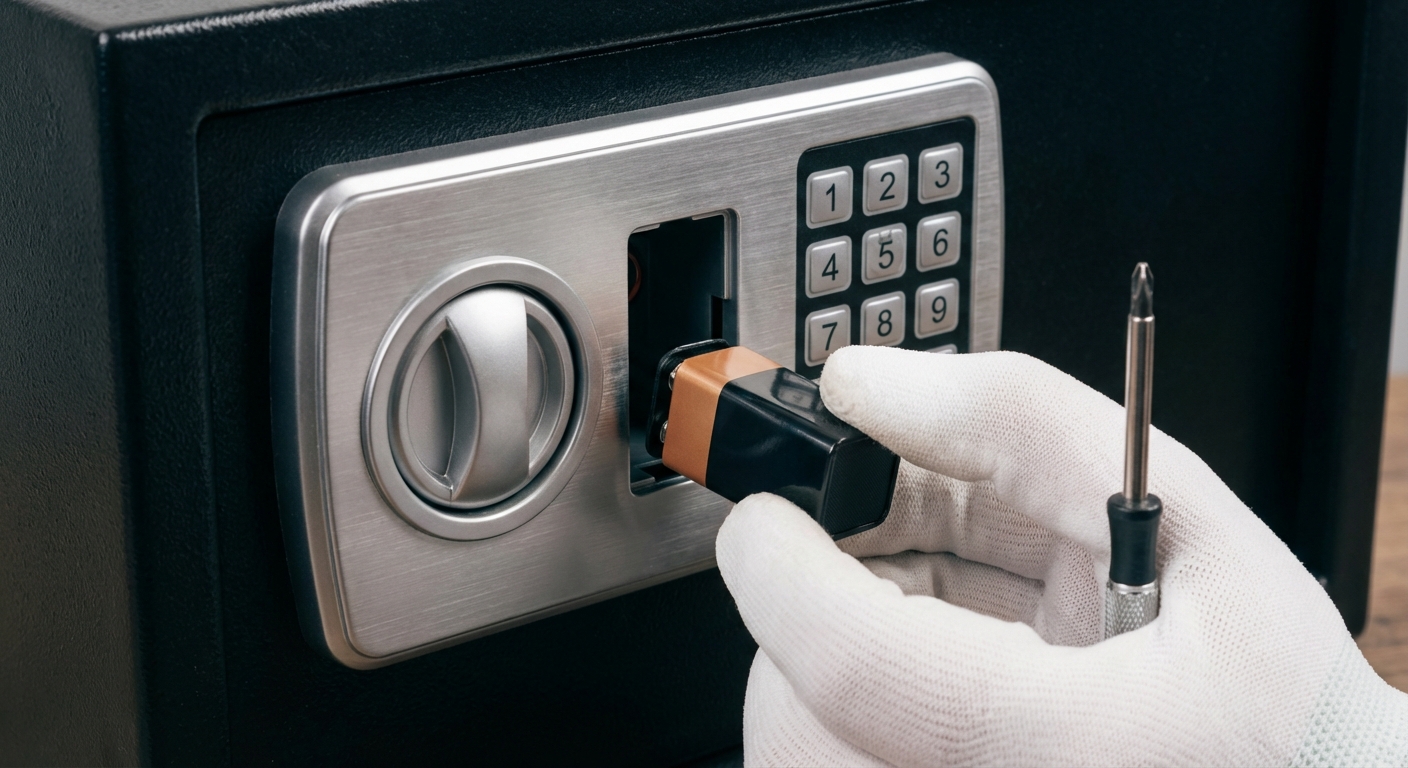
You should check your watch safe locks and replace the batteries every six to twelve months to ensure you are never locked out of your collection. Electronic locks are incredibly reliable, but they rely on consistent power to engage the solenoid and retract the heavy locking bolts.
- Low battery warnings should be addressed immediately.
- Use only high-quality alkaline batteries for consistent voltage.
- Test the lock with the door open to avoid accidental lockouts.
Think about it:
The last thing you want is a dead battery when you need to grab a watch for a flight.
Are electronic locks more reliable than dials?
Electronic locks offer significantly faster access and the ability to change codes instantly, which is a major advantage for modern operational security. While traditional dial locks are famed for their longevity, they are slower and much harder to manipulate under stress or in low-light conditions.
- Keypads allow for quick entry in an emergency.
- You can set temporary codes for trusted visitors.
- Modern electronics are shielded against electromagnetic interference.
The truth is:
Speed of access is a form of security in itself.
What happens if the power fails?
High-quality units from Jimbo Safes are designed with non-volatile memory, meaning your code is never lost even if the battery dies completely. Most modern locks also feature external power contacts or a manual key override


