 跳到内容
跳到内容 

A watch winder is used primarily to keep automatic watches running and properly lubricated when they aren’t on your wrist. Imagine the frustration of reaching for your favorite perpetual calendar timepiece only to find it has stopped, requiring a tedious manual reset of the date, moon phase, and time. This common pain point for collectors is solved by a watch winder safe insert like The Phantom V1, which provides the consistent rotation necessary to maintain mechanical readiness.
What is the primary purpose of a watch winder?

The primary purpose is to simulate the natural motion of the human wrist to keep the mainspring of an automatic watch energized. By utilizing a watch winder safe insert, you ensure that your timepiece remains “wear-ready” at all times without needing manual intervention. This constant motion prevents the internal lubricants from settling or drying out over long periods of inactivity.
How does it simplify your daily routine?
Using an automated system means you never have to spend your morning winding and setting your watch collection.
- Eliminates the need for manual winding.
- Preserves the accuracy of complex complications.
- Reduces wear on the winding crown and seals.
Think about it this way: your watch is always ready when you are.
Key Takeaway: A winder serves as a mechanical surrogate for your wrist, ensuring immediate functionality and long-term health.
| Function | Benefit |
|---|---|
| Motion Simulation | Keeps mainspring wound |
| Kinetic Energy | Prevents mechanical stoppage |
| Lubricant Distribution | Ensures smooth gear operation |
This analysis shows that consistent rotation is the foundation of automatic watch maintenance.
How does an insert protect your automatic movements?
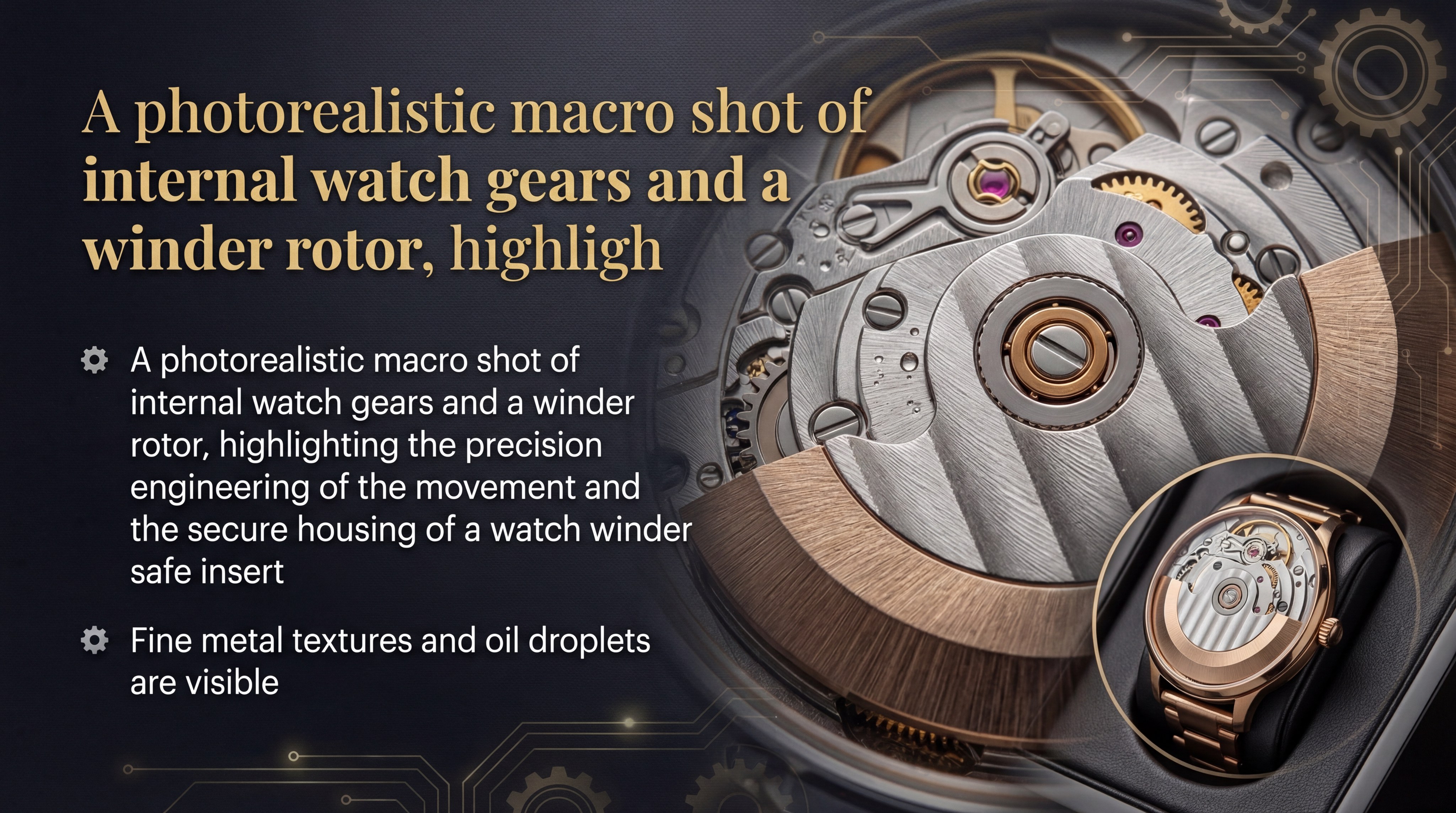
An insert protects your movements by ensuring that the delicate internal gears continue to rotate under controlled, optimized conditions. When you house your collection in a watch winder safe insert, you provide a stable environment that shields the caliber from dust and environmental fluctuations. This professional-grade maintenance is essential for preserving the precision of high-end horology.
Is constant movement better for the gears?
Mechanical movements are designed to be in motion, as stagnant oils can lead to increased friction during eventual startup.
- Distributes specialized oils across the escapement.
- Prevents the “gumming up” of old lubricants.
- Maintains the tension of the slipping clutch.
But that’s not all. Continuous movement actually reduces the stress of a full restart on the gear train.
Key Takeaway: Protection goes beyond security; it includes the internal mechanical integrity of the movement itself.
| Protective Element | Technical Impact |
|---|---|
| Controlled Rotation | Prevents oil migration |
| Enclosed Environment | Blocks particulate ingress |
| Slip-Clutch Safety | Avoids over-tensioning |
The evidence suggests that active storage is superior to static storage for mechanical longevity.
Why choose carbon fiber over leather winder inserts?
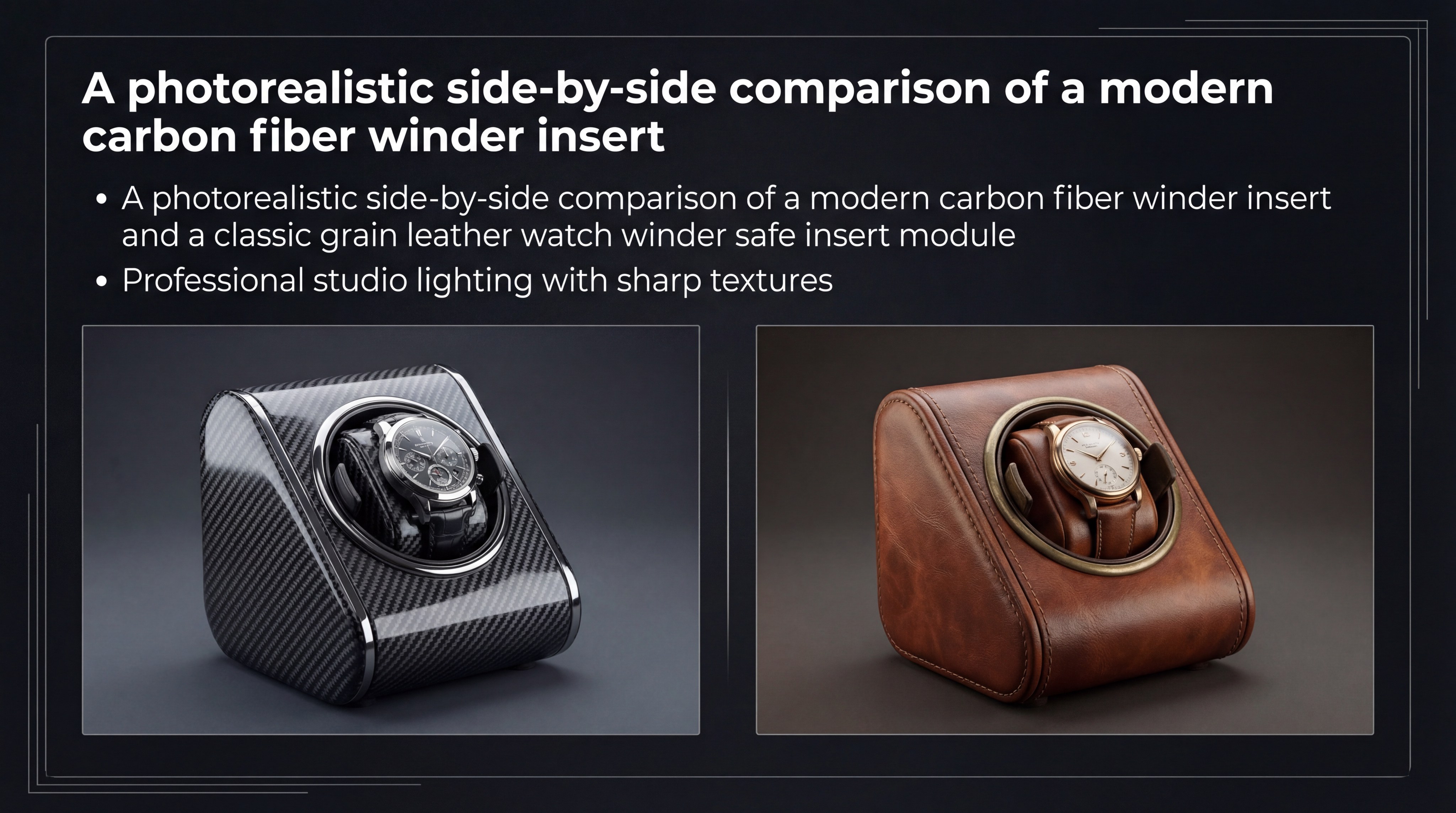
Choosing between materials often comes down to a balance of aesthetic preference and the specific durability required for a watch winder safe insert. Carbon fiber offers a modern, high-tech appearance that is incredibly resistant to wear and chemical degradation. Conversely, fine leather provides a classic, luxurious feel that complements traditional watch designs and adds a soft touch to your vault interior.
Which material offers better longevity?
Carbon fiber is generally more resistant to the humidity levels found inside a sealed steel safe over many years.
- Lightweight yet structurally rigid.
- Impervious to moisture and oil stains.
- Provides a sleek, contemporary aesthetic.
Believe it or not, the choice of material can influence the overall humidity levels within your safe.
Key Takeaway: While leather offers timeless elegance, carbon fiber provides superior durability in long-term secure storage.
| Material | Aesthetic Style | Durability Level |
|---|---|---|
| Carbon Fiber | Modern/Industrial | Extremely High |
| Fine Leather | Classic/Luxury | High (Requires Care) |
| Polished Wood | Traditional | Moderate |
Material selection should align with both your personal style and the environmental conditions of your vault.
Can a winder double as a luxury display case?
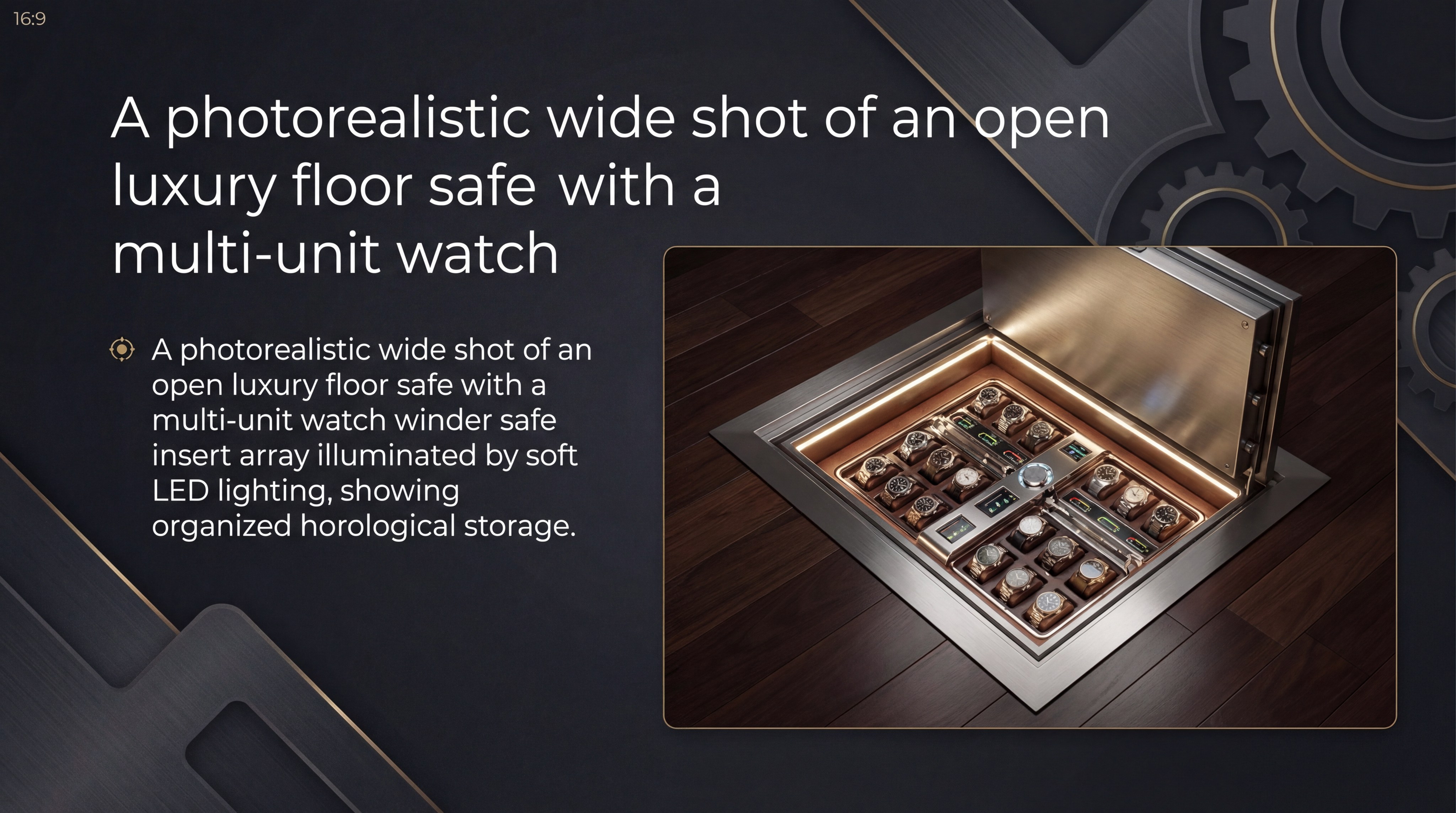
A winder serves as a magnificent display case by showcasing your watches in an upright, rotating position that catches the light. When you install a watch winder safe insert, your safe transforms from a mere steel box into a private horological gallery. Integrated LED lighting often accompanies these units, highlighting the intricate details of the dials and cases while they spin.
Does visibility compromise security?
Modern luxury safes use armored glass or internal lighting to allow you to admire your collection without exposing it to theft.
- Rotating displays provide a 360-degree view.
- Soft LED illumination enhances dial textures.
- Customized velvet linings prevent scratches.
It gets even better: you can enjoy your investment every time you open the door.
Key Takeaway: A winder elevates the presentation of your collection, turning storage into a visual experience.
| Display Feature | Impact on Collection |
|---|---|
| Rotation Angle | Optimized visual perspective |
| Internal Lighting | Highlights finishing and complications |
| Soft Cushions | Secures watches without scratching |
This dual-purpose design ensures that your timepieces are as beautiful to look at as they are precise to wear.
When does your collection require active storage?
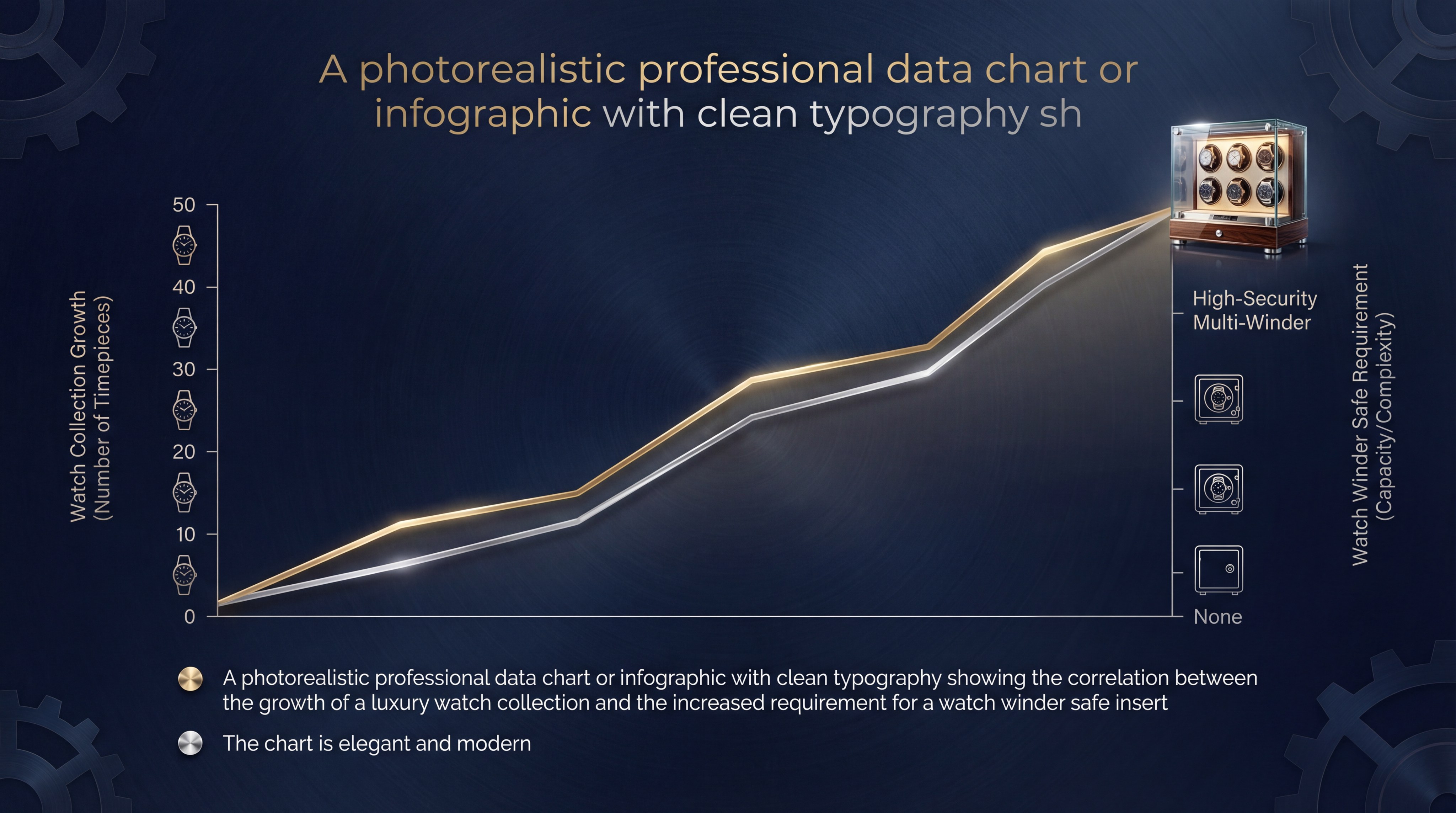
Active storage becomes a requirement the moment your collection grows beyond the number of watches you can wear in a standard rotation. Implementing a watch winder safe insert is the most efficient way to manage multiple automatic watches that feature complex calendars or moon phases. As the number of timepieces increases, the manual labor involved in resetting each one becomes a significant barrier to enjoying your collection.
Is there a threshold for needing a winder?
Generally, owning three or more automatic watches makes a winder a practical necessity rather than a luxury.
- Prevents stoppage of rarely worn pieces.
- Saves time for owners of perpetual calendars.
- Allows for spontaneous watch changes.
The truth is, the more complex your watches are, the more you need active winding.
Key Takeaway: Scaling your collection requires a scalable storage solution that keeps every piece active and accurate.
| Collection Size | Storage Recommendation |
|---|---|
| 1-2 Watches | Manual winding is manageable |
| 3-5 Watches | Single or dual modular winders |
| 6+ Watches | Multi-unit watch winder safe insert |
Monitoring the growth of your collection helps determine the right time to invest in automated maintenance.
How do you measure your vault for a winder insert?
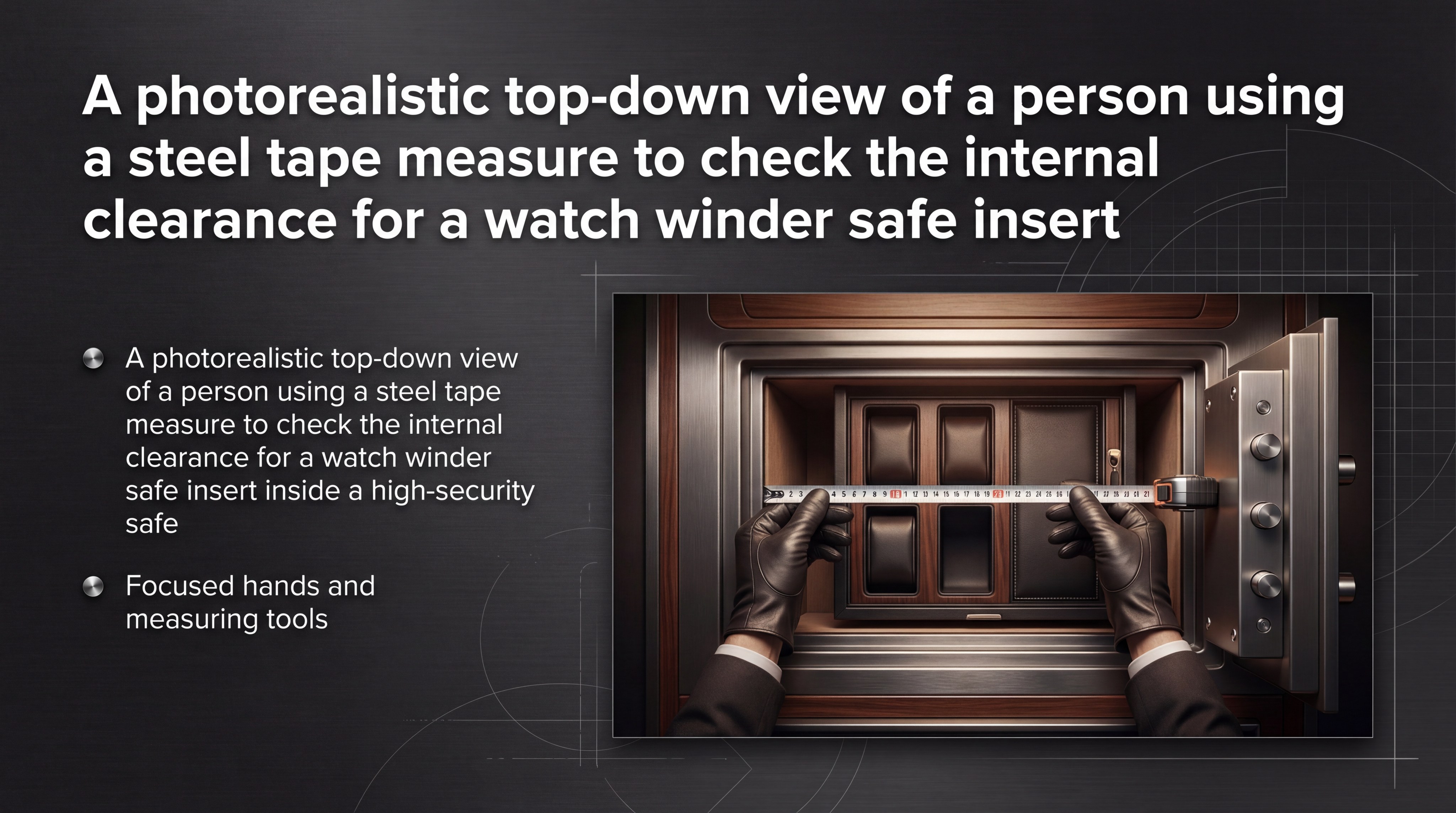
Measuring your vault requires precise calculations of height, width, and depth to ensure the watch winder safe insert fits perfectly. When selecting a unit like the Ghost V1, you must also account for the rotation clearance of the watch heads. Failure to measure accurately can result in the watch cases striking the safe walls or the door failing to close properly.
What are the critical clearance zones?
You must measure the internal “swing” of the largest watch in your collection to prevent contact during rotation.
- Calculate depth including the power cable.
- Ensure the safe door can close with watches mounted.
- Allow space for air circulation around the motors.
Here is the kicker: even an extra millimeter can make the difference between a smooth fit and a returned item.
Key Takeaway: Precision measurement is the first step toward a seamless integration of security and technology.
| Measurement Point | Reason for Accuracy |
|---|---|
| Internal Depth | Accommodates rotor and watch thickness |
| Total Width | Ensures the unit fits between safe walls |
| Power Access | Locates cable routing or battery access |
Following a strict measurement protocol guarantees that your investment fits your existing security infrastructure.
Who benefits most from a tourbillon winder safe?

Serious collectors of “Grand Complications” and tourbillons benefit the most from a high-security watch winder safe insert. These individuals prioritize both mechanical perfection and absolute physical security for their high-value assets. According to our about us philosophy, we believe that the world’s finest engineering deserves the world’s most robust protection.
Why do tourbillons require special care?
A tourbillon is a delicate mechanism designed to counter gravity, and it requires consistent energy to maintain its poise.
- Protects high-value horological investments.
- Maintains the continuous motion of the tourbillon cage.
- Ensures the watch remains within chronometric COSC specs.
Simply put, you cannot leave a six-figure timepiece to sit idle on a dresser.
Key Takeaway: For high-net-worth individuals, a winder safe is an essential tool for asset preservation.
| Collector Profile | Primary Need |
|---|---|
| Complication Enthusiast | Accuracy and readiness |
| High-Value Investor | Security and asset protection |
| Daily Wearer | Convenience and time-saving |
Professional collectors understand that a winder is a logical extension of the watch’s own engineering.
What are the installation steps for modular units?
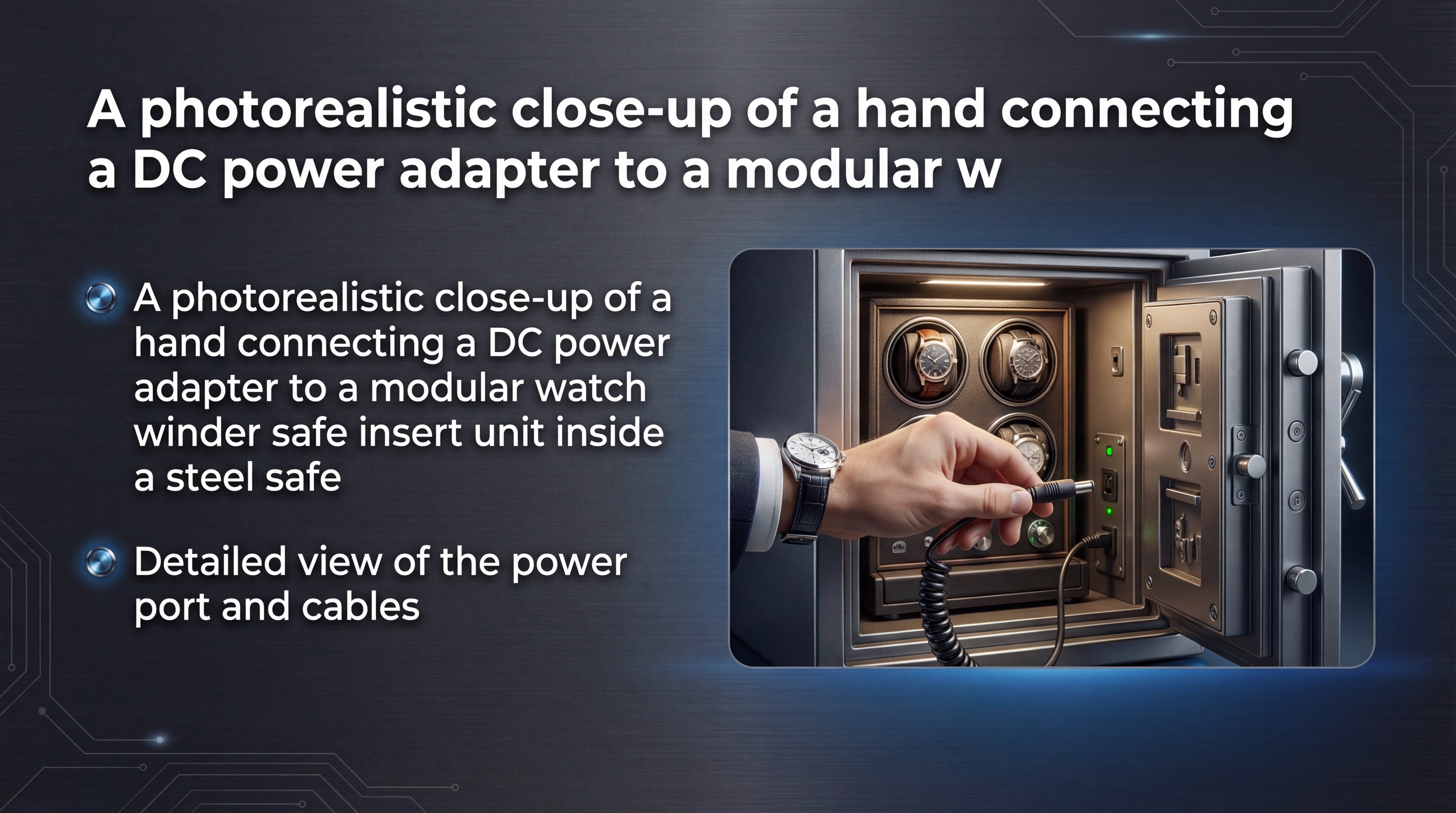
Installing modular units involves securing the base and connecting a reliable power source to your watch winder safe insert. Using a professional-grade watch winder safe insert allows for a clean, wire-free look if your safe has internal power outlets. Proper installation ensures that vibrations from the motors do not transfer to the safe walls, maintaining a silent and discrete operation.
How do you manage power inside a safe?
Most luxury safes include pre-drilled holes for AC adapters, but battery-powered modules offer the ultimate placement flexibility.
- Route cables through protected access points.
- Secure modular units with anti-slip backing.
- Test rotation before final bolting of the unit.
You’ll be glad to know that modular units can grow alongside your collection.
Key Takeaway: Proper installation guarantees quiet operation and protects the internal electronics of the winder.
| Installation Step | Best Practice |
|---|---|
| Power Connection | Use surge-protected AC outlets |
| Positioning | Place most-worn watches at eye level |
| Cable Management | Secure loose wires to prevent snags |
A well-installed unit looks like a factory-integrated part of your high-security vault.
How do you optimize turns per day (TPD) settings?
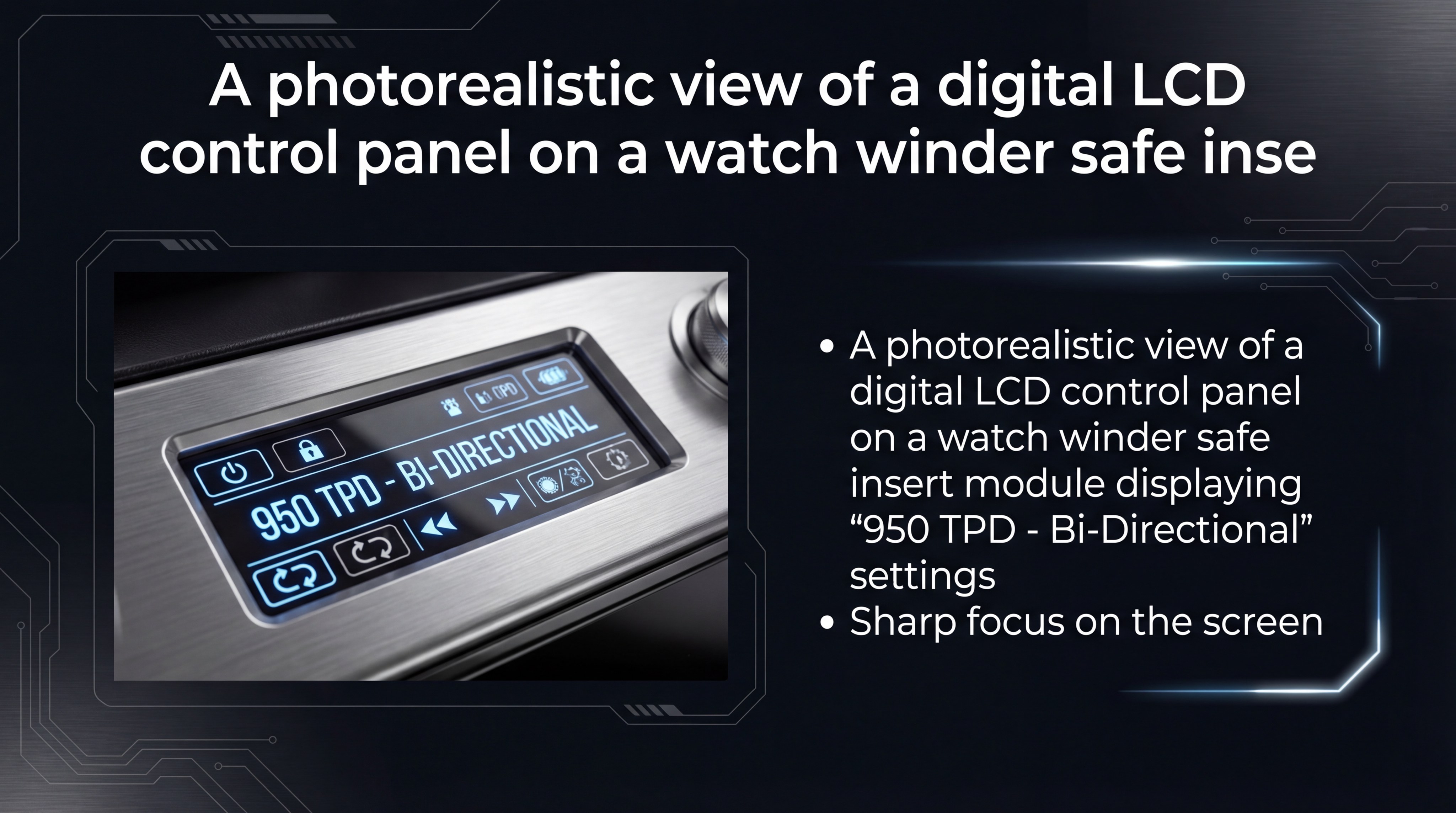
Optimizing TPD settings requires matching the winder’s rotation to the specific requirements of your watch’s caliber. A sophisticated watch winder safe insert allows you to set independent programs for each watch, ensuring that nothing is overwound. Most luxury automatic watches require between 650 and 950 turns per day to maintain a full power reserve without stressing the movement.
What happens if you use the wrong settings?
Too few rotations will cause the watch to stop, while too many can lead to unnecessary wear on the mainspring’s slipping clutch.
- Consult the manufacturer’s TPD database.
- Select clockwise, counter-clockwise, or bi-directional.
- Utilize “Sleep Mode” to simulate real-world wear patterns.
But here is the best part: modern digital panels make these adjustments effortless.
Key Takeaway: Customizing the rotation logic is vital for the specific health of different movement calibers.
| Watch Brand (Example) | Common TPD Requirement | Direction |
|---|---|---|
| Rolex (Cal. 3235) | 650 TPD | Bi-Directional |
| Patek Philippe | 650 – 800 TPD | Clockwise |
| Breitling | 650 – 800 TPD | Bi-Directional |
Fine-tuning your settings ensures your collection is treated with the precision it was engineered with.
Why is fire protection vital for your winder safe?
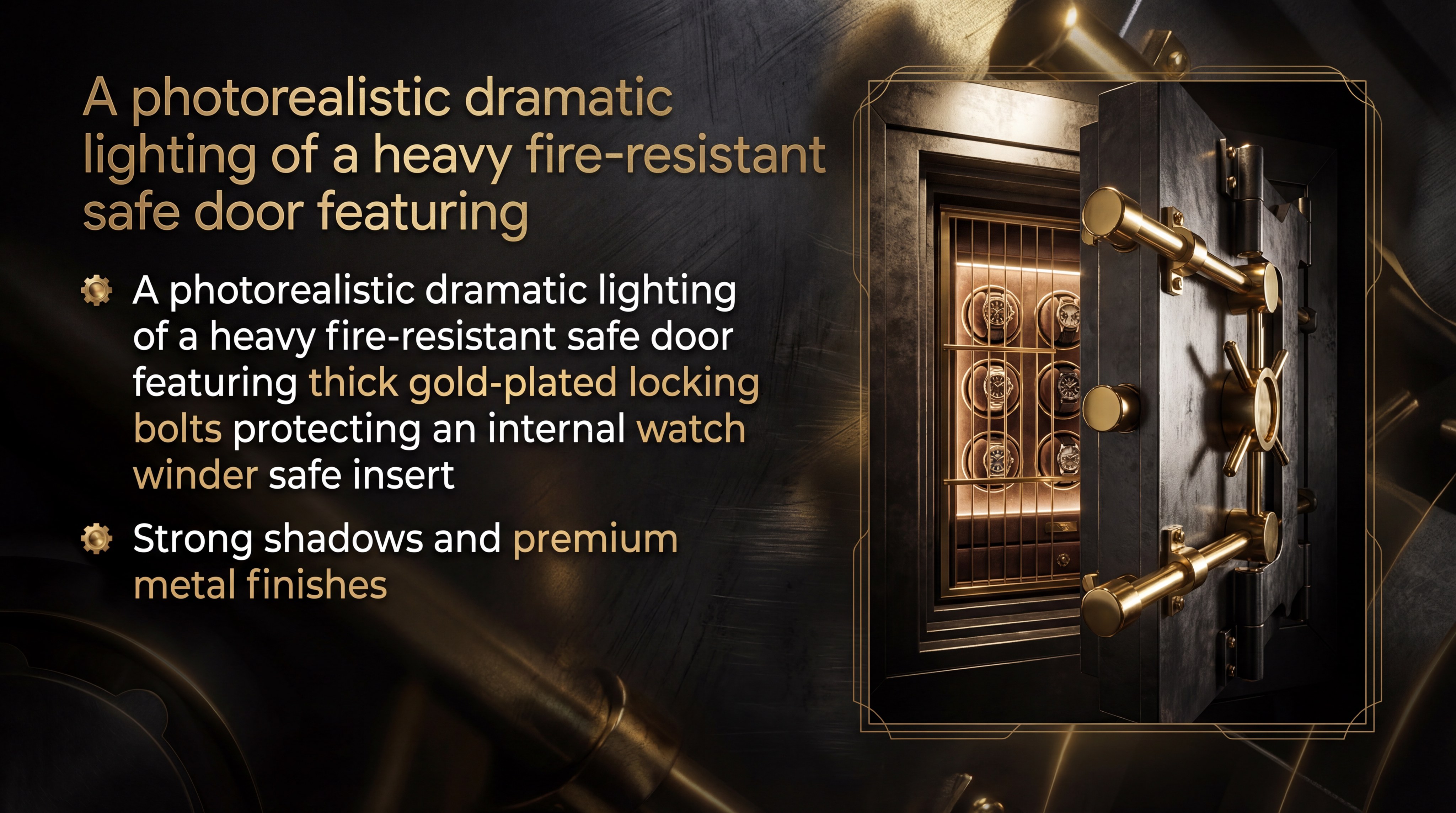
Fire protection is vital because the delicate components of a watch movement can be destroyed by heat long before flames ever touch them. Housing your watch winder safe insert within a fire-rated vault ensures that internal temperatures remain low during a catastrophe. Standard watch winders offer no such protection, leaving your multi-generational heirlooms vulnerable to environmental destruction.
Can movements survive extreme heat?
No, extreme temperatures will melt lubricants, warp balance springs, and ruin delicate dial finishes beyond repair.
- UL-rated safes provide verified heat resistance.
- Thick insulation prevents thermal transfer to the movements.
- Expansion seals block smoke and hot gases.
Make no mistake: a fireproof safe is the only way to truly “future-proof” your collection.
Key Takeaway: True security must account for environmental risks like fire and humidity, not just theft.
| Protection Level | Benefit to Collection |
|---|---|
| Fire Rating (60+ Min) | Protects movements from thermal damage |
| Theft Resistance | Prevents unauthorized physical access |
| Environmental Seal | Maintains stable humidity levels |
Combining active winding with fireproof security represents the ultimate standard in horological care.
*
At Jimbo Safes, our vision is to provide an industrial stronghold for your most precious treasures, blending five-star customized service with uncompromising security. We understand that your collection is more than just a set of watches—it is an investment in history and craftsmanship. To explore our full range of luxury security solutions or to discuss a custom project for your vault, contact us today for a professional consultation.
*
Frequently Asked Questions
Can I use a winder for a manual wind watch?
No, a watch winder only works for automatic watches that use a kinetic rotor. Manual watches lack the internal mechanism to benefit from external rotation.
What’s the best material for a watch winder cushion?
The best material is high-density foam covered in soft velvet or fine leather. These materials adjust to different wrist sizes and prevent any scratching of the watch bracelet.
Can I leave my watch in the winder indefinitely?
Yes, provided the winder has an overwind protection feature and optimized TPD settings. Quality winders include rest periods to prevent mechanical fatigue.
Can I store my watch winder safe insert in a damp basement?
No, while the safe provides protection, high external humidity can eventually affect the internal electronics. It is best to place your safe in a climate-controlled room.
What is the best way to power a multi-watch winder array?
The best way is a direct AC power connection through the safe’s internal power port. This ensures a consistent power supply without the need for periodic battery changes.


