 跳到内容
跳到内容 

Why buy a watch winder for safe storage?
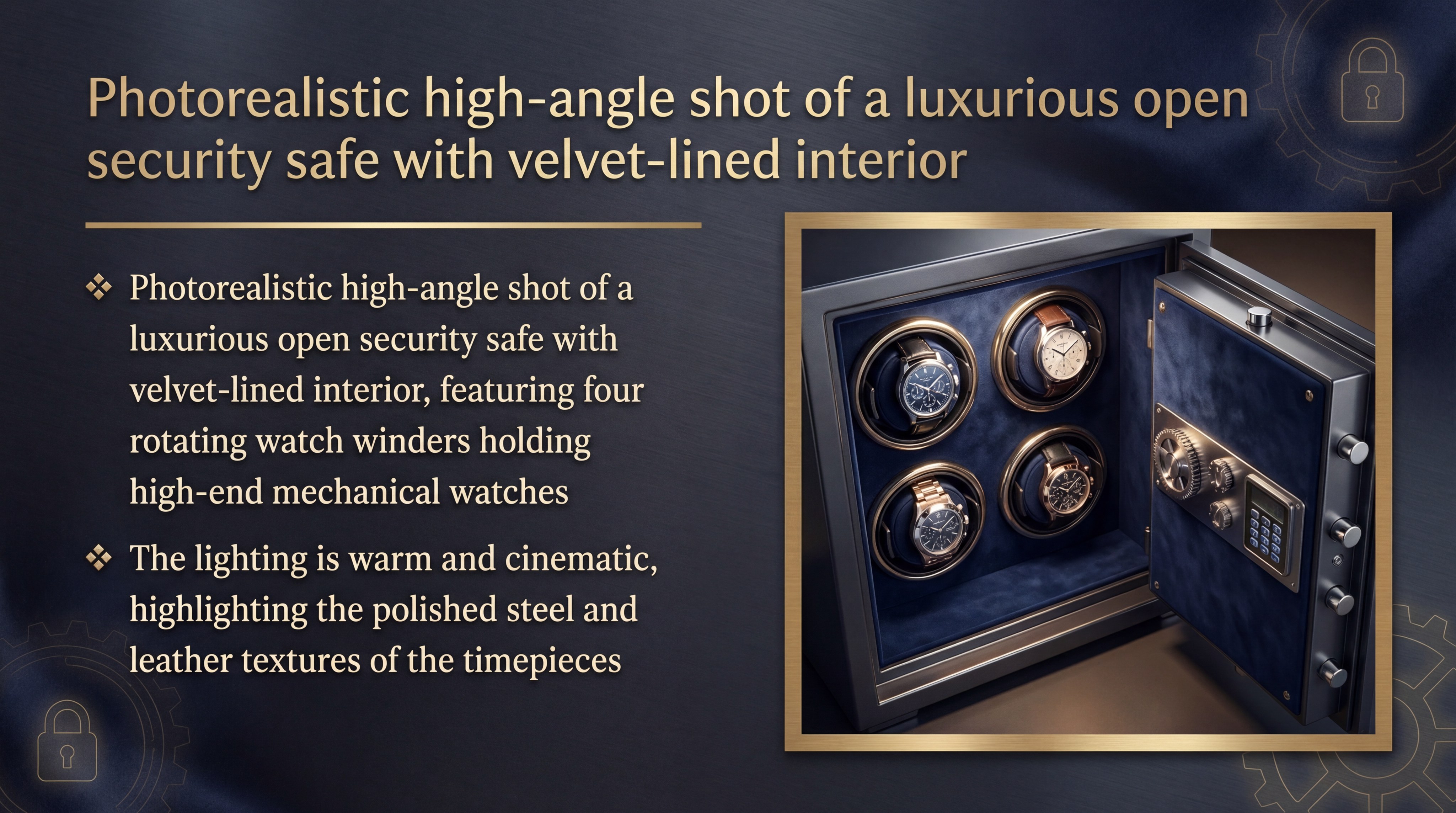
Buying a watch winder for safe storage allows you to combine high-level anti-theft security with the mechanical maintenance your automatic timepieces require. A watch winder for safe units ensures that your most valuable assets aren’t just sitting in the dark; they are staying active and lubricated.
What is an automatic winder?
An automatic winder is a motorized device designed to keep your self-winding watches running when they aren’t on your wrist.
But wait, there’s more:
- It uses a quiet motor to rotate the watch.
- It prevents the mainspring from fully unwinding.
- It eliminates the need for manual winding.
How do they protect timepieces?
These devices protect your investment by keeping the internal movements in motion, which is their natural state.
Here is the deal:
- They reduce the wear and tear on the winding crown.
- They provide a cushioned, secure mount for the watch.
- They keep the time and date current.
Key Takeaway: Using a winder inside a safe provides the dual benefit of physical security and mechanical readiness for your entire collection.
| Feature | Benefit |
|---|---|
| Rotation | Keeps movement active |
| Secure Mounting | Prevents scratches |
| Security | Protects from theft |
Choosing a winder specifically for a safe environment ensures your watches are always prepared for immediate wear.
How does a watch winder for safe use work?
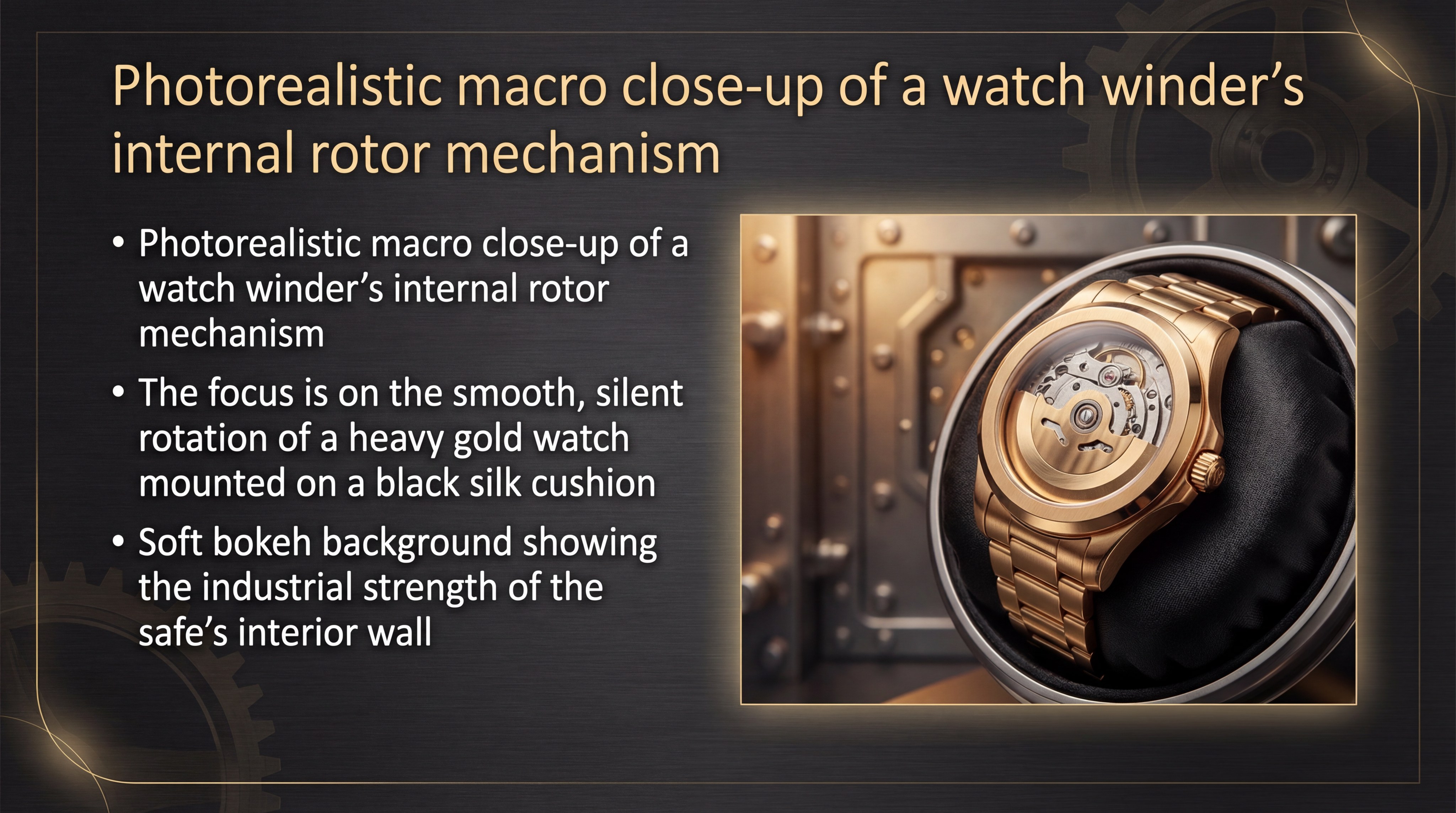
A watch winder for safe use works by rotating your timepiece on a specific axis to mimic the kinetic energy generated by human arm movement. This constant but controlled motion keeps the rotor inside your watch spinning, which in turn keeps the mainspring under tension.
Mimicking natural wrist motion?
The device rotates the watch in cycles, ensuring that the internal weights of the movement are shifted just like they would be while you are walking or working.
Think about this:
- Winders use specific “rest periods” to avoid over-tension.
- They rotate at a very low RPM to be gentle.
- Most have programmable directions.
What about gravity and rotation?
Gravity plays a key role as the winder turns the watch, allowing the internal oscillating weight to fall and wind the gear train.
The bottom line is:
- Rotation must be consistent to be effective.
- High-quality motors ensure silent operation.
- Proper angling helps the rotor move freely.
Key Takeaway: Understanding the mechanics of your winder helps you appreciate how it preserves the delicate balance of your watch’s internal power reserve.
| Component | Function |
|---|---|
| Motor | Drives the rotation |
| Rotor Cushion | Holds the watch safely |
| Control Board | Manages TPD settings |
This mechanical synergy is what keeps your high-complication watches from losing their calibration over time.
Where to place a watch winder for safe access?
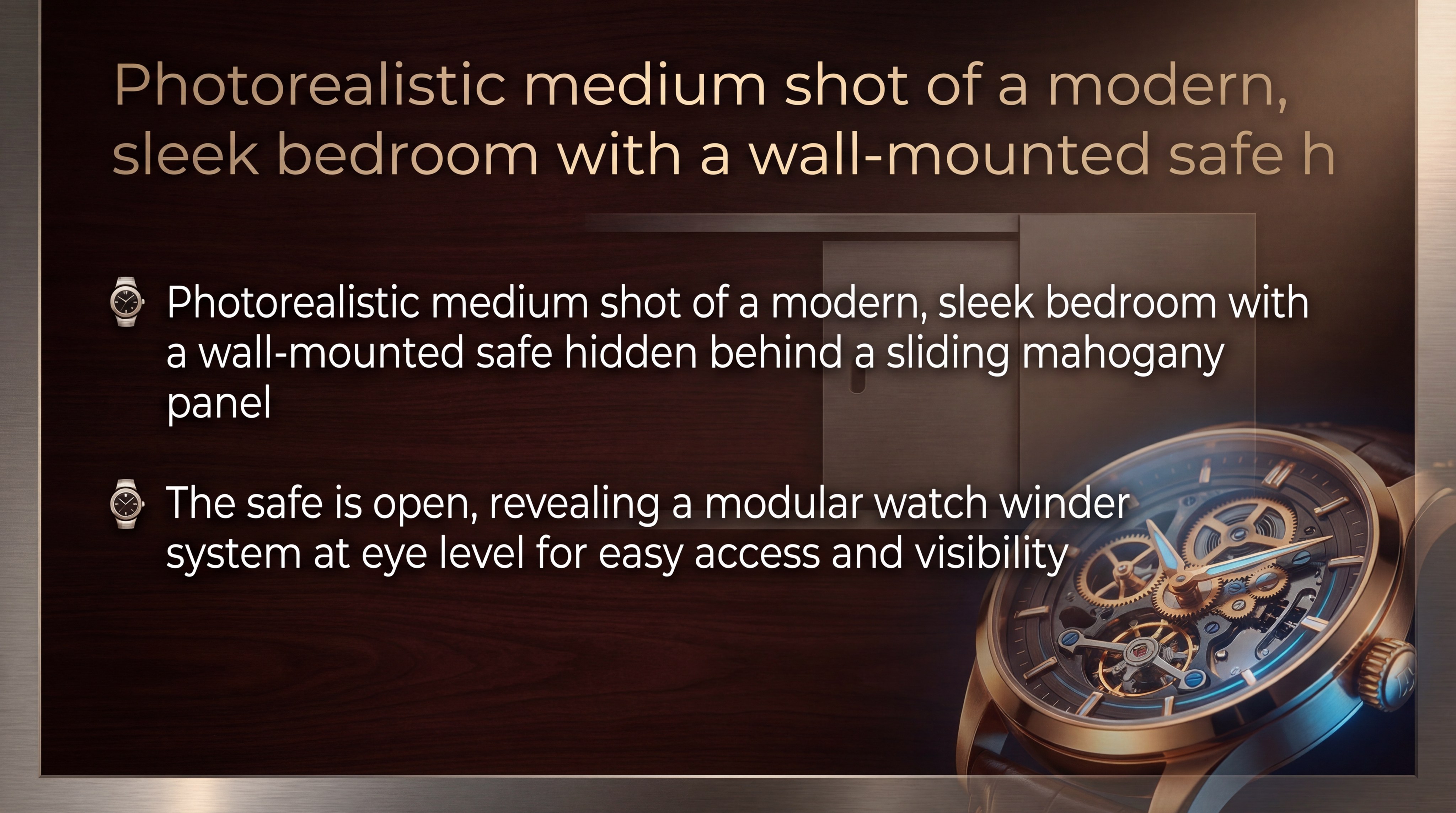
You should place your watch winder for safe access at eye level within your security cabinet to allow for easy insertion and removal of your timepieces. Placing a watch winder for safe use in a well-lit area of your vault ensures you can check the time and status of your watches without straining.
Optimal positioning in a vault?
The best position is typically on a middle shelf where you don’t have to bend down or reach too high, which could lead to accidental drops.
Here is the secret:
- Eye-level mounting increases visibility.
- Modular units allow for custom configurations.
- Clearance is needed for the door to swing.
Avoiding magnetic interference?
You must ensure the winder is placed away from the safe’s locking mechanism or internal speakers, as magnets can wreak havoc on mechanical hairsprings.
But wait, there’s more:
- Keep winders away from large electronic safe locks.
- Use shielded motor housings for extra safety.
- Test for magnetism if the watch gains time.
Key Takeaway: Strategic placement within your safe maximizes both the convenience of daily use and the longevity of the watch’s accuracy.
| Location | Pro | Con |
|---|---|---|
| Eye Level | High visibility | Uses prime space |
| Bottom Shelf | More room | Harder to access |
| Side Wall | Saves shelf space | Requires mounting |
Correct positioning reduces the risk of physical damage during the daily routine of choosing a timepiece.
Which settings suit a watch winder for safe units?
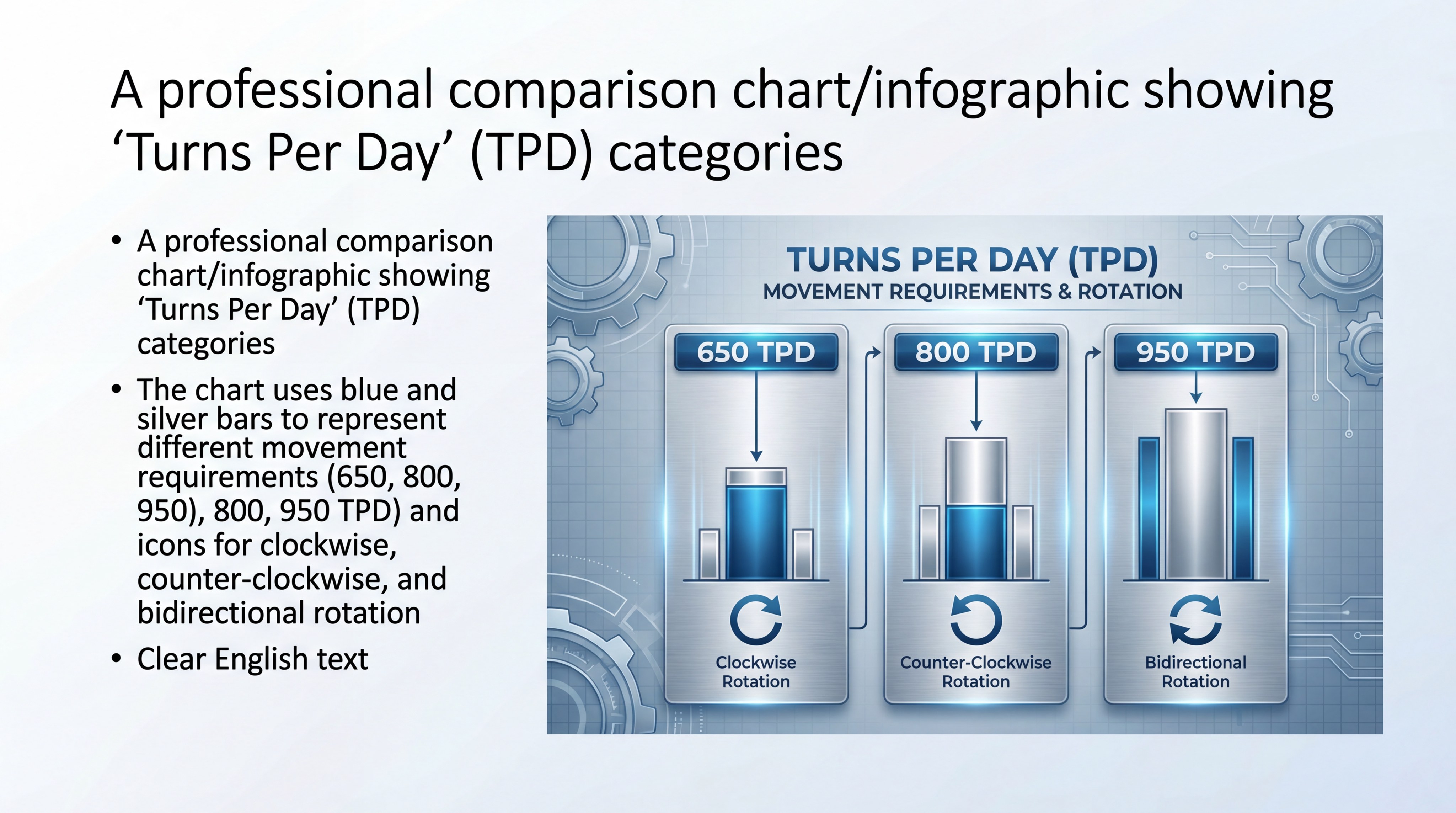
The settings that suit a watch winder for safe units depend entirely on the caliber of the watch movement, typically ranging from 650 to 950 Turns Per Day (TPD). Every watch winder for safe storage must be configured to the specific rotation direction—clockwise, counter-clockwise, or bidirectional—required by the manufacturer.
Selecting the right TPD count?
Most modern automatic watches require around 800 TPD to stay fully wound without putting unnecessary stress on the slipping clutch of the mainspring.
Here is the deal:
- 650 TPD is standard for many basic calibers.
- Heavy complications often need 900+ TPD.
- Check your manual for the exact number.
Clockwise or bidirectional?
Some watches only wind when the rotor turns in one specific direction, so setting the winder incorrectly will result in a dead watch.
It gets better:
- Rolex usually prefers bidirectional.
- Many Patek Philippe models wind clockwise.
- Valjoux 7750 movements often wind counter-clockwise.
Key Takeaway: Matching your winder’s TPD and direction to your watch’s movement is the only way to ensure it stays wound correctly.
| Movement Type | Common TPD | Direction |
|---|---|---|
| Basic Automatic | 650-800 | Bidirectional |
| Chronograph | 800-950 | Varies |
| Perpetual Calendar | 900+ | Specific |
Getting these settings right prevents you from over-winding or under-winding your most prized horological pieces.
Why use a watch winder for safe collection care?
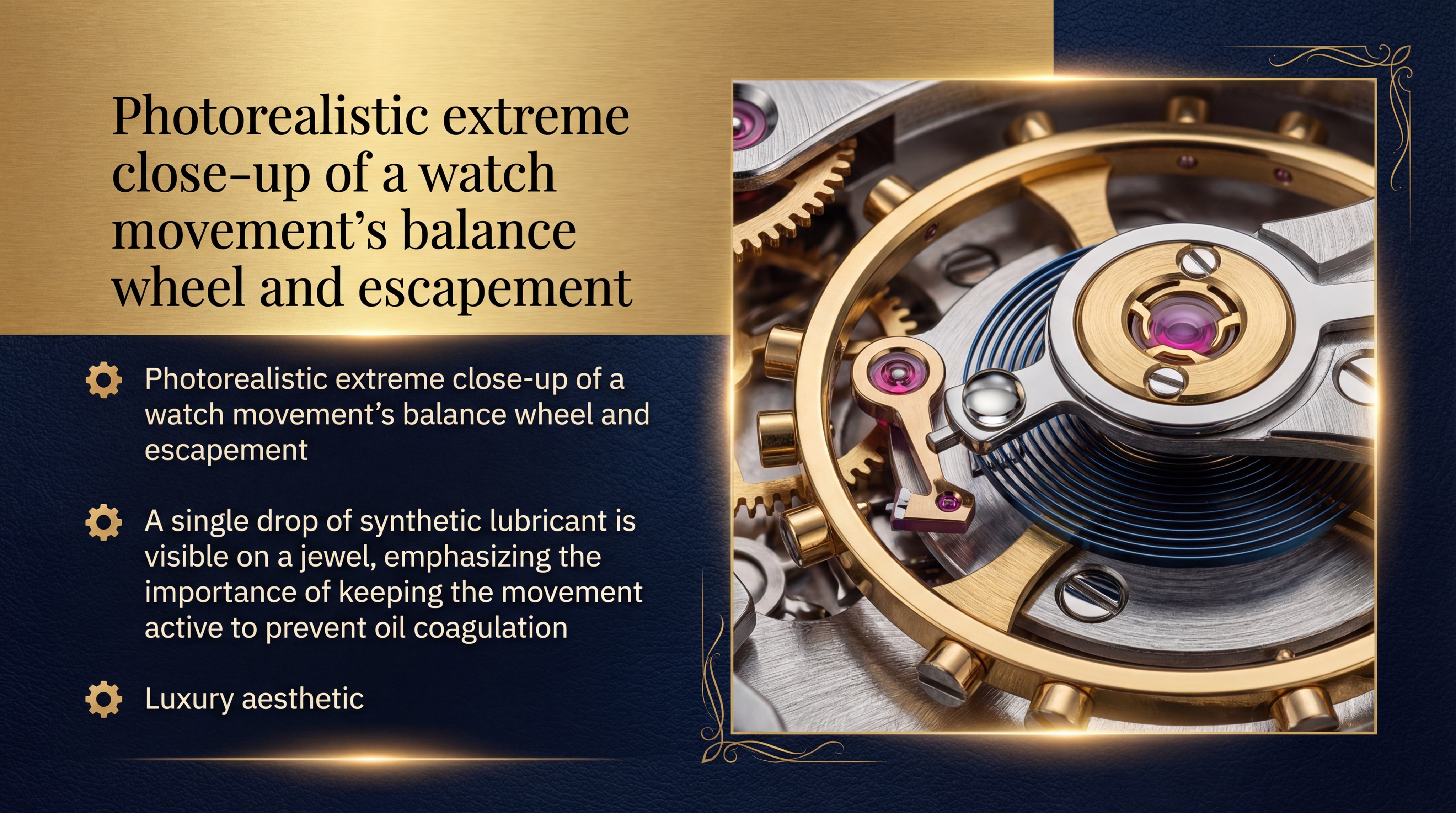
You should use a watch winder for safe collection care because it prevents the synthetic lubricants inside your watch from stagnating and drying out. A watch winder for safe environments maintains a consistent “exercise” routine for the gears, ensuring that the oils remain evenly distributed across the jewels.
Preventing lubricant stasis?
When a watch sits for months, the oils can pool or coagulate, leading to friction and expensive service costs when you finally decide to wear it.
Here is why it matters:
- Movement keeps oils fluid.
- Active gears prevent metal-on-metal wear.
- It extends the interval between services.
Protecting delicate complications?
If you own a moon phase or a perpetual calendar, resetting these features can be a nightmare and can even damage the movement if done at the wrong time of day.
But wait, there’s more:
- Winders keep date wheels in sync.
- They protect the delicate calendar gears.
- They save you hours of manual resetting.
Key Takeaway: A winder acts as a preventive maintenance tool that saves you significant money on long-term repair and servicing.
| Benefit | Impact on Watch |
|---|---|
| Oil Distribution | Reduces gear friction |
| Complication Sync | Prevents setting errors |
| Continuous Run | Maintains accuracy |
Keeping the movement active is the best way to ensure your watch performs to factory specifications for years.
How to install a watch winder for safe interiors?
To install a watch winder for safe interiors, you must first measure your internal shelf depth to ensure the winder door or rotor has enough clearance to operate. A watch winder for safe use often requires a modular setup, where individual cubes are stacked or bolted to a custom backplate for stability.
Securing the winder base?
You don’t want your winders sliding around when you open the heavy safe door, so using industrial-strength adhesive or mounting screws is highly recommended.
Here is the deal:
- Modular winders can be expanded easily.
- Use a level to ensure rotation is balanced.
- Leave space for the power cables.
Management of internal space?
Safes are often crowded, so you need to plan your layout to include room for jewelry drawers, documents, and your rotating watch collection.
But wait, there’s more:
- Use vertical space to maximize storage.
- Group watches by their TPD requirements.
- Ensure easy access to the power switch.
Key Takeaway: A clean, secure installation prevents the winder from vibrating or shifting, which could potentially scratch your safe’s interior.
| Installation Step | Tool Needed |
|---|---|
| Measuring | Tape Measure |
| Leveling | Bubble Level |
| Securing | Mounting Screws/Velcro |
Properly mounting your winders turns a standard safe into a professional-grade horological display and maintenance center.
What power fits a watch winder for safe cabinets?
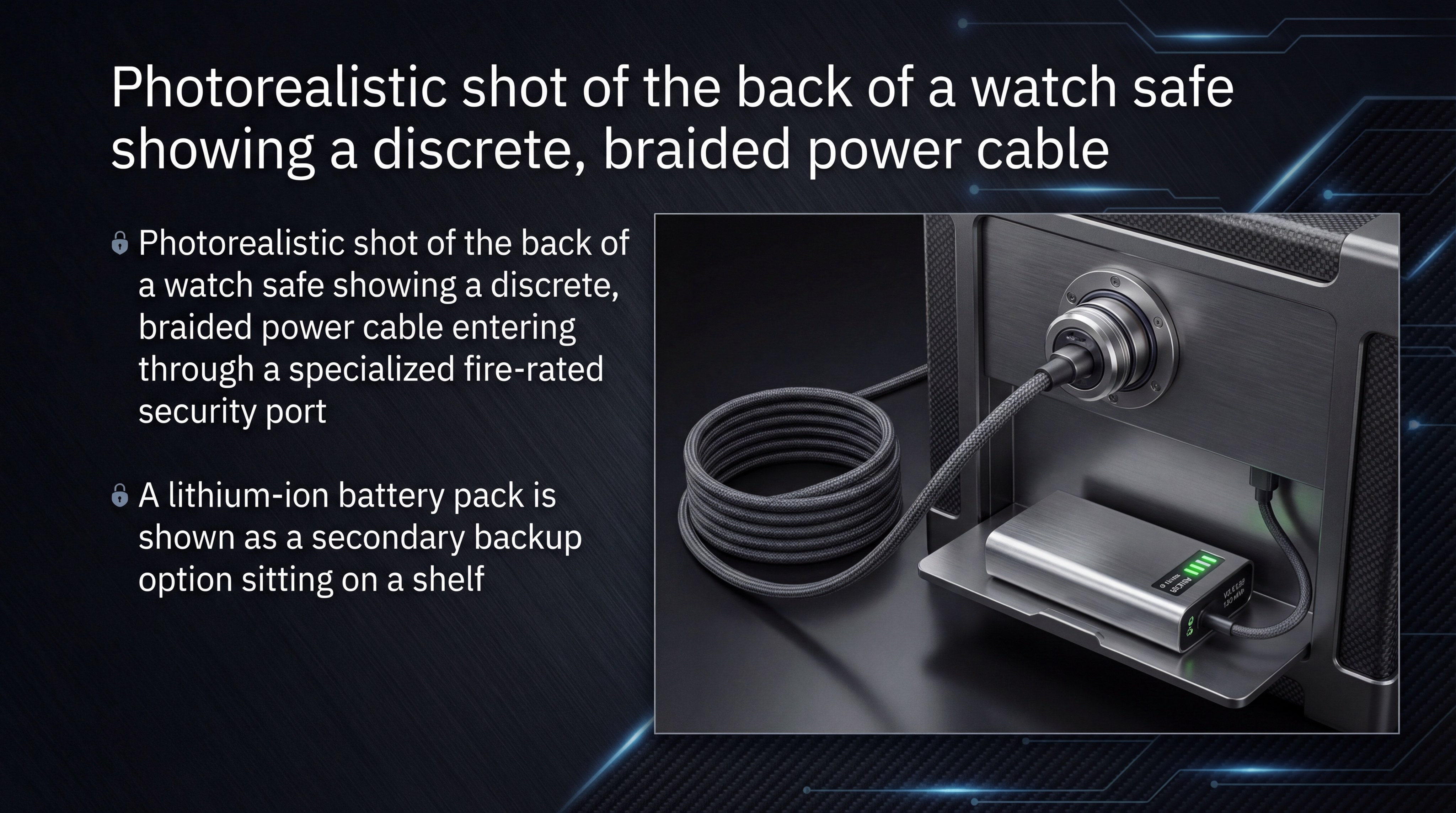
The best power source for a watch winder for safe cabinets is a direct AC connection through a pre-drilled fire-rated security port in the safe’s wall. Using a watch winder for safe units with battery backup is also a popular choice for those who do not want to drill holes in their existing vault.
AC power or battery packs?
While AC power is more reliable for long-term use, high-quality lithium-ion battery packs can last for months and offer a cleaner look without wires.
Here is the deal:
- AC power means no battery changes.
- Battery power is best for hidden safes.
- Dual-power models offer the best of both.
Running wires through a safe?
Most modern luxury safes come with a small power hole at the bottom, protected by a heat-expanding seal to maintain fire resistance.
But wait, there’s more:
- Use braided cables for durability.
- Ensure the cable doesn’t pinch in the door.
- Use a surge protector outside the safe.
Key Takeaway: Selecting a reliable power source ensures your watches never stop winding, even during a temporary power outage.
| Power Type | Reliability | Aesthetics |
|---|---|---|
| AC Adapter | High | Medium (Visible wires) |
| Battery | Medium | High (Wireless) |
| Solar (Safe Light) | Low | High |
Continuous power is the lifeblood of your winder system, so choose the method that best fits your safe’s location.
Is a watch winder for safe protection needed?

Whether a watch winder for safe protection is needed depends on the size of your collection and how frequently you rotate between different timepieces. A watch winder for safe storage is absolutely essential if you own complex watches that require significant time to set manually.
Assessing your wearing habits?
If you wear the same watch every single day, you likely don’t need a winder, but for those with three or more watches, it becomes a necessity.
Here is the deal:
- Occasional wearers benefit the most.
- Collectors of vintage pieces should use them.
- It turns a 10-minute “setting” chore into 0 minutes.
Managing perpetual calendars?
For a perpetual calendar watch, the cost of having it professionally reset after the power reserve dies can sometimes exceed the cost of the winder itself.
But wait, there’s more:
- It keeps moon phases accurate.
- Leap year indicators stay correct.
- Day/Date complications never lag.
Key Takeaway: Investing in a winder is a small price to pay for the sheer convenience of a “grab and go” luxury watch experience.
| Collection Size | Recommendation |
|---|---|
| 1 Watch | Not needed |
| 2-4 Watches | Recommended |
| 5+ Watches | Essential |
The more timepieces you own, the more a winder transforms from a luxury accessory into a fundamental maintenance tool.
Can a watch winder for safe setups hurt movements?

A high-quality watch winder for safe setups will not hurt your movement, as modern winders are designed with shielded motors and programmable rest cycles. You might worry about over-winding, but every watch winder for safe use accounts for the fact that automatic watches have a built-in “slipping” mechanism to prevent damage.
The myth of over-winding?
Automatic watches are designed to be worn on active wrists all day; they cannot be “over-wound” because the mainspring simply slips once full tension is reached.
Here is the deal:
- Rest cycles prevent constant tension.
- Quality winders have “sleep modes.”
- Magnetically shielded motors protect accuracy.
Quality motors and magnetism?
Poorly made, cheap winders can emit magnetic fields that magnetize the hairspring, causing the watch to run significantly fast or stop entirely.
But wait, there’s more:
- Look for “low EMF” motor certifications.
- Check the distance between the motor and watch.
- Use a magnetometer for peace of mind.
Key Takeaway: By choosing a reputable, shielded winder, you eliminate the only real risks associated with automated winding.
| Potential Issue | Solution |
|---|---|
| Over-winding | Programmable rest cycles |
| Magnetism | Shielded DC motors |
| Physical Wear | Soft velvet/silk cushions |
Security for your movement is just as important as security for the watch itself, so never settle for unshielded motors.
How to maintain a watch winder for safe longevity?

To maintain a watch winder for safe longevity, you should periodically clean the velvet cushions and the rotor housing to prevent dust from entering the watch’s delicate parts. A watch winder for safe units requires minimal care, but checking the motor’s sound and rotation speed annually ensures it continues to operate correctly.
Cleaning the velvet cushions?
Dust and grit can act like sandpaper on your watch’s polished case or leather strap, so keeping the mounting surfaces clean is vital.
Here is the deal:
- Use a soft horsehair brush for dust.
- Avoid using harsh chemicals on velvet.
- Inspect the leather straps for friction wear.
Checking motor performance?
If you notice the winder making a clicking or grinding noise, it is usually a sign that the belt or the motor is reaching the end of its lifespan.
But wait, there’s more:
- Listen for silent, smooth operation.
- Verify the rotation count matches settings.
- Replace batteries before they leak.
Key Takeaway: A few minutes of annual maintenance will keep your winder running silently and effectively for a decade or more.
| Maintenance Task | Frequency |
|---|---|
| Dusting Cushions | Monthly |
| Motor Inspection | Annually |
| Battery Replacement | Every 6-12 Months |
Keeping your maintenance routine consistent ensures your safe remains a pristine environment for your high-value horological collection.
Setting up your watch winder system properly is the ultimate way to respect the engineering of your timepieces while ensuring they are ready to wear whenever you are. Whether you are managing a small collection or a vast vault of complications, the right winder settings and placement solve the persistent problem of mechanical stagnation. We are here to help you optimize your secure storage; contact us today to find the perfect security and winding solution for your home. We believe that true luxury is not just owning a fine watch, but ensuring it is perfectly maintained and always ready for the next moment.
Frequently Asked Questions
- Can I leave a watch in the winder indefinitely?
Yes. Modern winders include programmed rest periods that mimic natural human movement, preventing the mainspring from remaining under constant, peak tension. - What is the best TPD for a luxury watch?
It depends. Most luxury automatic watches require between 650 and 950 Turns Per Day (TPD), but you should always check your specific movement’s user manual. - How do I know if my watch is wound?
If you leave the watch in the winder for 48 hours and it still displays the correct time and date without being worn, your settings are successful. - Can I use battery power inside a safe?
Yes. Many high-end winders are designed with long-lasting battery compartments specifically for use in safes where a power outlet is not available. - How do I know if the motor is failing?
It depends. Common signs of failure include a new grinding noise, the winder stopping during active cycles, or the watch losing time while in the device.


